
Projects
Fets & Crosses
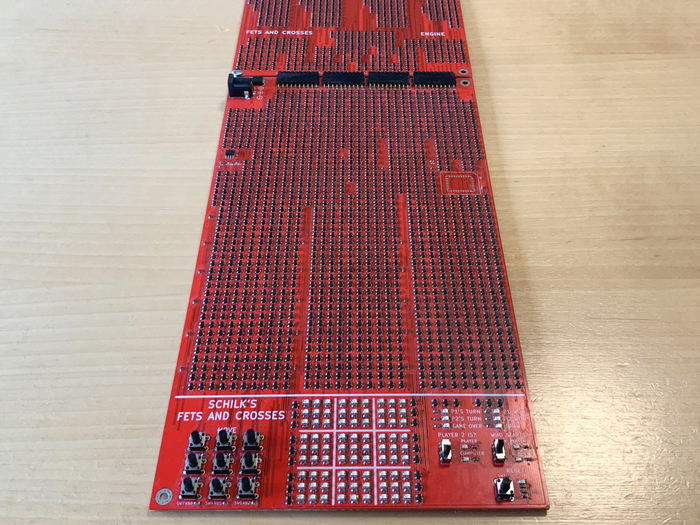
A game of Knots-and-Crosses (Tic-Tac-Toe) built from 2458 individual mosfets, featuring both player-vs-player and player-vs-computer modes.
PmodADC
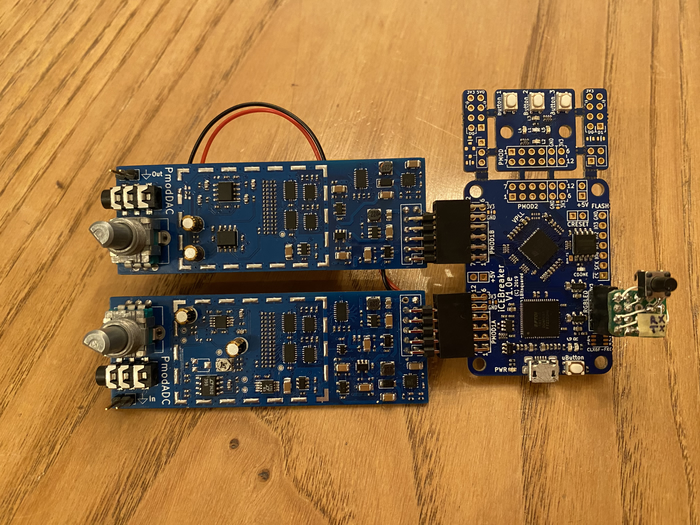
A fully discrete 14bit, 41kHz, FPGA-controlled successive-approximation audio ADC and R2R audio DAC.
psMCU
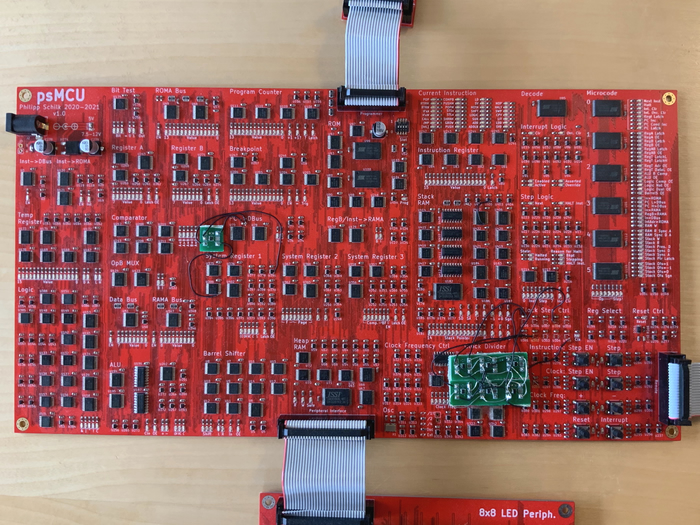
An 8-bit, 1MHz processor built from individual logic and memory ICs, featuring a custom ISA, peripheral interface, USB programmer and macro assembler.
ETH Zürich Embedded Systems
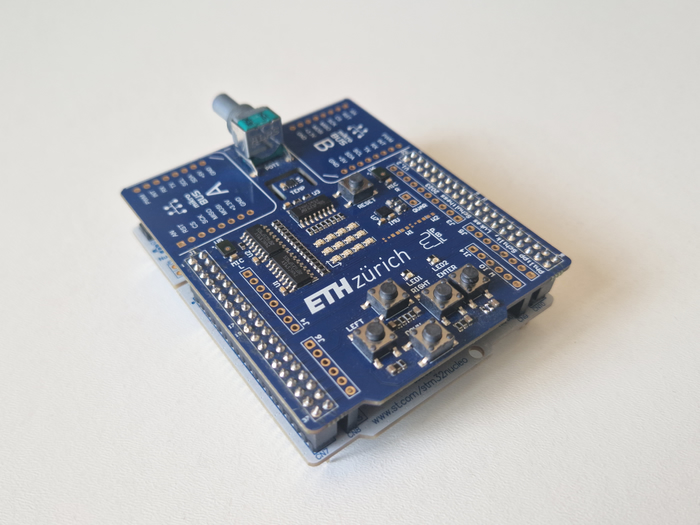
A full practical university-level embedded systems course based on a custom hardware platform and tooling running annually at ETH Zürich with 250+ participants.
VitalCore
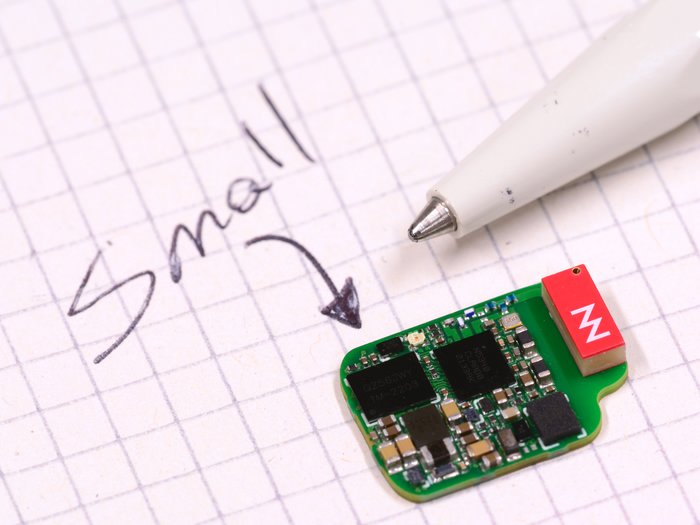
A self-contained, miniaturized, BLE-enabled embedded platform for low-power, wearable, and hearable applications.
RadarBud
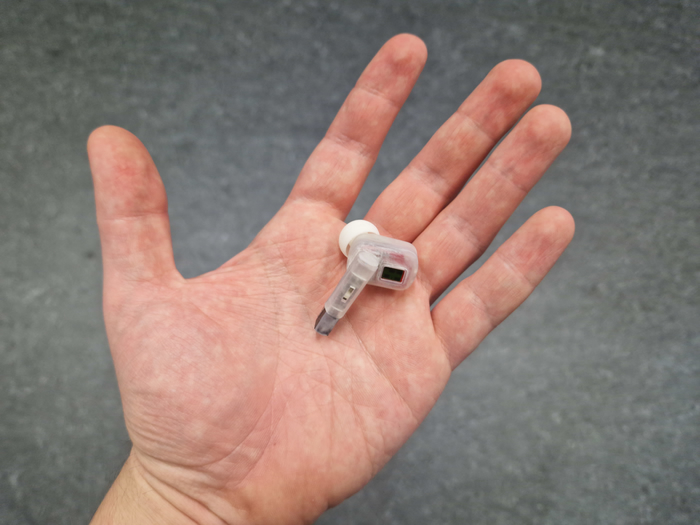
A low-power in-ear hand-gesture recognition system based on 50GHz mm-wave radars, efficient spatial and temporal Convolutional neural networks, and an energy-optimized hardware design.
VitalPod
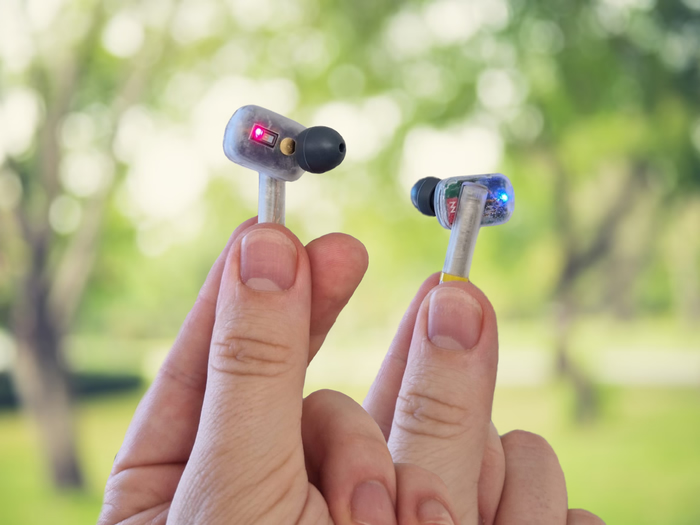
An in-ear multi-vital sign monitor that measures heart rate, blood oxygenation (SpO2), and skin temperature.
Tonbandgerät
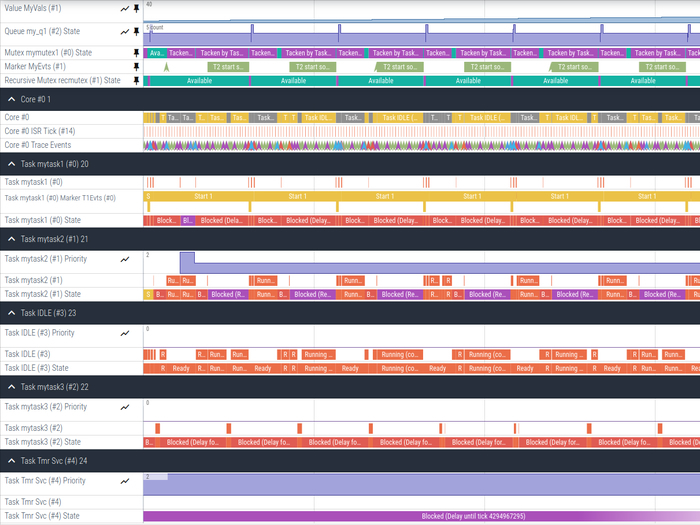
A small embedded systems tracer with support for bare-metal and FreeRTOS-based targets. Targets the Perfetto trace viewer.
PATCH-IT
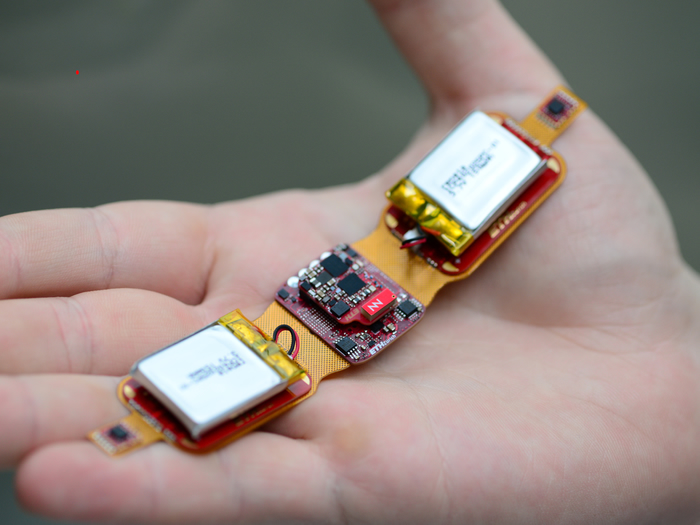
A modular chest-patch with integrated PPG, ECG, bio impedance, body temperature, and seismocardiographical sensors.
74-Series SAR-ADC
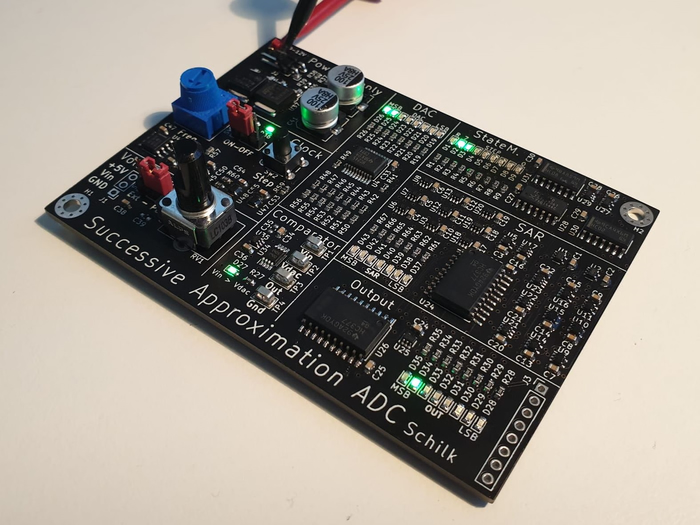
A fully discrete 8bit, 300Hz, successive-approximation ADC controlled by a 74-series logic gate state machine.
SYS Step Attenuator
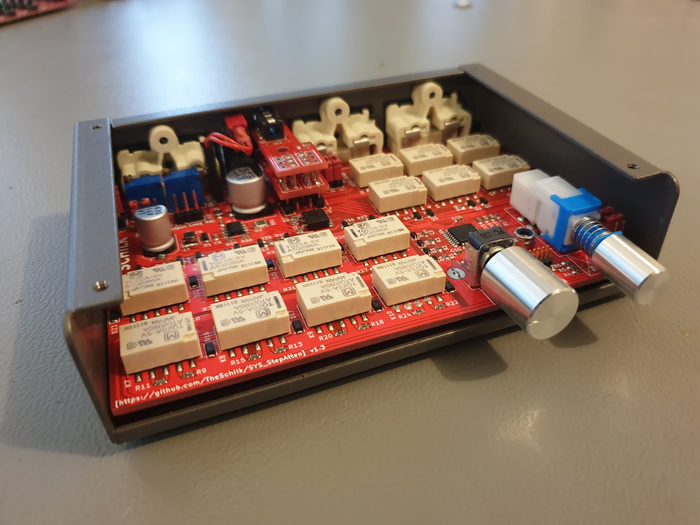
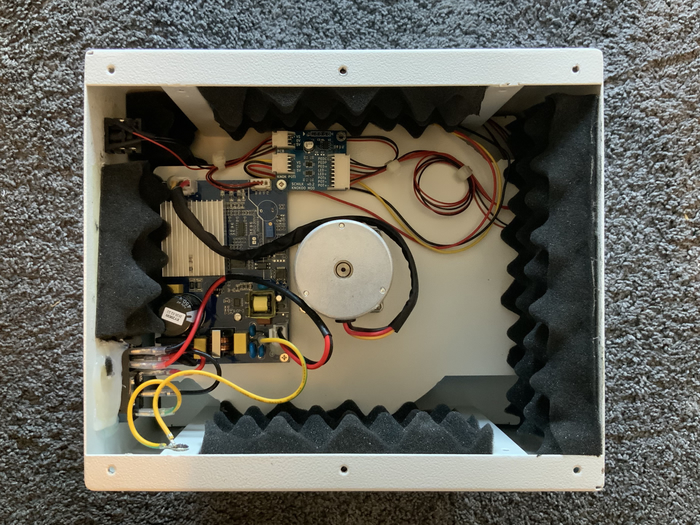
A 127 Step Audio Relay Step-Attenuator and 4-way input switcher designed to fit into a Schiit SYS enclosure.
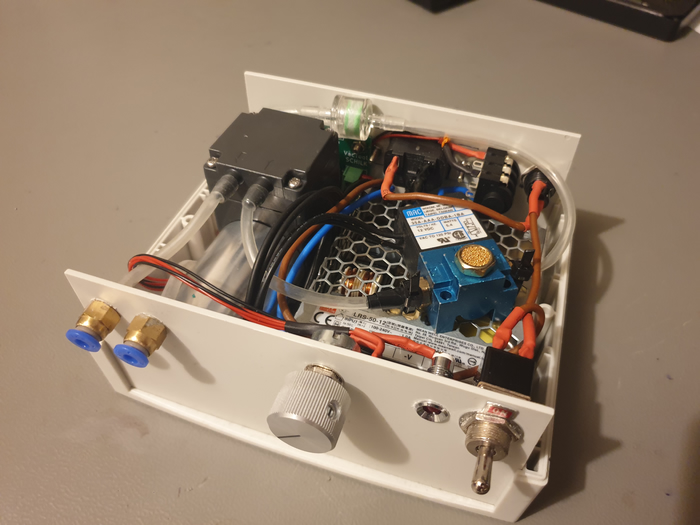
BLELog
A simple python BLE data logger which receives, decodes, stores, and plots characteristic data in real time.
WS2812B SPI Driver
A simple but flexible, unit-tested, cross-platform library to communicate with WS2812B-style LEDs using an SPI peripheral.
Recent Blog Posts
Progressive encoding and decoding of 'repeated' protobuffer fields.
Saturday, 24 January 2026I have found Google's Perfetto trace viewer to be a really useful tool to visualize arbitrary time-based traces by converting them into the protobuffer-based format that Perfetto uses. This is how both Tonbandgerät and CircumSpect work.
Especially with CircumSpect, the traces I am generating quickly reach into the
millions of TracePacket messages, and upwards of a gigabyte in size. This
makes bundling them all into a single Trace message that gets encoded or
decoded in a single pass infeasible, which lead me to dig into the encoding
scheme to manually implement a streaming encoder and decoder.
Working with external warnings and diagnostics in NVIM.
Tuesday, 20 January 2026 Tags: nvim, rtlCompilers and tools in the VLSI and RTL world often produce a very large number of warnings and errors when run. I was interested in being able to quickly see all and navigate these diagnostics directly in (Neo)Vim.
This is easily achievable using the :make command and compiler plugins, or by
manually generating diagnostics with a lua script.
Managing project-specific NVIM configuration.
Monday, 19 January 2026 Tags: nvimWhile my neovim configuration works out of the box for most of my projects, I have increasingly encountered situations where I need to adjust certain aspects on a per-project basis.
As with anything related to neovim configuration there are about 50 different ways this can be achieved, and because neovim is usually configured with executable code instead of declarative config files, a few gotchas that might not be immediately obvious.
Read More...