AI is transforming the software landscape, with many organizations integrating AI-driven workflows directly into their applications or exposing their functionality to external, AI-powered processes. This evolution brings new and unique challenges for automated testing. Large language models (LLMs), for example, inherently produce non-deterministic outputs, which complicate traditional testing methods that rely on predictable results matching … continue reading

AI promised to simplify project management. In practice, it often did the opposite. Instead of fewer tools and clearer execution, teams now juggle “AI add-ons” layered onto fragmented chat platforms, task trackers, and reporting systems that were never designed to work together. The result is familiar: constant context switching, duplicated effort, and project managers spending … continue reading

The adoption of AI in enterprise organizations is causing an evolution in the practice of strategic portfolio management (SPM). The changes reshaping this — lean portfolio management, shorter application delivery cycles and the rise of agentic AI — are redefining how organizations align investment with execution. Many organizations that have brought AI into their operations … continue reading

In an increasingly interconnected business world, being able to connect business intelligence (BI) tools to internal applications or data sources is a must. Fortunately, much of the industry has standardized around REST APIs, which provides a starting point for making these connections, but it’s not a perfect system as it stands today. Progress Principal Sales … continue reading

The drive for innovation behind Lightning Chart – and its upcoming data analytics and dashboard solution, Dashtera – is rooted in the history of the company’s founder, Pasi Tuomainen. Though his family had an established electrical company in Finland — Pasi’s passion was always software. He found himself drawn to creating code rather than installing … continue reading

The year is 2030. And hindsight is truly 20/20. We witnessed AI drive the cost of content creation to zero. Illustrations that once cost hundreds, headshots that cost thousands, and blog posts that once needed full creative teams could suddenly be produced in seconds for pennies. That collapse in creative costs reshaped entire industries. And … continue reading

The value of tools integration and model-based integration was the subject of a recent SD Times Live! webinar with Jeff McCollum, vice president of product management at portfolio management platform provider Planview, and Giorgio Leon-Guerrero, a senior solution consultant. This transcript was edited for length and clarity. SDT: What are the key drivers for interest … continue reading

Companies today want to leverage their data to support business intelligence (BI) initiatives, but without the proper data connectivity processes and tools in place, that data could remain locked in silos. Enter the Progress DataDirect Hybrid Data Pipeline (HDP) connectivity solution, which allows companies to securely connect cloud and on-premises data to BI tools. The HDP … continue reading

A recent CIO article revealed a startling reality: 31% of employees admit to sabotaging their company’s generative AI strategy. That’s nearly one in three workers actively slowing down, blocking, or undermining progress. Now layer in the math: most AI initiatives involve dozens of employees. That means statistically, almost every project or proof-of-concept is being impacted by one or … continue reading

Organizations are dealing with unprecedented amounts of data, and while this data has the potential to help drive more informed business decisions and facilitate AI projects, data silos can arise and prevent companies from realizing the true potential of their data. “Integrating diverse data sources requires not only bridging differences in data models and protocols … continue reading

Getting accurate address data for customers is a challenge on its own, but getting accurate legislative district data add an entirely new level of difficulty on top. There are a number of reasons why developers might need access to that data however, such as advocacy groups trying to do outreach that involves connecting voters to … continue reading

A recent email from ASTQB warned testers that to survive in an AI-driven world, they’ll need “broad testing knowledge, not just basic skills.” The advice isn’t wrong—but it misses the bigger picture. The real disruption is already here, and it’s moving faster than most realize. AI systems like AI Script Generation (AISG) and GENI are already generating, executing, and … continue reading
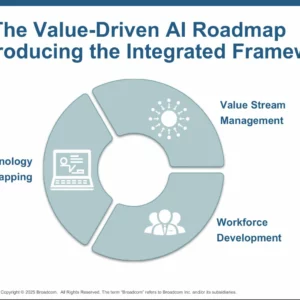
While the industry is racing to develop and implement artificial intelligence into its systems, cultural resistance, a skills gap, and the speed with which AI is changing are just a few of the factors why many AI projects fail. Because of that, most attempts at adopting AI into organizations never make it past the pilot … continue reading
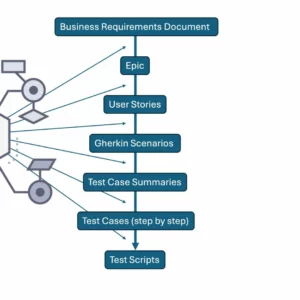
For decades, software testing has been built on a simple idea: humans write tests, machines run them. That model has persisted since the first commercial recorders appeared in the mid-1990s. Testers would record a flow, edit a script, maintain it as the application evolved, and repeat the cycle endlessly. Tools improved incrementally, but the basic … continue reading