
Humanity's Next Chapter

The HumanWare Project

Humanity's Next Chapter

Image

Welcome to The HumanWare Project – a channel that takes you to the frontier of where human capability meets technological innovation.

Through weekly conversations with pioneering scientists, longevity experts, and visionary innovators, we explore how emerging technologies can amplify – not replace – what makes us fundamentally human.

From groundbreaking neuroscience to transformative wellness discoveries, each episode illuminates new pathways for human flourishing in our rapidly evolving world.

About Méline Liu

The HumanWare Project’s founder and host, Méline Liu, believes the future is worth getting excited about – and she’s created a space for you to discover why.

Through fascinating conversations with some of the world’s leading minds, she guides listeners to the edge of human potential, combining her sharp lens as a technology investor with an endless curiosity about our species’ next evolutionary leap.

Latest episodes

TRAILER

From Loss to Purpose: The Origin of The HumanWare Project

What happens when personal loss transforms into a mission for health and longevity?

In this deeply personal episode, Méline Liu shares the story of her grandmother and the moment that ignited her purpose and became the seed for The HumanWare Project.

Through grief, reflection, and discovery, Méline found a calling: to explore how science, health, and philosophy can guide us toward living with greater vitality and meaning.

EPISODE 57

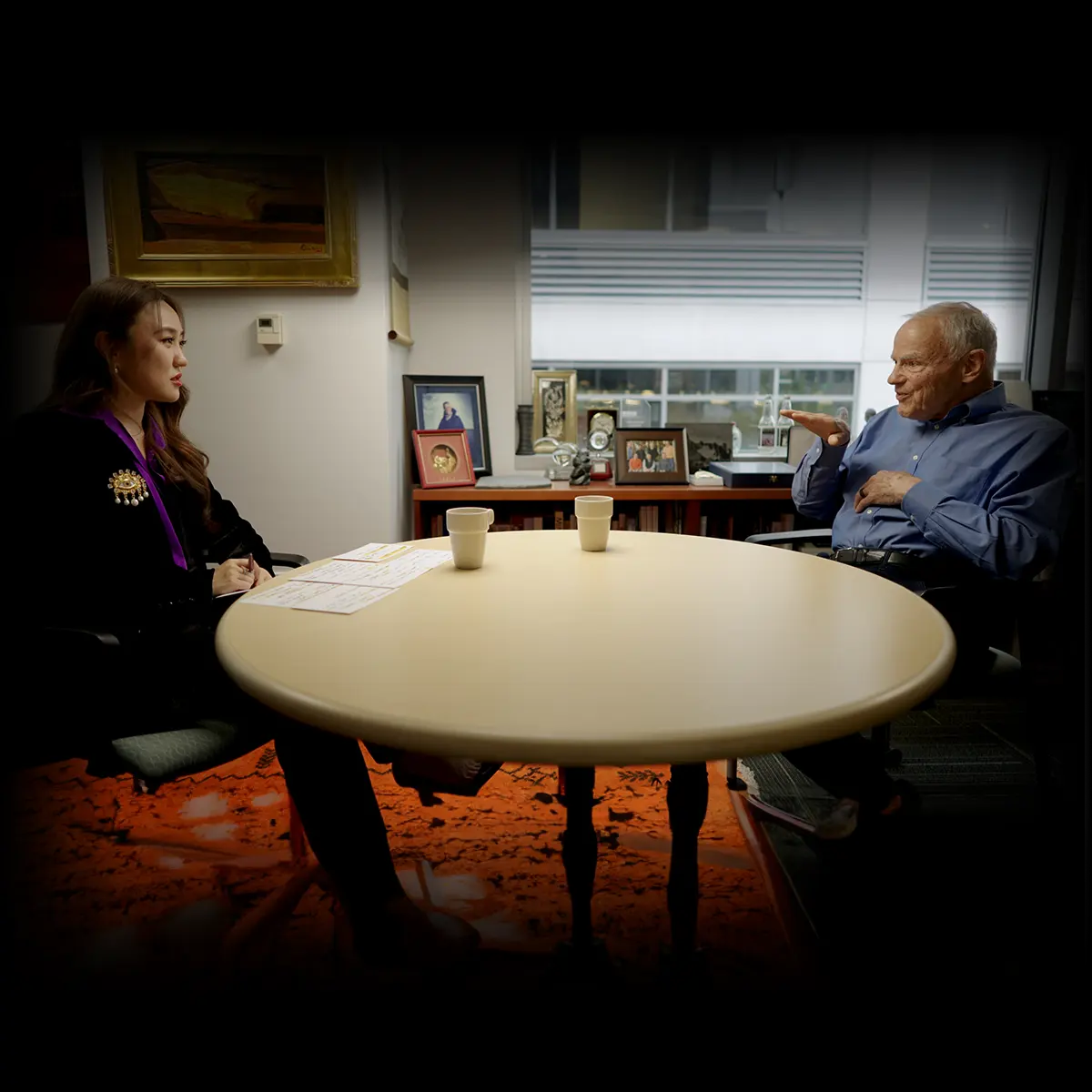
He Was Rejected 9 Times - Then Built World-Changing Medicine

Dr. Robert Langer discusses how he approaches scientific research, entrepreneurship, and the process of turning ideas into real-world technologies.

Read more

Drawing from decades of experience in medicine, engineering, and company building, he explains why asking the right questions matters more than having immediate answers, and how progress in health technology often happens slowly and unevenly. Dr. Langer is known as the “Edison of Medicine” he has authored more than 1,500 scientific papers and is the most-cited engineer in history.

As Co-Founder of Moderna, he helped discovered the COVID-19 vaccine and has over 45 honorary degrees from universities around the world. This discussion covers the practical realities of working in research labs, the challenges of translating science into products, and the role startups play in bringing new technologies to patients. Langer reflects on early skepticism toward his work, what persistence looks like in practice, and how failure shapes both scientific and commercial outcomes. Rather than focusing on predictions or trends, this episode looks at how decisions are made over long periods of time – in research, in companies, and in careers.

The conversation is grounded in experience and focuses on how useful technologies are built, evaluated, and sustained. This episode will be relevant to researchers, founders, students, and anyone interested in how science and business intersect in practice.

EPISODE 56

What CES Reveals About the Future of Health, AI, and Being Human

CES is often framed as a race toward faster, smarter, more powerful technology. But beneath the noise, a quieter shift is happening – one that asks a more important question: who are these technologies actually for?

Read more

In this second chapter from CES, The HumanWare Project explores health and AI innovations designed not just to optimise performance, but to support real human lives. From brain-based noise cancellation and women’s health wearables to mobility robotics and assistive AI.

Rather than asking how quickly technology is advancing, we pause to reflect on something deeper: how these tools shape our bodies, our autonomy, and our sense of dignity. What happens when innovation is measured not by scale or speed, but by its ability to reduce suffering and restore agency.

EPISODE 55

CES 2026 Made One Thing Clear: The Body Is the Next Interface (Part 1)

In this on-the-ground episode from CES 2026, The HumanWare Project explores what today’s emerging technologies quietly reveal about where innovation is heading.

Read more

From robotics and diagnostic imaging to health monitoring and ageing-related tools, a pattern begins to surface: technology is moving closer to the human body, not farther away. We look at the newest technologies looking to integrate into real human needs.What problems are being solved, and which ones are being avoided? Here at some of the ones to watch for 2026.

EPISODE 54

What If Your Home Could Detect Illness Before You Do?

What if the walls around you could quietly help protect your health?

Read more

In this episode of The HumanWare Project, we explore a radical shift in how health can be understood, monitored, and supported – without wearables, cameras, or invasive tools.

Dina Katabi, Professor of Electrical Engineering and Computer Science at MIT, reveals how everyday signals already moving through our homes can be used to detect subtle changes in breathing, sleep, mobility, and overall health. This conversation challenges the assumption that medical insight must come from hospitals or devices attached to the body.

Katabi examines the promise, and responsibility, of remote health monitoring: earlier detection, greater dignity for ageing populations, and a future where care is continuous rather than reactive. We also confront the ethical questions around privacy, consent, and trust that inevitably arise when technology becomes part of our living spaces.

EPISODE 53

Sergey Young on Healthspan, Biotech, and the Future of Ageing

Longevity is often framed as a race toward immortality – more supplements, more data, more promises. But what if that framing is the problem?

Read more

In this episode of The HumanWare Project, longevity investor and advocate Sergey Young offers a grounded, clear-eyed perspective on what longevity actually means – and what it doesn’t. Drawing from his work in biotech, health innovation, and long-term investing, Sergey explores the difference between lifespan and healthspan, why most people misunderstand aging, and how to think about longevity without falling for exaggerated claims or future fantasies.

Rather than prescribing routines or selling certainty, this conversation invites a deeper question: how do we build a healthier relationship with time, health, and progress?

This episode is for anyone feeling overwhelmed by the longevity conversation – and looking instead for clarity, realism, and a framework that makes sense in the present, not just the future.

EPISODE 52

Alzheimer’s Isn’t Inevitable - What Top Harvard Scientist Now Knows About Prevention

Is Alzheimer’s truly an unavoidable part of ageing – or is our understanding evolving?

Read more

In this episode of The HumanWare Project, neuroscientist Dr. Rudy Tanzi explores what modern brain science is revealing about Alzheimer’s risk, resilience, and prevention. Drawing from decades of research, he explains how genetics, lifestyle, sleep, inflammation, and cognitive engagement interact in ways we’re only beginning to understand.

Dr .Tanzi explains how Alzheimer’s develops, why it’s not solely a genetic destiny, and which everyday factors appear to play a meaningful role in long-term brain health as well as what supplements to take to reduce likelihood of developing the diseases.

EPISODE 51

This Data Proves You Don’t Have to Get Weaker as You Age

Emily Capodilupo, Senior Vice President of Research Algorithms and Data at WHOOP, explains how wearable technology is redefining how we understand aging and human performance.

Read more

She discusses how data-driven feedback loops – from sleep quality to recovery metrics – allow people to make subtle, personalised adjustments that dramatically improve their well-being.

She emphasises that longevity isn’t just about living longer, but living better now: when people start acting on the insights from wearables, they often feel better within days. WHOOP’s platform helps users see how small behavioural changes—like improving sleep, managing stress, and balancing strain, affect long-term health outcomes.

Emily also challenges the assumption that physical decline is inevitable with age. She shares that, by understanding and optimising key recovery markers, people can maintain or even enhance performance over time. The future of health, she argues, lies in empowering individuals with real-time physiological awareness, bridging science, behaviour, and technology to slow biological ageing.

EPISODE 50

The Neuroscientist Rewiring How We See the Brain

What if we could actually see how the brain works, in motion, in colour, in real time?

Read more

In this episode, MIT neuroscientist Edward Boyden reveals how his groundbreaking inventions, from light-based brain control (optogenetics) to expansion microscopy, are transforming how we understand the mind.

Through thoughtful conversation, Ed explores how mapping and manipulating neural circuits could unlock the mysteries of emotion, decision-making, and consciousness itself.

EPISODE 49

I Spoke to 100 Longevity Experts - Here’s What You Must Do in 2026

What happens when you spend a year speaking with over a hundred of the world’s leading longevity experts?

Read more

n this special New Year resolutions episode, Méline Liu distills a year of insight and exploration into three science-backed practices that can transform your health and mindset for 2026.

The HumanWare team uncovers the universal truths that connect nutrition, movement, and emotional wellbeing – revealing how small daily actions can add years of quality life.

This conversation is not about unrealistic resolutions, but about evidence-based change rooted in clarity and compassion. Whether you’re seeking to improve your energy, sleep, or focus, these expert-backed insights will help you step into 2026 with purpose and strength.

EPISODE 48

Why ADHD Is Rising: The Overlooked Factors Shaping the Modern Brain

Why are rates of ADHD and attention-related challenges increasing across children, teens, and even adults?

Read more

In this grounded and eye-opening conversation, neuroscientist and nutritional researcher Dr. Rachel Gow unpacks the lesser-known factors influencing how the modern brain develops, regulates attention, and responds to an increasingly complex world.

Drawing on decades of research, she explores the interplay between nutrition, early brain development, environmental exposures, inflammation, sleep, and stress and how these elements collectively shape behaviour and cognition far more than most people realise. Rather than reducing ADHD to a single cause or simplistic narrative, Dr. Gow explains why it emerges from a web of biological and environmental influences that begin long before a child enters the classroom.

This episode invites viewers to rethink common assumptions, understand the developmental needs of neurodiverse brains, and consider how modern food environments and lifestyle patterns may be quietly shaping attention in an age of overstimulation.

EPISODE 47

Your Brain Is Sabotaging Your Leadership (And How to Train It)

What if the real barrier to effective leadership isn’t strategy, skill, or experience – but the way your brain responds under pressure?

Read more

In this conversation, Jason Leavy breaks down the emerging field of neuroscience-informed leadership and explains how leaders can strengthen clarity, resilience, and decision-making in a rapidly changing world.

We explore why modern leadership has become so cognitively demanding, how AI is reshaping the mental load placed on executives, and what the science reveals about attention, stress, emotional regulation, and focus.

Jason shares the practical principles he teaches to founders, CEOs, and high-pressure teams – including how to recognise hidden neural patterns and retrain them for more confident leadership.

EPISODE 46

Could This Technology Actually Train Your Brain to Focus?

What if focus could be trained – not through willpower, but through direct communication with your own brain?

Read more

In this HumanWare Project episode, Méline Liu works with Sophie Hascher, founder of Brain Flow Elite, to explore how neurofeedback technology helps people enter deeper states of focus, calm, and mental clarity.

Using EEG sensors, Sophie visualises the brain’s electrical activity in real time – revealing how stress, emotion, and awareness shift moment to moment. Through guided exercises and feedback loops, the mind begins to learn from itself, building resilience and control in the process.

This is a journey into the science of self-regulation and the promise of neurotechnology – where neuroscience meets human potential.

Discover what happens when focus becomes something you can actually see, train, and transform from within.

EPISODE 45

The Science of Calm: How Neurofeedback Rewires an Anxious Brain

What if your brain could learn to stay calm, the same way your body learns to grow stronger?

Read more

In this episode of The HumanWare Project, Méline sits down with neurofeedback specialist Sophie Hascher reveals how we can train our brain to reach its flow state through a variety of different methods.Through data-driven brain mapping, mindful awareness, and lifestyle adjustments like sugar reduction, Sophie explains how neuroplasticity allows us to reshape the patterns that keep us stuck in anxiety, distraction, or stress.

Together, we explore what happens inside the brain when we enter a flow state, how dopamine drives addiction and motivation, and why true productivity begins by allowing ourselves to slow down.

This is a grounded look at the intersection between neuroscience, mindfulness, and behaviour change, and a reminder that mental clarity isn’t something we wait for. It’s something we can train.

EPISODE 44

Inside the Lab Growing the Future of Medicine - Stem Cells

In this episode, Méline Liu visits Cellcolabs in Sweden, a biotech company turning decades of stem cell research into real-world innovation.

Read more

Guided by the Chief Production Officer, Lina Sörvik, we follow every step of how mesenchymal stem cells (MSCs) are created: from bone marrow donation by young volunteers, to cell isolation, growth, and expansion inside sterile biosafety cabinets.

Lina explains how each batch begins with a single donation that can yield billions of cells, carefully watched under microscopes until they cover the surface of their growth vessels. We learn how GMP-certified procedures, sterile environments, and months of technician training ensure the purity and safety of every vial produced.

These cells aren’t designed to replace tissue: they signal the body to repair itself, reducing inflammation and supporting regeneration.

Through this rare look behind the glass, The HumanWare Project reveals the precision, patience, and quiet artistry inside the science of growing human cells, and the promise they hold for the future of medicine.

EPISODE 43

Stem Cells Could End Chronic Disease as We Know It

What if we’re standing at the next great turning point in modern medicine: a “before and after” moment like antibiotics?

Read more

In this episode of The HumanWare Project, Dr. Mattias Bernow, CEO of Cellcolabs, shares how stem cell research is unlocking an entirely new frontier in health. From regenerative therapies and chronic disease prevention to the dream of healthy ageing, this conversation explores how mesenchymal stem cells could transform the way we think about healing and longevity.

You’ll learn how stem cells work and the research that Cellcolabs is doing to fight chronic diseases, why scientific integrity matters, and what safeguards every patient should look for before considering treatment.

Katarina le Blanc’s Bio

Katarina le Blanc’s Papers:

MSC mechanisms: Le Blanc, Katarina and Krampera, Mauro, Mesenchymal Stromal Cells: Putative Microenvironmental Modulators Become Cell Therapy. Cell stem cell. May 2021.

Immunomodulation in GvHD: Boberg E, L von Bahr, K Le Blanc, et al. Treatment of chronic GvHD with mesenchymal stromal cells induces durable responses: A phase II study. STEM CELLS Transl Med. 2020;1–13.

**This content is for informational purposes only and should not be considered medical advice. Always consult with a qualified healthcare professional before making any health or lifestyle changes.**

EPISODE 42

Inside the Futuristic Health Centre Redefining Medicine

What if medicine wasn’t just about treating illness, but preventing it before it even begins?

Read more

In this HumanWare Project episode, we step inside Zoī, a groundbreaking health centre in Paris that blends predictive medicine, architecture, and human-centred design to reimagine the future of care.

Hidden behind an unmarked door near Place Vendôme, Zoī is a 20,000-square-foot sanctuary created to calm the senses and restore balance. With softly lit corridors, volcanic stone pools, and oval examination suites where technology disappears from sight, the space feels more like a retreat than a clinic.

But behind this serene architecture lies advanced science – predictive algorithms, behavioural tools, and personalised health pathways designed to help people live longer, healthier lives. Join us as we explore how architecture, science, and experience come together to redefine health and longevity in the 21st century.

Subscribe to The HumanWare Project for more explorations at the intersection of health, design, and human potential.

**This content is for informational purposes only and should not be considered medical advice. Always consult with a qualified healthcare professional before making any health or lifestyle changes.**