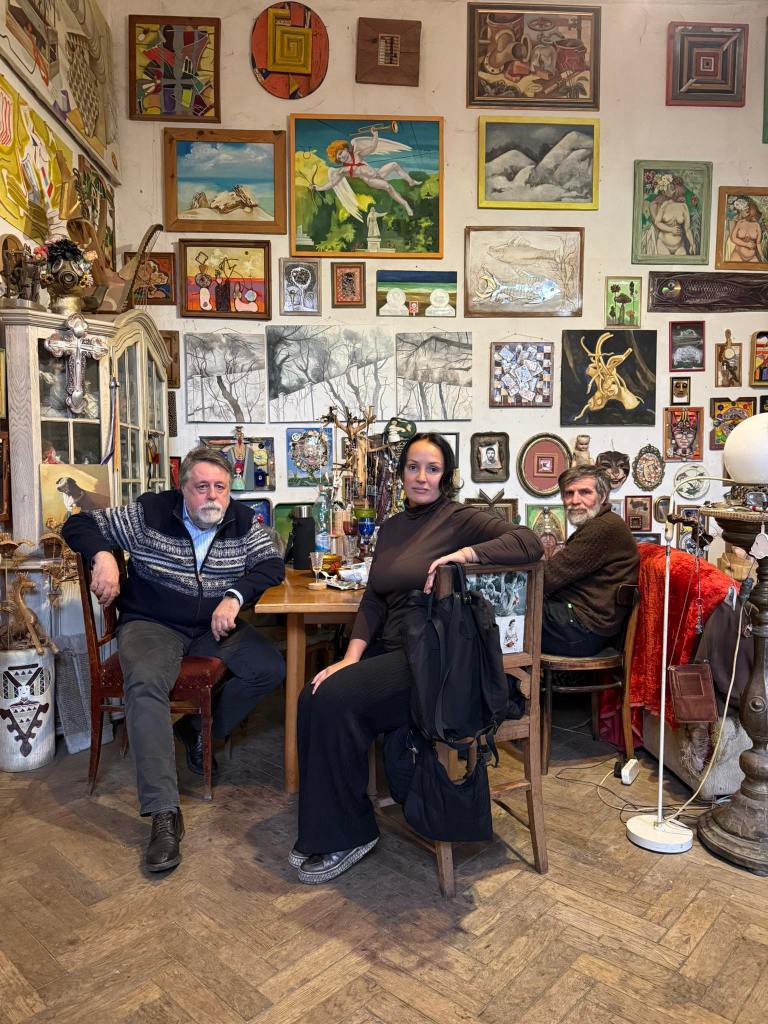
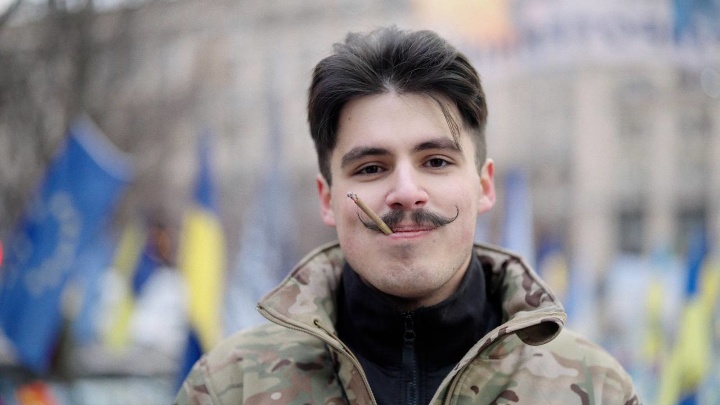
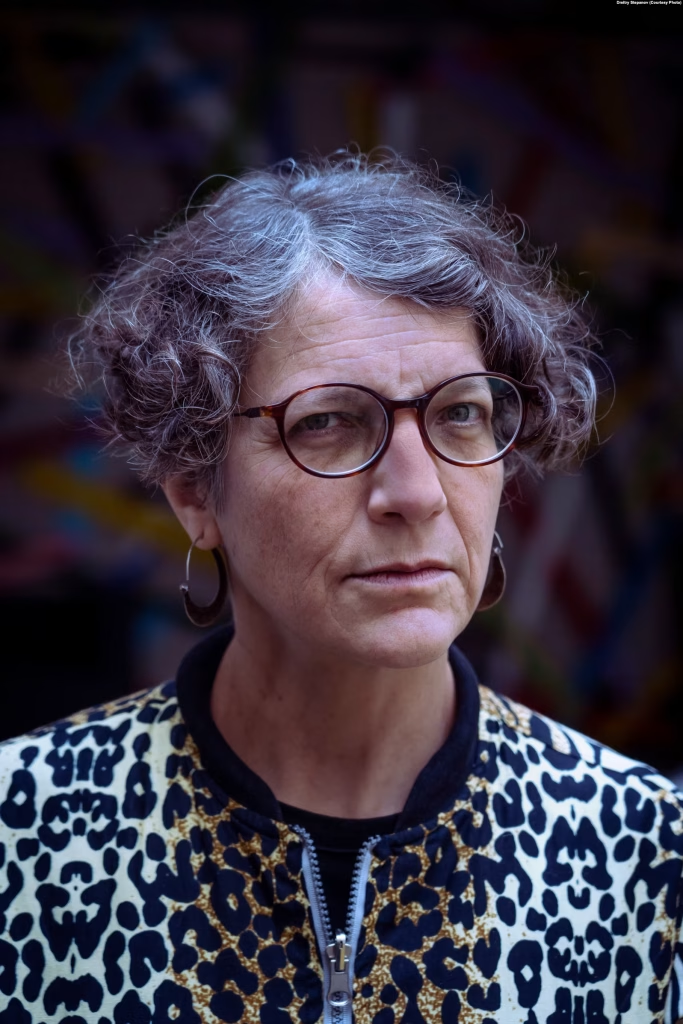
The name of the beautiful young woman in this photo, taken a month ago in Odessa, is Katya, and she is the mother of a wonderful young man, Timofey Anufriev, a Russian passport holder who went to war to defend Ukraine. Today we received news that he has been killed. You can learn more about him in the film to which I’ve linked in the comments. And try to think hard about [the difference between mere] words and real actions… May the memory of the heroes live forever!
The Insider, “‘War is like playing chess with death’: Confessions of a philosophy student from the RVC” (in Russian, no subtitles)
Until recently, 21-year-old Timofey Anufriev (son of the renowned artist Sergei Anufriev) was an ordinary university student in Petersburg. For over a year, though, he has been fighting for Ukraine in the ranks of RVC (Russian Volunteer Corps). Our film crewmet with him in Kiev. Timofey talks about why he made this decision and about war and death in this report by The Insider.
Source: The Insider (YouTube), 20 March 2025. Annotation translated by the Russian Reader. There is an egregiously machine-translated and machine-dubbed version of this same film which can be viewed here. |||| TRR
Timofey Anufriev
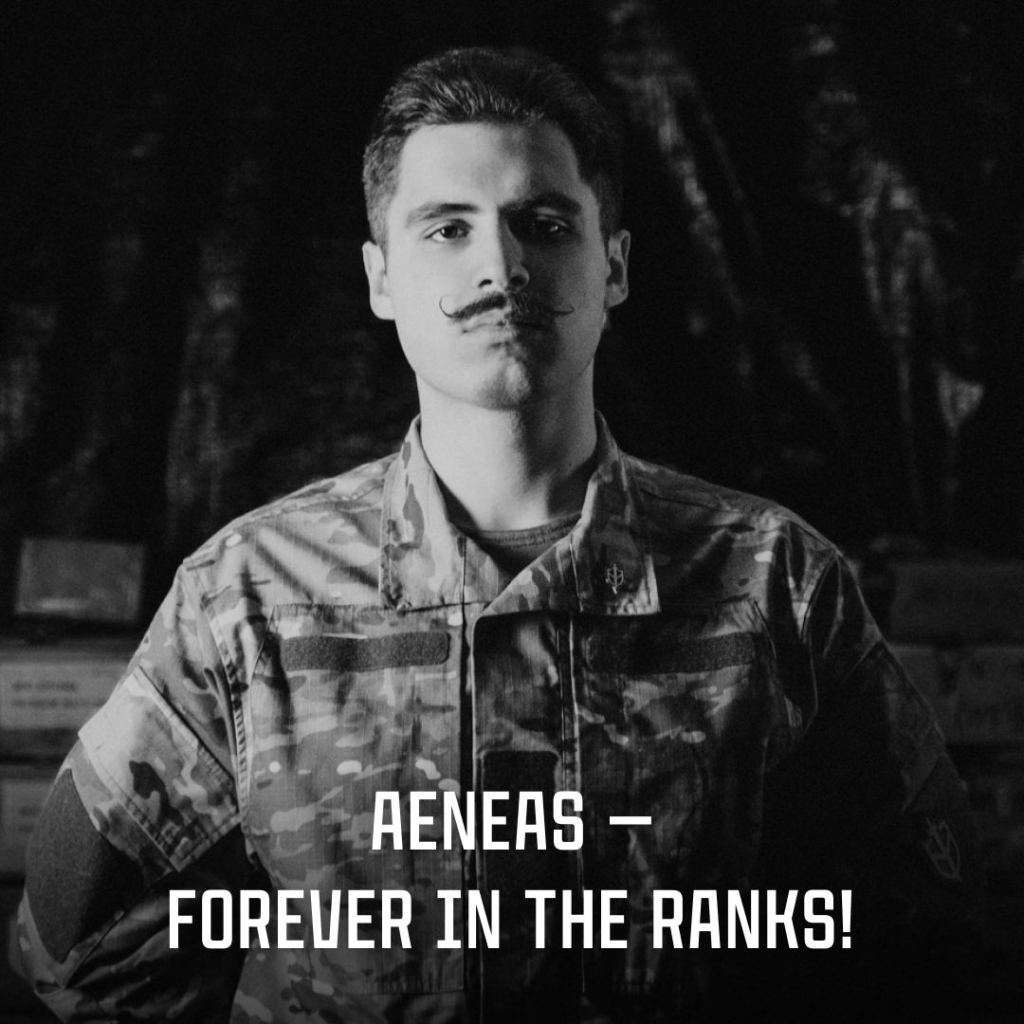
[The] 22-year-old Russian-Ukrainian fighter Timofey ‘Aeneas‘ Anufriev was kіlled in action while defending his second homeland.
“Timofey participated in many of the Corps‘ operations: assaults, cleanups, and capturing prisoners. He lived and dіеd like a true knight and poet, in a blaze of fiery glory! <…> Forever in the RVC, forever in the ranks!” the Corps wrote on its Telegram channel.
Anufriev served as a stormtrooper and had the call sign ‘Enei’ [Aeneas]. He was awarded the medal ‘For Assistance to Military Intelligence of Ukraine.’
“The son of a well-known conceptual artist [Sergei Anufriev], born in Moscow and raised in Odesa, Enei regarded both Ukraine and Russia as countries close to him. Highly intelligent and well-educated, open and kind, he sought to contribute to the Corps not only in combat but also beyond the battlefield.
From an early age, Enei was familiar with the cultural circles of two capitals. Unlike the detached, insular segment of the artistic elite that exists removed from reality, he was deeply concerned about the fate of his people.
The outbreak of the war coincided with his first year at university in Saint Petersburg, where he studied philosophy and planned to become a public intellectual. He was disturbed by the way many around him in Russia pretended that nothing was happening. As a result, he decided first to leave the country and later to join the Russian Volunteer Corps.
“There is always a choice,” Enei believed—and he made one guided by his sense of honor. Throughout his combat service, he served as an assault infantryman, one of the most dangerous roles in war.
He took part in numerous operations, including assaults, clearing operations, and the capture of enemy personnel. He lived—and died—in accordance with his convictions.” wrote RVC on its nocturnal post.
The son of a famous conceptual artist, he was born in Moscow and grew up in Odessa. Aeneas considered Ukraine and Russia to be his home countries. An exceptionally intelligent and educated, open and kind person, he sought to benefit the Corps not only in battle, but also beyond it.
From childhood, Aeneas was familiar with the cultural bohemian scene of the two capitals, but he was not part of the abstract and “airy” artistic elite that exists detached from reality. On the contrary, he was deeply concerned about the fate of his people.
The war began during his first year at university in St. Petersburg, where he studied philosophy and planned to become a public philosopher. He was disgusted by the fact that many of his peers in the Russian Federation pretended that nothing was happening. Therefore, he decided to first leave Russia and then join the Russian Volunteer Corps.
“There is always a choice,” Eney believed, and he made a choice dictated by honor. He spent his entire military career as an assault soldier — the most dangerous job in the war.
He participated in many operations of the Corps: he stormed, cleared, and took prisoners. He lived and died like a true knight and poet, in the rays of fiery glory!
He was awarded the medal “For Assistance to Military Intelligence of Ukraine.”
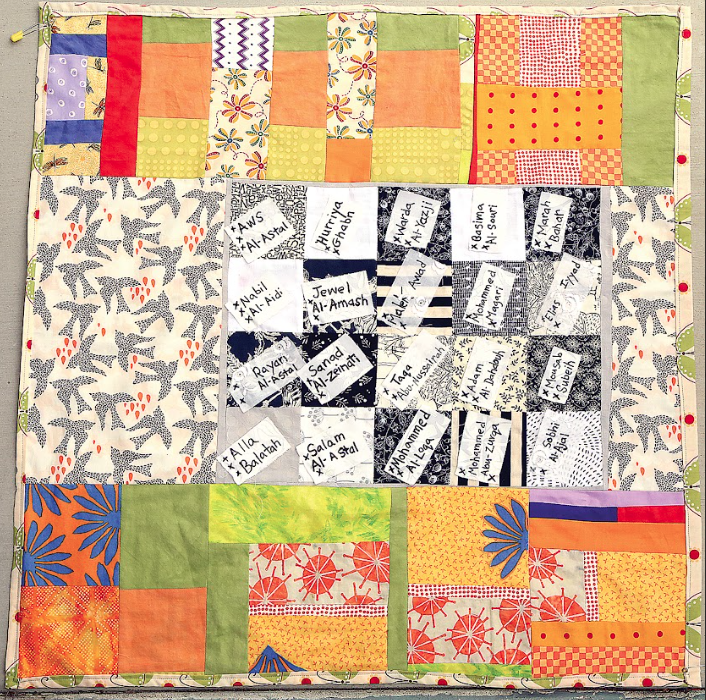
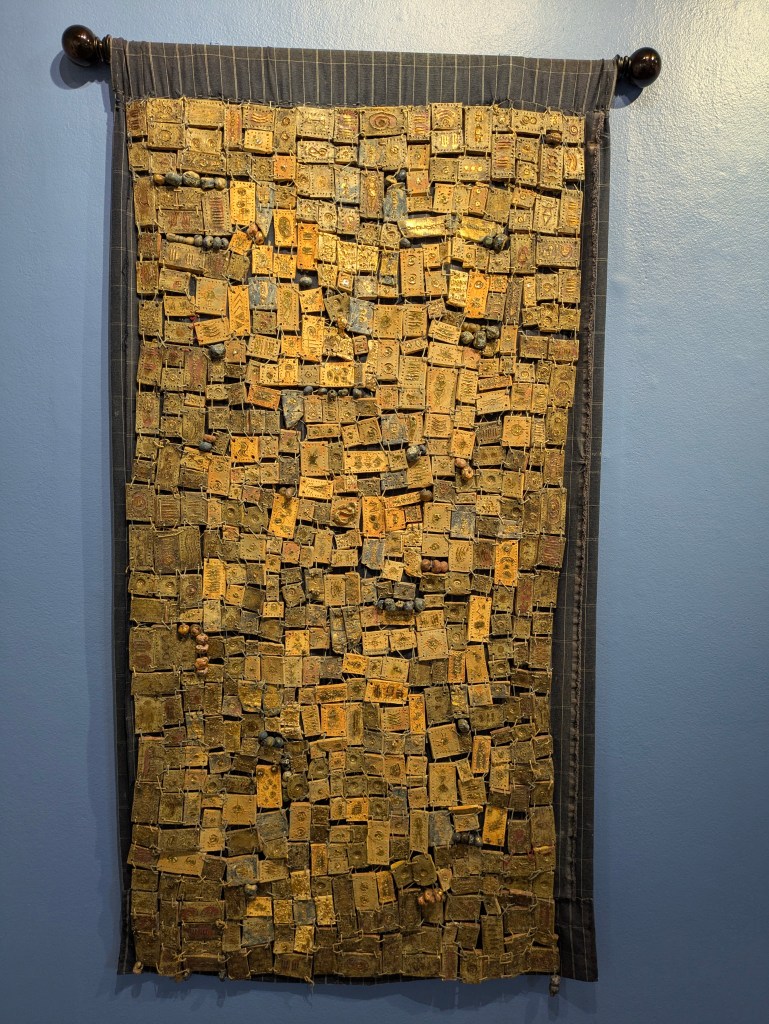
LOCAL INSPIRATION of the day. This quilt by Joleigh Kambic is part of a larger quilt titled “Babies in Gaza Who Never Made It To Their First Birthday.” The quilt is composed of smaller quilts created by nearly 40 quilters from across the Monterey Bay, commemorating the children who were killed in the Israel-Hamas war. It is on display through Oct. 3 at the Unitarian Universalist Church of the Monterey Peninsula, 490 Aguajito Road in Carmel.
Coeleen Kiebert, Ode to the Women of Ukraine, May They Return to Quilt Their Beauty Again Soon, 2021. Ceramic, indigo linen. Pajaro Valley Arts, Watsonville, California, 26 April 2025. Photo by the Russian Reader
Donbas hostages savagely tortured for ‘confessions’ in 2019 sentenced in Russia to 24 years (Kharkiv Human Rights Protection Group, April 25th)
Huge sentences and videoed ‘repentance’ in Russia’s mounting terror in occupied Zaporizhzhia oblast (Kharkiv Human Rights Protection Group, April 24th)
“Relatives said: people like you should be killed.” The story of a woman who survived torture and fled occupied Mariupol twice (Ukrainska Pravda, April 24th)
‘Wiping out neighborhood after neighborhood’ Russia pounds Ukraine’s Pokrovsk, forcing civilians to flee under fire. For many, it’s not the first time. (Meduza, April 21st)
Darya Kozyreva gets real prison term for Taras Shevchenko poem and opposition to Russia’s war against Ukraine (Kharkiv Human Rights Protection Group, April 22nd)
The Lost Army: War veterans could pose a problem for Putin’s Russia, just like they did for interwar Germany (The Insider, April 21st)
Meeting with Representatives of Ukrainian Roma in Brussels (Kharkiv Human Rights Protection Group, April 25th)
Experts of the Committee on the Elimination of Racial Discrimination Commend Ukraine’s Presence Despite the Prevailing Circumstances, Raise Questions on the Treatment of Ukraine’s Indigenous Peoples and the Roma Population (UNHCR, April 24th)
KYIV, Ukraine (AP) — A peace proposal by the Trump administration that includes recognizing Russian authority over Crimea shocked Ukrainian officials, who say they will not accept any formal surrender of the peninsula, even though they expect to concede the territory to the Kremlin, at least temporarily.
Giving up the land that was illegally annexed by Russia in 2014 is also politically and legally impossible, according to experts. It would require a change to the Ukrainian constitution and a nationwide vote, and it could be considered treason. Lawmakers and the public are firmly opposed to the idea.
“It doesn’t mean anything,” said Oleksandr Merezkho, a lawmaker with Ukrainian President Volodymyr Zelenskyy’s party. “We will never recognize Crimea as part of Russia.”
Unlike a territorial concession, a formal surrender would permanently relinquish Crimea and abandon the hope that Ukraine could regain it in the future.
The Ukrainian public largely understands that land must be ceded as part of any armistice because there is no way to retake it militarily. Polls indicate a rising percentage of the population accepts such a trade-off.
But much of the public messaging about land concessions has suggested that they are not necessarily permanent, as when Kyiv Mayor Vitalii Klitschko told the BBC recently that Ukraine may need to temporarily give up land as part of a peace deal.
Saying otherwise would effectively admit defeat — a deeply unpopular move, especially for Ukrainians living under Russian occupation who hope to be liberated and reunited with their families one day. It also would call into question the sacrifices made by tens of thousands of Ukrainian service members who have been killed or wounded.
U.S. President Donald Trump underscored the Crimea proposal in an interview published Friday in Time magazine: “Crimea will stay with Russia. Zelenskyy understands that, and everybody understands that it’s been with them for a long time.”
Asked by reporters on Sunday if Zelenskyy was ready to give up Crimea, Trump said, “Oh, I think so. Crimea was 12 years ago. That was President Obama that gave it up without a shot being fired.”
His comments offered the latest example of the U.S. leader pressuring Ukraine to make concessions to end the war while it remains under siege. Trump has also accused Zelenskyy of prolonging the war by resisting negotiations with Russian President Vladimir Putin.
Crimea, a strategic peninsula along the Black Sea in southern Ukraine, was seized by Russia years before the full-scale invasion that began in 2022. The Russian takeover followed large protests that ousted former Ukrainian President Viktor Yanukovych, who had refused to sign an association agreement with the European Union.
In the lead-up to peace talks, Ukrainian officials told the Associated Press for months that they expect Crimea and other Ukrainian territory controlled by Russia to be among Kyiv’s concessions in the event of any deal. But Zelenskyy has said on multiple occasions that formally surrendering the land has always been a red line.
Elements of Trump’s peace proposal would see the U.S. formally recognizing Crimea as Russian and de facto accepting Moscow’s rule over occupied Ukrainian territories, according to a senior European official who spoke on condition of anonymity to discuss sensitive diplomatic discussions.
Whether the U.S. formally recognizes Crimea as Russian is out of Zelenskyy’s hands. But many obstacles prevent the Ukrainian president from doing so, even under immense pressure. He cannot unilaterally sign any such proposal, and he could be reprimanded by future governments for even attempting it, experts said.
Ukraine began to accept that it would not regain its lost territories after the failure of the country’s 2023 summer counteroffensive. From then on, the Ukrainian military concentrated on defending the territory it still held.
In return for territorial concessions, Ukraine wants robust security guarantees that ideally would include NATO membership or concrete plans to arm and train its forces against any future Russian invasion with the pledged support of allies. One scenario envisions European boots on the ground, which Russia rejects.
Zelenskyy has said negotiations over occupied Ukrainian territory will be drawn out and will not likely occur until a ceasefire is in place. In late March, he told reporters after a call with Trump that the U.S. president “clearly understands that legally we will not recognize any territories.”
He said giving up territory would be “the most difficult question” and “a big challenge for us.”
Formal recognition of Crimea would also amount to political suicide for Zelenskyy. It could expose him to legal action in the future, said Tymofiy Mylovanov, president of the Kyiv School of Economics and a former economics minister.
Signing a potentially unconstitutional document could be interpreted as high treason, Mylovanov said.
The Ukrainian government cannot act either. It has no constitutional means to accept a violation of its territorial integrity, and altering the territorial makeup of the country requires a nationwide referendum.
If Ukrainian lawmakers were even to entertain the idea of surrendering Crimea, it would trigger a long, drawn-out legal debate.
“That’s why Russia is pushing it, because they know it’s impossible to achieve,” Mylovanov said.
“Anything related to constitutional change gives so much policy and public communication space to Russia,” he added. “This is all they want.”
Soldiers on the front line say they will never stop fighting, no matter what the political leadership decides.
“We lost our best guys in this war,” said Oleksandr, a soldier in the Donetsk region, who spoke on the condition that only his first name be used in line with military protocols. “We won’t stop until all Ukrainian lands are free.”
Coeleen Kiebert, Ode to the Women of Ukraine, May They Return to Quilt Their Beauty Again Soon, 2021 (detail). Pajaro Valley Arts, Watsonville, California, 26 April 2025. Photo by the Russian Reader
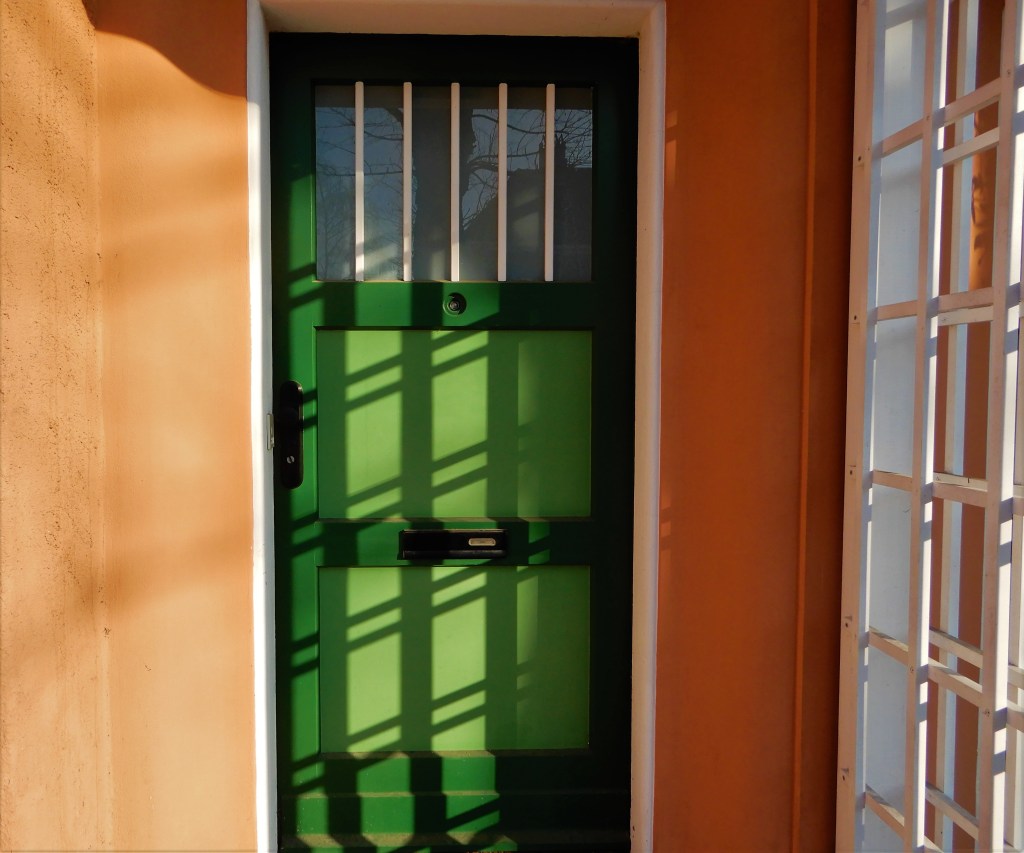
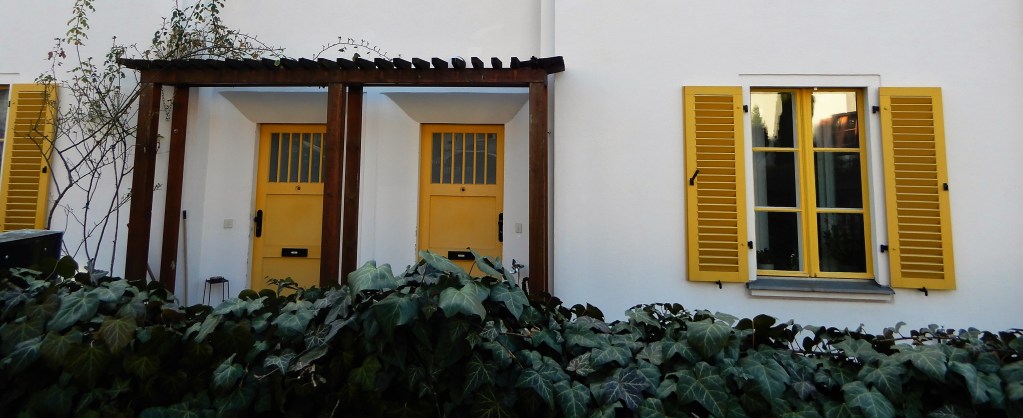
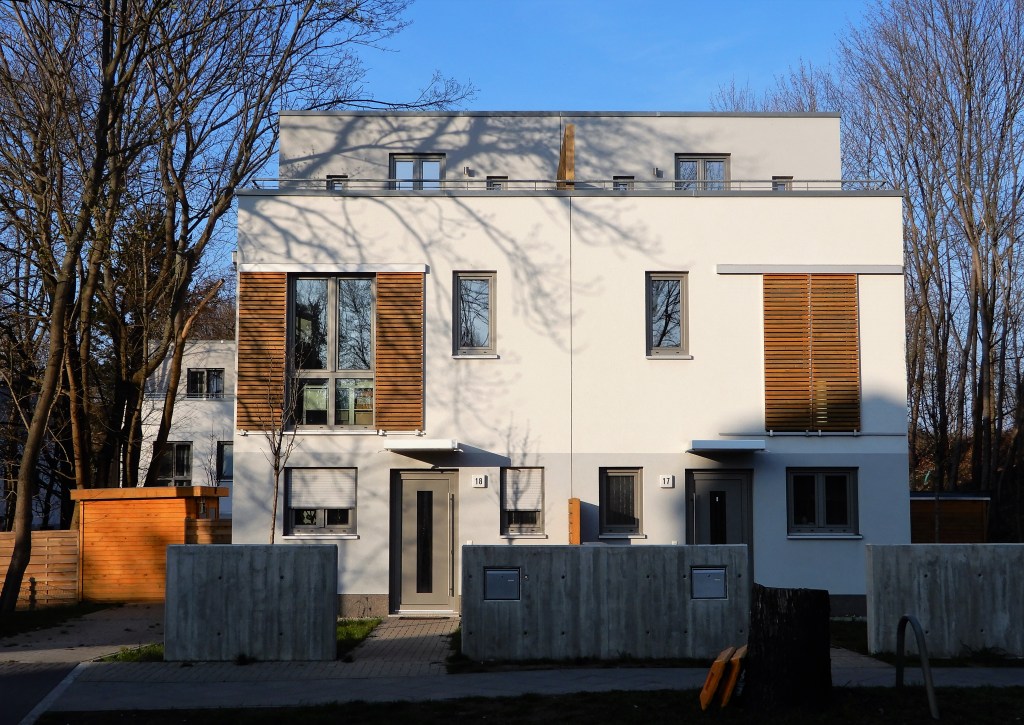
Yesterday was a rare sunny, warm day, so my boon companion and I traveled to the city’s far southeast to walk through Bruno Taut’s Falkenberg Garden City in Berlin-Bohnsdorf. It was like a tiny vision of heaven.
As it happened, it was also a short walk from Max Bel, Franz Clement, and Hermann Muthesius’s Prussian Street Estate, which was also quite handsome and built to a properly human scale.
I’ve noticed Berlin’s modernist housing estates seem to have had a beneficent effect on their neighborhoods, so that even current architects designing new houses and developments there try to get into the Tautian spirit, as it were. The overwhelming impression, however, is that you’re looking at a future we have lost forever.
The Russian Reader, Berlin-Friedrichshain, 30 March 2019
And now we come to this verb “see.” Within fifteen lines it’s been used six times. Every experienced poet knows how risky it is to use the same word several times within a short space. The risk is that of tautology. So what is it that Frost is after here? I think he is after precisely that tautology. More accurately, non-semantic utterance. Which you get, for instance, in “’Oh,’ and again, ‘Oh.’” Frost had a theory about what he called “sentence-sounds.” It had to do with his observation that the sound, the tonality, of human locution is as semantic as actual words. For instance, you overhear two people conversing behind a closed door, in a room. You don’t hear the words, yet you know the general drift of their dialogue; in fact, you may pretty accurately figure out its substance. In other words, the tune matters more than the lyrics, which are, so to speak, replaceable or redundant. Anyway, the repetition of this or that word liberates the tune, makes it more audible. By the same token, such repetition liberates the mind—rids you of the notion presented by the word. (This is the old Zen technique, of course, but, come to think of it, finding it in an American poem makes you wonder whether philosophical principles don’t spring from texts rather than the other way around.)
A charity concert has been held in Paris in tribute to the pianist Pavel Kushnir, who died in detention in Russia. The funds raised were donated to the Paris-based Atelier des artistes en exil (Agency of Artists in Exile), which aids artists who have fled their countries due to war, persecution, and discrimination.
The concert was held at Salle Cortot in Paris. World-renowned pianists Grigory Sokolov and Sergei Babayan performed a program of pieces by Frederic Chopin, Robert Schumann, Franz Schubert, Franz Liszt, and Sergei Rachmaninoff. Tickets for the concert were sold out almost instantly.
“As musicians, we want to voice our support for artists around the world who are persecuted and sometimes forced to leave their native country. Pavel Kushnir chose internal emigration and bravely and unreservedly spoke out against the war. He paid for this with his life. We wholeheartedly support Grigory Sokolov and Sergei Babayan’s November 18 concert in Paris and join them in paying tribute to Pavel, as well as in voicing our solidarity with all artists who are suffering from repression today,” reads a letter in support of the concert, which was signed by Martha Argerich, Daniel Barenboim, Gidon Kremer, Anne-Sophie Mutter, Semyon Bychkov, Paavo Järvi, and many other famous musicians of our time.
“Music can be used for good as well as for ill. Pavel Kushnir always used it for good. Let us honor his memory and follow his example,” says pianist Evgeny Kissin, who also signed the letter.
“I am honored to pay tribute to the memory of a young artist who gave his life for the truth. Pavel Kushnir clearly understood that there can be no happiness and, in fact, no real art when one country causes another country untold suffering, and the truth about this crime is not heard. The deeply inhuman nature of the regime responsible for his death is underscored by the fact that he, a young artist living far from the capital, posed no danger to the continuation of its criminal rule. He made a beautiful recording of Rachmaninoff’s Preludes, and for that reason I wanted to play Rachmaninoff for him. I would have loved to have met Pavel, who was undoubtedly a beautiful, exceptionally sincere young soul. My thoughts are with Pavel Kushnir, his family, and all the victims of the enemies of freedom and truth,” said Sergei Babayan, explaining his involvement in the concert and the works selected for it.
The proceeds from the concert, as well as the donations raised, will be given to the Paris-based Atelier des artistes en exil, which has aided many hundreds of artists during the seven years of its existence.
“When we left Russia, we had heard nothing about Atelier, and it was not clear where we would put down roots,” says composer Dmitry Kurlyandsky, who turned down Russia’s Golden Mask national theater prize, which he was awarded for the music he wrote for Perm-based Theater-Theater’s production of the play Katerina Izmailova. He called the award “antics on the part of a system which is destroying the theater.”
“But on the second day,” Kurlyandsky says, “I had already found out about Atelier. We called them and they invited us to a meeting. It was the very beginning of the wave of emigration from Russia, and Atelier had more capacity to accommodate refugees. We lucked out. Thanks to Atelier we stayed for eight months for free in a hotel in downtown Paris, and during this time we were able to get our papers sorted and find a place to live.”
Judith Depaule
Judith Depaule, founder and head of Atelier des artistes en exil, sat down for an interview with Radio Svoboda.
— How did you find out about Pavel Kushnir’s tragic story?
— From Russian acquaintances. I also read about it in the French press. There wasn’t that much coverage of Kushnir’s plight, but there were some articles nevertheless. Many artists at Atelier talked about it.
It’s all quite frightening, of course. I have been studying the history of theater in the Gulag for a long time. I see Kushnir’s tragedy as a repetition of what already happened, of things with which we are all very familiar. I’m always amazed at how much history can repeat itself. I wonder why it repeats itself, despite everything we know about our past. How is it that people are dying again just for freely expressing themselves! I find it scary, because the right to freedom of expression is what matters most.
— You said that you said that you studied theater in the Gulag. Tell us a little more about that.
— It so happened that as part of my studies I researched the work of the Futurist theater director Igor Terentiev, who was arrested and sent to work on the White Sea Canal. We know a lot about his life on the White Sea Canal because he was photographed by the legendary Alexander Rodchenko. It was a shock to me that the theater could exist in the Gulag. I researched the topic. I went to the Memorial Society, and I was able to interview many former prisoners. I even traveled to Magadan and Vorkuta. So I am an expert on the history of the theater in the Gulag.
— Whose idea was Pavel Kushnir memorial concert? Why were Grigory Sokolov and Sergei Babayan involved in it?
— It was the artists at Atelier who took the initiative. To make the event respectable, they decided to invite famous musicians. We approached Sokolov and Babayan, and they immediately agreed.
— Yes, Sokolov and Babayan are certainly musicians of the highest order. Babayan is also a renowned teacher. Was the concert program solely Sokolov’s and Babayan’s choice? Or did they discuss it with you as well?
— No, they decided themselves what to play in memory of Kushnir. It was their own choice; we didn’t discuss it with them. It was important to us that the program included pieces which they loved and were willing to perform.
— I think any classical music lover would dream of going to such a concert. It’s just a pity that the occasion is so tragic. There was also a letter in support of the concert, signed by a plethora of classical music stars. The letter claimed that Pavel Kushnir had chosen internal emigration, internal exile. Do you agree with this? If so, how do you understand this term?
— I would imagine that Pavel did not want to be the center of attention, but simply wanted to feel freer. This did not work out for him, alas. I think that, while living under a dictatorship, Pavel was trying to find a place where he could at least breathe freely and do what he loved doing. Because Russia is so vast, you could say that it really was internal exile. This again takes us back to the past. When people tried to disappear from the Kremlin’s sight, they left the major cities to feel at least a little bit freer.
— Atelier des Artistes en Exile deals with a wide range of creative genres, not just music or theater, for example. How did you decide to take on such a serious challenge?
— I founded Atelier in 2017 as a response to the migration crisis in Europe, which peaked in September 2015. There were so many Syrian migrants in Paris. I was working in a small cultural center at the time. We just decided to shelter migrants; it wasn’t about artists at the time. Gradually we began helping immigrants and put together a festival that was dedicated to Syria. I often talked to exiled artists, and they always said the same thing: “We were professional artists before we left. We had a profession. What are we supposed to do now? We don’t understand how French society works, we don’t understand its cultural traditions.” And so on. I decided that something had to be done to help performers and artists in exile. Gradually, this idea began to develop, and I set up this agency in early 2017. At the time there was no talk at all about Russian artists and performers, back then it was mostly Sudan and Syria. Atelier has grown because it helps everyone who leaves their country, whatever the reason, whether dictatorship or discrimination. The world is now in a state in which there are wars, dictatorships, and illegal imprisonment everywhere. So performers and artists have started arriving in France much more often.
— What kind of assistance do you provide? Do you help with accommodation, visas, and jobs, or do you support cultural projects?
— For those who are still in their home countries but want to come to France, we help them get visas and explain how to get here. When people are already in France, we help them with long-term visas and residence permits, so that they are staying in France legally. We help them with social services — medical insurance and so on. We provide a place to work, because that is super important. If you don’t have a place to work, you are no longer an artist or a performer. We offer French language courses, and we have put together a program for artists to learn French through art. We help them understand how French society is organized and learn the peculiarities of French culture. We explain to them what rights they have, what benefits they can claim, how they should fill out their income tax declarations, and so on. We also organize cultural events.
— Who supports Atelier des artistes en exil itself?
— It is supported by the French Ministry of Culture, which sponsors various programs. Private foundations also help out. We are constantly looking for resources. The Pavel Kushnir memorial concert also includes a fundraising campaign to support the Atelier. This involves the money from ticket sales and donations, which we need very much, as we have a large team helping hundreds of people — 350-400 people a year.
— How can people who decide to come to you for help prove that they are artists?
— You have to show us what you have done up to this point: a portfolio, internet links, an account of your past work. It is not difficult to check whether a person is actually an actor, musician, or artist. It is immediately clear what kind of experience they have, where they studied, with whom they worked. Then we decide whether or not to work with them.
— Given that there is a full-scale war on in Ukraine, do you prioritize Ukrainian artists who have fled the hostilities when you’re choosing whom to help?
— Because there are many ongoing wars in the world, we don’t prioritize anyone. We just assist people who find themselves in a dangerous situation. If we talk about relevance, we are most often contacted by people from Gaza and Lebanon, who can be killed at any moment and who ask us how they can leave and what they need to do to leave. We are always watching what is happening in the world. It was not that everything was fine in the world when we started, but there were not so many conflicts. After the pandemic, there were immediate problems in Myanmar and Afghanistan, there was the war in Ukraine, there was the brutal crackdown against the women’s rights movement in Iran. And so on and so forth. More and more performers and visual artists have been turning to us because they don’t know how to go on living.
— Has the number of Russians who seek your assistance increased recently?
— It has been a constant flow which doesn’t stop. The current wave of émigrés from Russia is even greater than the very first one, whom we call White Russian émigrés.
— Let us return to the fate of Pavel Kushnir. I have read that famous musicians who learned about this tragedy and then listened to Pavel’s recordings and read what he wrote, voiced regret that they had not known about him or his talent earlier. Do you think there are many such unknown talents in the world? If so, how can we help the world learn about them not only after their tragic deaths, as happened with Kushnir?
— Pavel’s fate mirrors the history of art in many ways. Many great talents have been discovered after their death. There are so many musicians, actors, and artists for whom creating and making art is what matters most, not being famous. It doesn’t matter to them that they are not in the public eye. We can’t know about everyone, of course. I can’t suggest any way of remedying ths; it’s just the way the world works. There are people who will always be in the limelight, and there are people who will go on modestly pursuing what they love. Sometimes they are more talented than the artists we know well. When we discover a great talent after their death, sometimes a hundred years later, we ask ourselves how come we hadn’t heard anything about them until now, how we had missed them. But there’s hardly anything we can do about it.
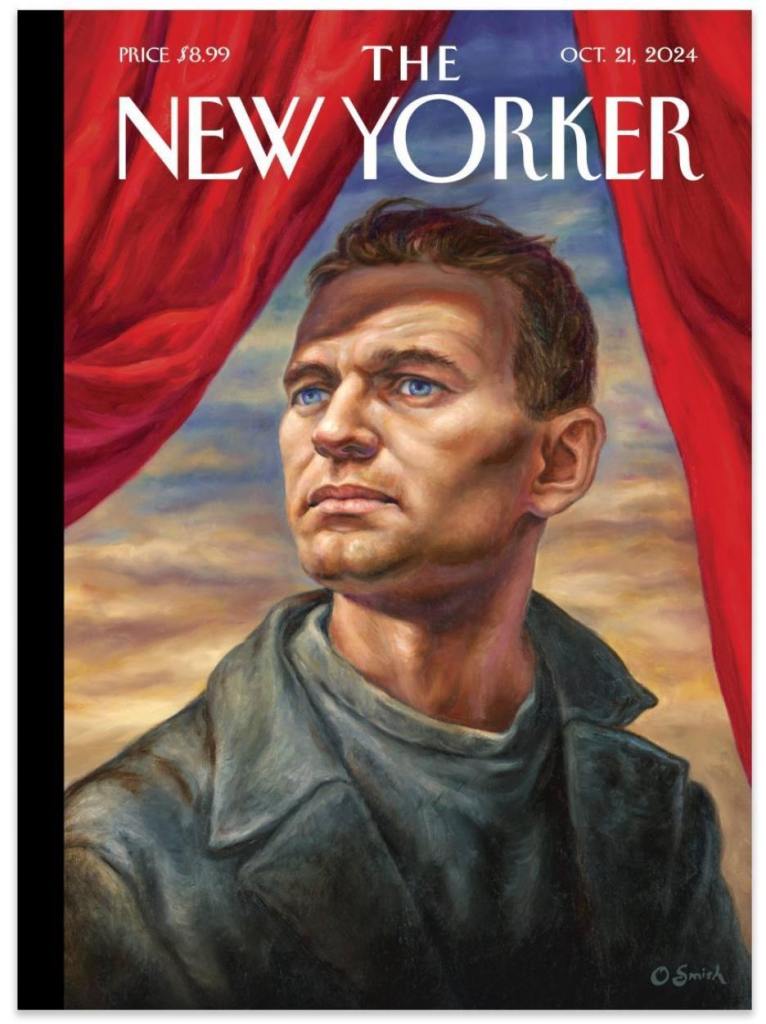
I wouldn’t want Navalny to be remembered the way he has been remembered this past year.
I haven’t read the book Patriot yet, but I was quite upset by Mikhail Zygar’s review of it. Zygar compares Navalny to Jesus and concludes that by dying, Navalny bequeathed us an idea that would rid future generations of cynicism and teach them to believe.
This is feeble sentimentalization, in my opinion. Navalny didn’t not dream up any particular ideas. He called for action, not faith. The meaning of his sacrifice, in my mind, is practical and political, not abstract and ideological. It can and should benefit the current generation, not some future generation.
Navalny didn’t dream up a new ideal. The “beautiful Russia of the future” is a feeble image, but Navalny understood better than anyone how tyranny operates on the mechanical level. I often complain that the FSB understands better how Russian society functions than do opposition politicians, sociologists and psychologists. Navalny couldn’t be accused of this shortcoming.
He was the only person in Russian politics who talked about power relations as a two-way street. He didn’t talk about the enormous resources Putin has, but about the fact that we give Putin power. It is not the security services, the army and the tanks that give Putin power. We give Putin power.
This view evolved over the course of Navalny’s career, becoming more and more central. As time went by, it separated Alexei more and more from his colleagues in the opposition. Toward the end of his life, Navalny’s writings centered on the idea that power consists in consenting to obedience, in “obeying in advance.” We say to ourselves: I cannot disobey, because if I don’t obey, they will (notice me/file administrative charges against me/fire me/banish me from my profession/send me to jail/kill me).
Only by obeying in advance can governing by unfulfilled threat be scaled up indefinitely, to a country of 140 million people, because this means of governing doesn’t require any resources. We obey without taking resources from the state. Putin’s estimates for the war in Ukraine include every dollar, euro, and pound spent on Ukraine’s defense. They are what counts against Russian budgets, not “faith in democracy” or “anti-war sentiment.” I understand Alexei’s decision to return to Russia in this sense; I see it as logical and unusually tenderhearted on the personal level. By returning to Russia, Alexei was able to provide Russians with one more example of tyranny’s limits: Putin never had power over Alexei. Had he stayed in Germany, Putin’s power would have extended to Navalny.
Navalny was concerned not with the thoughts in our heads, but with whether our deeds matched our thoughts. I appreciate Christian philosophy, but I could never accept the postulate that a second of faith can save a person, no matter their actions — “Now thou shalt be with me in paradise,” and so forth. The Russian opposition, for as long as I’ve been watching it, wants to get to democracy approximately the same way the thief gets to paradise — by believing in it. The notion that we are democrats and decent because we believe in democracy while all remaining Russians are slaves and awful because they don’t believe in it is the main obstacle to democracy in Russia, in my mind, and the Koshchei’s egg of tyranny. A “democracy” in which only “democrats” have a stake and which only they want is an oxymoron that makes democracy impossible and tyranny in Russia perennial. Democracy cannot be for Muscovites alone. It cannot be built via media outlets in which only Petersburg and Moscow have a voice. It cannot be built without equal representation of activists, issues, and interests from other regions and ethnicities.
Late in life, Navalny hated talk about the “freewheeling ’90s” and the good Chekists/bad democrats dichotomy, which doesn’t prevent his supporters from remaining stuck in this selfsame paradigm.
Alexei started his career in Russia’s faux democracy project, which was unfair from the get-go. He entered politics as a “democratic nationalist,” desiring greatness and a better elite for Russia. It was within this same paradigm that he pursued the most successful project of his life: “fighting the regime by legal means.” By the end of his life, however, he came to realize that Russian power is held by a hypocritical elite which justifies its obedience by talking about white coats, and is not willing to share power. It is not even willing to think about being the equals of other Russians, let alone the equals of Ukrainians, for example.
This, in my opinion, is what Navalny left behind. It pains me to see how the legacy he left at such a high cost is being frittered away by films about traitors, stupid speeches, and sentimental religious comparisons.
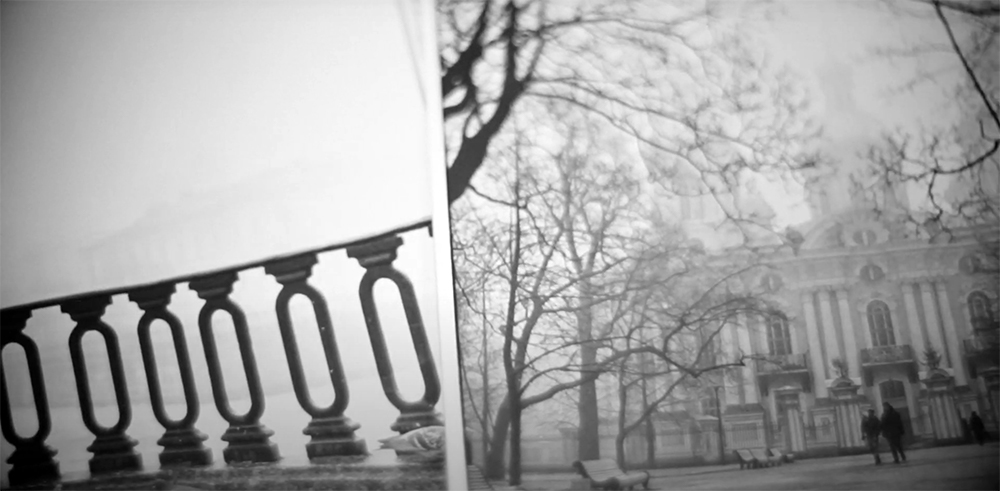
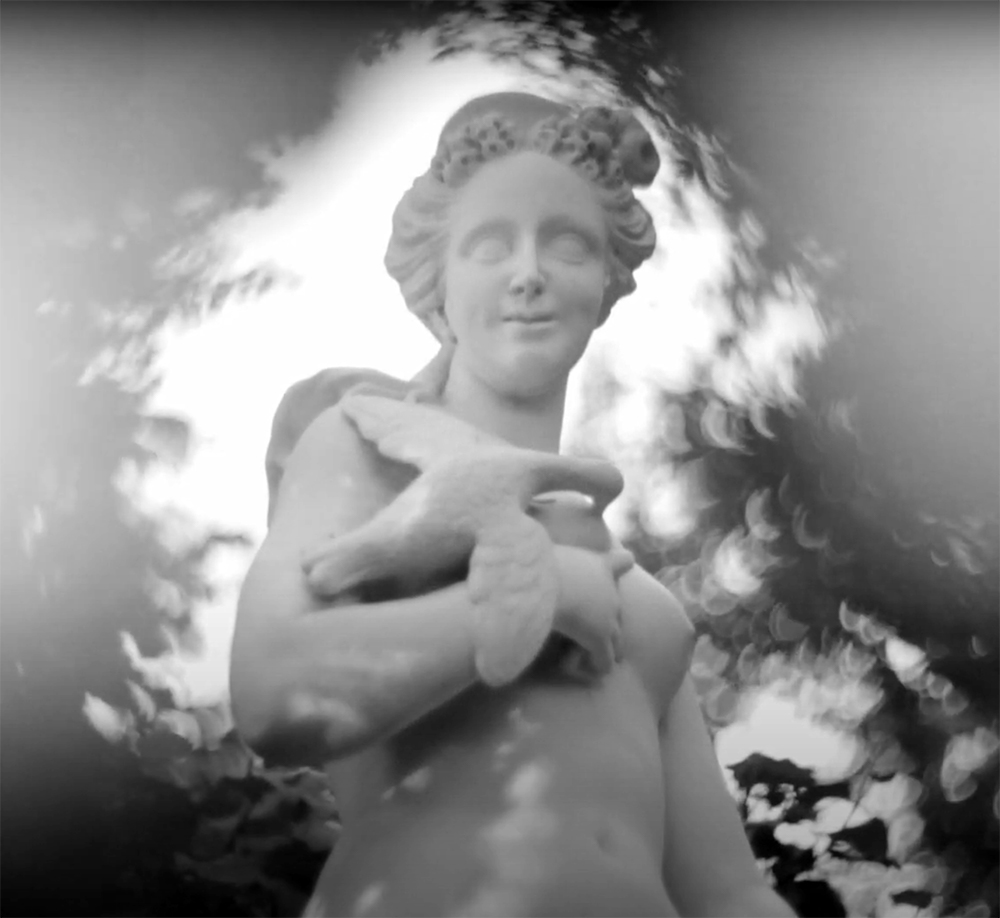
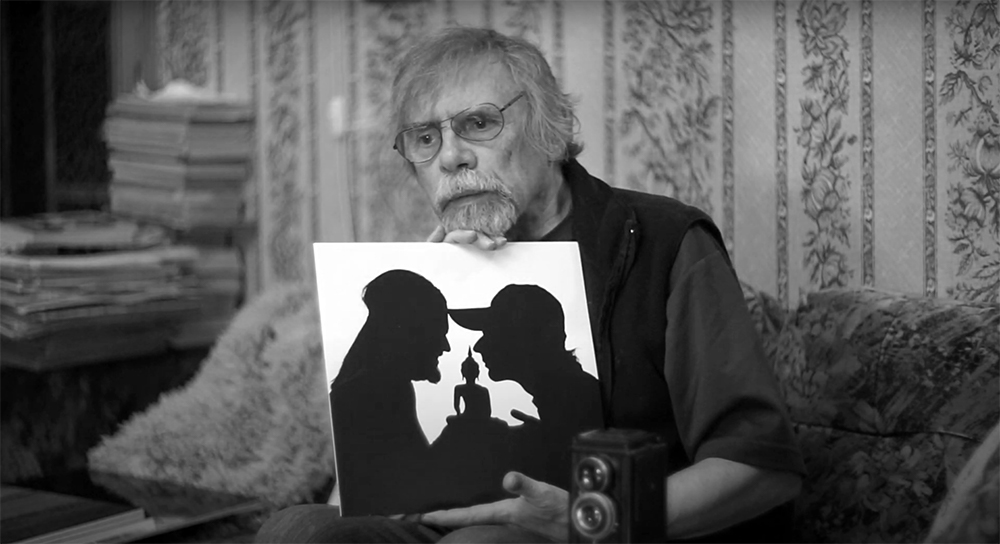
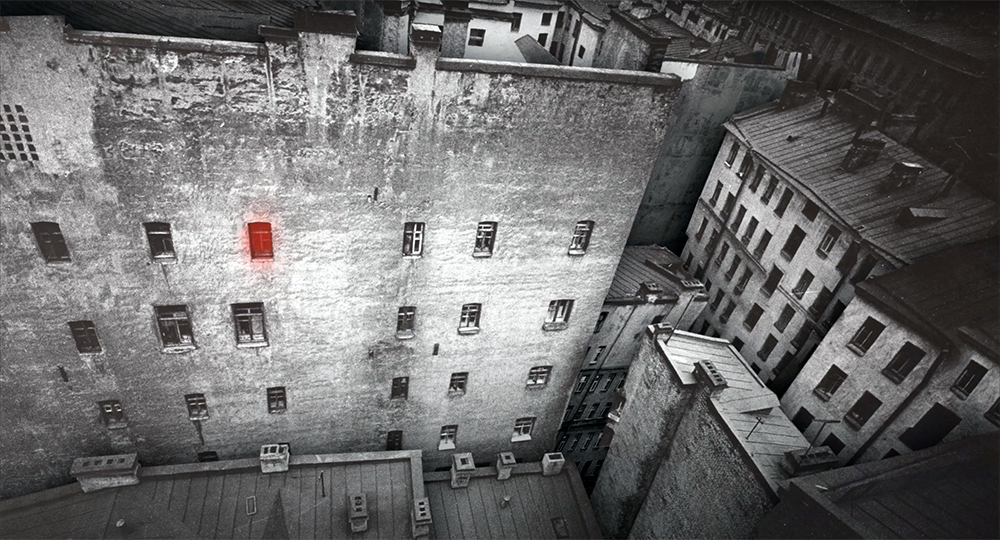
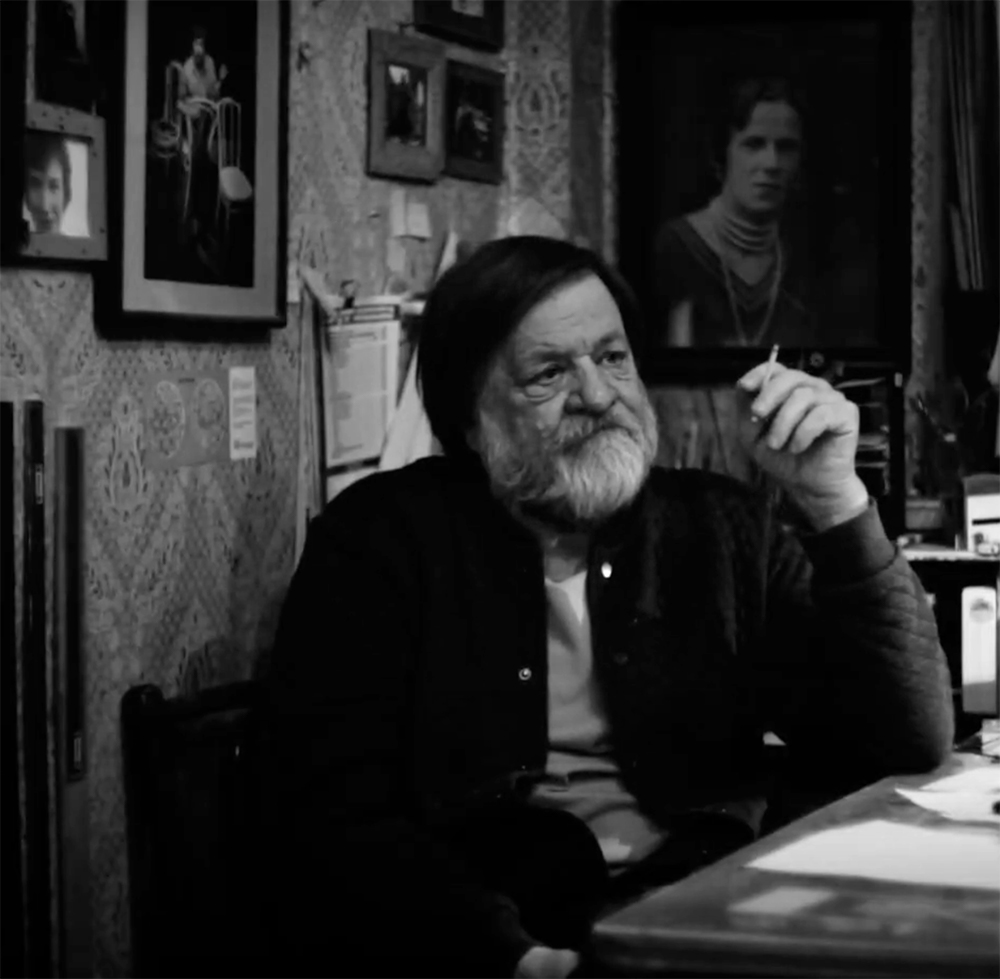
If you have been to Chronicles Bar[in downtown St. Petersburg], you have definitely seen the photos discussed in this film. In today’s session of “Screening the Real,” we are watching Leningrad 4, a documentary about Sergei Podgorkov and other champions of Leningrad’s unofficial photography scene during perestroika. Yuri Mikhailin spoke to the filmmaker, Dmitry Fetisov, about dramatic structure, time as a form and rhythm, and Soviet-era beer stalls.
“Leningrad 4,” Dmitry Fetisov, 2023 (in Russian with no subtitles)
My path to documentary filmmaking was a tortuous one. At school, I was interested in writing texts, and at the age of seventeen I decided to apply to the St. Petersburg State University of Film and Television (KiT) to study drama, but at the interview I was advised to go into documentary directing. At the time, Victor Kossakovsky was accepting students, but I didn’t go to study with him, I went to Tver (I’m from the Tver Region) and studied three years at the College of Culture, specializing in directing and theatrical acting. Then I went to study in Konstantin Lopushansky’s feature filmmaking program at KiT. I studied for a year, but them I decided to try my hand at documentary filmmaking again, although I didn’t really understand what it was.
I transferred to Vladislav Borisovich Vinogradov’s course, and I more or less made a go of it there. I guess I had found my master. It was the first time I saw examples of poetic documentary films with characters and dramatic structures that intrigued me. I also really liked Vladislav Borisovich’s work (I Return Your Portrait, A New Year at the End of the Century). I think that I have inherited to some extent his format, in which the films are based on interviews with the characters, and the themes have something to do with Leningrad culture.
Still from “Leningrad 4,” Dmitry Fetisov, 2023
My interest in photography stemmed from moving to St. Petersburg. I liked the texture of its central districts, the most banal things—palaces and , the difference between the Petrograd Side and Vasilievsky Island. And I was very interested in the movies made at Lenfilm Studios—Ilya Averbakh, the so-called Leningrad school, the perestroika-era pictures. This texture intrigued me. I came across the photographs of Boris Smelov, Leonid Bogdanov, and Boris Kudryakov. I became a big fan of theirs, and started looking for lesser-known photographers.
You could say that Leningrad 4 was born in 2011, when I went to a photo exhibition at the legendary Borey Gallery on Liteiny for the first time and saw Sergei Podgorkov’s work. I thought that I should make a movie about this man. I was very impressed by Ludmila Tabolina’s show at the Akhmatova Museum, as well as the exhibition on the Zerkalo photo club, from which many photographers had emerged.
Still from “Leningrad 4,” Dmitry Fetisov, 2023
In 2021, I decided to make a short film about Sergei Podgorkov. At the time, I had no idea that it would turn out to be a forty-minute movie. I wrote to Sergei on VKontakte, and he invited me to his place in Borovichi. If I were making the film now, I would probably add a video chronicle of the trip. Podgorkov showed us around the town, including the old railway station, and after filming we drank some good Novgorod moonshine with him to celebrate our acquaintance.
Many of the shots were made with Soviet gear—a Helios 40 telephoto lens. I bought it in a thrift store, and I successfully fitted this 1965-made lens to a Sony mirrorless camera. The Helios 40 handsomely blurs the edges and thus emphasizes the subject in the frame. It is my favorite lens.
After filming Podgorkov, I realized that the topic could be pursued further. I had always been interested in the Leningrad Rock Club, and so I decided to film Andrei “Willie” Usov, who was the staff photographer for the band Aquarium and did all the covers of their records, and was friends with Mike Naumenko.
Andrei “Willie” Usov, holding his iconic image of Boris Grebenshchikov and Mike Naumenko. Still from “Leningrad 4,” Dmitry Fetisov, 2023
The third character was the pictorialist Ludmila Tabolina. I appreciate this movement in photography. The next character was Alexander Kitaev. I liked the Kitaev’s powerful countenance, that of a bohemian. Petersburg photographer, and I decided that I would film him even before I got acquainted with his images myself.
Another character is Valery Valran. He is not a photographer, but a well-known artist in Petersburg, a popularizer of photography, a curator of photo exhibitions, and the first to turn [photos by Leningrad’s underground photographers] into a photo album: the book Leningrad Photo Underground appears at the beginning of the film. I decided to include it in the film to tell about this photography movement a little from the outside.
And finally, there was Sergei Korolyov. I filmed him, but during editing I realized that, unfortunately, a short subject about him did not fit into the film. I edited it separately and posted it on my “Blog Stall” which I dreamed up when blogging was the cool thing and where I publish stories related to cinema. This episode is called “The Photographer Korolyov”.
“The Photographer Koroylov,” Blog Stall, episode 26
How did I realize that these characters were enough? When I filmed them, I had an idea for the next film I might make: about photographers who are no longer alive, like Bogdanov and Kudryakov. And I decided that the filming was over.
The film took a long time to edit, almost a year. I realized that each photographer has a certain leitmotif. Sergei Podgorkov has a story connected with beer stalls (although he does not emphasize it himself), Andrei Usov has rock, Ludmila Tabolina has the white nights, and Kitaev has [Petersburg’s] Kolomna neighborhood.
Still from “Leningrad 4,” Dmitry Fetisov, 2023
To separate the interviews and photos, I decided to use a film footage frame. Some of my colleagues think that this is visual bad form, but for me it seems logical: conversations with photographers are the present day, while their photos are the past, and the footage works as a transition between them.
Sometimes I wanted to connect the times. The chapter “Conversations at Beer Stalls” features music by contemporary jazz-noir artist Bebopovsky and the Orkestry Podyezdov. I had enjoyed him for a long time. I met the artist, and the opportunity to use his music in the film presented itself.
While I was editing, I did a photo shoot on black and white film for an acquaintance. I was supposed to make shots like in the scene in Godard’s movie Le petit soldat in which the main character takes a picture of a young woman. For this photo shoot, my friend bought a Leningrad 4 light meter on Avito. I realized that I would call the film that, because the main character is late Soviet Leningrad, and there are four photographers in it. Then I decided that I would divide the movie into four parts. Besides, perhaps these photographers possibly also used the Leningrad 4, as it was one of the most popular exposure meters of its time.
It was later that Sonia Minovskaya, my co-director and assistant on the movie, noticed that in some mythologies the nuumber four is the number of decay, death, and demised. And indeed, in each chapter something fades away or dies. In the first one, the Leningrad white nights are buried, while in the second, Mike Naumenko and a whole erа exits the stage. Then we see the end of the Summer Garden in its historical guise, and in the final chapter, where the rallies in the squares are shown, we see a country disintegrating. I didn’t think about this symbolism when I was making the film. I did it intuitively.
Photographer Alexander Kitaev. Still from “Leningrad 4,” Dmitry Fetisov, 2023
I understand that the editing is finished when a special, unique time emerges in a film. Time is a rhythmic form to me. A movie is ready to go when it suits me rhythmically. My films are calm, lyrical, and meditative. I probably like the documentaries of Wim Wenders for a reason.
Leningrad 4 was screened at the Arctic Open Festival in Arkhangelsk, where it got a super-warm reception; at the Salt of the Earth Festival in Samara; and in the online program at Artdocfest.
At one of the premiere screenings at the Rosphoto Museum, Sergei Podgorkov, with his usual irony, criticized the film for being too sentimental about an era that, in his opinion, is not worth the nostalgia. I did not put nostalgia in the movie, especially nostalgia for the Soviet Union, which I do not have. Andrei Usov noted that the films uses images from a time when the city was more interesting texturally for photographers. Nowadays, Petersburg is quite touristy, shiny and bright. He also admitted that the film left him with a heavy feeling. He and Naumenko had a great, strong friendship, and he still takes his departure quite personally.
Still from “Leningrad 4,” Dmitry Fetisov, 2023. Photo by Sergei Podgorkov
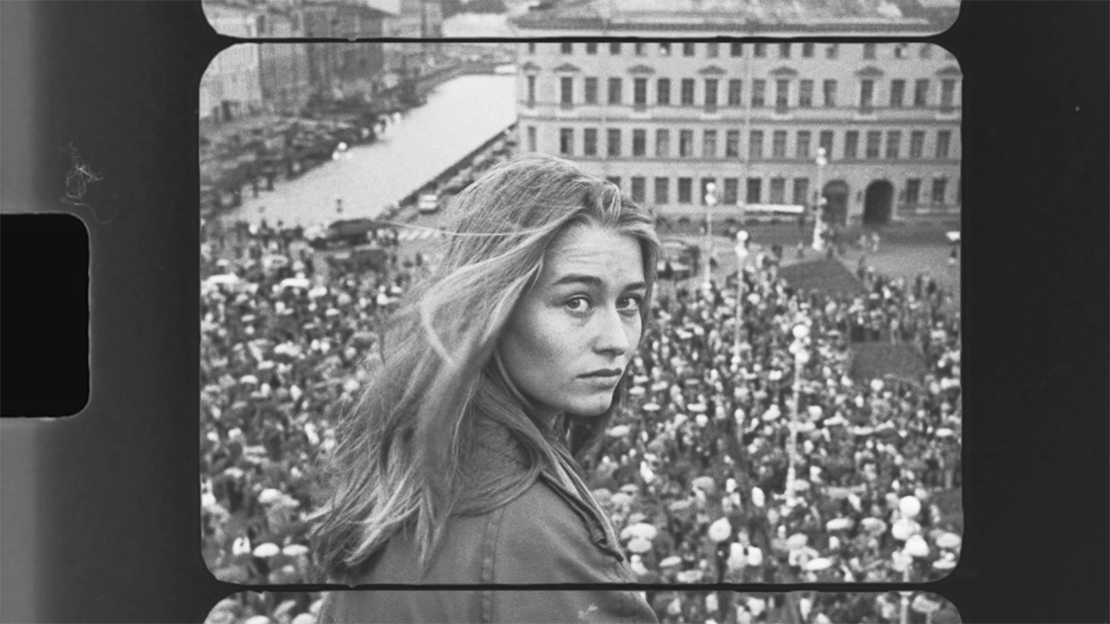
Another character in the movie, Svetlana, attended the screening at the bar WÖD. In the final scene, we see a photo of her standing on the roof of a building opposite the Mariinsky Palace during the attempted coup in August 1991 and looking into the lens—as if that era were upon us today. This is a famous photo by Sergei Podgorkov. Recently, Sergei found Svetlana through the internet and invited her to the screening. And now, thirty-three years later, she saw herself on the screen and recounted how the picture was taken. Podgorkov had run out of film, but Svetlana was also an amateur photographer, so she lent him her own camera, and he photographed her.
Recently, I went to Chronicles Bar on Nekrasov Street and saw Podgorkov’s photos there. It was amazing. It is a young people’s bar, and yet the walls are adorned with photos of Soviet-era beer stalls, so it is as if two eras were connected through Podgorkov’s photographs.
Impact of Discrimination on Integration of Emigrants From the Aggressor Country (with Ivetta Sergeeva)
Following the full-scale invasion of Ukraine in 2022, up to one million Russians fled their homeland, marking the most significant brain drain since the Soviet Union’s collapse. While some host countries view the highly educated and politically active migrants as an asset, integrating nationals of the aggressor state has presented challenges. Many migrants face institutional restrictions aimed at sanctioning Russia, alongside varied experiences of discrimination from local populations. This study delves into the effect of discrimination on the assimilation intentions of Russian migrants, focusing on language learning as a key indicator. Laitin’s model of identity building suggests that migrants’ willingness to assimilate depends on the perceived benefits, including acceptance by the host society. Following the model, Sergeeva assumes that discrimination signals to migrants that the host country’s society does not accept them, making learning the local language a less rational choice.
Utilizing a cross-sectional panel survey, the study establishes a link between discrimination and integration, differentiating between the effects of discrimination experienced from local citizens and local institutions on language acquisition. Findings reveal that societal discrimination significantly dampens migrants’ willingness to learn local languages and diminishes their trust in and attachment to host societies, unlike institutional discrimination, which shows no such effect on language learning. These insights contribute to an understanding of the impact of nationality-based discrimination, highlighting the role of societal acceptance in the successful integration of political migrants.
This event will be hosted in person and virtually on Zoom. Register for the Zoom meeting here. Non-NYU affiliates must RSVP for in-person campus access.
Ivetta Sergeeva is a PhD candidate at the European University Institute in Florence. She specializes in political behavior, civil society, and Russian emigration. She is a co-founder and co-principal investigator of OutRush and ViolenceMonitor (a series of surveys on intimate partner violence in Russia). She also has eight years of experience supervising projects in civil society and human rights organizations in Russia. Website: www.ivettasergeeva.com. Email: [email protected].
Date: 29 April 2024 4:00 PM – 5:30 PM
Speaker: Ivetta Sergeeva
Location: Jordan Center, 19 University Place, New York
Professoressa on the Pole* is the result of Polina Kanis’ investigation into the perceptual transformation of the female body in Russia following the onset of the full-scale invasion of Ukraine and subsequent ideological shift within Russian society. As part of this investigation the artist trained as a pole dancer and worked at a strip club.
The exhibit includes photographs documenting Kanis’ three-month stint at a strip club, the club’s rules of conduct for strippers, and a video re-enactment of the artist’s stage performance. The project marks the latest chapter in Kanis’ ongoing research into the changing role of a female teacher in Soviet and post-Soviet Russia, where limitations imposed by the state can only be counter-balanced by imagination.
*Professoressa (Italian: female teacher) refers to the 1967 manifesto Letter to a Teacher (Letters a una Professoressa), which harshly criticizes the power structure and classism of the educational system in 1960s Italy.
location: Expo
price: €5, tickets for a performance of the CARTA ’24 festival give free admission
duration: 5h
extra info: wed – sun: 14:00 – 19:00, evening performances until 22:00
Nadya Tolokonnikova, an artist who is founder of the feminist collective Pussy Riot, has long been persecuted in Russia for her conceptual performances and artistic protest against the Putin regime. Her performance Punk Prayer in the Christ the Savior Cathedral in Moscow, recognized by The Guardian as one of the most important artworks of the twenty-first century, ended for her and her colleagues with imprisonment for “hooliganism motivated by religious hatred.”
OK LINZ is bringing Nadya Tolokonnikova’s art to the museum, presenting her haunting works dealing with resistance, repression, and patriarchy for the first time to the European public.
Tolokonnikova’s oeuvre encompasses objects, installations, and performative works in which she processes her traumatic experiences during her life under Putin. Out of a state of repression, she has developed a visual language that rebels against aesthetical and political realities: anarchic and radical, yet also moving and witty.
“Being from Russia brings me pain. Most of my life, even after 2 years imprisonment following my art protest, I chose to stay in Russia, even though I had plenty of opportunities to immigrate, I tried to change Russia, make it a country that I would be proud of—peaceful, prosperous, friendly, democratic, loving, a country that values human life, art and happiness. First with Voina Group, later with Pussy Riot, I’ve been in performance art since 2007, for 17 long years—years filled with joy of protest and comradery, harassment, arrests. I watched my friends being murdered and revolutions suffocating under Putin’s boot.“ —Nadya Tolokonnikova
An oversized blade hangs like a sword of Damocles over visitors to the OK. “Shiv” is the title, American prison slang for an improvised knife. It stands for the precarious situation of artists and activists in Russia who, like Tolokonnikova herself, live in constant fear of persecution by the Russian judiciary. The exhibition will spotlight a selection of Situatioinist actions by Pussy Riot. At the center is Tolokonnikova’s 2022 performance Putin’s Ashes in which she joined forces with twelve women from Ukraine, Belarus, and Russia who experienced repression and aggression at the hands of the Russian president to burn a portrait of Vladimir Putin in a desert, collecting the ashes in small bottles.
“This art is a weapon,” says Tolokonnikova of her works, analyzing and exploring in this way the role that her art and she herself can play in the context of international power structures.
Curators: Michaela Seiser / Julia Staudach
Source: e-flux mailing list, 22 April 2024
Akhmatova’s Orphans International conference Princeton University 3-5 May 2024
May 3
4:00 pm–5:00 pm. Location: Firestone Library
The Anatoly Naiman Papers. Visit to the Special Collections
Presentation by Thomas Keenan-Dormany, Slavic Librarian
5:00 pm–6:30 pm. Location: McCosh 50
Rock. Paper. Scissors (2023)
Documentary film screening
Q&A with the co-author Anna Narinskaya
7:00 pm
Reception at the Levings’ residence (Shuttle provided)
May 4
Location for all talks: 245 East Pyne
9:30 am
Breakfast at East Pyne
Session 1
10:00 am–12:00 pm
Veniamin Gushchin, Columbia University
Late Akhmatova and Philology: Intertextuality, Interpretive Communities, and Effective History
Evgeny Soshkin, Free University / Brīvā Universitāte (Latvia)
Akhmatova’s Dead Orphans: Toward the History of a Paradox
Gleb Morev, Independent researcher
Akhmatova and Brodsky
12:00 pm–1:00 pm
Lunch
1:00 pm–1:40 pm
Keynote speech
Roman Timenchik, The Hebrew University of Jerusalem / PrincetonUniversity
Akhmatova’s Orphans and the Literary Orbit of the 1960s
Session 2
2:00 pm–4:00 pm
Dmitry Bobyshev, University of Illinois Urbana-Champaign [via Zoom]
On the so-called ‘Akhmatova’s Orphans’
Emily Lygo, University of Exeter
Dmitry Bobyshev’s Poetry of the Turn of the Century
Marco Sabbatini, University of Pisa
“Out of the Magic Choir”: Viktor Krivulin and the Leningrad Underground Poetry on Akhmatova and her Orphans
4:00 pm–4:30 pm
Coffee break
4:30–5:50 pm
Sofia Guerra, Princeton University
Anatoly Naiman’s Translations from Giacomo Leopardi
Benjamin Musachio, Princeton University
Estrada as a Fault Line: Akhmatova and Company vs. Evtushenko
6:00 pm–7:30 pm
Location: East Pyne 010
Akhmatova’s Orphans. Disassembly (2024)
Documentary film screening
Q&A with the director Yuri Leving
7:30 pm
Dinner
May 5
Location for all talks: 245 East Pyne
9:30 am
Breakfast at East Pyne
Session 1
10:00 am–12:00 pm
Maya Kucherskaya, Jordan Center, New York
Solo in a ‘Magic Choir’: The Case of Joseph Brodsky
Michael Meylac, StrasbourgUniversity [via Zoom]
An Enchanting (!) Chorus (?): Different Poets of Dissimilar Fortunes
Alexander Dolinin, University of Wisconsin-Madison
Brodsky’s Poem “Darling, I left the house today…” in the Context of Poetic Tradition
12–1 pm
Lunch
1:00 pm–1:40 pm
Leningrad Poetic Circles of the 1960s Through the Camera Viewfinder
Roundtable devoted to photography of Boris Shwartzman, Mikhail Lemkhin and Lev Poliakov
Session 2
2:00 pm–4:00 pm
Polina Barskova, Berkeley University [sic!]
Depiction of Links and Ruptures of Time in Evgeny Rein’s Poetry
Oleg Lekmanov, Princeton University
On Evgeny Rein’s Poem “In the Pavlovsky Park”
Anna Narinskaya, Independent researcher, Berlin
The Orphans and Jews
4:00 pm–4:30 pm
Coffee break
Session 3
4:30 pm–6:45 pm
Translating Poetry of “Akhmatova’s Orphans” into English
An Open Workshop: Kathleen Mitchell-Fox, Emma George and Ilya Kaminsky, Princeton University
Lev Oborin, Berkeley University
Anatoly Naiman’s “Vegetation”: Towards Poetology of Branching
Maria Rubins, University College London
Is Brodsky a Poet for Our Time?
6:45 pm
Dinner
Organizing Committee:
Yuri Leving, Chair
Ekaterina Pravilova, Ilya Vinitsky and Michael Wachtel
Sponsored by REEES, PIIRS, and Department of Slavic Languages and Literatures, Princeton University
I think that most of us have not yet understood that the world of Russia has once again, like a century ago, split in two, like an iceberg, and its two halves, the bigger and the smaller, are rapidly drifting apart. It’s just that the split happened less dramatically, without the crowding onto the last steamship, without the “we departed from Crimea amidst smoke and fire” [lines from a poem by White émigré Nikolai Turoverov]. The split has been dragged out in time, and the crack wasn’t so wide at the beginning. Some people are still hopping from one iceberg to the other.
“Endless War”
And yet—that’s it. There are two Russias again. Many people—in both halves—cannot or are afraid to recognize this. It’s time to stop hopping, otherwise you’ll leap to one side and won’t be able to hop back again.
Hopes for the swift fall of the rotten regime (also just like one hundred years ago) have been disappointed. It’s plenty rotten but rot, as everyone knows, spreads.
Last time it took seventy years to root it out. This time it probably won’t take as much time; time moves more quickly in the twenty-first century, but you still have to unpack the suitcases and settle in for a long wait.
“Anticipation of White Nights”
What will happen with the ‘little’ Russia, scattered across different countries, is pretty clear. [Russians] who are younger or more active or more professionally cosmopolitan will assimilate with varying degrees of success. [Russians] who are older and professionally tied to the language and culture will sadly sing “while the light has not gone out, while the candle burns” [a line from a famous Mashina vremeni song] and will support that little flame as long as they have the life and strength for it. This work of theirs is not pointless or in vain, because in ‘big’ Russia there are still a great many people for whom that light will be precious and necessary.
In the mother country—goddamn déjà-vu—things will soon be utterly unbearable. In the longstanding two-hundred-year struggle between the Asiatic state and European culture the Horde has triumphed once again, now zealously working to asiatize the culture. (There is nothing malign about Asia and its culture, which of all people I, a specialist in Asian studies, should know; I am talking about political Asia, in which the state is everything and the individual is nothing.)
The culture of the mother country will be censored, hollowed out, thrust onto all fours and taught to wag its tail. We’ve seen it, we remember. Later, of course, a counterculture will take shape, [yielding] virtuosos of Aesopian language and furtive rude gestures. We remember that too: we had plenty of it. The emigres will coo condescendingly over any vivid manifestations of censored culture—like Nabokov did over Okudzhava. Those in Russia will secretly pass around tamizdat editions. And publish in the West using pseudonyms.
How dreadful and boring this all is, ladies and gentlemen. Russia’s national anthem: “We sowed and sowed the grain, we will stomp and stomp the grain” [lines from a Russian folk song].
For some the price will be their profession, for others poverty or emigration. The most noble will give up their freedom. And even their lives. The higher quality the person, the greater the cost.
And it is all worth it. This is what I’ve been thinking and why I wrote this text, not at all because I wanted to drive you into even greater despondency.
More so than all of us together, each of us individually is facing a big test. We can’t flunk.
Stop referring to “Asia” and “the Horde.” Why insult millions of people in the world and in Russia itself? You are not helping the “little” Russia” in any way.
I see that Akunin has again written something about Asia (where “the state is everything and the individual is nothing”) defeating European values in one particular country.
The point is that Russian intellectuals are, historically, not so fond of anything as repeating German vulgarities. And “Asian” metaphors are the favorites of Germans, and there is no degree of blatant idiocy at which they would stop.
For example, Adenauer explicitly claimed that the “Asian steppes” begin east of the Elbe. (He considered Prussia to be Asian, and so Bismarck’s triumph was an Asian conquest of Germany. Adenauer added the steppe by association.)
No matter how many decades have passed, the pre-war German spirit cannot be taken out of the Russian pamphleteer, and the fear of appearing ridiculous is as alien to them as it was to their mentors.
Quite correct thoughts in general, but there is one big catch.
How does Akunin (Chkhartishvili) differ from those Sieg Heiling in Russia when he starts using “Asia” in such a context, in such a comparison, even with a caveat? Maybe someone will say that I am wrong to try and compare him with the Sieg Heilers. Let me put it another way, then. How does a very good writer differ from those who are called white supremacists in the west?
I recently listened to a very interesting lecture on racism. The lecturer made a rather loose, but interesting ranking, singling out the racism of Soviet people as a separate species.
For some reason, some Europeans, when speaking about Asianness, “forget” about the Inquisition, concentration camps, and many other terrible events in history. Or are these also manifestations of Asianness?
We should also not forget that the current world order is also largely a product of European civilization with all its pros and cons.
One last thing, about why I decided to react in this way to Akunin’s statement, which are quite congenial to my own thoughts. It seems to me that a respected public figure should always think about the consequences of their words and deeds.
[…]
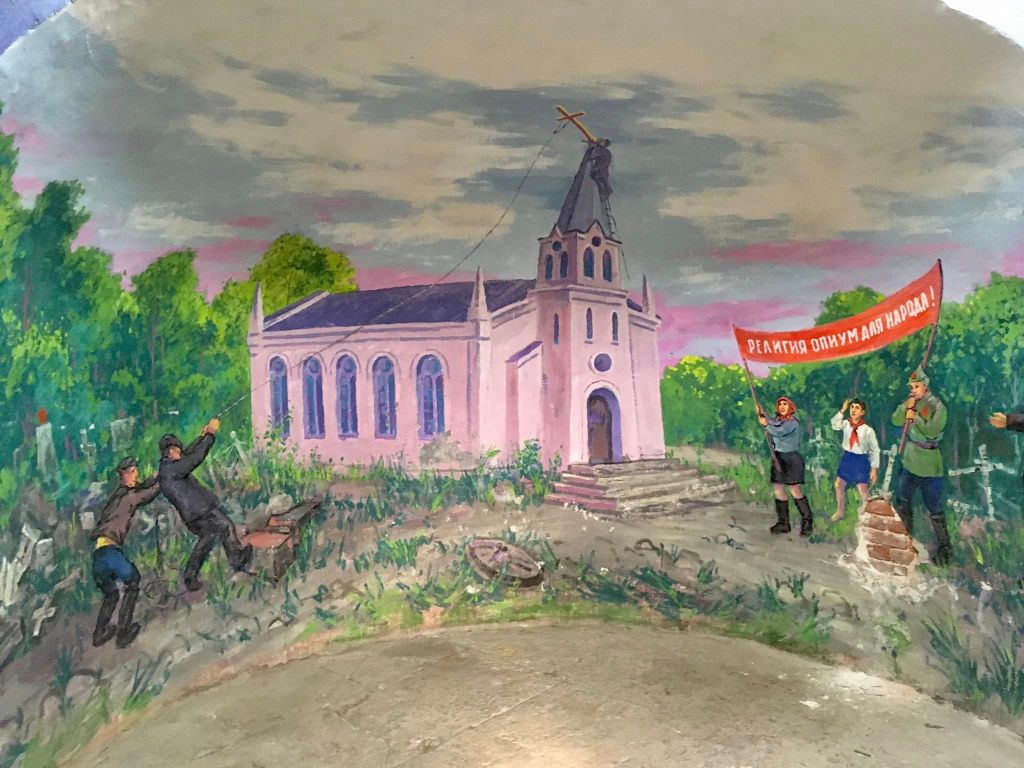
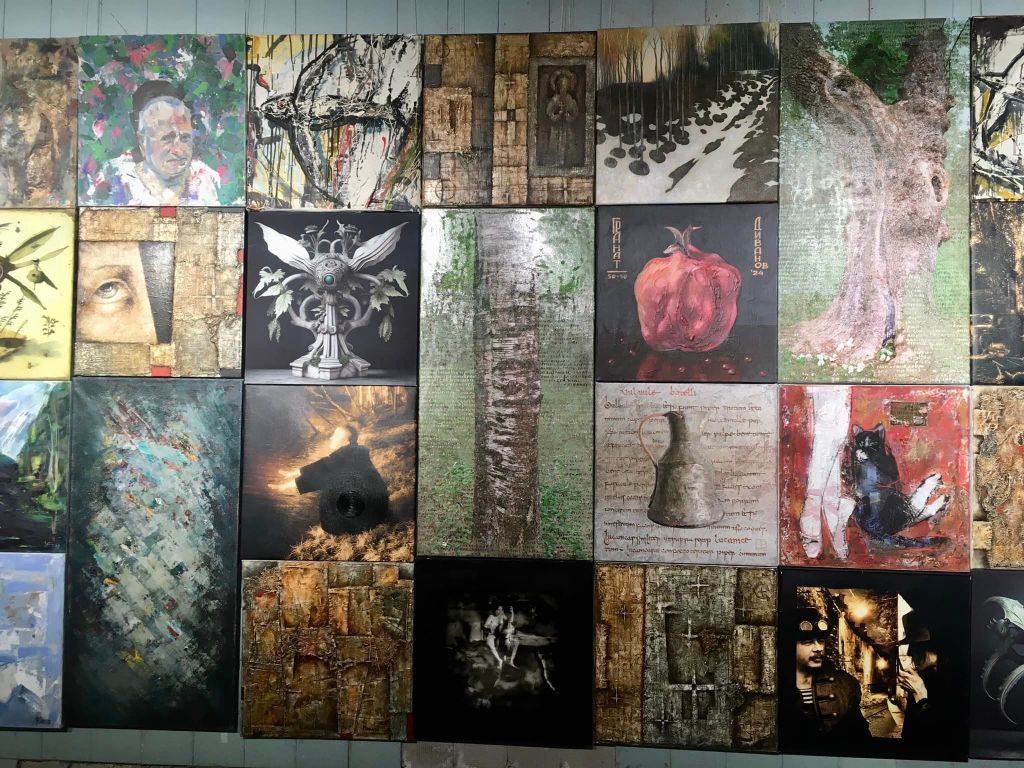
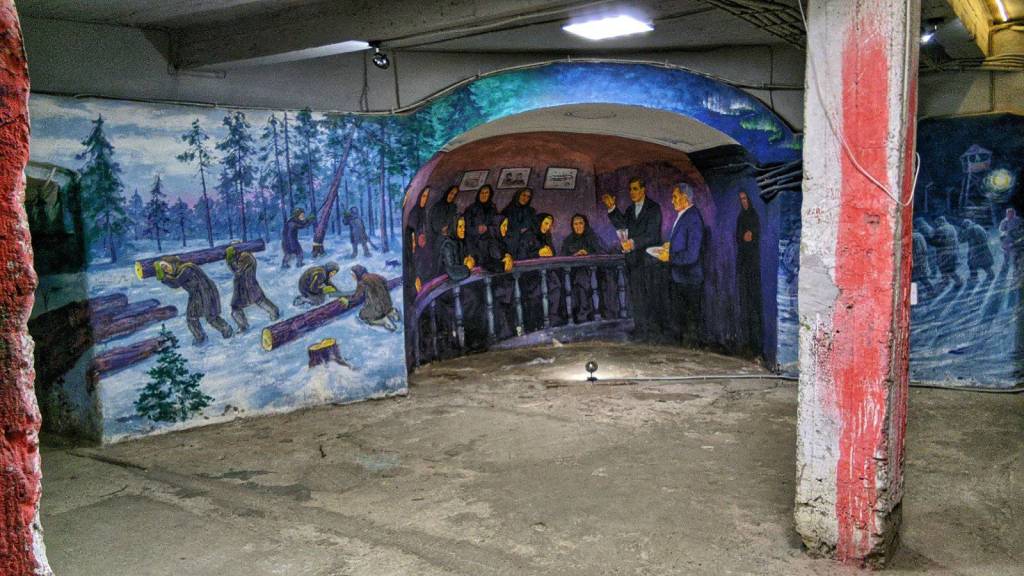
Source: Asya Rudina, “‘The world has split in two:’ the Runet discusses Akunin’s post about the two Russias,” Radio Svoboda, 1 April 2024. Translated by the Fabulous AM and the Russian Reader. The reactions, above, to Akunin’s outburst were not typical. Most of the best-selling author’s fans echoed his sentiments. The photos, above, by our friends V and M, were taken today at an exhibition currently on view in the former swimming pool and catacombs in the so-called Petrikirche on Nevsky Prospekt in downtown Petersburg. They suggest, I think, that the reality on the ground in “big Russia” (and “little Russia” as well) is slightly more complicated than Akunin would have us believe.||| TRR
The FSB has opened a criminal case on charges of “high treason” against artist and former Mediazona publisher Pyotr Verzilov. The details of the case are not yet known, but as part of their investigation, law enforcers raided the homes of a number of artists and activists across Russia. Many of those whom the law enforcers raided are not personally acquainted with Verzilov.
In the early hours of Tuesday morning, people identifying themselves as FSB officers searched the home of Petersburg artist Katrin Nenasheva and her girlfriend Natasha Chetverio. Nenasheva was taken away for questioning, while Chetverio was released, but both had their electronic devices confiscated. The homes of artist Sasha Blot, Party of the Dead activist Kristina Bubentsova, illustrator Vladlena Milkina, and architect Alexandra Kachko were also searched in St. Petersburg.
Law enforcers simultaneously raided the apartments of Verzilov’s mother Yelena, members of the art group Yav, actionist Anastasia Mikhailova (an associate of the artist Pavel Krisevich), and Pussy Riot members Rita Flores, Olga Pakhtusova, and Olga Kuracheva. The latter two were involved in the action “The Policemen Enters the Game”: along with Verzilov, they ran out onto the field of a Moscow stadium during a World Cup match there.
In Moscow, a female acquaintance of the artist Philippenzo (who is now in exile) was taken from her flat. The Yekaterinburg artist Ilya Mozgi and the Ulyanovsk artist Ilya Kholtov were both taken away for questioning after their homes were searched. Nizhny Novgorod artists Artem Filatov and Andrei Olenev were questioned. Samara artist Denis Mustafin’s home was searched. Although he was not at home, his mother’s computer was confiscated.
Some of these have already been released from interrogation (Nenasheva and Kholtov, for example), while others are still being questioned. It is known that most of them have now been designated as “witnesses” in the case against Verzilov. Many of them were asked about their connection to Verzilov: many did not know him personally and had never had much contact with him. Kristina Gorlanova, the former director of the Urals branch of the Pushkin State Museum of Fine Arts, located in Ekaterinburg, whose home was also searched, said that she had “heard nothing” about the “artist” who occasioned the search.
It is still unclear what gave rise to the criminal case. Under new legislation, however, switching to the enemy’s side during a war can be considered “state treason” can be considered as switching to the enemy’s side during a war. In an interview with Yuri Dud last year, Verzilov admitted that he had originally traveled to Ukraine as a documentary filmmaker, but now he was at the front “as a military man.”
“Verzilov: Inside [the] War,” vDud, 5 October 2023. In Russian, with English subtitles
Many of the artists whose homes were raided may never have been involved in Verzilov’s activities, but they themselves have produced works about current events in Russia and Ukraine. We wrote last year about the works of Yav and Philippenzo. Mustafin was fined for flying a a Russian flag inscribed with the phrase “Today is not my day” outside the Ministry of Defense in Moscow on 12 June 2022. Milkina made a public art piece about “people who are scared” on a Petersburg square and T-shirts with the word “Peace” on them.
Petersburg artists find ways to get their messages across even amidst strict censorship. They mount underground apartment exhibitions, “tiny pickets” on city streets, and exhibitions and performances in the woods. It all smacks of the Soviet guerrilla art and actionism from which the international stars of post-Soviet conceptualism later emerged.
Bumaga explores how street art shows have gained popularity in Russia, how guerrilla art has changed in recent decades, and how today’s actionists resemble the organizers of the notorious Bulldozer Exhibition.
Street exhibitions have been around since the 1960s. One of the first such projects was dubbed “the Soviet Woodstock”
Guerrilla street exhibitions in Russia date back to the so-called unofficial art scene of the 1960s and 1970s. Pursuing the idea of coupling art and ideology, the authorities forced undesirable artists out of public art life.
In 1962, Nikita Khrushchev cracked down on the exhibition 30 Years of the Moscow Union of Artists, at the Moscow Manege. The Soviet premier wanted to expel all of its participants from the CPSU and the Union of Artists, although almost none of them were Party or Union members. Artists and connoisseurs reacted to political censorship in the USSR by forming an artistic underground, meaning that the most progressive art was exhibited at apartment exhibitions and in salons.
The 1970s witnessed open confrontation between the art and the world authorities. The most flamboyant members of the artistic underground were the Lianozovo school, who gathered and held exhibitions in a barrack in Moscow’s Lianozovo neighborhood. The leader of the group, Oscar Rabin, organized one of the most infamous guerrilla street exhibitions in the history of Russian art, which later became known as the Bulldozer Exhibition. On 15 September 1974, the artists staged a show of paintings in a vacant lot in Moscow’s Belyayevo Forest. The authorities sicked police on the participants and attendees and destroyed the show with bulldozers.
This crackdown on artistic expression triggered an international uproar, and the Soviet authorities made concessions. Two weeks later, the artists were allowed to hold an officially sanctioned exhibition featuring an expanded list of participants in Moscow’s Izmailovo Park.
This time the police were tolerant towards the artists and their guests: no one was detained. The exhibition lasted for several hours and, thanks to the beautiful weather, it turned into a big picnic. Western journalists dubbed the event “the Soviet Woodstock.”
Soviet unofficial artists continued this tradition, and one art group published 14 volumes documenting their activities
These exhibitions were sanctioned, but the authorities still created a number of organizational obstacles for the artists. For example, only those artists who had a Moscow residence permit were allowed to show their work at the House of Culture. In addition, the authorities made the condition in which the artists worked unbearable: during the mounting of the show, the temperature in the pavilion topped forty degrees Celsius. Thirty-eight works were banned by the censorship commission. It is not known how many works were exhibited, ultimately, but a total of 145 artists participated in the show.
After the scandals provoked by the “unofficial” artists’ public appearances, the authorities began pursuing a policy of legalizing alternative art. In May 1976, the Painting Section of the Graphic Artists Committee was established, primarily to monitor and control the ideologically dangerous underground.
We should keep in mind that we do not have information about every single Soviet-era guerrilla exhibition. Many were held without leaving any trace in contemporary newspapers and other documents.
Collective Actions, a group led by Andrei Monastyrsky, did a huge amount of work in this sense. The artists compiled fourteen volumes documenting their Trips to the Countryside — actions during which various events took place in particular landscapes, including installations, performances, and minimalist interventions in nature. By going outdoors, the artists showed that art could be implicated in the space outside galleries and museums. Another important feature of the performances was the inclusion of viewers in the works: their participation and reactions were part and parcel of the conceptual actions. The way the actions were staged encouraged the spectators to focus on the processes of anticipating and comprehending the happenings. That is, the spectacle itself was an occasion for reflection, a statement meant to spark a dialogue.
In [1977], for example, Collective Actions simply hung a red banner between trees in the woods. The banner read: “I HAVE NO COMPLAINTS AND I LIKE EVERYTHING, ALTHOUGH I’VE NEVER BEEN HERE AND KNOW NOTHING ABOUT THESE PARTS.”
Guerrilla exhibitions are still organized nowadays, many of them dedicated to political prisoners
As a rule, guerrilla exhibitions and actions have a political agenda, so their organizers can be punished quite severely, even by Russian standards.
Nevertheless, there is activity in this field. For example, on 5 August 2023, Petersburg activists mounted an open-air exhibition on the Sestroretsk Ecotrail on the Day of Remembrance of the Victims of Sandarmokh [sic], a tract in the forests of Karelia where victims of the Great Terror were shot and buried in mass graves. Fifty works hung in the open air for a record time — almost an entire day.
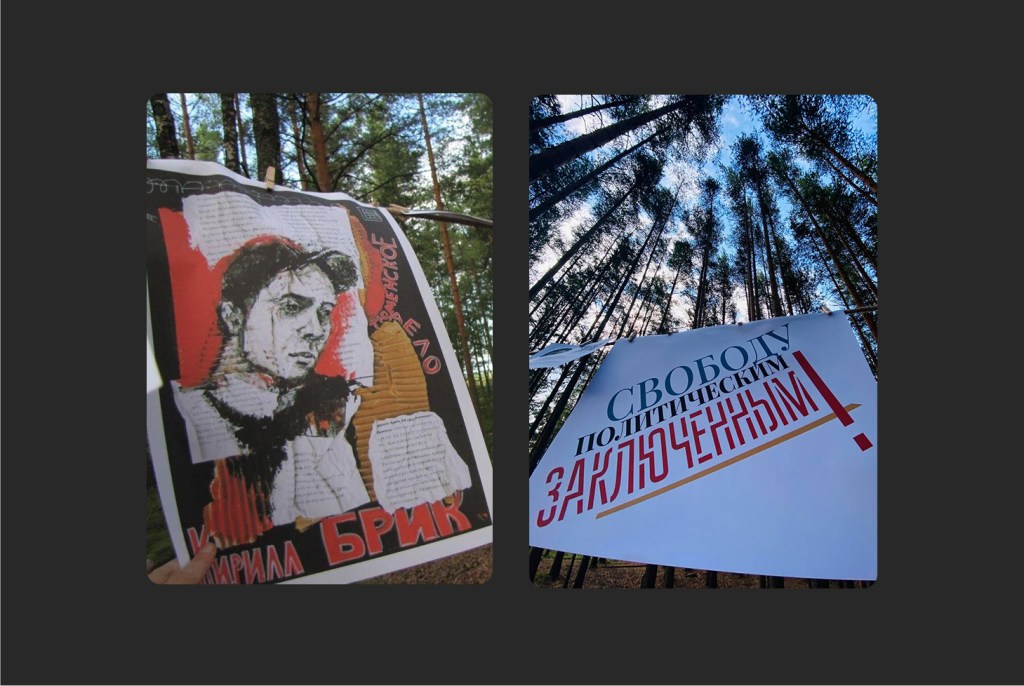
Placards in support of Tyumen Case defendant Kirill Brik (left) and the release of political prisoners (right) at 2023 guerrilla exhibition in suburban Petersburg. Photos courtesy of 123ru.net via Bumaga
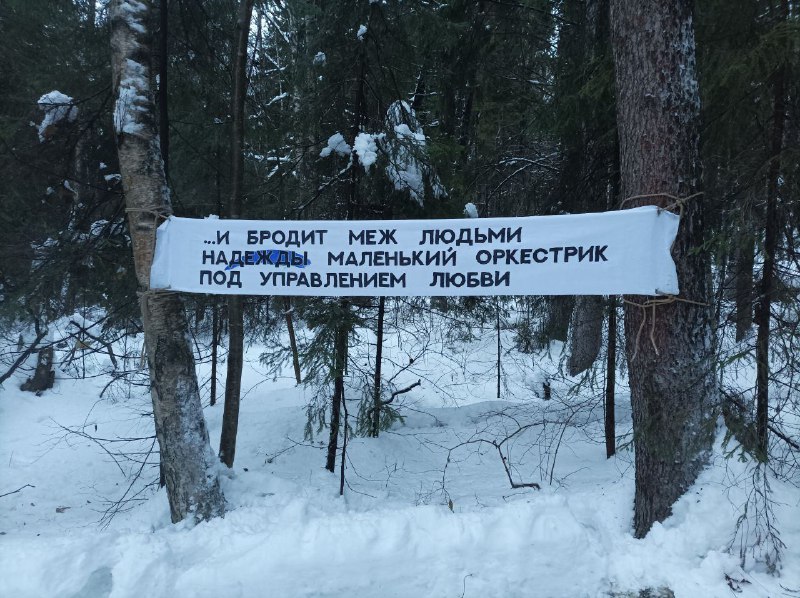
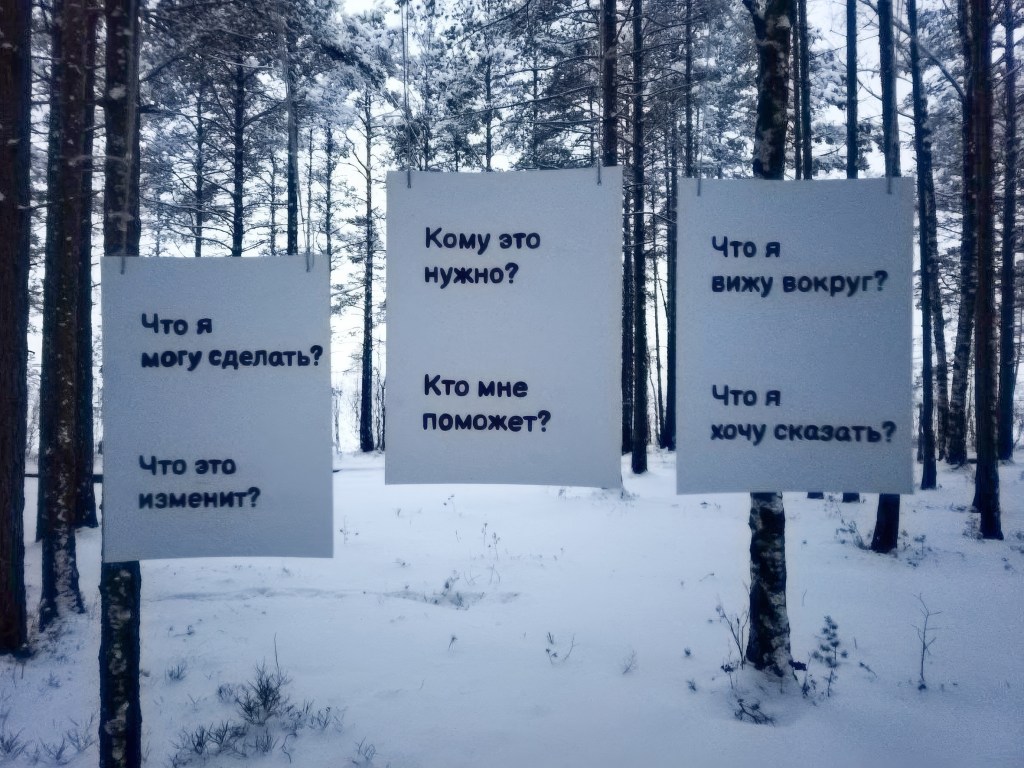
Several placards were also hung in the woods outside Petersburg this winter — for example, on December 10, Human Rights Day, the work I Dissent, Therefore I Am. And in January, an installation featuring a quotation from the Bulat Okudzhava song “Hope’s Little Band” was mounted outside the city.
“…and wandering amongst people / is hope’s little band, / conducted by love.” Photo: Bumaga reader
“What can I do? What would it change? Who would care? Who would help me? What do I see when I look around? What do I mean?” Part of the installation I Dissent, Therefore I Am. Photo: a Bumaga reader
In 2022, Petersburg hosted Carte Blanche, an international guerrilla street art festival. In addition to street works, a stationary exhibition at the abandoned Sailors Palace of Culture on Vindavskaya Street attracted great attention; it featured over twenty artists, including Vladimir Abikh, Maxim Ima, and Slava PTRK. That same autumn, Petersburg hosted the underground exhibition Continuity, dedicated to political prisoners of the past and present, including the victims of the Great Terror and those caught up in the Network Case. Some of the works were made by political prisoners themselves using improvised means and materials while they were incarcerated in pretrial detention centers and penal colonies.
Contemporary street exhibitions continue the Soviet tradition, but the state’s reaction to them has become tougher
Today’s guerrilla exhibitions in many ways are a continuation of the Soviet and post-Soviet tradition. The Bulldozer Exhibition can hardly be called an artistic event also. It was also a political event. It was a challenge to a repressive regime, “the first and most significant collective performance,” as art historian Yevgeny Barabanov wrote.
Since 2022, such exhibitions also have not only aesthetic but also political goals. Although in the Soviet and post-Soviet years, “unofficial” exhibitions, albeit with certain restrictions, could be legitimated [sic], since 2022, the state does not even attempt to compromise with artists.
Moreover, crackdowns against artists who voice alternative opinions have reached a new level. In 1991, the Moscow actionist Anatoly Osmolovsky and his group E.T.I. used their bodies to spell an indecent word for the phallus [khui] on Red Square. After the action, Osmolovsky was detained and threatened with charges of “malicious disorderly conduct.” However, thanks to the petitions submitted to the authorities by his art world colleagues and the Memorial Society, Osmolovsky was soon released.
Nowadays, petitions and statements of support are not enough to get artists acquitted. Sasha Skochilenko was sentenced to seven years in prison on charges of disseminating “fake news” about the Russian army. The young woman replaced price tags at a Perekrestok chain grocery store with anti-war messages.