Written on the anniversary of my husband’s death.
I’m sitting on a beach by myself, watching the fog roll in.
Wrapped in a thick quilt, I settle into air grown heavy with salt,
and let the fog envelop me. A mug of mulled wine rests warm in my hands,
its spiced scent mingling with the damp air.
I’m in the fog on an empty beach, in a world that has lost its edges.
The fog is an obscuring intimacy, the ocean an undefined expanse beyond
Her tumbling foam and water break rhythmically,
and the cadenced sound of breaking waves and fog blindness are spellbinding. I remain there a long time, alone.
out of the waters
There’s a beautiful passage in the Bible about being trapped for a long time in a place of terrible restriction and deprivation, but then coming out into a “broad place.” The Old Testament recounts the song King David sang when he was delivered from all his enemies:
For the waves of death encompassed me;
The torrents of destruction overwhelmed me;
The cords of Sheol surrounded me;
The snares of death confronted me.
In my distress I called upon the LORD—Yes, I cried to my God;
And from His temple He heard my voice,
And my cry for help came into His ears.He sent from on high, He took me;
2 Samuel 22:5-7, 17-18, New American Standard Bible
He drew me out of many waters.
He delivered me from my strong enemy,
From those who hated me, for they were too strong for me.
They confronted me in the day of my calamity,
But the LORD was my support.
He also brought me forth into a broad place;
He rescued me, because He delighted in me.
captive, we wait
In Hebrew, this broad place, merchâb (מֶרחָב) and its root, râchab (רָחַב), denote a place of enlargement—literally, an open space; figuratively, liberty. It means to broaden, to make room for, to make wide open.
At its most primitive root, the phrase means, “He brought my Self,” conveying a miracle of assent.1 The English translation for broad descends from Germanic and Old English roots meaning wide—
vast, expanded, embracing many subjects, and “extending through the whole of.”2
Deprivations and restrictions are inevitable. Throughout our lifetime, we’ll encounter ordeals, traumas, and torments that push us underwater, plunging us from times of growth to times of deficiency. Captive to what’s too strong for us, we wait for a beacon—for any signal at all that invites us to assent and ascend. When one is suddenly brought into a place wide open for growth, it seems nothing short of miraculous.
longing for deliverance
Many things in David’s song resonate with me, speaking to fears I’ve experienced post-trauma—fears that are consequential to most who’ve been traumatized—
the fear of death,
the terror of monstrous waves and torrents of crisis
that overwhelm and destroy;
the despairs of Sheol–
that place of isolation, suffering and purging;
the threat of traps and enemies,
the ruin of betrayal from those I’ve loved.
the dread of no peace and no rest,
the presage of sudden, unavoidable
calamity, catastrophe, and collapse;
the wreckage of the uncontrollable, the forces that unhinge me
the cruelty of those who confront when comfort is needed
But the LORD was my support.
We know support and sustenance are there, beyond the fog.
And we long for it.
beyond the fog
I’ve mulled within myself for a long time, steeped in an alchemy of suffering and spice, simmering over slow-burning flames. Some of this suffering has been unavoidable, brought on by calamitous, catastrophic events. Some has been self-inflicted, as I writhe and resist realities I never wanted.
Lately, though, all this mulling has brought forth something sweet and heady, strong and delicious and wonderful. It has notes of breathtaking and confounding, balanced by the bold flavor of shock. It has me teetering on the edge of something I don’t yet fully perceive, because there’s a fog that lingers.
Beyond the fog, though, I hear the steady, rhythmic pounding of a deep and eternal sea.

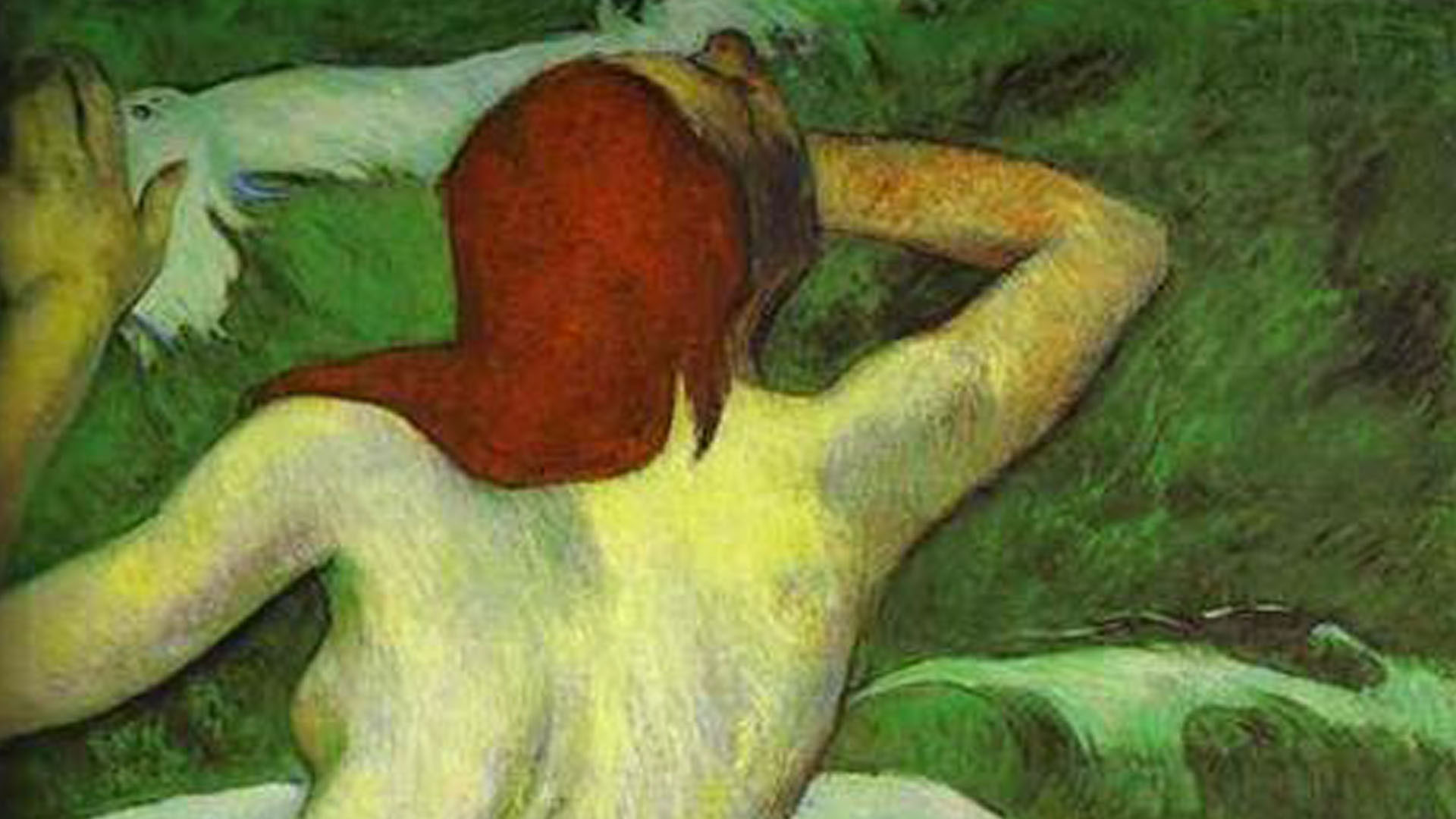
In the Waves. 1889.
contemplate & convey
Were you a bit of an oddball while growing up, or are you one now?
Share how you and your quirks have evolved over the years.
Think back on the sufferings that have most transformed you.
What changes do you see in yourself after suffering so deeply?
What beacon has given you light?
endnotes
- The Polyglot Bible. Sacred Texts, 2023. ↩︎
- The Sciolist. Online Etymology Dictionary, 2023. ↩︎


Leave a Reply