timelets: (Default)
Новые документальные свидетельства о систематических преступлениях российских военных против граждан Украины:
Российский военачальник Роман Демурчиев хвастался родным и сослуживцам пытками, казнями и надругательствами над телами украинских военных. Это следует из архива его переписки за 2022-2024 годы, который изучили "Схемы" и "Система". Мы подтвердили подлинность переписки и восстановили контекст упомянутых в ней событий. Многочисленные описания, фото и видео зверств доказывают: российское командование не просто знает о подобных практиках на фронте, но и поощряет их.

https://www.currenttime.tv/a/systema-schemy-demurchiev/33682482.html

Стирание памяти о систематических преступлениях государства против своих граждан:
Москва. 20 февраля. INTERFAX.RU - Первый национальный Музей памяти, посвященный жертвам геноцида советского народа, появится на месте Музея истории ГУЛАГа*.

"В Москве откроется Музей Памяти. Он будет посвящен памяти жертв геноцида советского народа. Экспозиция охватит все этапы военных преступлений нацистов в годы Великой Отечественной войны", - говорится в сообщении на сайте.

Согласно сообщению на сайте мэра и правительства Москвы, открытие музея состоится в 2026 году.

"В его основу лягут архивные материалы проекта "Без срока давности", инициированного Поисковым движением России", - сообщается на сайте.

Новым директором музея стала Наталья Калашникова, которая, как уточняется на сайте, с апреля 2025 года возглавляет музей "Смоленская крепость", имеет опыт работы по сохранению памяти жертв геноцида советских граждан в рамках организации тематических выставок и издания исторических книг.

* В ноябре 2024 года стало известно о том, что Музей истории ГУЛАГа в Москве с 14 ноября временно прекратил работу из-за нарушений пожарной безопасности. Как уточнили в департаменте культуры столицы, решение о приостановке деятельности музея принято для безопасности посетителей.

https://www.interfax.ru/russia/1073861

Больше о современной России думать не имеет смысла. В течение ближайших трех поколений страна будет во власти военных преступников и их наследников. В лучшем случае, лет через 15-20 начнется переход от тоталитаризма обратно к авторитаризму, но, как показывает опыт Ирана, вероятность этого достаточна мала, чтобы следить за развитием событий из соображений прагматики.
timelets: (Default)
In the heavily censored realm of the Chinese internet, where no group is allowed to be very organized, one set of intellectuals has made themselves heard. They are loosely affiliated writers who refer to themselves as the Industrial Party. Their views are simple to summarize: that nation-states ruthlessly compete with each other; that science and technology are the decisive forces in this Darwinian competition; and that therefore the state must be organized around the pursuit of science and technology. They patriotically view the Communist Party as the world’s most capable political organization for this pursuit.

The Industrial Party tends not to cite a broad range of thinkers, only forceful leaders like Mao or Stalin who repelled invaders and established an industrial base. It is a worship of strength through technology.

--- Daniel Wang. “Breakneck: China’s Quest to Engineer the Future.”
timelets: (Default)
I tried to listen to Trump's press conference about the SCOTUS tariff decision but gave up after few minutes because his answers were a stream of BS claims completely untethered from reality. Only the most stupid members of his political base could take it seriously, with all the grievances of a delusional old man railing against the courts, other US presidents and countries that "disappointed" him. It's insane that we have this moron as the president.
timelets: (Default)
“a collection of essays called The Hall of Uselessness by the Belgian sinologist Simon Leys. In one of these essays, “The Chinese Attitude Towards the Past,” Leys considers the construction techniques of Chinese builders.

Builders everywhere have attempted to overcome the erosion of time. Ancient Egypt and medieval Europe built great pyramids and cathedrals out of stone. The approach in China, as Leys points out, is for builders to yield to the onrush of time by using eminently perishable, and indeed fragile, materials. By building temples out of wood with paneling sometimes made of paper, Chinese architecture has built-in obsolescence, demanding frequent renewal. “Eternity should not inhabit the building,” Leys writes. “It should inhabit the builder.” Rather than using the strongest materials, Chinese builders have embraced transience to ensure the eternity of spiritual designs.

--- Daniel Wang. “Breakneck: China’s Quest to Engineer the Future.”
timelets: (Default)
“[China] embraced a vision of technology radically different from Silicon Valley’s: the pursuit of physical and industrial technologies rather than virtual ones like social media or e-commerce platforms. In China, technology is not represented by shiny objects; rather, it is embodied by communities of engineering practice like Shenzhen, where technology lives inside the heads and in the hands of its workforce. ”
...
Chinese officials climbed over each other to host a Foxconn facility. They salivated at the number of jobs and amount of tax revenues the company could create for their jurisdiction, which could elevate them to higher office. Local officials promised to satisfy Foxconn’s extraordinary labor demands. In Chengdu, minor bureaucrats had to hit quotas on the number of workers to rustle up for factory work; those who failed might receive an order to work at assembly lines themselves.
...
A 2012 story in the New York Times reported that Apple needed to hire nearly nine thousand industrial engineers in the earlier days of iPhone production. The company’s analysts expected recruitment to last nine months to hire that many engineers in the United States. In China, they were able to do it in two weeks.

-- Daniel Wang. “Breakneck: China’s Quest to Engineer the Future.”


The difference in the vision reflects the nature of capital provenance: state and state affiliated banks vs venture. The Chinese state can take on risks and invest so much money into hardware and equipment that no VC can afford.
timelets: (Default)
“I came to realize the inadequacy of twentieth-century labels like capitalist, socialist, or, worst of all, neoliberal. They are no longer up to the task of helping us understand the world, if they ever were. Capitalist America intrudes upon the free market with a dense program of regulation and taxation while providing substantial (albeit imperfect) redistributive policies.

Socialist China detains union organizers, levies light taxes, and provides a threadbare social safety net. The greatest trick that the Communist Party ever pulled off is masquerading as leftist. While Xi Jinping and the rest of the Politburo mouth Marxist pieties, the state is enacting a right-wing agenda that Western conservatives would salivate over: administering limited welfare, erecting enormous barriers to immigration, and enforcing traditional gender roles—where men have to be macho and women have to bear their children.”

-- Daniel Wang. “Breakneck: China’s Quest to Engineer the Future.”
timelets: (Default)
It's difficult to predict the future of AI, but one thing is guaranteed to happen: we'll have ethical conflicts related to the technology, alignment being probably the easiest one to see on the horizon. What gives me a pause is that people responsible for AI development those who are likely to have a strong influence on AI evolution placed their political bets on Trump, who is one of the least ethical persons in today's politics. Will those people make ethical choices when the future conflicts arise? I really doubt they'd do it, unless significant social pressure is applied to them.

p.s. by the end of Trump's term we'll hit a white collar job crisis and his administration will be flailing like his previous administration did when the pandemic hit.
timelets: (Default)
AI [mis-]alignment amplifies human alignment problem:
Right now, workers are potentially training AI how to make them obsolete. And they often don’t realize it.

The kind of AI used by companies, called an enterprise AI system, can capture everything you do at work and use that information to train itself. These systems can record your interactions within the platform—the prompts you write, the documents you create, the queries you run.

In other words, the company can potentially track—and claim ownership of—every keystroke you make within the system, every idea you document there, every tool you build using that platform.


This dynamic may fundamentally change the relationship between employer and employee. The stakes are so high and so urgent that both sides are rushing to position (or protect) themselves. Executives are rapidly implementing enterprise AI systems, seeking productivity gains and competitive advantage—and they often aren’t disclosing the implications for job security and privacy. Meanwhile, at least some employees are secretly adopting personal AI tools, sometimes violating corporate policies, so that their employers can’t capture everything they know and do.

Individual opt-out of AI is often impossible, so unions and professional associations need to pay attention. With collective bargaining, workers could demand transparency about the use of enterprise AI and demand fair compensation for the knowledge it gathers. Without collective power, individual employees will keep clicking “accept” on agreements that restructure their jobs simply because they have no alternative.

https://www.wsj.com/lifestyle/careers/ai-knowledge-capture-employees-a69a0e1c

timelets: (Default)
A joint toxicological investigation concluded that Navalny, who died while serving a sentence on what his supporters and Western governments said were trumped-up charges, was most likely poisoned with epibatidine—a highly potent toxin derived from South American poison dart frogs. The substance doesn’t occur naturally in Russia.

“Navalny died in prison, meaning the Russian state had the means, motive and opportunity to administer this poison,” the governments of the U.K., France, Germany, Sweden and the Netherlands said in a joint statement.

Navalny, the most prominent domestic critic of Russian President Vladimir Putin, appeared in good health and high spirits in video footage recorded days before his death at the notoriously harsh penal colony known as “Polar Wolf.” Officials said the symptoms he reportedly experienced—paralysis, acute pain and respiratory failure—are consistent with epibatidine poisoning.

https://www.wsj.com/world/russia/navalny-killed-by-poison-frog-toxin-european-governments-say-7ca4b388

В Л-де у путина была твердая репутация мстительной гниды. В Москве, чем больше он накапливает власти, тем больше оправдывает свою репутацию.
timelets: (Default)
В литературе часто встречается клише, что очень умные люди иногда совершают катастрофически глупые поступки. В жизни я лично знаю одного такого человека. Сейчас он сидит в тюрьме за то, что давал наркотики и занимался сексом с 15-летней девушкой. Вероятнее всего, он в тюрьме и умрет.

Много лет назад я помогал ему работать над открытием в области физики, которое он сделал исключительно в силу какой-то совершенно необъяснимой интуиции. В самых значительных публикациях о том прорыве он идет первым номером, а я вторым. Над его идеями сейчас работают экспериментальные группы в нескольких университетах и частных технологических компаниях. Если у них получится, то это изменит несколько областей, включая медицину. Но Д. умрет в тюрьме, потому что в какой-то момент ему надоели наука и технология, и он решил лечить своим биологическим полем психические расстройства. Развелся с первой женой и женился на женщине двадцать с лишним лет его младше. По-моему она была его бывшей студенткой. Вместе с ней они устраивали сеансы _излечения_ молодых девушек, вдыхая в них позитивную сексуальную энергию. К сожалению, вместе с уходом из науки он порвал отношения со всеми друзьями и сотрудниками. В нужный момент рядом с ним не оказалось никого, кто бы отговорил его от той дурацкой затеи, за которую он в итоге поплатился тюрьмой и, вероятнее всего, жизнью.

Эта реальная трагедия. Если его идея сработает, то польза, которую она принесет человечеству будет неизмеримо большой. Но на личном уровне она не будет больше цены одного изнасилования.
timelets: (Default)
В ночь, когда умерла мама, я послал текст дочке, написал, что бабушка ушла. Утром она мне перезвонила. Мы вместе повспоминали, поплакали. В какой-то момент, дочка спросила через слезы: ты знаешь колыбельную, которую нам пела бабушка? я мелодию помню, а слова совсем забыла, кроме вот этих двух - "burem glory".
...
Через несколько месяцев, после того, как мы приехали в Америку, я познакомился с приветливым американским парнем. Звали его Питер или Пит. Фамилия у него произносилась сравнительно легко, но записывалась странными буквосочетаниями, явно французского происхождения. Потом оказалось, что он чуть-чуть говорит по-русски и может связать подряд несколько простых предложений. Еще где-то через год выяснилось, что бабушка и дедушка у него русские, попали на континентальную Америку, через Аляску, Китай и Францию. Я удивился, но решил не влезать с расспросами; мало ли в Америке иммигрантских историй.

Мы дружили несколько лет. Пит через какое-то время решил жениться, и к нему на выходные приехали родители, посмотреть невесту. Он позвал меня на общую вечеринку, сказал, что им будет приятно поговорить по-русски с настоящим носителем языка. К моему удивлению, его мама и папа разговаривали на прекрасном русском, хотя родились уже в Америке. Пита они звали Петей, и он каждый раз улыбался, видя мою реакцию, когда они обращались к нему по его новому имени. Мы разговорились. Выяснилось, что языку, устному и письменному, они научились в русской общине на Аляске, а потом поддерживали связи и часто встречались с семьями таких же иммигрантов. Тут на меня что-то нашло и я спросил, почему такая странная фамилия, и как она пишется русскими буквами. Отец Пети взял карандаш, листок бумаги и красивой прописью написал ...

Я буквально чуть не упал. Это была фамилия близкого друга Пушкина, которую я знал с детства. Ему было посвящено одно из стихотворений — мы его проходили в школе и, наверное, даже учили наизусть. Возникла немая сцена. Пит потом говорил, что его родителям очень понравилось мое остолбенение. За пределами их круга мало кто знал о Петином настоящем имени и его русской родословной. Питу она и все связанные с ней дворянские заморочки были глубоко безразличны, но для его мамы и папы семейная история была явно очень важна. Для меня почему-то тоже. И для моих родителей. Мама еще неделю с удивлением говорила, что нас от Пушкина — если считать по семейной линии — отделяет всего одно рукопожатие.

Буря мглою небо кроет,
Вихри снежные крутя;
То, как зверь, она завоет,
То заплачет, как дитя,
....

После маминых похорон, дочка перевела слова колыбельной на английский и немного расстроилась. Сказала, хорошо, что я не знала, о чем эти стихи. Они такие страшные и темные. Все русские стихи такие. От них было бы трудно заснуть.
timelets: (Default)
Three times a year, the forecasting platform Metaculus hosts a tournament that is known to have especially difficult questions. It generally attracts the more serious forecasters, Ben Shindel, a materials scientist who ranked third among participants in a recent competition, told me. Last year, at its Summer Cup, a London-based start-up called Mantic entered an AI prediction engine.

A few months later, the guesses from Mantic’s prediction engine and the other tournament participants were scored against the real-life outcomes and one another. The AI placed eighth out of more than 500 entrants, a new record for a bot.

Mantic’s prediction engine combines a bunch of LLMs and assigns each one different tasks. One might serve as an expert on a database of election results. Another might be asked to scan weather data, economic outcomes, or box-office receipts, depending on the question that it’s attacking. The models work together as a team to generate a final prediction.

On Metaculus, a group of forecasters has taken to estimating when AIs will have the chops to out-predict an elite team of humans. Last January, they said there was about a 75 percent chance this would happen by 2030. Now they think it’s more like 95 percent.

https://www.theatlantic.com/technology/2026/02/ai-prediction-human-forecasters/685955/

The feedback cycle is long, but the approach seems to be working nevertheless.
timelets: (Default)
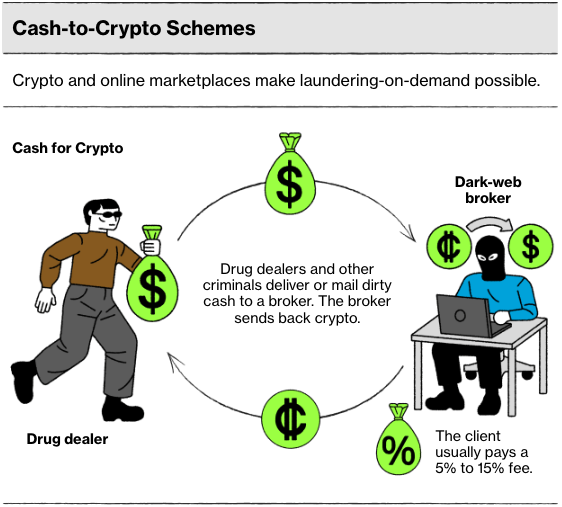
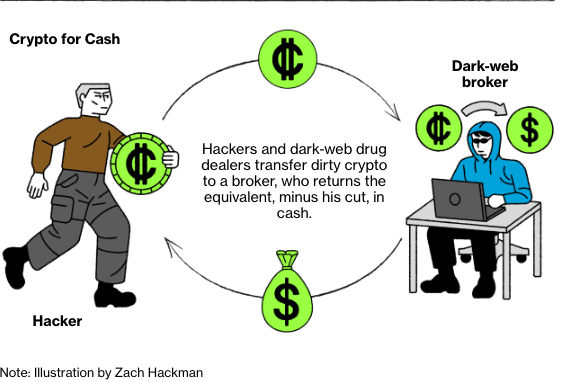
Powered by encrypted messaging apps, anonymized platforms and a growing pool of people willing to move money for a cut, the system is agile, scalable and disturbingly hard to shut down. What began a decade ago as a fringe trend on dark-web bazaars is fast evolving into a sprawling global ecosystem of freelance money movers. Even the biggest criminal groups, long reliant on in-house laundering, are starting to tap it.

This is happening while the Trump administration is shifting funding and priorities away from money laundering investigations while also clearing the way for crypto to take a larger role in global finance. That raises the dangerous possibility that laundering operations could slip entirely beyond the government’s ability to police them, several watchdogs and crypto enforcement agents say.

Image

Image

https://www.bloomberg.com/news/features/2026-02-11/drug-cartel-money-laundering-shifts-to-crypto-and-the-gig-economy


Speaking of the Trump administration,

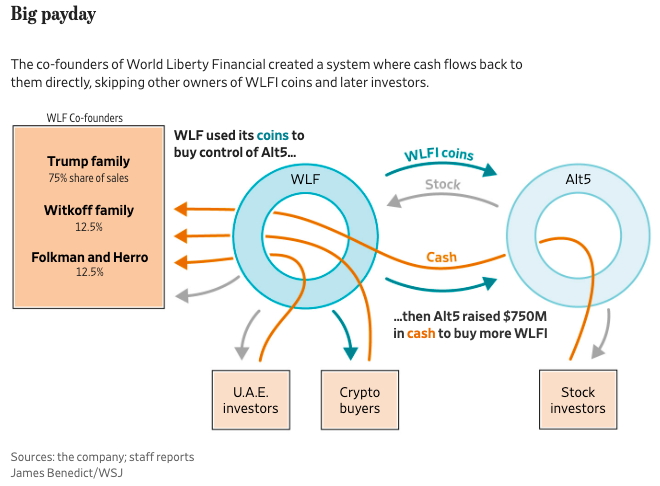
Both the Trumps and Witkoffs began cashing out during the run-up to the inauguration.

On Jan. 16, two lieutenants for Sheikh Tahnoon bin Zayed Al Nahyan, the U.A.E. president’s brother, signed the deal to purchase a 49% stake in World Liberty for half a billion dollars—a huge sum for a company that at that time had no products. Of the upfront installment, $187 million was directed to Trump family entities, while $31 million was slated to flow to entities affiliated with the Witkoff family. The deal didn’t give the Tahnoon-backed entity any rights to the proceeds of future WLFI token sales, preserving the Trumps’ and Witkoffs’ income stream.

World Liberty stopped selling its WLFI token to the public in March. By then, the company said it had taken in $550 million from the token sales, in addition to the U.A.E. investment money.

Image

https://www.wsj.com/finance/currencies/trump-sons-crypto-billions-1e7f1414
timelets: (Default)
Federal prosecutors in Washington sought and failed on Tuesday to secure an indictment against six Democratic lawmakers who posted a video this fall that enraged President Trump by reminding active-duty members of the military and intelligence community that they were obligated to refuse illegal orders.

It was remarkable that the U.S. attorney’s office in Washington — led by Jeanine Pirro, a longtime ally of Mr. Trump’s — authorized prosecutors to go into a grand jury and ask for an indictment of the six members of Congress, all of whom had served in the military or the nation’s spy agencies.

But it was even more remarkable that a group of ordinary citizens sitting on the grand jury in Federal District Court in Washington forcefully rejected Mr. Trump’s bid to label their expression of dissent as a criminal act warranting prosecution.

https://www.nytimes.com/2026/02/10/us/politics/trump-democrats-illegal-orders-pirro.html

It's really remarkable because the standard for a grand jury indictment is rather low:

Threshold: Probable cause (not "beyond a reasonable doubt").
Requirement: At least 12 of 16-23 members must agree.
Evidence: Based solely on evidence presented by the prosecutor.
timelets: (Default)
One key difference between web and AI — the two most recent tech revolutions — would be the impact of money. That is, the web was built with the idea that information wants to be free and everyone should have as much access to content as possible. By contrast, AI has access inequality built in. Compute and expertise cost money and people, esp. businesses, would get dramatically different outcomes from AI using free and paid services. Similar to social networking, the "free" aspect is a one-way street now: the public provides their data for free and hopes to get something valuable in return.
timelets: (Default)
South Texas is a heightened example of what contractors are facing across the country in areas where U.S. Immigration and Customs Enforcement activity has intensified. Home builders in Minnesota relayed similar experiences of raids picking up whole work crews, even those with legal documentation, said Grace Keliher, executive vice president of the Builders Association of Minnesota. Nationally, a third of commercial contractors reported being affected by immigration-enforcement actions in the past six months, according to a January report by trade group Associated General Contractors of America.

Two guards at a nearby immigration detention center said they frequently see detainees come in still wearing dusty work clothes from construction jobsites. A significant portion of the men they now guard have valid work permits, they said, which they haven’t seen in previous administrations, but those detainees still wait weeks to see a judge before being released.

Because of that, people are afraid to work whether they have legal authorization or not, a reality that has hit the industry and broader regional economy hard. Paul Rodriguez, CEO of Valley Land Title, estimated that residential construction activity fell 30% in recent months in Hidalgo County.

https://www.wsj.com/politics/policy/texas-immigration-raids-economy-87e23e2e

ICE/DHS agents have quotas for daily arrests and they are highly incentivized to fulfill the quotas. Moreover, arrests counted against the quotas are not revised down even if a person arrested during the raid is released later. Therefore, doing the right thing, i.e. arresting only illegals, puts an honest and conscientious agent at a disadvantage because a) he'd have to spend more time doing verification; b) his numbers would be lower than average because they would not include lawful immigrants. This is a clear case of government corruption, where doing the right thing is disincentivized.

Anyone running a business knows that incentives matter because wrong incentives lead to wrong outcomes. When people voted for Trump in 2024 they partially justified their choice by the fact that in their opinion he was a good (rich!) businessman. What we see now is that he is a good businessman when maximizing his own profits and/or advantages, not pursuing public good. Ultimately, private business and public governance are completely different domains of expertise. I only hope is that the clique of scoundrels (Trump, Witkoff, Lutnick) and morons (RFK jr) will not do too much damage to the country.

upd. One more thing: Trump keeps touting the growing value of people's assets in 401Ks due to the stock market rise. Of course, as a businessman he knows the difference between value of assets and cash flow/liquidity: he himself went bankrupt several times because he was "assert rich and cash poor". This divide — assets vs cash flow — comes loud and clear in surveys, both formal and informal. https://www.wsj.com/economy/consumers/americans-rate-trump-economy-21b85459
timelets: (Default)
Факты – упрямая вещь, и эти факты говорят нам о том, что при «слабом» Байдене Москва не могла и близко позволить себе того, что сходит ей с рук при «сильном» Трампе.

Без Трампа у Путина не было уверенности в том, что «энергоцид» Украины и массовый расстрел городов-миллионников баллистическими ракетами сойдет ему с рук. Теперь она есть. Всеми своими действиями, какими бы благими намерениями он ни руководствовался, Трамп последовательно поощрял Путина к террору. Он создавал у него уверенность в том, что «ответка» от Америки не прилетит.

https://t.me/v_pastukhov/1809

Эпизод с Гренландией открыл глаза европейским русским на Трампа.

Profile

timelets: (Default)
timelets

February 2026

S M T W T F S
123 4 5 6 7
8 9 10 11 12 13 14
15 161718 19 20 21
22232425262728

Syndicate

RSS Atom

Most Popular Tags

Style Credit

Expand Cut Tags

No cut tags
Page generated Feb. 23rd, 2026 02:03 am
Powered by Dreamwidth Studios