The shortlists for the 2026 Australian Indie Book Awards have been announced. The awards celebrate the finest of Australian writing and are nominated and judged by indie booksellers. The awards are given in several categories, including children’s and young adult. Below are the shortlisted titles for those two categories. Click here to see the entire list of shortlisted titles.
The winners of the Nero Book Awards have been announced. The awards celebrate the best writing of the year in the UK and Ireland in four categories: children’s fiction, fiction, debut fiction and nonfiction. The winners of the categories then compete to win the Gold Prize Book of the Year. Below is the winner and other finalists for the Children’s Fiction category:
At school, she is bullied, called names. Luckily, in the summer she can journey to her grandmother’s home. She brings empty mason jars collected through the year and flip-flops though she will be barefoot all summer. When they arrive, she announces to her grandmother that they have to fix her mojo bag. Her grandmother is thrilled. As they have lunch, her grandmother tells her about magick and how hoodoo came from Africa through the enslaved people. The two work together all summer, doing rootwork together, making mojo bags stuffed with herbs, working in the garden, going for long walks. At the end of the summer, the mason jars are full and her mojo bag is replenished stronger than before.
This is award-winning McBride’s first picture book and it’s lovely. Working within the restraint required for picture books, she manages to create an entire world of hoodoo and magick that celebrates ancestral knowledge and connection with nature. Her text is inviting and powerful and at the end of the book she offers small ways that readers can connect with nature themselves. The illustrations are dynamic and beautiful, celebrating connection just as much as the text does with closeness, pages filled with plants, and familial love.
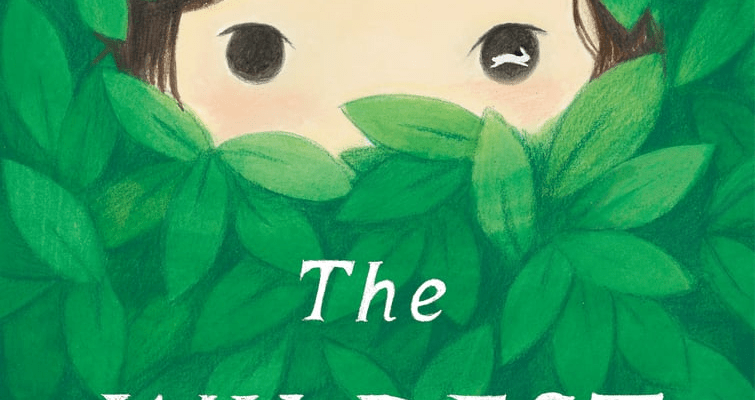
Eleanor loves wild things, all sorts of animals and plants. One night when she goes to bed, she awakens to discover that the wildness has entered her house. Amid the animals, she continues to live her regular life. She has breakfast from her favorite bowl has squirrels and rabbits fill the kitchen. She eats at the couch, which is actually a slumbering bear. She draws on the walls and floor, filling the blankness with butterflies, flowers and more. With her new friends, they play together until Eleanor sees herself as a wild thing too.
There is such a gentleness to this picture book with its fine-lined illustrations that show a small girl letting herself be as wild as she wants to be. The connection with nature is palpable as Eleanor spends time outside. When that is brought into the house it is merry and often silly, giving space to that sort of wildness in indoor life too. In what might be a dream of wildness, the book embraces nature and animals and how being with them can be inspiring too.
A dreamy look at letting loose and connecting with nature. Appropriate for ages 3-6.
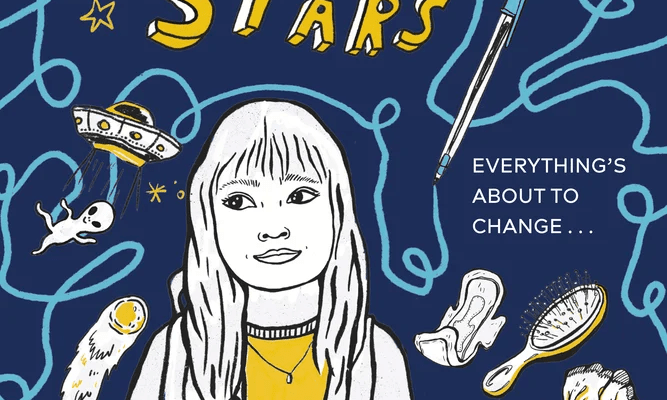
Luna’s life is pretty normal as she starts seventh grade. She is best friends with Scott, a friend she’s had since she was very small. She loves writings and discovers a love of zines. At school, her quiet kindness leads to her being seen as the book doctor, a person who can refer just the right book to a reader to help them out. She helps one classmate with self-esteem and then everyone seems to want her help. Luna begins to create zines to help people too with Scott’s art in them and her words. Soon she gets the attention of one of the more popular girls in class and starts to hang out with that popular girl group. But what will that mean for her friendship with Scott? And how much is she willing to change to fit in?
The Newbery-Honor winning author returns with a new middle school book. She captures so tangibly the push and pull of middle school, the anxiety about the changes that inevitably come, and how you can get lost in it all. The depiction of the hierarchy of popular girls doesn’t take it too far, staying entirely relatable and realistic in their cruelty. At times joyously unique and independent and other times suffocating in its conformity, this book is middle school between two covers. Just the zine about getting your period is enough to recommend this book.
A triumph of a book about writing, middle school and staying yourself. Appropriate for ages 9-12.
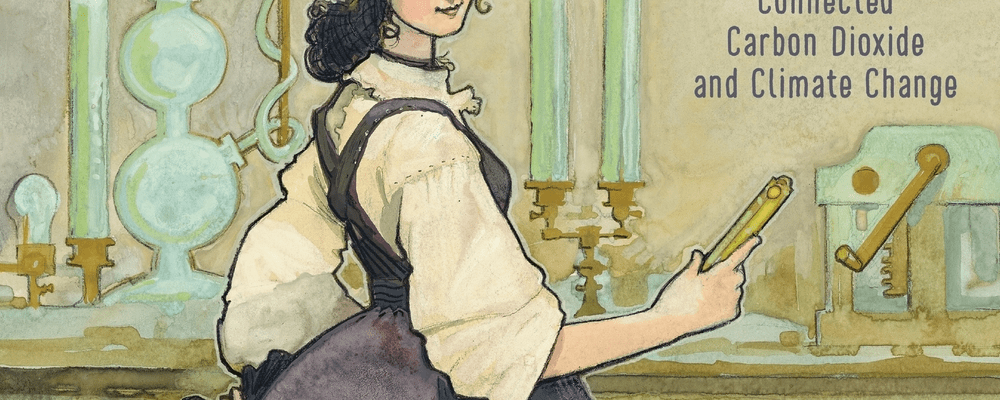
Though an Englishman is credited with discovering that carbon dioxide traps heat, it was actually an American woman, Eunice Newton Foote, who did it first in 1856. Eunice grew up on her family farm and asked lots of questions. At age 17, she was sent to a girls school where she was taught science and able to use a laboratory. She grew up, married and had children and stayed curious. Never a professional scientist, she did science at home, learning about various gasses and their capabilities. When she wasn’t allowed to present her findings since she was a woman, a friend presented them on her behalf. She was the first to tie carbon dioxide to global warming, a foundational learning for our times.
Offering just the right amount of information for young readers, this nonfiction picture book focuses on Foote’s curious mind and scientific studies. The illustrations are particularly striking with Foote in her wide hoopskirts engaged in long walks, scientific experiments and discoveries. They demonstrate how rarely we see women of this period engaged in scientific work.
Inspiring and engaging. Appropriate for ages 7-10.
Take a walk like Charles Darwin in this nonfiction picture book that reveals both Darwin’s thinking process and also his scientific discoveries. First find a rock or two, then a walking stick and then find a loop to walk. It could be a loop around the block or a loop around the world, like the one Darwin made on his ship. That’s when he discovered the fossil of a giant sloth, the variety of beaks on finches that lived on the Galapagos Islands, and the bones and skin of a rhea, a bird he’s been seeking but had been served for a meal. Then came the thinking. The why of it all. The walking in loops. The stacking of rocks to count the loops. What will you think of when you take your own walk?
The combination of encouragement to get outside, walk and think with the historical and biographical information on Charles Darwin creates an unexpected treat of a book. The book ends with the author explaining that walks that are celebrated tend to be extraordinary, full of vistas and beauty. That is not the sort of walk we are talking about. These are thinking walks, going the same way every time. And just look at the result. The illustrations play with the dichotomy of the book, sharing historical elements with paintings and offering a light-hearted feel.
A real thinker of a book. Appropriate for ages 5-9.
When Beth is found dead near the March family home in Concord, Massachusetts, her family is devastated. Their father is gone, having left the country months earlier due to the negative reaction to his book about his daughters. In that same book, Beth dies at the end. As the sisters grieve and start to work out the mystery of her death, there are many suspects and suspicious situations that led up to the night of her death. Each of the sisters have times when they think that their own actions caused Beth’s death, but the truth is far more sinister.
This modern mystery takes the Little Women cast and manages with great skill to maintain their unique characters. Readers who love the original book will enjoy seeing Jo navigate social media fame, Amy struggle to find attention for her artistic talent, and Meg make choices about how to keep up with her more wealthy friends at Harvard. Bernet never loses sight of the original book while still creating something new and fresh, even allowing Beth’s voice to be heard through flashbacks. Readers who don’t know the original characters will find a great mystery here filled with sisters you never want to leave.
A grand mystery done with great skill and a real fondness for the original.
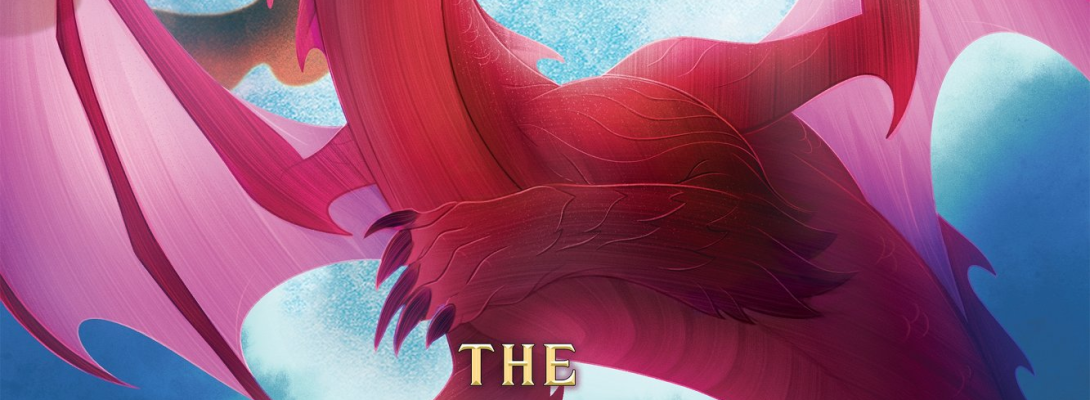
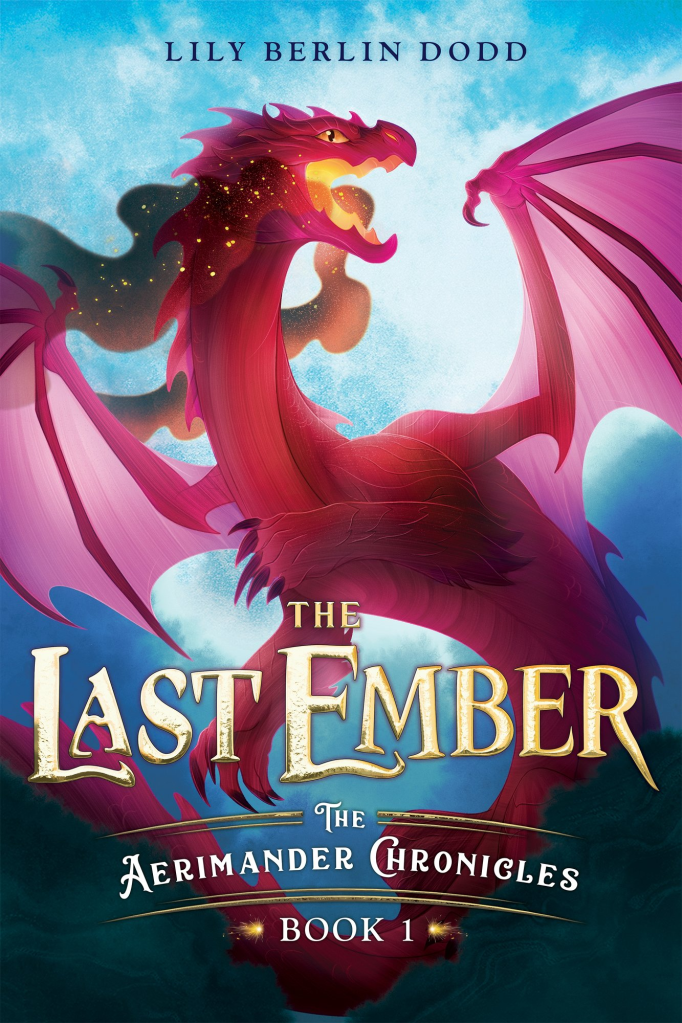
This first book in a new series starts with a fiery, war-torn tale of a city filled with wealth and poverty. Eva is a 12-year-old chemist attending a prestigious scientific school for girls. When her father gifts her the choice of anything in the jewelry store for her birthday, she selects a silvery ball that she believes is a rare element, rubibium. Meanwhile, Dusty has grown up as a foundling at St. Ichabod’s where he is now the oldest boy and headed into the military when he turns 14 from which he knows he won’t return. Dusty has become part of the Thieves Union at night and is now asked to steal that silvery ball from Eva in her dorm room. Soon Dusty and Eva find themselves of interest to the Director of Kingdom Secrets, who will stop at nothing to get his hands on what Eva has found. Could it actually be an egg from an extinct dragon-like species of lore? Fire and time will tell.
Dodd’s writing is incredibly engaging, allowing readers to understand the society and world she has built fully. Her interludes of information serve more as a friend offering insight rather than information loading. In Eva and Dusty she has created two great hero figures who are complex and interesting to spend time with. Even her secondary characters, including Eva’s roommate and Dusty’s best friend, are fully drawn and fascinating. Add in a potential dragon and you have a rollicking book filled with scientist girls, thieving boys and a dangerous government.
A great series opener, this middle-school fantasy novel is an exuberant experience. Appropriate for ages 8-12.







 Waking Brain Cells
