Gospel commentary index Lectionary Year A

On this page, you can find an index to all the commentary articles on the gospel lectionary readings for the whole of Year A, together with links to the video discussions between Ian and James. The articles will be reposted with updates during the year—but they are listed here for convenience and planning ahead.
How does archaeology help us read the Bible?

Cris Rogers is a vicar in East London (at All Hallows, Bow), and a friend online. He has recently been posting interesting material on the archaeological background to the Bible. So I asked him what he was doing and why—and he gave some very interesting answers!
IP: You have recently been in the habit of posting really interesting links on social media to archaeological finds. What first sparked your interest in archaeology and the insights it offers to interpreting the Bible and Christian faith?
CR: I have always been interested not only in the words of the Bible, but in the world those words came from. Scripture never dropped from the sky in abstraction; it was written in real places, by real people, under real political, social, and economic pressures. Archaeology helps me hold those two things together—part of that interest began quite early. Like many people of my generation, I grew up watching films such as Raiders of the Lost Ark. While they are obviously fictional, they sparked an imagination for buried worlds and lost histories. Around the same time, I remember watching a long documentary about the Shroud of Turin. Whether one is convinced by it or not, the idea that physical objects could still speak across centuries fascinated me.
Jesus calls his first disciples in Matthew 4

This Sunday’s lectionary reading for Year A, Epiphany 3, is Matt 4.12–23. The epistle is 1 Cor 1.10–18, where Paul gets into the issues of factions and divisions. The video for that reading can be found here, and is linked at the end of this piece, as is the video on Matthew 4.
The gospel passage begins the account of Jesus’ ministry in Galilee, which continues until Matt 16.20 (compare ‘from that time on’ in Matt 4.17 with Matt 16.21), and now Jesus takes centre stage as the main actor in the drama. But from the beginning, he does not act alone, but calls a community of disciples to himself, and in Matthew they are with him throughout—until he is deserted in Matt 26.56.
Mark’s account of the start of Jesus’ ministry is quite stark and factual—but Matthew makes it more specific and personal. His ministry begins, not merely ‘after John was arrested’ (Mark 1.14), but ‘when he [Jesus] heard that John had been arrested’. We know from John 3.22 and John 4.1–3 that Jesus had spent some time in the southern area, apparently involved in ministry in parallel with John; as part of the undesigned historical coincidences in the gospels, this fits well with Matthew’s depiction of Jesus as part of John’s renewal movement. The word translated ‘withdrew to Galilee’ (ἀναχωρέω, anachoreo) can in fact mean ‘return to’, but Matthew typically uses it to refer to an escape from danger (as in Matt 2.12, 2.14, 2.22, 14.13). The movement from the danger of Herod Antipas in the South back to Galilee echoes the journey he took with his family when they first came back from Egypt.
Factions and unity in 1 Corinthians 1 video discussion

The lectionary epistle for Epiphany 3 in Year A is the next part of 1 Corinthians, verses 10 to 18.
Having prepared his canvas in the previous verses with all the amazing things God has done for his readers, Paul now paints in the details of the problems of factionalism. He challenges the idea of charismatic leaders, and of ministry being about people rather than faith. And he sows the seeds of ideas he will develop later in the letter of the nature of unity and diversity in the body of believers.
The gospel reading is Matthew 4.12–23, the initial preaching of Jesus and calling of the first disciples. The written commentary is here.
and the video discussion is here.
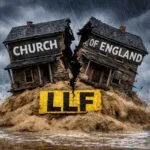
The Bishops on LLF: how good a diagnosis of our pain?

Summary: the statement from the House of Bishops is much as anticipated in terms of drawing the LLF process to a close with none of the further promised changes being…
How John the Baptist points us to Jesus in John 1

For the Second Sunday of Epiphany in Year A, the readings are 1 Corinthians 1.1–9 and John 1.29–42. You can find the video discussion of the epistle here and posted…
The grace of God in 1 Corinthians 1 video discussion

For the Second Sunday of Epiphany in Year A, the readings are 1 Corinthians 1.1–9 and John 1.29–42. Paul’s introduction to his letter to the Corinthians offers the most remarkable…
Running on empty in the PLF journey?

The following article by Andrew Goddard provides a historical overview and critique of the Church of England’s protracted and divisive struggle to implement the Prayers of Love and Faith (PLF)…
Did Paul rename church leaders and co-workers?

It has often been noted that, in some key respects, the emphasis of the narrative of Acts is different from what we might suppose from reading Paul’s letters. Given that…
Visit Istanbul and the Seven Cities of Revelation in Sept–Oct 2026

Please note: this trip is now also booked up! If you would like to be on a waiting list in case of cancellations, or would like to be notified of…
The baptism of Jesus in Matthew 3 as fulfilment of the Old Testament

This Sunday’s lectionary reading in Year A is the baptism of Jesus from Matt 3.13–17. It is a short and compact reading, and needs careful reading in its own right….
Peter’s summary of the gospel in Acts 10 video discussion

The epistle for Epiphany 1, known as the Baptism of Christ, is Acts 10.34–43. It is worth preaching on rather than Matthew 3.13-end because it is such a rich and…