2,256
2,256 people
Skip to main content

Generative AI and the marketer

A DATA REPORT BY TYPEFORM
Generative AI isnโ€™t a passing trend. Its accessibility and value are already redefining marketing. But what does this mean for marketers in 2026? And how are they really feeling about the rise of AI? We surveyed 2,000+ marketers and consumers to explore these questions and the new workplace partnership between the marketer and AI.โ€จโ€จ

Note: When we refer to AI throughout this report, weโ€™re referring to Generative AI.
The adoption of AI
โ€œAI really affects everything I do at work nowโ€
Generative AI is a powerful output machine capable of creating never-ending iterations of text, visuals, audio, and video: all cornerstones of marketing. โ€จAnd with the expectation that marketers do more with less, itโ€™s not surprising that 95% of marketers report using AI at work while only 5% avoid it.
Image
95%
of marketers use AI at work
5%
avoid it
How reliant are marketers on AI?
5% Rely on it
31% DEPEND ON IT
43% USE IT REGULARLY
16% USE it OCCASIONALlY
5% avoid it
Image

โ€THE ADOPTION OF AI AI is here to stay. McKinseyโ€™s The state of AI in 2025 survey reveals that 88% of companies now use AI in at least one business function, with the greatest revenue benefits from AI in marketing and sales.

โ€

Despite AIโ€™s recent rise in accessibility, reliance is already setting in. The majority of marketers reported using AI regularly, but could manage without it. Close behind are more than a third of marketers who say they โ€œrelyโ€ or โ€œdependโ€ on AI.

โ€

So where is AI most pivotal? Writing. 79% of marketers report using AI for copywriting or written contentโ€”and they say writing, editing, and repurposing content is where AI adds the most value.

Marketersโ€™ most common AI use cases*
79%
Copywriting or written content
57%
Visuals or graphics
31%
Video or motion
Marketersโ€™ most valuable AI use cases
Writing, editing, repurposing content
brainstorming, drafting plans
research, analysis
*Respondents could select multiple answers

The dataโ€™s clear: Marketers are using AI for tasks that often require a specialistโ€™s helpโ€”but itโ€™s not the flashy, visual use cases that bring them the most relief. Itโ€™s getting to a decent piece of content, a useful idea, or a clear conclusion faster.

โ€

Needless to say, marketers are eager for what AI can help them with next. When asked how they feel about using AI, most marketers report optimism, excitement, or neither (theyโ€™re neutral). Only a small percentage (13%) report negative emotions, specifically skepticism or anxiety.

How marketers feel about using Al

Image
Image
Image
Marketer take
โ€œWhile I feel threatened by AI, I also believe very strongly that AI has the power to make every business better.
No matter how small the business is. Because it helps you reach your audience faster.โ€
marketer TAKE
โ€œI'm not really afraid of AI. I use it a lot for very easy tasks.
But it helps me in my work day.โ€
marketer TAKE
โ€œI think it's actually kind of genius to use [AI] without being too dependent on it,
but just using it as a way to enhance the ideas you already are bringing to life on your own.โ€
marketer TAKE
โ€œIt is still really helpful to uncover blind spots, see where you
might have missed things and just sort of get a different perspective than maybe what we have in the room.
marketer TAKE
โ€œI'm really impressed with how I was able to organize my brain, because I have hundreds of ideas with AI,
and it's able to keep track of all of that, and I think it's absolutely wonderful.โ€

Another signal of AIโ€™s value: pride. Does saving time on repetitive work make marketers happy? Yes. But does AI make their work better?

โ€

For many, the answer is also yes. 40% of marketers say using AI increases pride in their work, and 31% say their pride levels are the same as if they didnโ€™t use AI.

Image
71%
of marketers are just as proud of their workโ€”or even prouderโ€”when using AI.

To marketers, AI isnโ€™t controversial. Itโ€™s a source of relief in a frequently under-resourced profession. It increases access and makes the specialized, resource-heavy work of content creation more manageable.โ€จ

โ€

But whatโ€™s next?โ€จ

โ€

As AI models continue to improveโ€”and fastโ€”itโ€™s likely marketer satisfaction with AI will also increase. The question is: Will their audience (the consumer) feel the same?

Key takeaways on the adoption of AI:

โ€

  • AI is already universal. Build your workflows for AI-accelerated outputs.
  • Get the most ROI from AI by optimizing your writing workflows.
  • Tap into your teamโ€™s AI enthusiasm to support broader, smarter AI use.

Image
AI AND TRUST
โ€œIt comes down to transparency and respectโ€
As AI becomes increasingly normalized, itโ€™s doing something notable: Democratizing access to high-quality work, especially for small teams with smaller budgets. While consumers have criticized brands that use AI and applauded those that donโ€™t, the bigger question lies in whether these perceptions have a tangible impact. Does AI harm brand trust?
Image
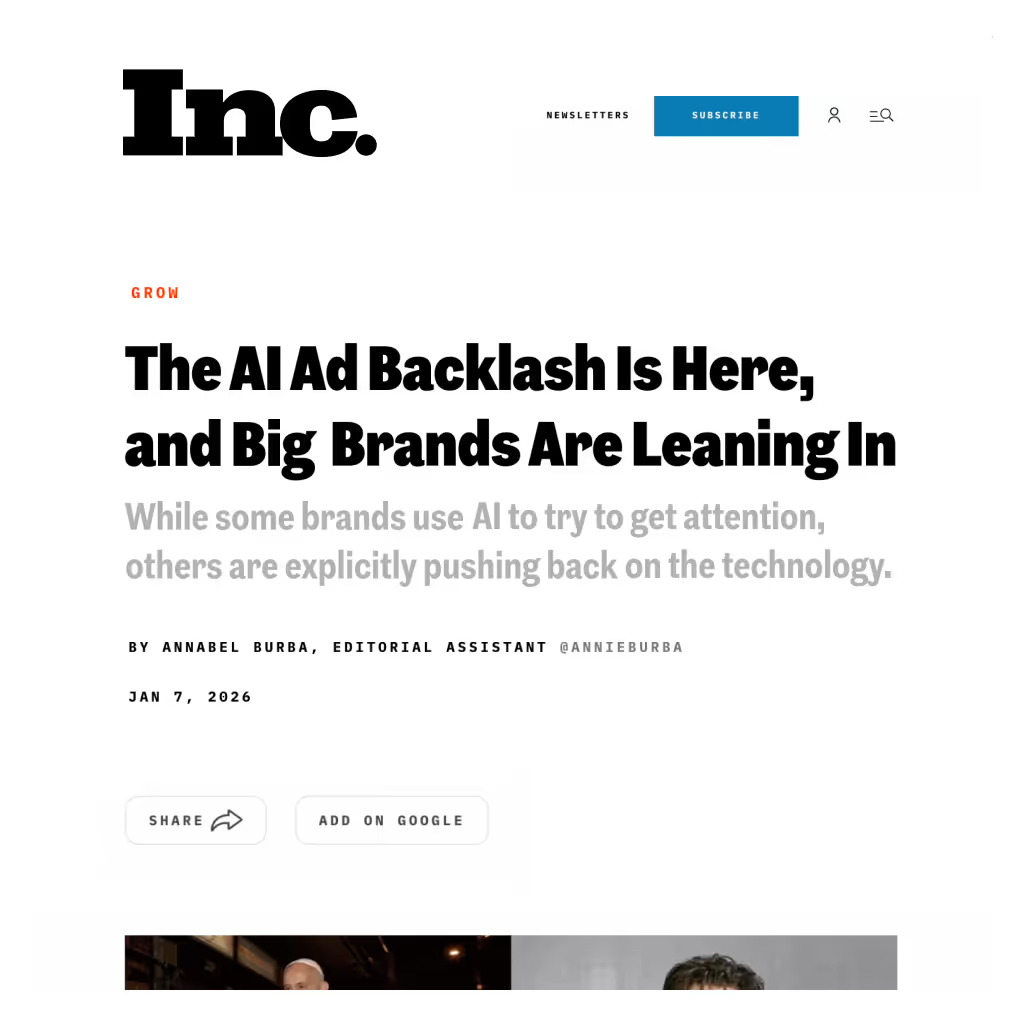
2026 begins with a series of anti-AI-slop ads from brands including Almond Breeze, Equinox, and more.
See more
Image
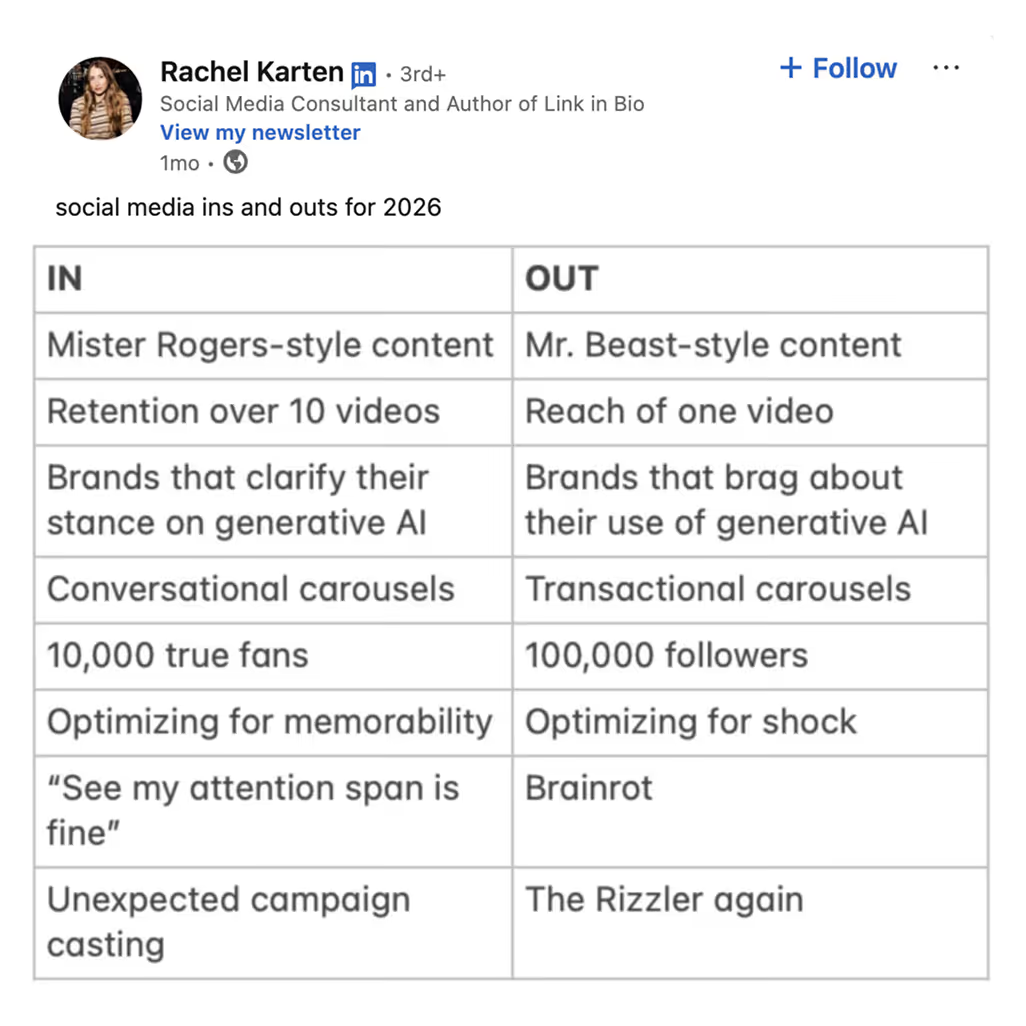
Social media consultant Rachel Karten includes brand stance on Generative AI in her list of 2026 social media โ€œins and outs.โ€
See more
Image
Is the new default to blame any errors or weakness in a creative asset on AI?
See more
Image
Ariana Grandeโ€™s apparent sixth finger in a photo appearing in Vogue Japan stirs online debate over AI slop in fashion.
See more
Image
What defines goodโ€”and trustworthyโ€”written content when โ€œAI paranoiaโ€ is on the rise? Once again, the discussion returns to the em dash.
See more
Image
Discussions of AI slop exist alongside increasing calls from AI's proponents (including Gary Vaynerchuk) to ignore discomfort around AI and embrace it anyways.
See more

โ€AI AND TRUST Itโ€™s easy to assume from online discourse that brands should avoid using AI or risk alienating their customer. But thereโ€™s a crucial nuance: AI slop.โ€จ

โ€

Consumers donโ€™t like slopโ€”low-quality, mass-produced digital content generated by AI. But our data doesnโ€™t support the broader โ€œAI harms brandsโ€ narrative.โ€จ

โ€

Instead, it suggests that consumers donโ€™t want to be misled by any marketing, including marketing made by AI. The majority want AI disclosure, but notably, only 21% of consumers say theyโ€™d trust a brand less because of AI.

Image
59%
of consumers believe brands should disclose when content is AI generated.
Image
21%
of consumers say AI-generated marketing would make them trust a brand less.

Understanding AIโ€™s effect on brand trust is complicated. Marketersโ€™ excitement over AI makes it easy to forget to slow down and ground decision-making in the consumerโ€™s point of view.

โ€

But the consumerโ€™s mind is still being made up on whether AI is harmful or just the latest excuse for sloppy marketing.

โ€

Nearly half of marketers use AI, donโ€™t disclose it, and donโ€™t regret it. Luckily for marketers, the majority of consumers judge marketing based on qualityโ€”not AIโ€™s presence in it.

Nearly
50%
of marketers say theyโ€™ve published AI-generated work without disclosing and would do so again.
ImageImage

Meanwhile, consumers crave transparency and quality.

consumer TAKE
โ€œI think AI will be the downfall of some businesses if they don't use it effectively [...] There are ways to use it that lighten the workload of people and get the job done.โ€
consumer TAKE
โ€œNothing will stay the same. But unless people get way more involved in quality control, at the current pace of use, within 5 years AI will have devalued the majority of what is published on the internet to the point of un-usability.โ€
consumer TAKE
โ€œIโ€™m terrified about whatโ€™s happening with AI. You canโ€™t tell whatโ€™s new or fake and I hate it when companies have AI answering machines. I think things will only get further from humanity and AI will take over ever[y] little aspect it can.โ€
consumer TAKE
โ€œI'd expect most if not all marketing promotions will be AI generated to some degree in 5 years. I'd imagine content to be similar though more ambitious given the greater possibilities available. Unfortunately, I believe jobs will be lost although there will be cost and time savings.โ€
consumer TAKE
โ€œI fear that AI will overtake the creative marketing positions even though it depends on creative marketing content produced by humans in order to operate. Using AI tells me that a brand/company only cares about profits and not people.โ€

So be thoughtful, not fearful, the next time you prompt. AI can be part of consumer-facing content without harming brand trust when you prioritize quality, consider context, and stay true to your brand.โ€จ

โ€

For your brand (and your customer), that might mean avoiding AI, disclosing AI, or understanding when one or both is important.โ€จ

โ€

But done right, AI can elevate your brand by helping you create more relevant experiences, ask better questions, and make your work feel more human.

Hear from marketers
โ€œAI can make marketing better for the clients that I'm trying to reach by more clearly articulating their pain points.โ€
Image
"[AI] should never be used to mislead, over-automate human connection, or create a black box where no one fully understands exactly what is being said or why."
Image
โ€œIf people find out that instead of paying artists or graphic designers to make graphics and also a soundtrack for an ad and that you just use AI to generate it for, like, a big activation, you are going to lose, no, you are going to hemorrhage followers.โ€
Image
โ€œI think the entire world is using AI in different formats in their marketing. I think it's absolutely fine.โ€
Image
โ€œIt's also important to address the fact that we are gonna be using AI in some things [...] And it's not just AI doing the work for us, where in reality we are making it work with just the help of AI.โ€
Image

As AI becomes more widespread and indistinguishable from human output, it becomes harder to imagine a future where AI use is something we want to avoidโ€”or even can.โ€จ

โ€

Even a year from now, will marketers choose to avoid AI? Will they feel the need to disclose? And how will the value we place on marketers themselves be affected?

Key takeaways on AI and trust:

โ€

  • AI use affects brand trust far less than poor experiences. Use it to deliver more engaging interactions.
  • Consumers trust quality and clear intent, so disclose AI usage when it counts, but let quality lead the experience.
  • Even in the age of AI, quality content wins. Use it to raise your standard and deliver it more consistently.
Image
AI AND JOB SECURITY
โ€œYou will still need human eyes and creativityโ€
Marketers have overwhelmingly adopted AI and even rely on it. Consumers are accepting AI, even if the rules around โ€œgoodโ€ usage are still being defined. But if AIโ€™s really boasting a reputation this good, why wouldnโ€™t it take over marketing jobs? The answer is simple: Nothing beats the human touch.
โ€œI think there will become an increasing need for humanity in marketing.โ€
โ€œI think my biggest fear is that in the future [AI] definitely could make marketers obsolete.โ€
โ€œIn 5 years, I think AI will make marketing far more personalized and predictive, helping brands deliver the right message at the right time. What will stay the same is the need for creativity and human connectionโ€”AI can assist, but it canโ€™t replace genuine trust and storytelling."

AI AND JOB SECURITY AI is disrupting the workforce, and marketers feel threatened. One-third of marketers report losing their jobs to AI or knowing someone who has, while the majority feel some degree of worry over job security.โ€จ

โ€

But marketers are also hopeful. They see a clear division of labor taking shape. AI automates the tedious, while human minds bring the creativity, context, and critical thinking required for stand-out marketing.

Image
1/3
of marketers report losing their job or knowing someone whoโ€™s lost their job due to AI.โ€จBut theyโ€™re still hopeful.
How threatened do marketers feel by AI?
35% NOT THREATENED
28% slightly
24% moderately
10% significantly
3% very
marketer TAKE
โ€œIf [AI] were to get banned tomorrow, I think a lot of the jobs that were going away would actually end up sort of getting replenished. โ€จYou would work with a graphic designer, a human one,
rather than having a program just kind of turn some AI slop out.โ€

Marketers recognize their own potential and AIโ€™s present limits. Yes, AI can produce valuable content, but it canโ€™t consistently replicate human quality or creativity.โ€จ

โ€

In other words, AIโ€™s ability to turn input into output isnโ€™t the same as years of marketing expertise, even as AIโ€™s presence and our confidence in it grows.

โ€

Take copywriting. Itโ€™s the top AI use case. It makes sense marketers across the board believe copywriters are the most at risk of losing their jobs. But the copy experts themselves feel more secure: Only 40% of copywriters believe their role is at risk.

60%
of marketers say copywriters are most at risk of job loss due to AI.
But only
40%
of copywriters themselves say their role is at risk.

Despite AIโ€™s ability to empower marketers, itโ€™s not all-powerful yet. It still leaves gaps marketers have to fill with knowledge born from experience and expertise. Especially when it comes to writing.โ€จ

โ€

Almost all marketers also report that they edit AI copy to make it sound more human. No matter how much value AI adds, marketers know the best copy is a little more distinct, and often, more imperfect.


91%
of marketers say they occasionally or often edit AI-generated copy even when itโ€™s accurate, to make it sound more human.
ImageImage
marketer TAKE
โ€œI rely on [AI] to handle tasks that would otherwise take hours, which frees me up for higher-value work AI canโ€™t do (at least not yet). But at the end of the day, I see it as a toolโ€”not as a replacement for human creativity and judgment.โ€
marketer TAKE
โ€œAI in marketing is unoriginal (for content creation), provides inaccurate or outdated information (for research purposes), and won't quit adding the weird emojis.โ€
marketer TAKE
โ€œIt's too reliant on plagiarism and removing it would cut down on filler content across marketing channels. It would also mean that customer service would not have to use unreliable bots.โ€
marketer TAKE
โ€œAs a marketer, AI isnโ€™t going anywhere, but itโ€™s my job to use it strategically and as a tool, not as something to take over my job.โ€
marketer TAKE
โ€œMy biggest fear is that AI will amplify bad practices: over-targeting, spreading misleading ads, replacing human judgment with sloppy automation, or creating a flood of bland, low-quality content that drowns out genuine voices.โ€
marketer TAKE
โ€œAlongside all of my concerns about environmental impact, impact on creatives, stolen material, inaccurate information, dependency, etc. is just a feeling of icky-ness that I canโ€™t shake. Iโ€™d give up the convenience of getting 100 headline options in 2 minutes if I never had to feel that again.โ€

Itโ€™s the gap between what AI creates and what humans define as good writing (and by extension, good marketing) that gives marketers optimism regarding their roles.โ€จ

โ€

However, marketersโ€™ optimism doesnโ€™t mean never changing or improving to remain relevant. Nearly two-thirds of marketers say theyโ€™re looking to stay in the field and adapt by re-skilling, especially those in design and customer relationship management (CRM) roles.

Image
Nearly
2/3
of marketers are re-skilling or planning toโ€”with the heaviest representation among design and CRM roles.
marketer TAKE
โ€œI think from a human standpoint, we become more like the strategist,
or as I like to focus on it, conductors of the orchestra where AI are the players.โ€

AI is more than a tool now. Itโ€™s a workplace partner. And like any partner, AI can be a multiplying force for productivity and positivity.โ€จ

โ€

But that also means it introduces new ways of working and process gaps marketers canโ€™t lose sight of as they rush to take advantage of every new AI capability.โ€จ

โ€

As long as marketers continue to adapt to AI, acknowledge its imperfections, and advocate for distinct, creative marketing, the future with AI looks bright.

Key takeaways on AI and job security:

โ€

  • AI drives efficiency, but humans drive quality. Use AI to accelerate your work, but refine the results yourself.
  • Re-skilling is on the rise as marketers who feel secure still want to keep pace with AIโ€™s impact on their work.
  • AI will keep getting better, but its strongest role remains the same: a partner, not a threat.
Image

A final reflection on Generative AI and the marketer

CONCLUSIONWhether itโ€™s job security or the quality of their work, marketers have plenty to weigh when it comes to AI. But the data is clear: Theyโ€™re also leading its adoption.โ€จ

โ€

Rather than feeling threatened by AI, marketers are using it to reshape how they work. It helps them move faster, explore more ideas, and start from stronger foundations.โ€จ

โ€

We believe AI should give more people access to the tools and insights that once felt out of reachโ€”and make every customer interaction more thoughtful and relevant.โ€จ

โ€

That's the AI future weโ€™re building at Typeform.

The source data: The making of the Get Real survey and bonus findings

APPENDIX Take a peek behind the curtain: who we surveyed, how we did it, and the intriguing stats that deserve a special shoutout here.

โ€

This report? It came from a Typeform survey designed to answer what marketers think about AI, how they use it, and how they talk about it.

Who we surveyed

We heard from
2,256 people
1,191
marketers across content, social, paid media, analytics, growth, and creative rolesโ€”with experience ranging from just starting in their careers to senior leaders.
1,065
consumers representing a diverse rangeโ€จof ages, regions, and backgrounds.

The marketers we surveyed work across every major industry, with the most coming from:

15%
Marketing/Advertising/Creative Services
15%
Software/Tech/SaaS
9%
E-commerce

The companies they represent range from freelancers (20%) to teams with 10,000+ employees.

Our respondents (a mix of marketers and consumers) covered a wide age mix, led by:

24%
aged 18-24
22%
aged 25-34
22%
aged 35-44

The remaining group included individuals 45 and up.โ€จ

โ€

Together, they gave us a clear view of how AIโ€™s reshaping both sides of the marketing experience.

How we collected the data

We used a mix of question types to capture the big-picture trends and the human nuance behind them:

โ€

  • Multiple-choice questions
  • Likert scale questions
  • Open-ended questions
  • Video questions
  • Questions that collected audio and video responses

โ€

We used separate question paths for marketers and consumers so we could compare how each group uses and trusts AI.

More from marketers

Marketers had a lot to say about how AI shows up in their day-to-day workโ€”what helps, what frustrates them, and what still feels uncertain.

โ€

These extra insights didnโ€™t fit neatly into the main chapters, but they add helpful context about how marketing teams are using (and questioning) AI right now.

Saving time is still the number one reason marketers try AI.

24%
of marketers adopted AI to work faster.
24%
of marketers hoped AI would improve the quality of their work.

Hereโ€™s what marketers are actually using AI for:

79%
Copywriting or written content
57%
Visuals or graphics
31%
Video or motion design
29%
Voiceover โ€จor audio
18%
AI avatars or spokespeople
2%
Donโ€™t use AI at all
Respondents could select multiple answers

Marketers believe ethical AI use is context dependent, not absolute.

22%
of marketers describe AI ethics as intent and context dependent.
20%
of marketers emphasize transparency and data consent.

AI policies are a work in progress.

42%
of marketers say their company has no formal AI policy.
Of those with a policy,
20%
of marketers say their policies are vague or still evolving.

The brand behind the report

WHY TYPEFORMBecause surveys that feel like conversations get better responses. They give you better insights.โ€จ

โ€

Just look at the insights this Get Real report revealed. Typeform lets us get realโ€”real answers, from real people, with real insights.โ€จ

โ€

And weโ€™re just getting started uncovering whatโ€™s next in marketing. Want to come along for the ride? Subscribe to Informed and get marketing trends, data deep-dives, and tips and tricks delivered straight to your inbox.