Customers who viewed this item also viewed
Buy New
-50%
$15.85$15.85
FREE delivery Sunday, October 4 on orders shipped by Amazon over $35
Advertisement
Advertisement
Ships from: Amazon.com Sold by: Amazon.com
Used - Very Good
$7.09$7.09
FREE delivery October 6 - 8
Advertisement
Advertisement
Ships from: Reliant Distribution Sold by: Reliant Distribution
Download the free Kindle app and start reading Kindle books instantly on your smartphone, tablet, or computer - no Kindle device required.
Read instantly on your browser with Kindle for Web.
Using your mobile phone camera - scan the code below and download the Kindle app.
Follow the authors
OK
Outlive: The Science and Art of Longevity
Purchase options and add-ons
“One of the most important books you’ll ever read.”—Steven D. Levitt, New York Times bestselling author of Freakonomics
AN ECONOMIST AND BLOOMBERG BEST BOOK OF THE YEAR
Wouldn’t you like to live longer? And better? In this operating manual for longevity, Dr. Peter Attia draws on the latest science to deliver innovative nutritional interventions, techniques for optimizing exercise and sleep, and tools for addressing emotional and mental health.
For all its successes, mainstream medicine has failed to make much progress against the diseases of aging that kill most people: heart disease, cancer, Alzheimer’s disease, and type 2 diabetes. Too often, it intervenes with treatments too late to help, prolonging lifespan at the expense of healthspan, or quality of life. Dr. Attia believes we must replace this outdated framework with a personalized, proactive strategy for longevity, one where we take action now, rather than waiting.
This is not “biohacking,” it’s science: a well-founded strategic and tactical approach to extending lifespan while also improving our physical, cognitive, and emotional health. Dr. Attia’s aim is less to tell you what to do and more to help you learn how to think about long-term health, in order to create the best plan for you as an individual. In Outlive, readers will discover:
• Why the cholesterol test at your annual physical doesn’t tell you enough about your actual risk of dying from a heart attack.
• That you may already suffer from an extremely common yet underdiagnosed liver condition that could be a precursor to the chronic diseases of aging.
• Why exercise is the most potent pro-longevity “drug”—and how to begin training for the “Centenarian Decathlon.”
• Why you should forget about diets, and focus instead on nutritional biochemistry, using technology and data to personalize your eating pattern.
• Why striving for physical health and longevity, but ignoring emotional health, could be the ultimate curse of all.
Aging and longevity are far more malleable than we think; our fate is not set in stone. With the right roadmap, you can plot a different path for your life, one that lets you outlive your genes to make each decade better than the one before.
- Print length496 pages
- LanguageEnglish
- PublisherHarmony
- Publication dateMarch 28, 2023
- Dimensions7.01 x 0.98 x 9.02 inches
- ISBN-100593236599
- ISBN-13978-0593236598
Explore your book, then jump right back to where you left off with Page Flip.
View high quality images that let you zoom in to take a closer look.
Enjoy features only possible in digital – start reading right away, carry your library with you, adjust the font, create shareable notes and highlights, and more.
Discover additional details about the events, people, and places in your book, with Wikipedia integration.
Frequently bought together

Customers who viewed this item also viewed
- Lifespan: Why We Age―and Why We Don't Have ToHardcoverFREE Shipping on orders over $35 shipped by AmazonGet it as soon as Sunday, Oct 4
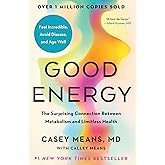
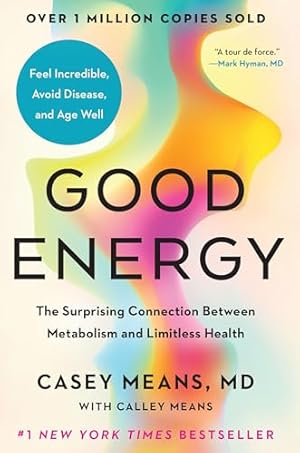
- Good Energy: The Surprising Connection Between Metabolism and Limitless HealthHardcoverGet it as soon as Monday, Oct 19
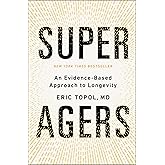
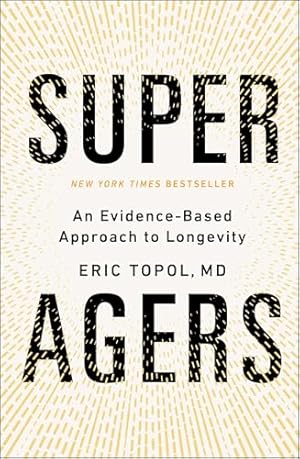
- Super Agers: An Evidence-Based Approach to LongevityHardcoverFREE Shipping on orders over $35 shipped by AmazonGet it as soon as Sunday, Oct 4
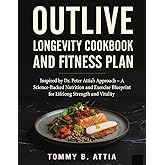
- OUTLIVE LONGEVITY COOKBOOK AND FITNESS PLAN: Inspired by Dr. Peter Attia’s Approach - A Science-Backed Nutrition and Exercise Blueprint for Lifelong Strength and VitalityTOMMY B ATTIAPaperbackFREE Shipping on orders over $35 shipped by AmazonGet it as soon as Sunday, Oct 4
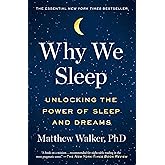
- Why We Sleep: Unlocking the Power of Sleep and DreamsPaperbackFREE Shipping on orders over $35 shipped by AmazonGet it as soon as Sunday, Oct 4
- Study Guide: Outlive by Peter Attia (SuperSummary)PaperbackFREE Shipping on orders over $35 shipped by AmazonGet it as soon as Sunday, Oct 4
Customers also bought or read
- The Outlive Diet Cookbook: 365 Days of Quick & Easy Wholesome Recipes for a Healthier and Longer Life | 28-Day Meal Plan Included
Paperback$18.90$18.90Delivery Sun, Oct 4 - The Outlive Fitness Formula: Age-Defying Exercise Plans and Wellness Strategies Inspired by Peter Attia's Teachings for a Longer, Healthier Life
Paperback$29.90$29.90Delivery Sun, Oct 4 - Lifespan: Why We Age―and Why We Don't Have To#1 Best SellerGenetic Health
Hardcover$15.39$15.39Delivery Sun, Oct 4 - Why We Sleep: Unlocking the Power of Sleep and Dreams#1 Best SellerNeuroscience
Paperback$10.09$10.09Delivery Sun, Oct 4 - Good Energy: The Surprising Connection Between Metabolism and Limitless Health
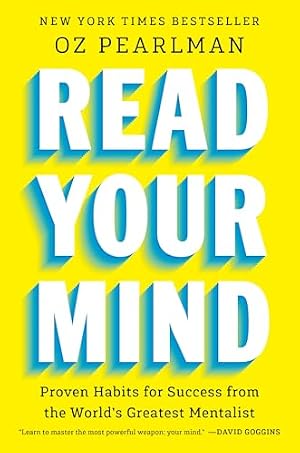
Hardcover$11.23$11.23Delivery Oct 19 - 25 - Read Your Mind: Proven Habits for Success from the World's Greatest Mentalist
Hardcover$15.00$15.00Delivery Sun, Oct 4 - Unbreakable: A Woman's Guide to Aging with Power#1 Best SellerOsteoporosis
Hardcover$14.59$14.59Delivery Sun, Oct 4 - Forever Strong™: A New, Science-Based Strategy for Aging Well
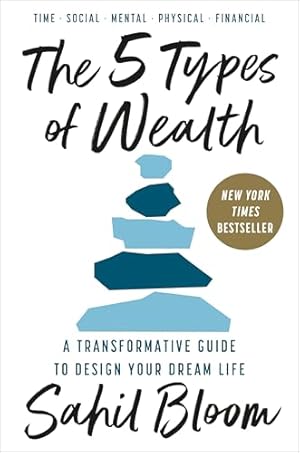
Hardcover$15.70$15.70Delivery Oct 13 - 16 - The 5 Types of Wealth: A Transformative Guide to Design Your Dream Life
Hardcover$16.19$16.19Delivery Sun, Oct 4 - 1929: Inside the Greatest Crash in Wall Street History--and How It Shattered a Nation#1 Best SellerEconomic History
Hardcover$16.25$16.25Delivery Oct 21 - 27 - The Circadian Code: Lose Weight, Supercharge Your Energy, and Transform Your Health from Morning to Midnight: Longevity Book
Paperback$7.99$7.99Delivery Sun, Oct 4 - Ageless: The New Science of Getting Older Without Getting Old
Hardcover$15.60$15.60Delivery Oct 11 - 16 - I Don't Want to Talk About It: Overcoming the Secret Legacy of Male Depression
Paperback$10.99$10.99Delivery Sun, Oct 4 - Eat Your Ice Cream: Six Simple Rules for a Long and Healthy Life
Hardcover$21.89$21.89Delivery Sun, Oct 4 - From Strength to Strength: Finding Success, Happiness, and Deep Purpose in the Second Half of Life
Hardcover$20.45$20.45Delivery Sun, Oct 4 - The Blood Sugar Solution: The UltraHealthy Program for Losing Weight, Preventing Disease, and Feeling Great Now! (The Dr. Mark Hyman Library, 1)
Paperback$11.68$11.68Delivery Sun, Oct 4 - How Not to Die: Discover the Foods Scientifically Proven to Prevent and Reverse Disease#1 Best SellerFood Counters
Hardcover$15.90$15.90Delivery Oct 8 - 13 - Built to Move: The Ten Essential Habits to Help You Move Freely and Live Fully
Hardcover$14.77$14.77Delivery Oct 8 - 14 - The Blue Zones, Second Edition: 9 Lessons for Living Longer From the People Who've Lived the Longest
Paperback$8.31$8.31Delivery Sun, Oct 4 - Altered Traits: Science Reveals How Meditation Changes Your Mind, Brain, and Body
Paperback$12.90$12.90Delivery Sun, Oct 4 - The Telomere Effect: A Revolutionary Approach to Living Younger, Healthier, Longer
Paperback$10.46$10.46Delivery Sun, Oct 4 - The Good Life: Lessons from the World's Longest Scientific Study of Happiness
Hardcover$23.88$23.88Delivery Sun, Oct 4 - Glucose Revolution: The Life-Changing Power of Balancing Your Blood Sugar#1 Best SellerType 2 Diabetes Health
Hardcover$16.61$16.61Delivery Sun, Oct 4
From the Publisher
Editorial Reviews
Review
“In Outlive, Peter Attia explores the science of not just prolonging life, but also prolonging aliveness. Attia makes the crucial connection between overall health and relational health.”—Esther Perel, New York Times bestselling author, psychotherapist, and podcast host of Where Should We Begin?
“Finally, there is a modern, thorough, clear, and actionable manual for how to maximize our immediate and long-term health. Firmly grounded in data and real-life conditions, Outlive makes obvious which actions we all need to take, and just as important, what all we need to pay attention to in order to live a long, vital life. As the most accurate and comprehensive health guide published to date, Outlive is not just informative, it is important.”—Andrew Huberman, PhD, professor, Department of Neurobiology at Stanford University School of Medicine, creator of the Huberman Lab podcast
“Dr. Peter Attia is my doctor and also my friend. He is a specialist in longevity and someone I trust with my life. What separates him from others is his pursuit of quality of life from all angles—physical, emotional, mental, relational, and spiritual health. This incredible book is a call to action and a reminder to always participate, and never be passive. It will arm you with the tools you need to live a long, meaningful, and fulfilling life.”—Hugh Jackman
“In Outlive, Peter Attia has delivered the definitive look at the complex subject of longevity. Comprehensive and rigorous, Outlive is full of surprising insights into the diseases of aging that will likely kill most of us, and the tactics and techniques that can help us live longer and in better health. Attia’s writing surprises and delights us, while provoking a new way to think about longevity.”—Siddhartha Mukherjee, author of the Pulitzer Prize winner The Emperor of All Maladies and the New York Times bestseller The Song of the Cell
About the Author
Bill Gifford is a veteran journalist and author of the New York Times bestseller Spring Chicken: Stay Young Forever (Or Die Trying). His work has appeared in Outside, Scientific American, Bloomberg Businessweek, Men’s Health, and numerous other publications.
Excerpt. © Reprinted by permission. All rights reserved.
The Long Game
From Fast Death to Slow Death
There comes a point where we need to stop just pulling people out of the river. We need to go upstream and find out why they’re falling in. —Bishop Desmond Tutu
I’ll never forget the first patient whom I ever saw die. It was early in my second year of medical school, and I was spending a Saturday evening volunteering at the hospital, which is something the school encouraged us to do. But we were only supposed to observe, because by that point we knew just enough to be dangerous.
At some point, a woman in her midthirties came into the ER complaining of shortness of breath. She was Black, from East Palo Alto, a persistent pocket of poverty in that very wealthy town. While the nurses snapped a set of EKG leads on her and fitted an oxygen mask over her nose and mouth, I sat at her side, trying to distract her with small talk. What’s your name? Do you have kids? How long have you been feeling this way?
All of a sudden, her face tightened with fear and she began gasping for breath. Then her eyes rolled back and she lost consciousness.
Within seconds, nurses and doctors flooded into the ER bay and began running a “code” on her, snaking a breathing tube down her airway and injecting her full of potent drugs in a last-ditch effort at resuscitation. Meanwhile, one of the residents began doing chest compressions on her prone body. Every couple of minutes, everyone would step back as the attending physician slapped defibrillation paddles on her chest, and her body would twitch with the immense jolt of electricity. Everything was precisely choreographed; they knew the drill.
I shrank into a corner, trying to stay out of the way, but the resident doing CPR caught my eye and said, “Hey, man, can you come over here and relieve me? Just pump with the same force and rhythm as I am now, oaky?”
So I began doing compressions for the first time in my life on someone who was not a mannequin. But nothing worked. She died, right there on the table, as I was still pounding on her chest. Just a few minutes earlier, I’d been asking about her family. A nurse pulled the sheet up over her face and everyone scattered as quickly as they had arrived.
This was not a rare occurrence for anyone else in the room, but I was freaked out, horrified. What the hell just happened?
I would see many other patients die, but that woman’s death haunted me for years. I now suspect that she probably died because of a massive pulmonary embolism, but I kept wondering, what was really wrong with her? What was going on before she made her way to the ER? And would things have turned out differently if she had had better access to medical care? Could her sad fate have been changed?
Later, as a medical resident at Johns Hopkins, I would learn that death comes at two speeds: fast and slow. In inner-city Baltimore, fast death ruled the streets, meted out by guns, knives, and speeding automobiles. As perverse as it sounds, the violence of the city was a “feature” of the training program. While I chose Hopkins because of its excellence in liver and pancreatic cancer surgery, the fact that it averaged more than ten penetrating trauma cases per day, mostly gunshot or stabbing wounds, meant that my colleagues and I would have ample opportunity to develop our surgical skills repairing bodies that were too often young, black, poor, and male.
If trauma dominated the nighttime, our days belonged to patients with vascular disease, GI disease, and especially cancer. The difference was that these patients’ “wounds” were caused by slow-growing, long-undetected tumors, and not all of them survived either—not even the wealthy ones, the ones who were on top of the world. Cancer doesn’t care how rich you are. Or who your surgeon is, really. If it wants to find a way to kill you, it will. Ultimately, these slow deaths ended up bothering me even more.
But this is not a book about death. Quite the opposite, in fact.
More than twenty-five years after that woman walked into the ER, I’m still practicing medicine, but in a very different way from how I had imagined. I no longer perform cancer surgeries, or any other kind of surgery. If you come to see me with a rash or a broken arm, I probably won’t be of very much help.
So, what do I do?
Good question. If you were to meet me at a party and ask me that, I would do my best to duck out of the conversation. Or I would lie and say I’m a race car driver, which is what I really want to be when I grow up. (Plan B: shepherd.)
My focus as a physician is on longevity. The problem is that I kind of hate the word longevity. It has all sorts of terrible associations, with a centuries-long parade of quacks and charlatans who have claimed to possess the secret elixir to a longer life. I don’t want to be associated with those people, and I’m not arrogant enough to think that I possess some sort of easy answer to this problem, which has puzzled humankind for millennia. If longevity were simple, then there might not be a need for this book.
I’ll start with what longevity isn’t. Longevity does not mean living forever. Or even to age 120, or 150, which some self-proclaimed experts are now routinely promising to their followers. Barring some major breakthrough that, somehow, someway, reverses two billion years of evolutionary history and frees us from time’s arrow, everyone and everything that is alive today will inevitably die. It’s a one-way street.
Nor does longevity mean merely notching more and more birthdays as we slowly wither away. This is what happened to a hapless mythical Greek named Tithonus, who asked the gods for eternal life. To his joy, the gods granted his wish. But because he forgot to ask for eternal youth as well, his body continued to decay. Oops.
Most of my patients instinctively get this. When they first come to see me, they generally insist that they don’t want to live longer, if doing so means lingering on in a state of ever-declining health. Many of them have watched their parents or grandparents endure such a fate, still alive but crippled by physical frailty or dementia. They have no desire to reenact their parents’ suffering. Here’s where I stop them. Just because your parents endured a painful old age, or died younger than they should have, I say, does not mean that you must do the same. The past need not dictate the future. Your longevity is more malleable than you think.
In 1900, life expectancy hovered somewhere south of age fifty, and most people were likely to die from “fast” causes of death: accidents, injuries, and infectious diseases of various kinds. Since then, slow death has supplanted fast death. The majority of people reading this book can expect to die somewhere in their seventies or eighties, give or take, and almost all from “slow” causes. Assuming that you’re not someone who engages in ultrarisky behaviors like base jumping, motorcycle racing, or texting and driving, the odds are overwhelming that you will die as a result of one of the chronic diseases of aging that I call the Four Horsemen: heart disease, cancer, neurodegenerative disease, or type 2 diabetes and related metabolic dysfunction. To achieve longevity—to live longer and live better for longer—we must understand and confront these causes of slow death.
Longevity has two components. The first is how long you live, your chronological lifespan, but the second and equally important part is how well you live—the quality of your years. This is called healthspan, and it is what Tithonus forgot to ask for. Healthspan is typically defined as the period of life when we are free from disability or disease, but I find this too simplistic, too binary. For example, I’m as free from “disability and disease” as when I was a twenty-five-year-old medical student, but my twenty-something self could run circles around fifty-year-old me, both physically and mentally. That’s just a fact. Thus the second part of our plan for longevity is to maintain and improve our physical and mental function.
The key question is, Where am I headed from here? What’s my future trajectory? Already, in midlife, the warning signs abound. I’ve been to funerals for friends from high school, reflecting the steep rise in mortality risk that begins in middle age. At the same time, many of us in our thirties, forties, and fifties are watching our parents disappear down the road to physical disability, dementia, or long-term disease. This is always sad to see, and it reinforces one of my core principles, which is that the only way to create a better future for yourself—to set yourself on a better trajectory—is to start thinking about it and taking action now.
Product details
- Publisher : Harmony
- Publication date : March 28, 2023
- Edition : First Edition
- Language : English
- Print length : 496 pages
- ISBN-10 : 0593236599
- ISBN-13 : 978-0593236598
- Item Weight : 1.63 pounds
- Dimensions : 7.01 x 0.98 x 9.02 inches
- Best Sellers Rank: #1,268 in Books (See Top 100 in Books)
- #1 in Aging Medical Conditions & Diseases
- #2 in Anatomy (Books)
- #3 in Aging & Longevity (Books)
- Customer Reviews:
About the authors

Peter Attia, MD, is the founder of Early Medical. He received his medical degree from the Stanford University School of Medicine and trained at the Johns Hopkins Hospital in general surgery. He also trained at the NIH as a surgical oncology fellow at the National Cancer Institute, where his research focused on immune-based therapies for melanoma. He serves on the editorial board for the journal Aging. He is the host of The Drive, one of the most popular podcasts covering the topics of health, medicine, and longevity.

Bill Gifford is a veteran magazine writer and editor who writes about extraordinary athletes and cutting-edge health science, specializing in aging and longevity. He is coauthor of the worldwide bestseller Outlive. Prior to that, he wrote the New York Times bestseller Spring Chicken: Stay Young Forever (Or Die Trying). His magazine work has taken him from West Africa to Southeast Asia, the permafrost of Siberia to the monster waves of Nazare, Portugal. A native of Washington, D.C., he now lives in Salt Lake City, where he can often be found skiing or cycling in the mountains. He is a longtime contributing editor of Outside magazine, and his articles have appeared in many other national publications, as well as in Best American Sportswriting.
Related products with free delivery on eligible orders
Customer reviews
Customer Reviews, including Product Star Ratings help customers to learn more about the product and decide whether it is the right product for them.
To calculate the overall star rating and percentage breakdown by star, we don’t use a simple average. Instead, our system considers things like how recent a review is and if the reviewer bought the item on Amazon. It also analyzed reviews to verify trustworthiness.
Learn more how customers reviews work on AmazonCustomers say
Generated from the text of customer reviews


![The Book of Wisdom: [2 in 1] Truths Revealed to Awaken Your Spirit, Unlock Hidden Realms, and Guide You Through the Sacred Journey of Conscious Transformation](https://m.media-amazon.com/images/I/51eIqAOjVQL._AC_SR100,100_QL65_.jpg)