-
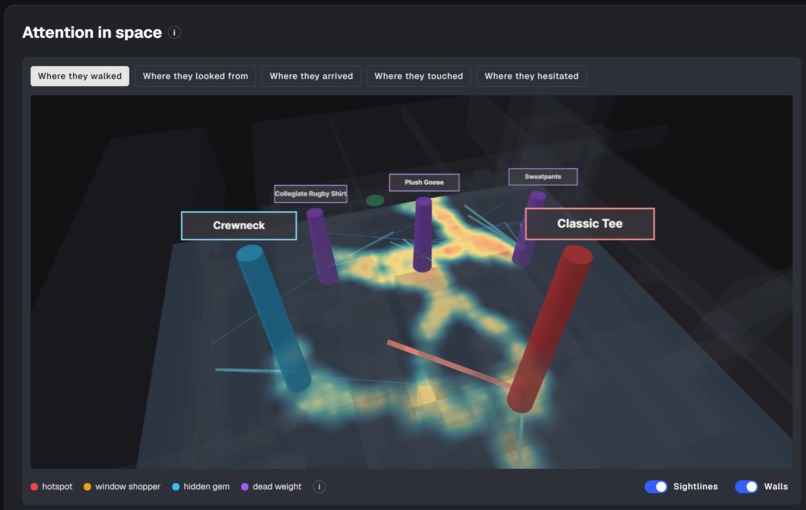
Player behaviour tracking
-
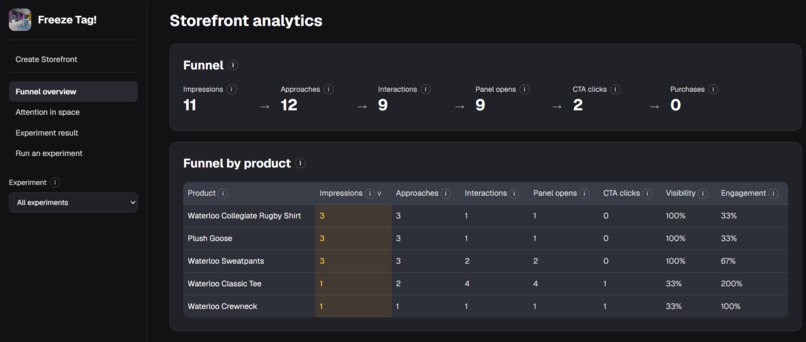
Player analytics
-
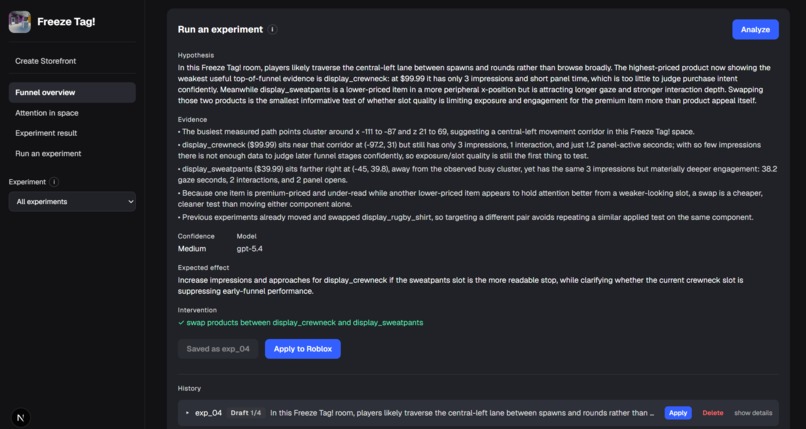
Experimental design and implementation
-
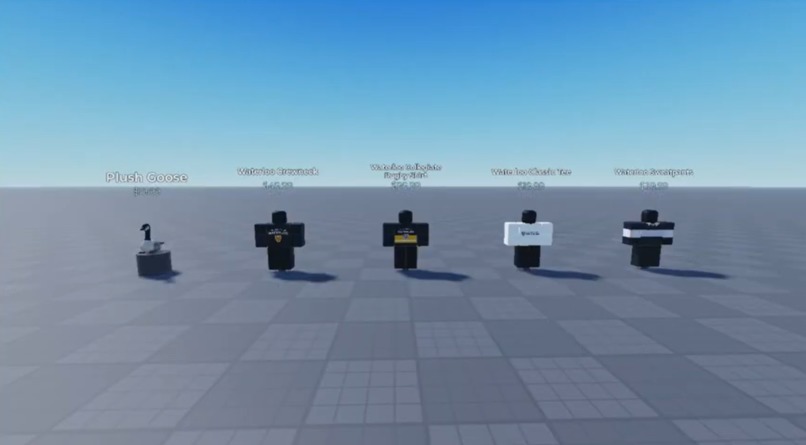
Generated product and clothing displays from Shopify store in Roblox
-


Inspiration
Last year, Shopify and Roblox shipped an integration that lets creators sell real products from Shopify stores inside Roblox games. Big developer studios and brands are pulling in hundreds of thousands in revenue through it. But one thing missing from that integration is an analytics layer, and with that gap comes the opportunity for an agentic layer. I-commerce, integrated and intelligent commerce, is the future.
What it does
- Add a storefront to any Roblox game, based on your Shopify store and its products, using a storefront creation agent: classifies a live Shopify catalog, generates 2D clothing nets for mannequins and procedural meshes from product photos and info
- Live analytics: raycast-based line-of-sight and positional tracking measures who actually saw, approached, and interacted with each display
- 3D attention view: the game map rebuilt in 3D on the dashboard, with a real foot-traffic heatmap and player behaviour patterns
- Marketing agent: knows the game, the game map, each product's price, and its own past experiments in order to develop, propose, and apply edits straight to the Roblox storefront
How we built it
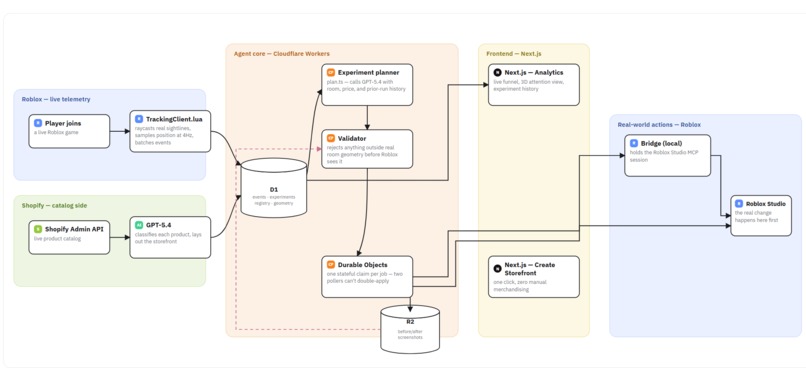
Cloudflare Workers is the backend and the brain, with two agents running there on GPT-5.4. D1 is the database that holds every player event and every past experiment as the agents' memory, so the marketing agent finds user behaviour patterns and checks what it already tried before proposing new experiments. Durable Objects run the job queue that turns an agent's decision into a real action; one stateful claim per job means two Roblox servers polling at once can never double-apply the same change. R2 stores before/after screenshots of every applied change for context.
Shopify's Admin API feeds the product catalog in, both to build the storefront and to inform the agents. Roblox's own game server provides real-time player data, and Roblox Studio's MCP allow agents to edit the Roblox game.
The frontend is made with Next.js and Three.js.
Challenges we ran into
- Connecting three separate platforms (live Roblox game, Roblox Studio, and Shopify's commerce APIs) took a lot of time before any of the agentic layer could be implemented and run
- Generating the storefront was challenging because the agent layer needed to classify the Shopify store's catalog, then either generate meshes for product displays or generate 2D clothing nets for mannequins
Accomplishments that we're proud of
- Building agents that actually do things: tool calls (Shopify's API, Roblox's Open Cloud asset API, Roblox Studio's MCP), memory in D1 and R2, physically-verifiable action in a live game
- Closed the full loop end to end, from storefront creation → analytics → propose changes → apply → measure → compare → roll back/validate
What's next for Bloxify
- Richer experiment types beyond moving and swaping locations, such as pricing tests, seasonal layout campaigns, and more
- Test and generalize storefront creation and marketing experimentation across more Roblox game genres
Built With
- cloudflare
- lua
- mcp
- next.js
- openai
- react
- roblox
- tailwind
- three.js
- typescript


Log in or sign up for Devpost to join the conversation.