-
-
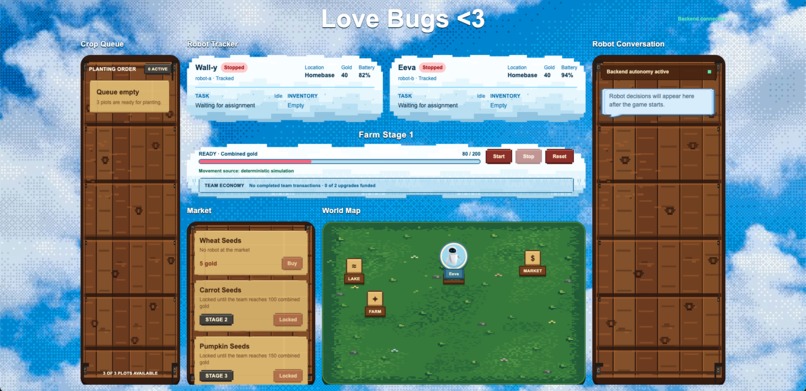
Beginning of the game
-
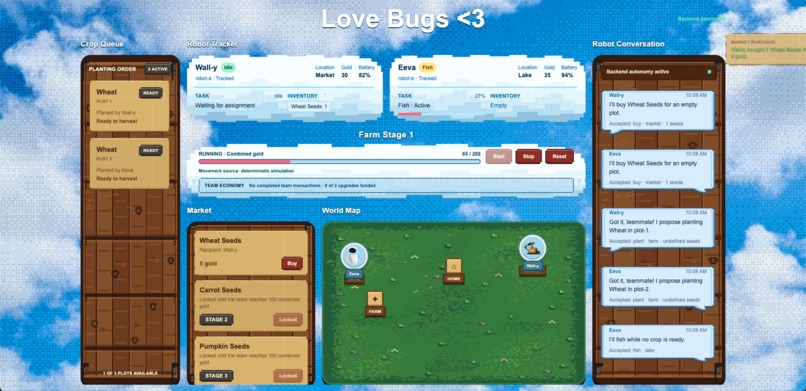
Mid game, agents making their own decisions
-
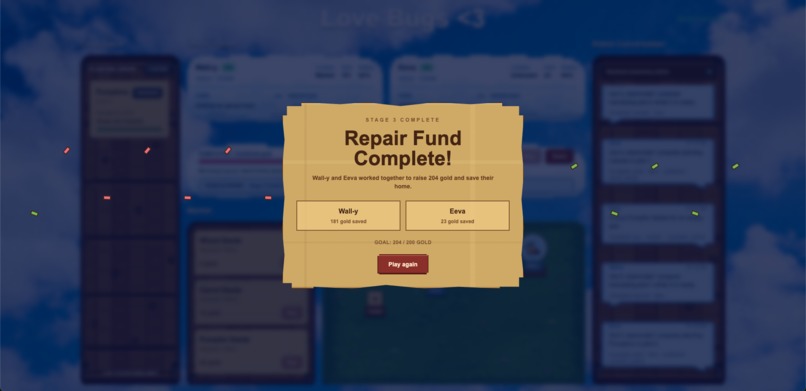
End of game credits
-
-


Inspiration
We all enjoyed playing stardew valley, and believe that the game is an excellent display of cooperation.
What it does
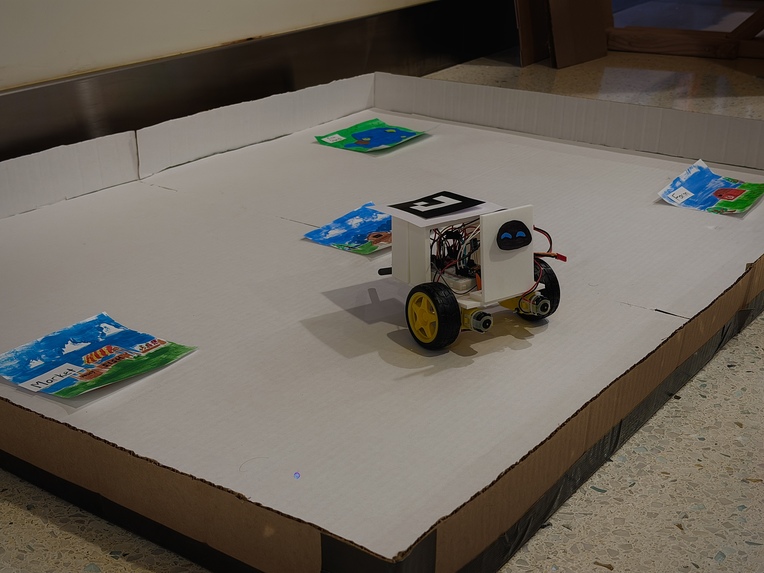
Love Bugs is a cooperative farming game where two autonomous robots, Wall-y and Eeva, move through a shared physical or simulated world. They can travel between a farm, lake, market, and home base to plant and harvest crops, fish, trade resources, earn gold, and unlock new stages.
How we built it
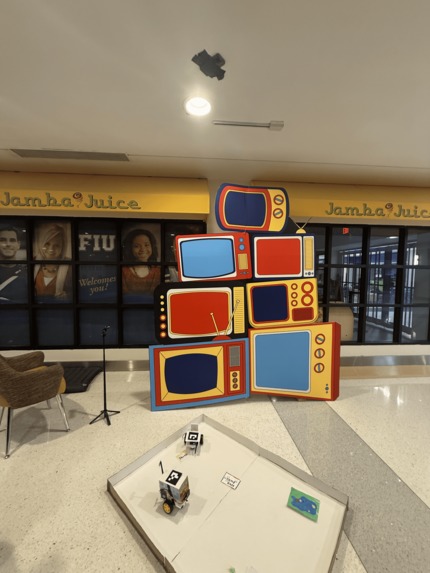
We built the dashboard with React, Tailwind CSS, and Vite. A Python backend powered by FastAPI manages the game state, economy, tasks, robot telemetry, and real-time WebSocket updates. Google Gemini and the Google Agent Development Kit power the robot agents, allowing them to make independent decisions while considering their teammate’s actions and the shared objective. OpenCV and ArUco markers provide overhead localization, while Bluetooth Low Energy connects the Python navigation system to ESP32-based robots. We also designed and 3D-printed several versions of the robot chassis. To make development possible before the physical hardware was ready, we created a simulation mode that uses the same game rules and APIs as the real robots.
Challenges we ran into
Hardware was difficult to figure out. We went through many iterations of chassis designs, and iterated through different wiring diagrams to get both of our cars working. Designing the physical circuit and chassis in the 36 hour timeline was extremely challenged but rewarding,
Accomplishments that we're proud of
We are proud that Love Bugs became a complete end-to-end experience rather than just a software prototype. Our robots can make decisions, coordinate their work, move through a physical game world, and contribute toward a shared goal.
What we learned
We learned how quickly software assumptions break when they meet physical hardware. Reliable robotics requires careful handling of imperfect motors, stale camera data, connection failures, timing differences, and safety conditions. We also learned that multi-agent systems need more than good individual decisions. Agents need shared context, clear responsibilities, structured communication, and an authoritative source of truth. Most importantly, we learned how to divide a complex robotics project into stable interfaces so that hardware, AI, backend, and frontend work could progress in parallel.
What's next for Love Bugs
Next, we want to improve navigation with obstacle avoidance, smoother path planning, and more robust localization. We would also like to add more crops, locations, robot abilities, cooperative quests, and unexpected world events. Longer term, Love Bugs could become a physical tabletop game in which players design environments, assign personalities to their robots, and watch autonomous characters build relationships and solve challenges together.


Log in or sign up for Devpost to join the conversation.