-
-
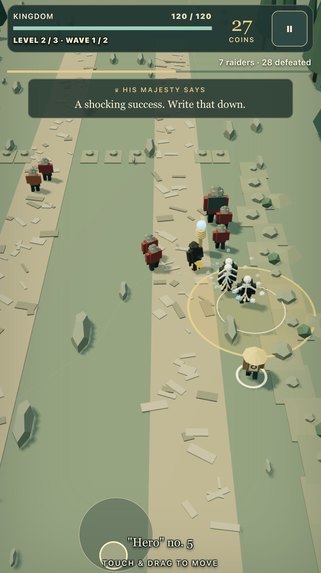
Lure enemies into danger. Preferably without joining them.
-
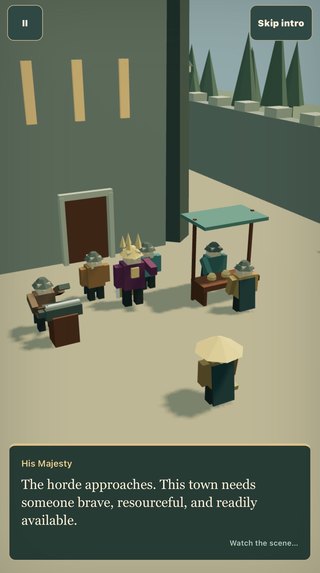
His Majesty needs a ‘Hero.’ You were readily available.
-
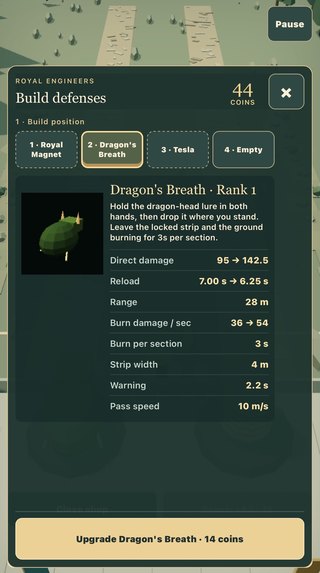
Build and upgrade the kingdom’s defenses. Your safety is sold separately.
-
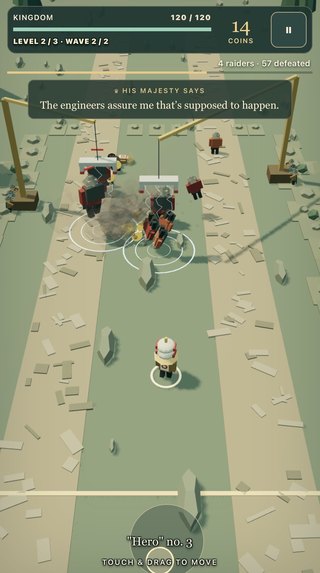
The engineers call this crowd control. His Majesty calls it his idea.
-
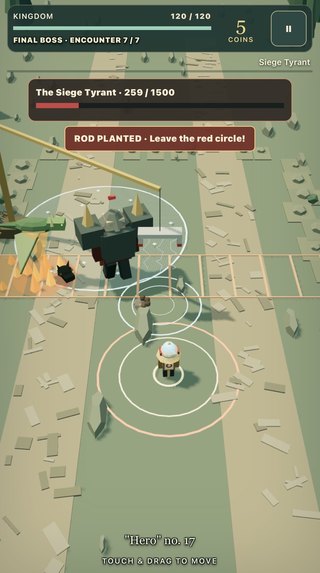
One final siege. Several questionable defenses. ‘Hero’ number 17.


Royal Target began with a simple question: what if the most dangerous part of defending a kingdom was your own defenses?
I wanted to make a tower defense game where the player had something meaningful to do during each wave. Our earlier prototype wasn’t giving me that feeling. Placing towers and watching them work left the player feeling unnecessary, so I explored two directions: running between castle defenses to take control of towers, and becoming the target those towers needed to aim.
The second idea became Royal Target. The kingdom’s engineers have perfected firing at a torch. Unfortunately, someone has to carry it.
You play as the kingdom’s disposable “Hero,” building and upgrading defenses while luring enemies into their attacks and escaping before those attacks hit you too. Each tower brings its own danger and visual joke, from cannons targeting your torch to a giant magnet collecting your metal helmet with you still underneath it. Replacements keep arriving, and the king remains confident that everything is going according to his brilliant plan.
The comedy became part of the game’s design. Tower signals explain incoming attacks, deaths show what went wrong, and the king’s dialogue makes failure feel like another joke rather than the end of the experience. Between levels, celebrations give the defenses one more opportunity to demonstrate why standing near them is a terrible idea.
I built the prototype through an iterative workflow with Codex, using AI assistance for implementation, debugging, and testing while directing the mechanics, presentation, writing, and balance through repeated playtests. Royal Target runs in the browser as a portrait mobile game. I also recorded the character dialogue myself, then used local audio processing to reduce microphone noise and balance it against the music and effects.
One of the biggest challenges was making several towers operate together without creating unreadable chaos. The “Hero” only has two hands, so signals need to share them and queue when necessary. Attacks also need enough warning to feel avoidable while still making the player move and make decisions.
Mobile testing revealed equally important problems: crowded interfaces, unclear tutorial arrows, awkward touch controls, and audio behavior that needed attention on Safari. A dedicated debug scene made it much easier to test individual towers, replay cinematics, and refine their timing without completing an entire run.
The biggest lesson was that more difficulty does not automatically create more agency. The player needs a clear reason to act and understandable consequences for their choices. Pivoting helped me find that connection.
Royal Target is still a prototype, but its identity is clear: you do the work, the towers create the chaos, and the king takes the credit.


Log in or sign up for Devpost to join the conversation.