-
-
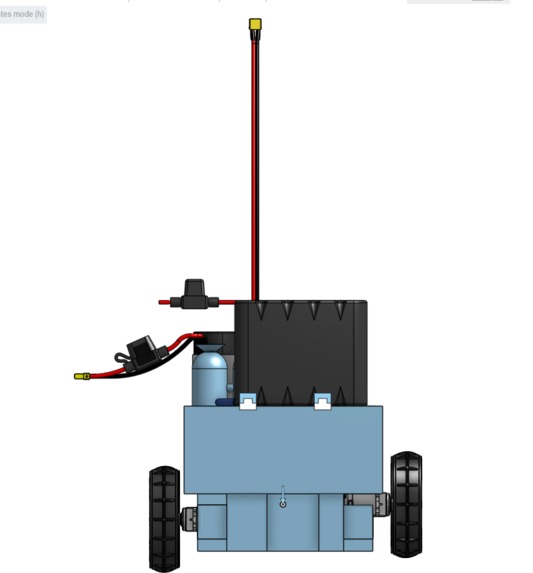
Back View
-
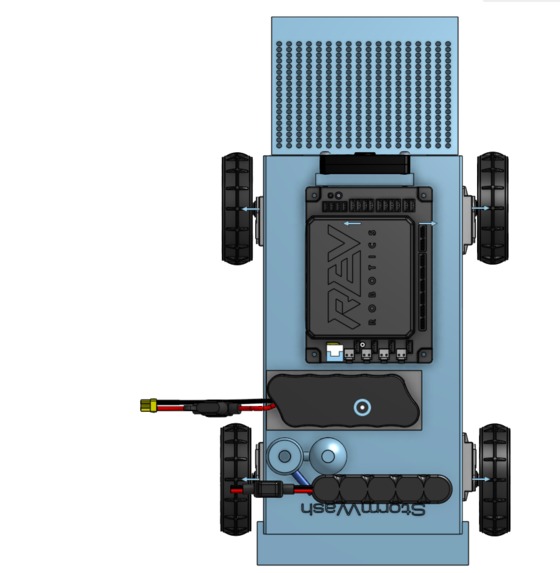
Top View
-
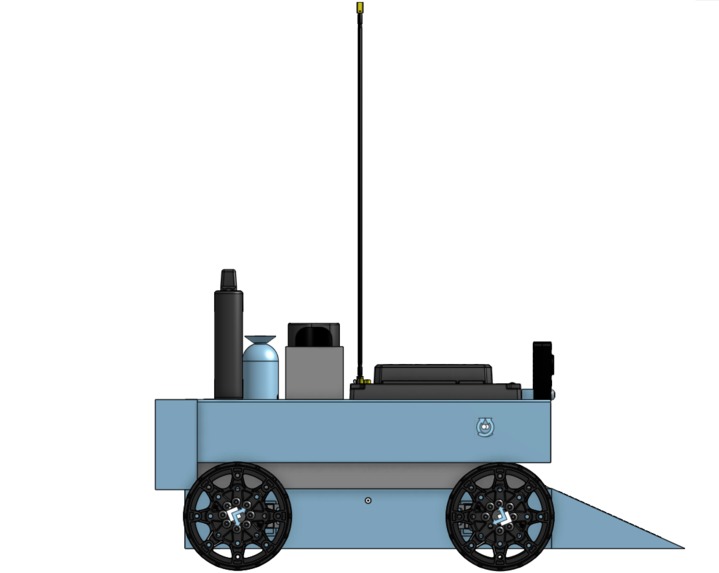
Side View 2
-
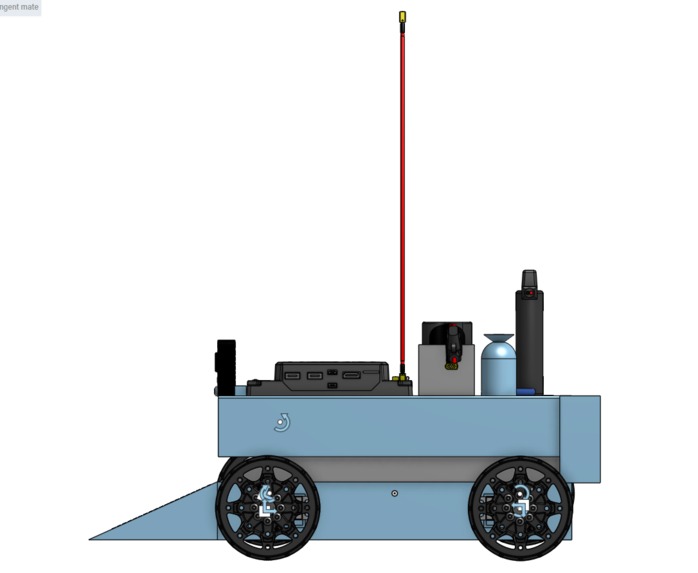
Side View 1
-
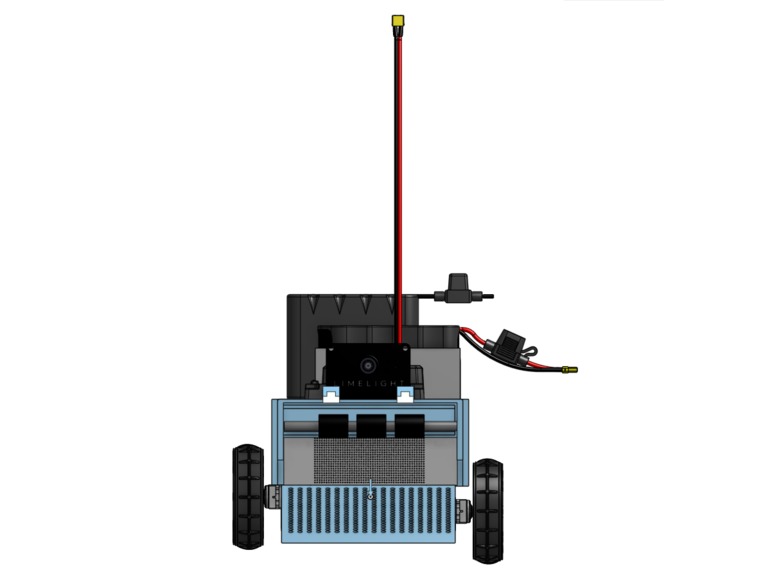
Front View


Inspiration
The reason I built this is because when I used to go to the bus stop back when I was in elementary school I noticed that the small stream seemed polluted, However, there were no big power plants, or factories nearby by so I wondered what caused the problem. Afterwards, I would end up learning that one main source of freshwater pollution is waste that goes through storm drains. You see most stormwater doesn’t get treated and gets dumped straight into rivers and streams. From grass clippings to soapy water, stormwater brings all of the waste into our rivers and streams. In Morrisville there is a Creek Week(https://www.morrisvillenc.gov/Events-directory/Morrisville-Creek-Week) event that happens yearly to raise awareness of stormwater pollution. I wanted to build a robot in order to help out in the next year’s Creek Week and others more to come. These events were the inspiration of StormWash.
What it does
StormWash is a robots the filters waste out of storm water before it hits the drain. This version is specifically for areas that receives a lot of rain. StormWash works by using the camera on it(currently a Limelight 3a) and runs an algorithm that detects the flow of the water(not built yet). Based on that it will position itself to the nearest storm drain(based on predownloaded city storm drain maps) in the path of the water. The water will go through small holes and reaches a activated carbon filter.I specifically chose that type due to how effective it is and its cost .From there the water will get filtered and released safely into the storm drain. Solid materials will be rolled up into a small trash bag for collection. The robot moves via 4 Gobilda Torque Servos. It has two ways to power its self. It has one main 12 volt battery and an additional 12 volt hydrogen cell. We have a small electrolysis chamber that collects the hydrogen from the rainwater and waste water from the battery. The hydrogen is then sent to the fuel cell to make it run longer.
How we built it
I first looked at similar robots that attempt to do similar things. Such examples are Ram Marine’s WasteShark and WYBOT’s pool cleaning robots. Then I built a base robot on Onshape, a CAD software where the robot would be designed. This base robot only had basic features such as movement, water filtration, and waste collection but not storage. The first problem I solved was the waste collection, by adding a section where you can insert a small trash bag inside which can be easily removed with the addition of my back plate. Then I noticed that the robot cannot actually touch the ground and collect the rainwater. To fix this I added a bottom piece that connects to the water filter that touches the ground. I also added a place for the servos to be properly mounted instead of just attaching them on the sides. Then I started adding electrical components to my robot. For this prototype, I am starting out with basic FTC components but will later on shift to other tools and software. I started out by adding a 12 volt GoBilda battery as the main power source. Then at that point I had realized that I was basically just making something that already exists. So I decided to get more creative and remembered about hydrogen cells. Since there is hydrogen in water I thought that I could separate the hydrogen and oxygen in water. The robot would use the hydrogen from electrolysis to recharge the battery. Also, hydrogen cells produce water as a waste product so that also flows the the electrolysis/hydrogen chamber. However, after doing some research I learned that I cannot rely on the hydrogen cell alone because electrolysis uses energy as well so I kept the GoBilda 12 volt battery. Then I did research for my water filter and decided to use a activated carbon filter. I would have used a reverse osmosis filter but they cost more money and use more power.
Challenges we ran into
While designing this robot there were a multitude for challenges to deal with. One big challenge was finding out how to actually make the robot be able to move but still touch the ground. I found out if the bottom is really smooth then it will work perfectly fine. Also, I had problems with doing the wiring in Onshape but I realized that wires cannot be bent in Onshape without making your own. Another challenge was deciding how to waterproof my robot. I ended up deciding that I should use a conformal coating after doing some research on Google in order for the robot to stay dry.
Accomplishments that we're proud of
Here are a few accomplishments: Successful base/draft design Successful Servo Mounts Trash Bag System working The fact that this could actually be built and it could work.
What we learned
I have learned many new things from this hackathon. One things that I learned, that helped me a lot in completing this project is time management. I used Microsoft To-Do to keep track of which parts and steps needed to be completed on each day. I also learned how easily fasten pieces in Onshape assemblies by using the insert tool to insert and automatically fasten screws and washers.
What's next for StormWash
Some future improvements that I would like to do are: Make a version for areas with less rain fall Finish the mates and do testing on SimScale to see if the fluids can go through. Make versions using differents software and hardware(instead of parts from REV and Gobilda) Make a cheap version. Make code for finding the flow of the water and moving to the nearest storm drain in that path.
AI Disclosure
I did use AI in order to make the template for this document. I specifically used Copilot for this template and Gemini for the product documentation template. I did this because this was my first ever hackathon so I wanted to understand how to format my submission properly.
Built With
- onshape


Log in or sign up for Devpost to join the conversation.