-
Intro Slide
-
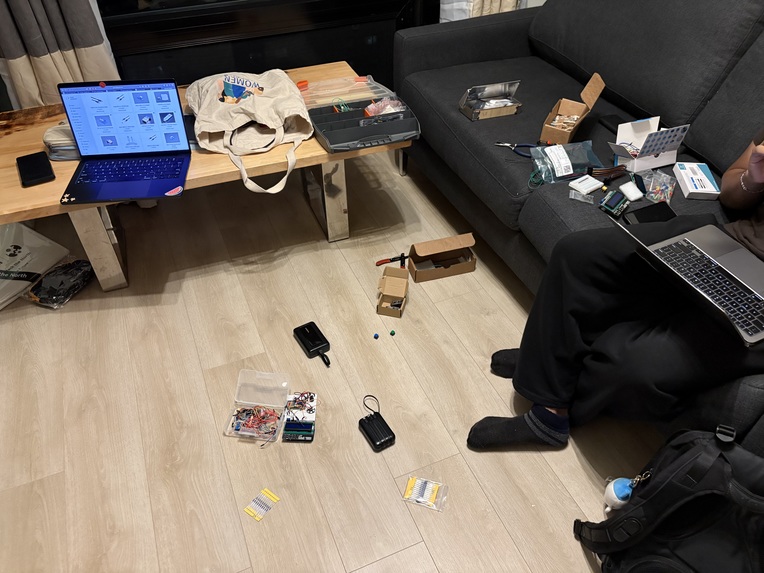
The hacking
-
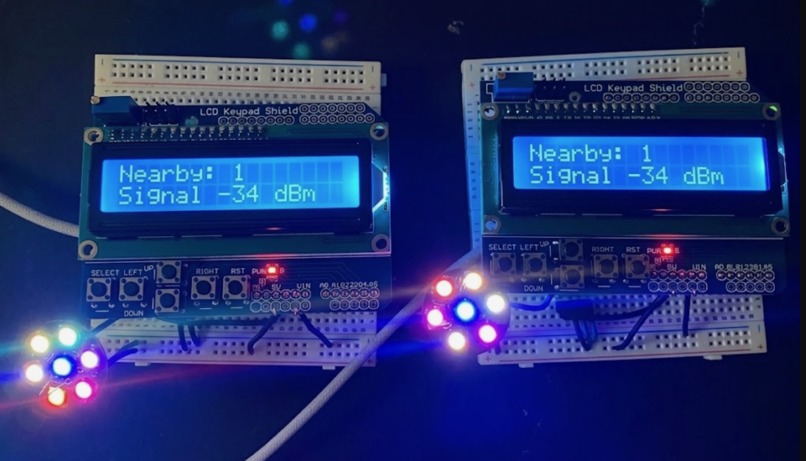
The Arduinos in action!


Inspiration
SydeQuest was inspired by our experiences at university. Even though we are constantly surrounded by people, the pressure to stay productive and the rise of online-first social interaction can make it surprisingly difficult to form meaningful connections. We wanted to create something that makes meeting new people feel natural, playful, and spontaneous—and turns those encounters into lasting memories.
What it does
SydeQuest is a wearable social-discovery system that helps compatible strangers connect in the real world. Users create profiles based on their interests and current vibe. When two compatible users are nearby, their wearables light up and display a message to signal the match. The mobile app then suggests a personalized activity, or “SideQuest,” that they can complete together.
How we built it
We combined physical hardware, Bluetooth communication, and a mobile experience. We initially explored a setup involving two ESP32 boards and two Arduino Uno R4 WiFi boards. After several design iterations, we simplified the prototype to two ESP32-based wearables, an LCD keypad shield, phone connectivity, a matching system, and a custom frontend.
We also integrated Sentry Session Replay, Logs, and Tracing. Session Replay helped us understand how people navigated the app, while structured logs gave us a systems-level view of the journey from profile creation and compatibility scoring to Bluetooth communication and the wearable response.
Challenges we ran into
Connecting software to physical hardware introduced several points of failure. We encountered challenges involving wiring, power management, Bluetooth reliability, hardware-software synchronization, and choosing the right microcontroller architecture. We also had to design a wearable enclosure using the limited time and materials available at the hackathon.
When something failed, it was not immediately clear whether the issue came from the interface, matching logic, Bluetooth connection, or hardware. Sentry helped us narrow down where the flow stopped instead of debugging every component individually.
Accomplishments that we’re proud of
We transformed an ambitious concept into a working physical and digital prototype within one weekend. Along the way, we learned to read Arduino schematics, connect multiple hardware and software components, and creatively work within our material constraints.
We are especially proud that we used observability to influence the product itself. Sentry did more than capture errors: its replays, logs, and traces helped us understand the complete system, identify failures, and improve the user experience. We also learned when to ask mentors for guidance and how to quickly apply their advice.
What we learned
Our biggest lesson was to enter a hackathon with a clear plan—but remain flexible when the original architecture does not work. We learned to reduce scope, test integrations early, and design around the core experience.
Most importantly, we learned that observability is valuable from the beginning of development. Seeing both the user experience and the underlying system behaviour allowed us to make informed decisions instead of relying on assumptions.
What’s next for SydeQuest
The better question might be: what isn’t next for SydeQuest?
We envision SydeQuest helping people connect at universities, hackathons, conferences, festivals, and in new cities. Future versions could support more accurate proximity detection, group matching, personalized activity recommendations, smaller wearable designs, and feedback-based compatibility improvements.
Our long-term goal is simple: use technology to help people spend less time behind screens and more time creating memories together.


Log in or sign up for Devpost to join the conversation.