Custom-fit modular data centers for AI and edge compute
Trusted by partners, proven in the field
Built for demanding sites and on-prem workloads, our prefabricated modular data center solutions deliver 5–150 kW per rack.
Multiple modular data center cooling options — including free-cooling — and Tier III/IV modular data center design principles ensure reliable, efficient operation in any environment.
No commitment. NDA available.
Containerized Modular Data Center Specs that Solve Real Problems
Power and density
5–150 kW per rack. Modular, containerized compute capacity for mixed workloads — scalable without overbuilding.
Cooling options
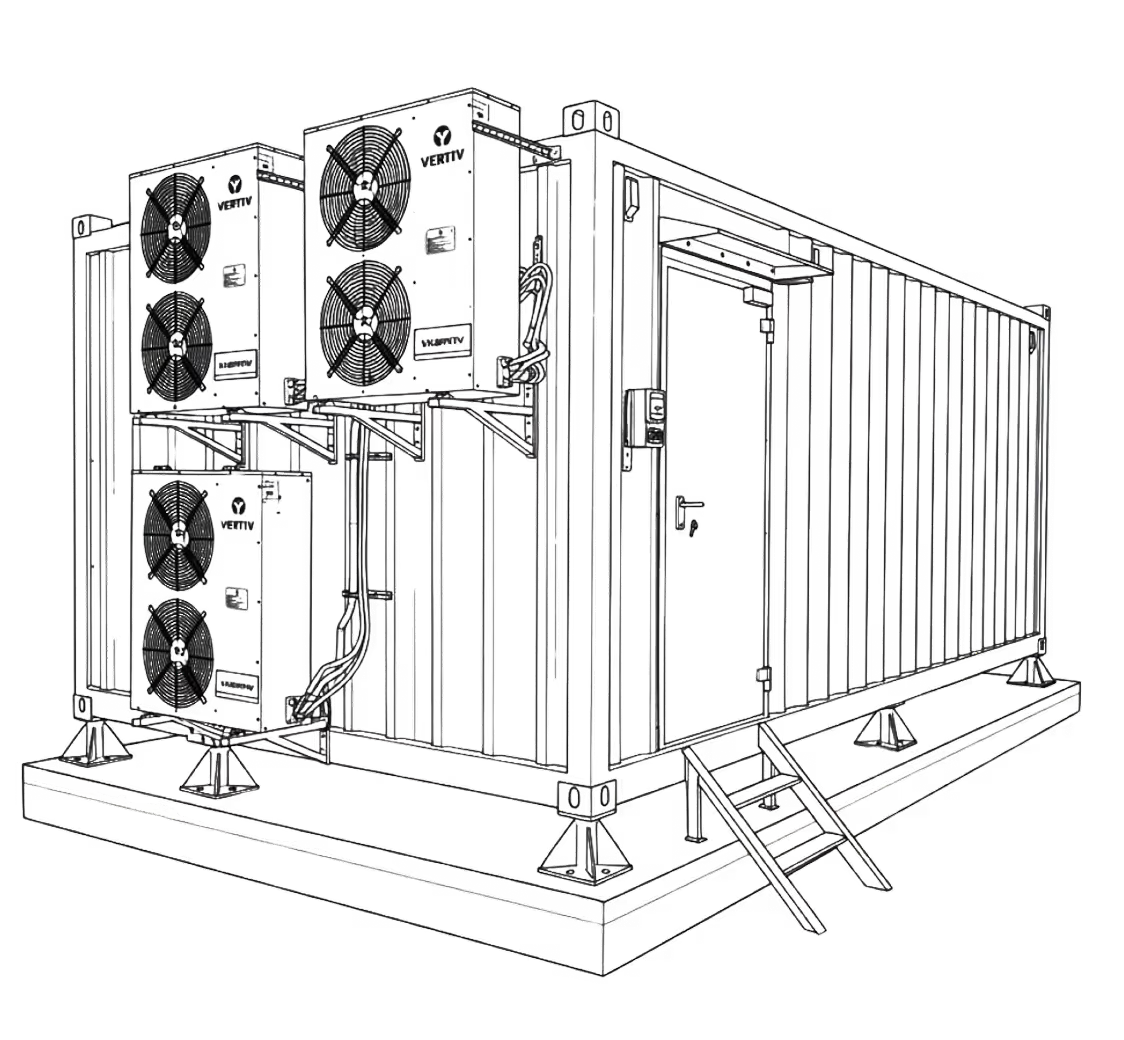
DX, chilled-water, adiabatic, or free-cooling systems built into prefabricated modules. Each container data center is tuned to site climate and energy efficiency for predictable PUE.
Environmental Hardening
Ruggedized modular enclosures for dust, sand, humidity, and vibration. Operates from –35 °C to +52 °C with optional EMP-shielded packages for mobile or remote sites.
Integrated Infrastructure
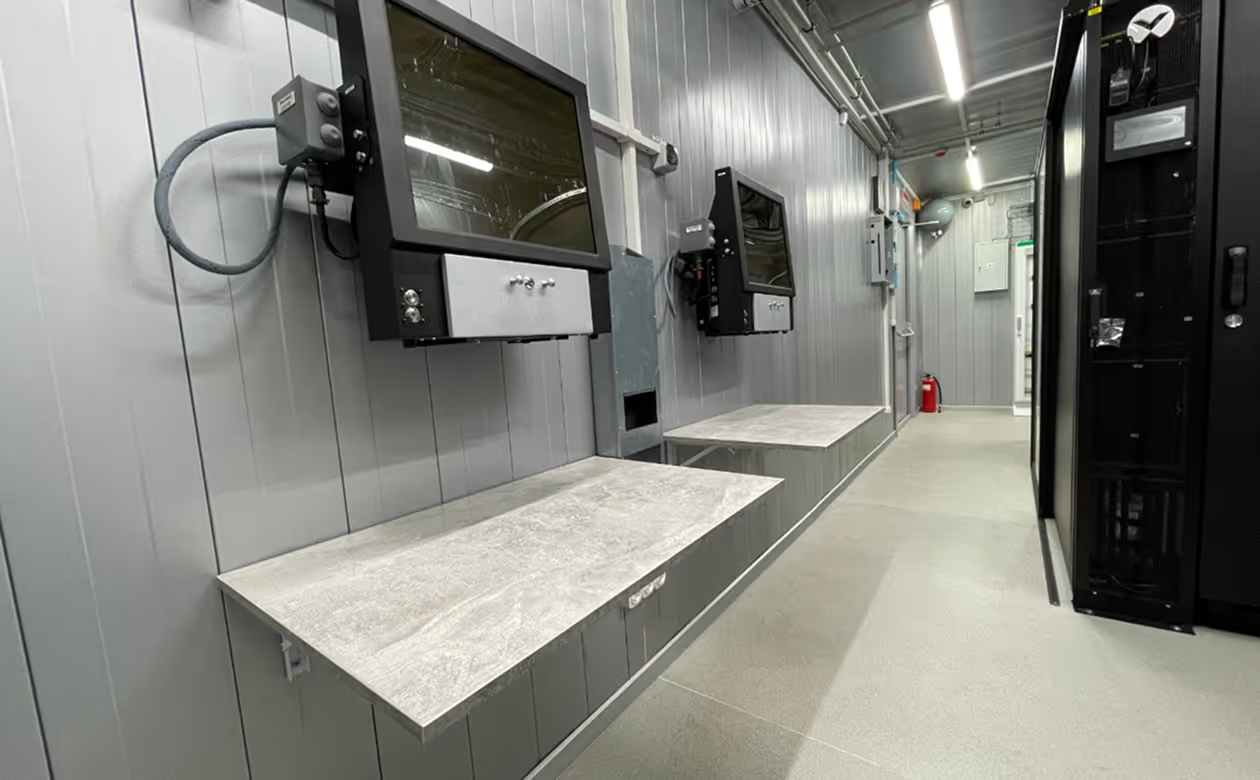
Prefabricated racks, UPS/power, cooling, fire suppression, monitoring, and access systems — a complete portable data center solution ready for fast deployment.
Availability & Scalability by Design
Built to meet Tier III/IV principles and fully tested (FAT/SAT). Modular, redeployable design enables 3–6 month custom builds and stepwise expansion of containerized sites.
Efficient Logistics
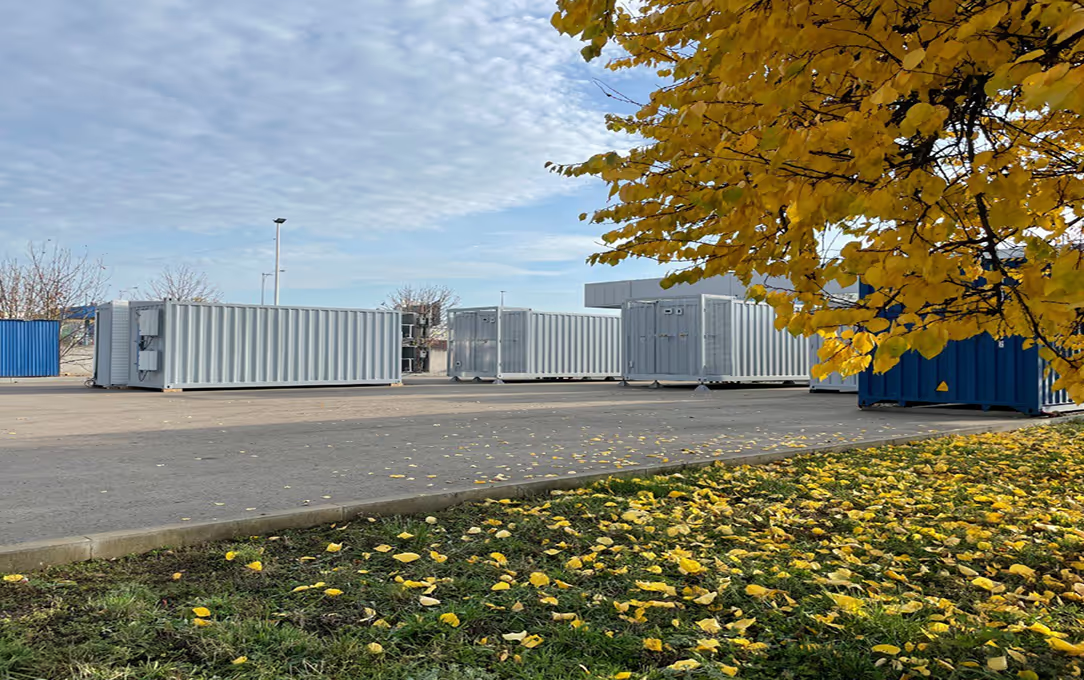
Modules sized for EU-compliant road transport to avoid oversize-load permits and escorts. Mobile, prefabricated construction shortens deployment time and lowers total cost.
Two paths to value
How ModulEdge works
Partners and OEMs
White-label-ready modular data centers you can brand as your own. Configure power (5–150 kW/rack), cooling, and hardening for each deployment. We provide engineering and modular data center construction support from design review through FAT/SAT, plus branding kits and partner collateral.
Request partner pack

Operators and Enterprises
On‑prem control with edge‑class performance. Match density and cooling to your workload and climate, then expand in modular steps with predictable TCO. Commissioned with FAT in factory and SAT on site.
Request partner pack
How modular data center design drives results
Resilience and
on‑prem control
Designed to meet Tier III-IV principles with integrated power/UPS, cooling, fire suppression, monitoring, and access/CCTV. Factory‑tested (FAT) and verified on site (SAT). Environmental hardening and vibration tolerance; optional EMP shielding.
Performance matched to workload and climate
Configure 5–150 kW per rack with flexible modular data center cooling systems (DX, chilled-water, adiabatic, free-cooling) for predictable efficiency in any region.

Predictable TCO and modular growth
Standard 20- and 40-ft data center containers with redeployable footprints. Expand capacity as demand grows - typical containerized modular data center builds complete in 3–6 months.
Contact Us
Get your configuration – Fast path to sizing
Answer a few questions and receive an indicative configuration matched to your workload, climate, and site constraints.
Real deployments, real constraints
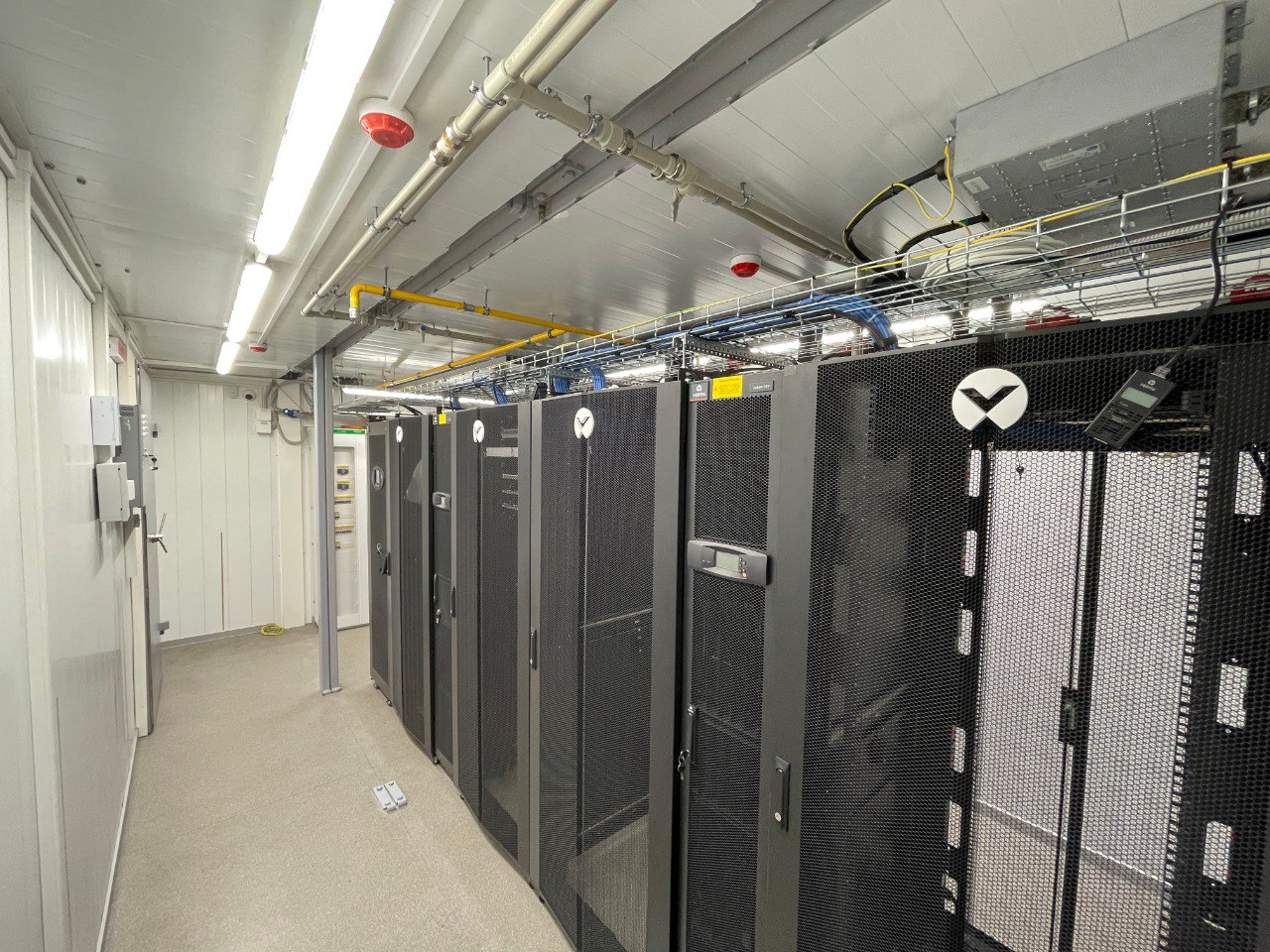
Shielded Modular Data Center (EMP/IEMI Protection)
Fully shielded modular enclosure with verified Faraday-grade protection, EMP-rated SPDs, and concurrent-maintainable power/cooling for sensitive workloads.
Read the case study
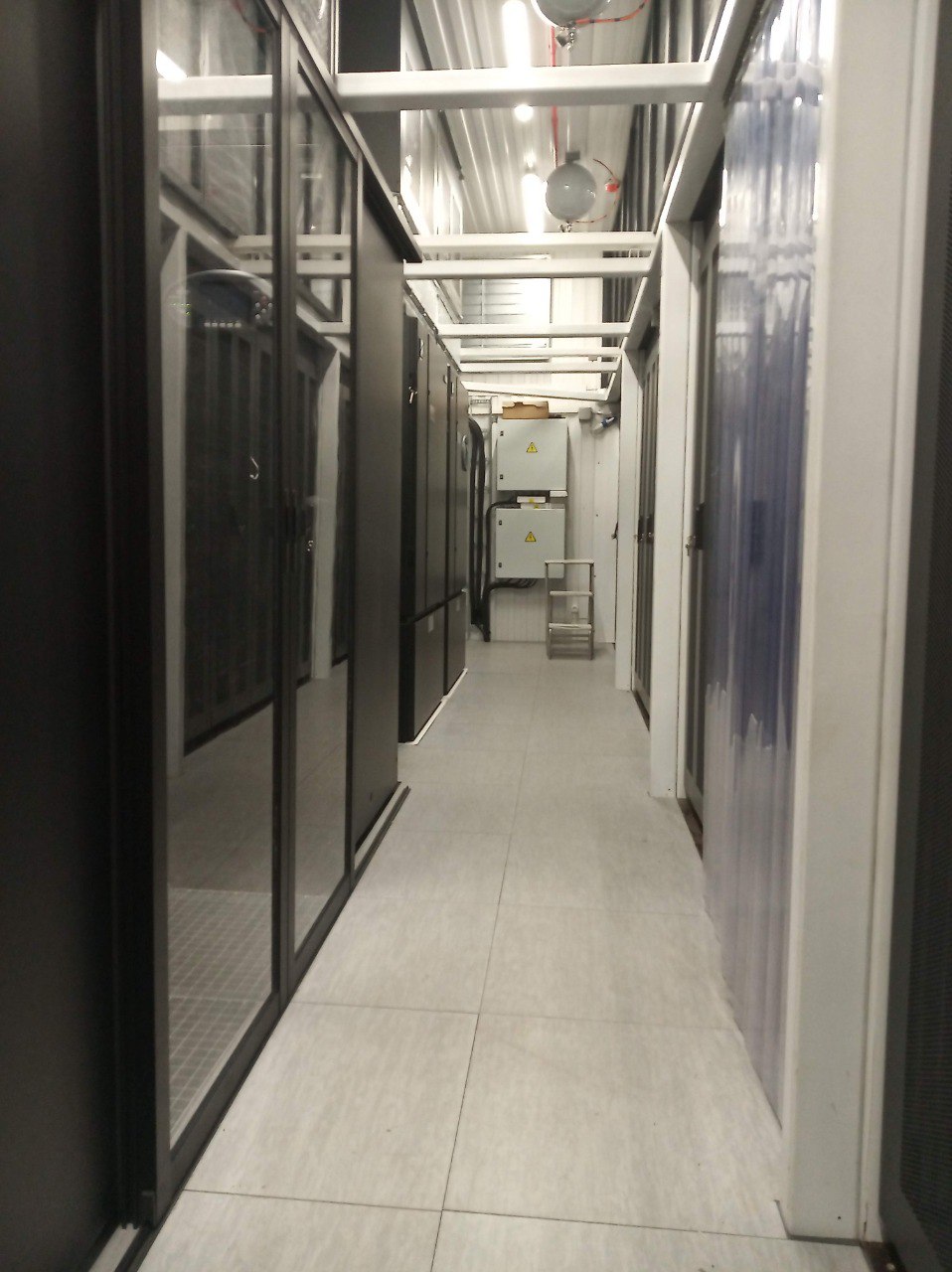
Public-Sector Modular Data Center (Energy-Efficient, Relocatable Build)
Two joined 40-ft containerized data centers hosting up to 120 kW IT load, combining hybrid free-cooling with DX systems for Tier III resilience and low OPEX.
Read the case study

Modular Data Centers for National Road-Traffic Video Capture Infrastructure
Two-site, four-module complex providing 320 kW total IT load, N+1 power and cooling, and full data replication for nationwide traffic-violation analytics.
Read the case study
Use cases
Designed to meet Tier III-IV principles with integrated power/UPS, cooling, fire suppression, and access/CCTV. Factory‑tested and verified on site (SAT). Environmental hardening and vibration tolerance; optional EMP shielding.
ENERGY AND O&G
(REMOTE SUBSTATIONS, PADS)
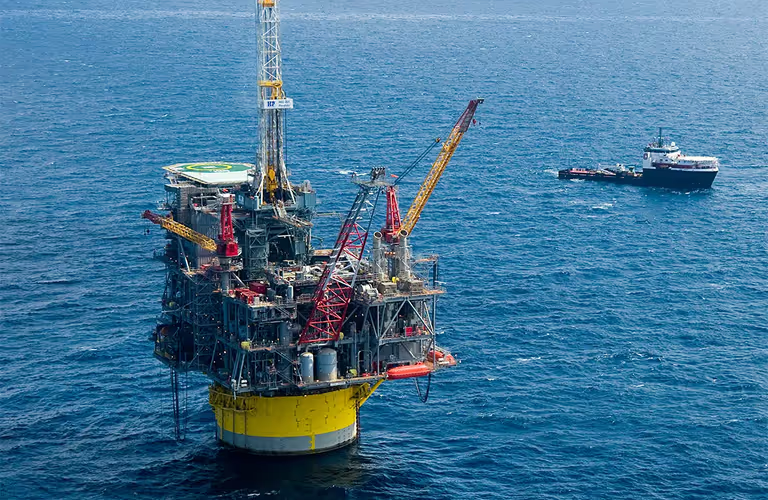
Low‑latency analytics and control on harsh sites with dust/humidity hardening and vibration tolerance; redeployable footprint.
MINING
(PIT AND PLANT)
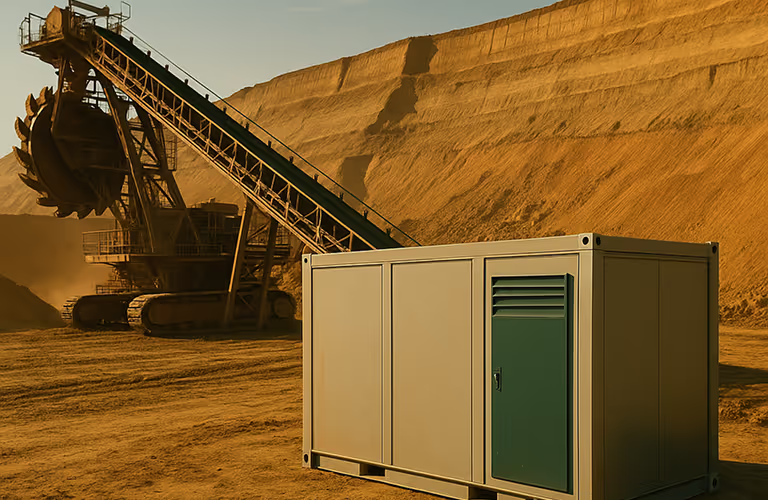
Edge processing for sorting/vision and telemetry; ruggedized cooling for heat and dust.
INDUSTRIAL AUTOMATION AND ROBOTICS

Real‑time control and QA near the line; power/ cooling matched to workload and climate; designed to support Tier I–IV reliability levels, matching each project’s required balance of uptime and cost.
TELECOM
5G EDGE
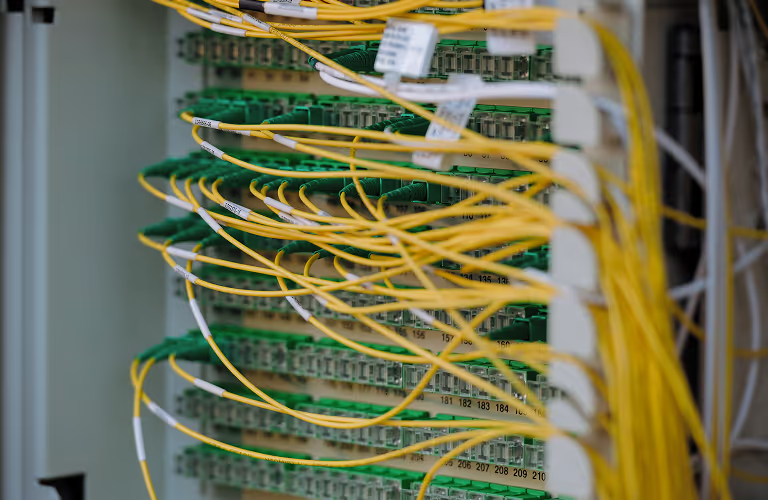
Density for vRAN/MEC close to users; predictable PUE with DX/chilled‑water/adiabatic/free‑cooling options.
RENEWABLES (WIND/SOLAR/HYDRO)

Monitoring and predictive maintenance with on‑prem control; modules sized for constrained pads and remote access.
LOGISTICS
AND PORTS
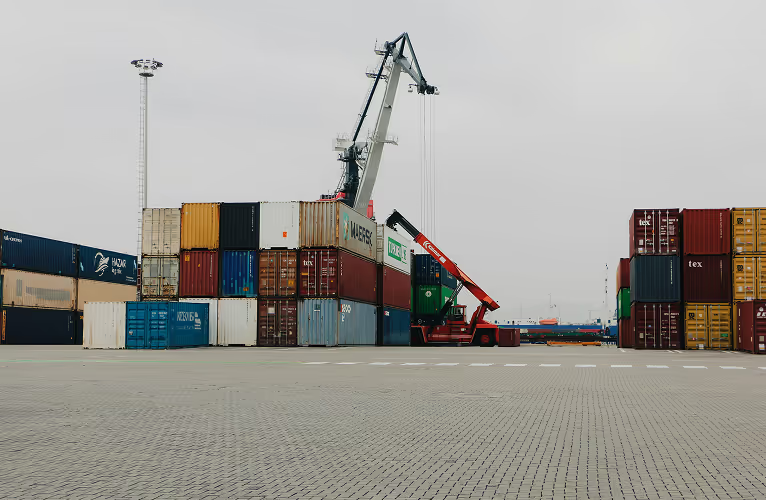
Computer‑vision and IoT ingestion at the perimeter; integrated power, cooling, fire, monitoring, and access/CCTV.
How We Shape Your Data Center Together
01
DEFINE YOUR NEEDS
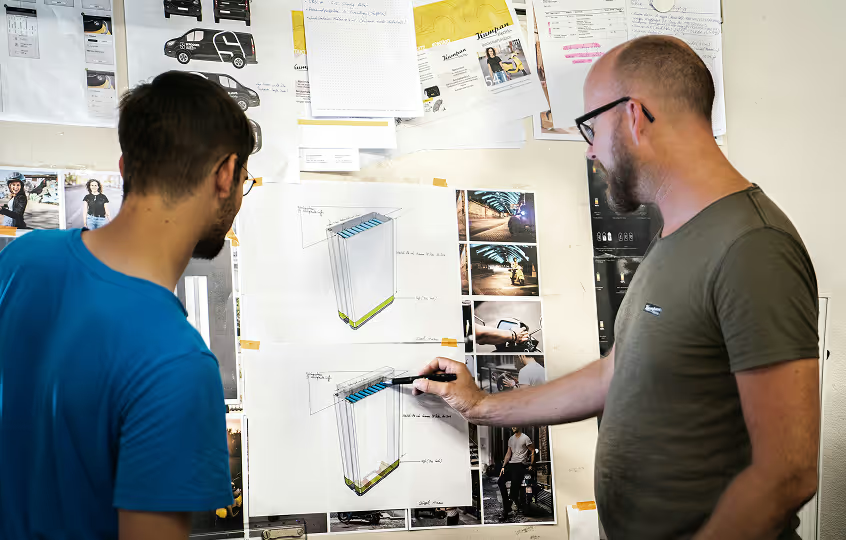
You share workloads, environment, and required reliability level (Tier I–IV). Together we define a technical brief for your modular data center that capturing power, cooling, security, and space constraints.
02
CONFIGURE YOUR MODULE
We translate your needs into a tailored design. You can choose from all-in-one or separate IT, power, and cooling blocks; specify rack sizes; airflow direction;

03
ALIGN SITE REQUIREMENTS
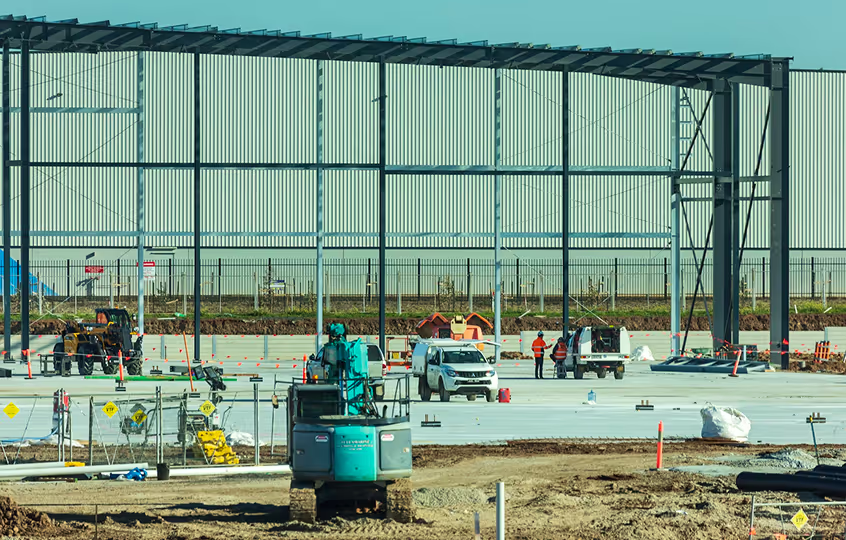
We provide detailed specs for site preparation: power feeds, fiber optics, water/cooling loops, and access points. This ensures a seamless plug-and-play connection when your data center container arrives on-site.
04
BUILD AND TEST IN FACTORY
Your modules are manufactured, equipped, and fully integrated with UPS, cooling, fire suppression, and monitoring. Before shipment, we run complete acceptance tests, so reliability is proven before it leaves the factory.
05
DEFINE YOUR CONNECT
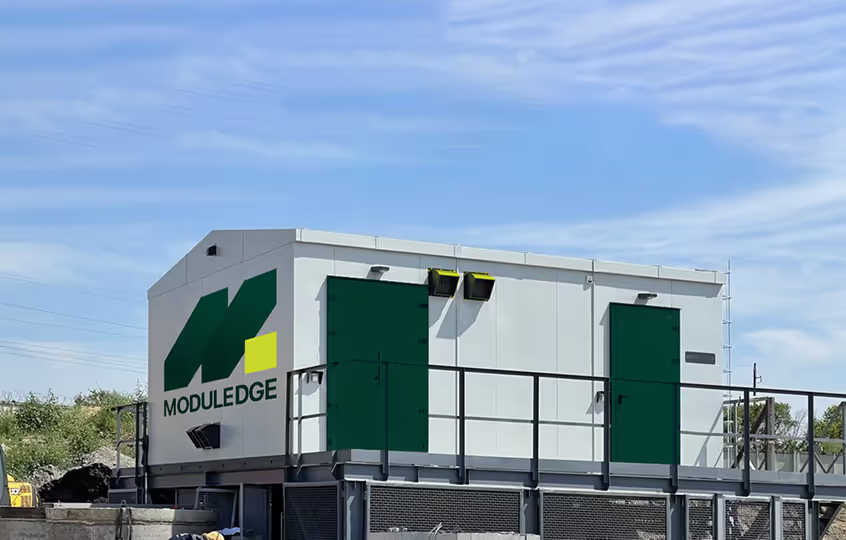
Modules are transported on public roads (within standard dimensions), placed on your site, and connected to external utilities. No complex on-site build is needed.

06
COMMISSION AND HANDOVER
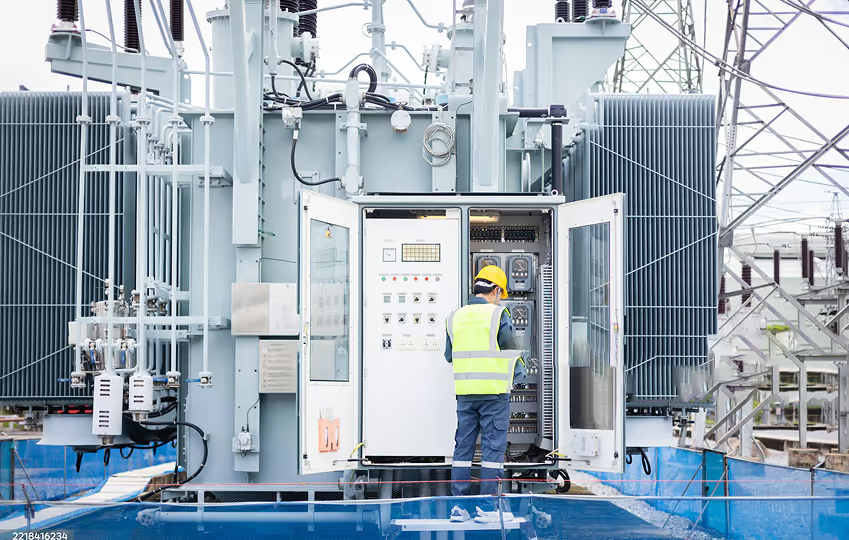
Final testing happens in your environment, and we hand over a documented, monitored, and operator-ready MDC — with the resilience and customization agreed at step one.
Book a 30-min design review
Blog

Does Liquid Cooling Use Water? Closed Loops, Dry Coolers and Cooling Towers
Learn when liquid-cooled data centers consume water, how closed loops differ from dry cooling, and what to check in dry, adiabatic and tower designs.
Read the article
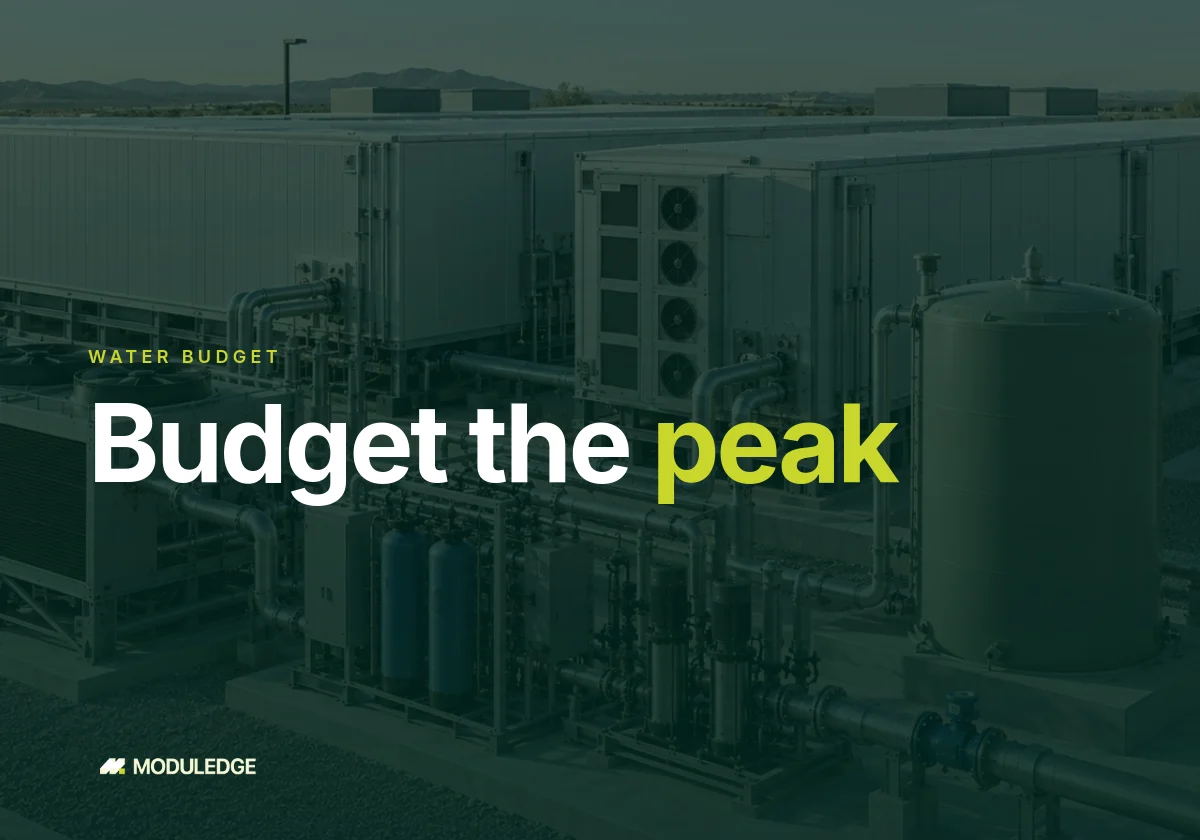
AI Data Center Water Budget: Annual Use, Peak Demand and Storage
A practical method for estimating annual withdrawal, consumption, discharge, peak make-up and storage for an AI data center—without treating WUE as a pipe-sizing tool.
Read the article
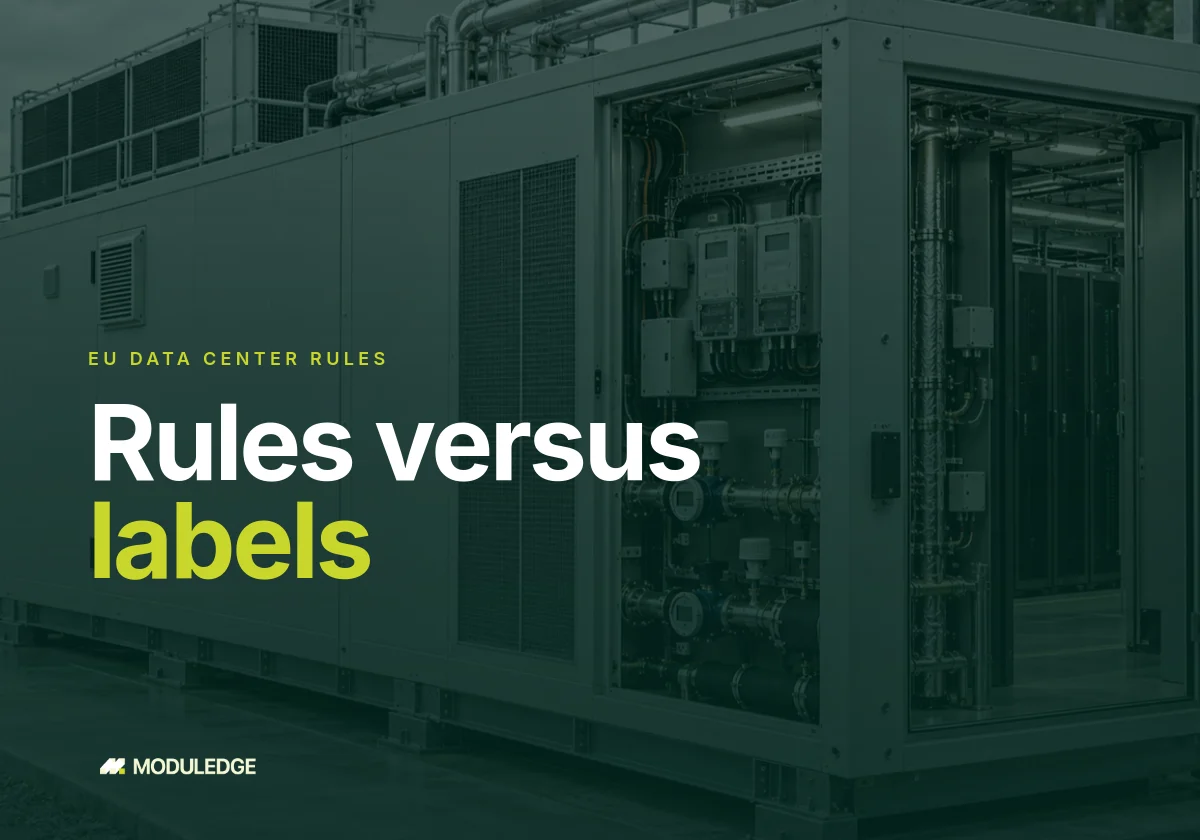
EU Data Center Rating Scheme 2026: Binding Rules and Draft Labels
The EU already requires qualifying data centers to report energy, water, heat-reuse and operational data. The A–G PUE and WUE labels remain a draft; this guide separates current law from the proposed 2027 rating scheme and turns both into a practical metering plan.
Read the article
FAQ
What is a modular data center?
A complete data centre, or a critical subsystem of one, engineered and tested in a factory before it is delivered. Racks, power distribution, cooling, fire suppression, monitoring and access control arrive as one integrated thing instead of as a construction project.
The point is not that it sits in a container. The point is that the difficult, expensive integration work happens somewhere it can be tested properly, and site work shrinks to foundations, utilities and connection.
Why consider a modular data center instead of a traditional build?
Because fabrication and site works run in parallel, and a conventional build cannot do that. Six to nine months from order, against two to three years for a building.
Worth being straight about this: that is a property of the method, not something unique to us. Any competent modular supplier can make the same argument honestly. What differs between suppliers is what the module is built to, and whether it survives your tenant's technical review.
Does your infrastructure support AI inference and model fine-tuning?
Yes, and the useful answer depends on which end of the range you are at.
Low-power inference silicon runs comfortably on air at 10 to 20 kW a rack. A GB300 NVL72 rack draws up to 142 kW maximum IT load, split 128 kW to direct liquid cooling and 14 kW to residual air, and there is no air-only version of that. We build for both ends. Part of the first conversation is working out which one your workload actually needs, rather than which one sounds more impressive.
What's the typical lead time?
Six to nine months from order to a working data centre, with factory build and site works running in parallel.
Some modular suppliers publish faster than that. If schedule is the single variable that decides your project, say so at the start and we will tell you honestly whether we are the right fit. Better that conversation now than at contract.
How do you handle hot or variable climates?
Cooling is selected against the site, not picked from a catalogue. Air handles the lower densities through in-row, precision, indirect and direct free cooling. Rear-door heat exchangers on a closed chilled-water loop handle the middle of the range. Warm-water direct liquid cooling at 41/51 degrees C handles GB300 density.
Dry operation is the normal mode. Adiabatic assistance runs from on-site storage, only when ambient conditions require it, so no permanent utility water connection is needed. Annual energy and water performance is established by site-specific climatic simulation, which is why we do not publish one figure and pretend it holds everywhere.
Can the modules handle harsh environments?
Dust, sand, humidity and vibration hardening are standard options, and EMP or IEMI shielding is available where the site calls for it. We have built shielded modules for exactly that requirement.
We do not publish a single operating temperature range. The honest limit depends on the configuration inside the module and the site around it, so it is confirmed per project at design review rather than printed as one number that would be wrong for half the people reading it.
Can we redeploy modules later?
Yes, and it is worth designing for at step one rather than discovering the constraint later. Modules are sized for standard road transport, so relocating one does not turn into a permitting exercise with escort vehicles.
Redeployability is one of the genuine structural advantages of modular over a building. If there is any chance the site changes, say so early. It costs almost nothing to plan for and a great deal to retrofit.
Do you sell direct or via partners?
Both, depending on the project. Larger and more complex builds we usually take direct. Where a system integrator already owns the client relationship, we work behind them.
Tell us which situation you are in and we will be straightforward about how we would run it, including the cases where we think the other route serves you better.
