So Long, and Thanks for All the HITs

Amazon Mechanical Turk is shutting down soon. I came up with an idea for a small project to say goodbye. I was getting pretty excited to build this, but I just discovered that Amazon has stopped allowing new Mechanical Turk (MTurk) requester signups. Since I don’t already have an account, I cannot execute this idea. So I’m going to offer it up to anyone who’d like to take it and run with it.

The idea is to use MTurk itself to help the people who worked on HITs (Human Intelligence Tasks) to share their memories. I was thinking of starting with a small HIT asking folks to fill in the blank:

Mechanical Turk was                          .

I was going to test that HIT to see what actually happened, but I hoped to hear things like:

Mechanical Turk was how I paid for groceries when money was tight.

Mechanical Turk was weird little jobs at 2 a.m.

Mechanical Turk was the reason I could stay home with my kid.

Mechanical Turk was tedious and strangely addictive.

For this hit I planned to pay a few cents, collect 1,000 responses, and then put those answers onto a slowly scrolling page at onefinalhit.com (yes, the domain name is available). I was hoping it could be a real-time feed as answers came in.

I was considering a second HIT that asked a little more:

What is the most interesting or memorable HIT you ever worked on?

For this one I was hoping for some longer stories around these sorts of scenarios:

I transcribed an audio diary from someone describing the first months after losing their spouse, and I still think about the way they talked about ordinary mornings.

I reviewed handwritten postcards people had sent to their grandparents. It was repetitive work, but every once in a while one would feel like being allowed into a tiny part of someone’s life.

I labeled photos for a project and realized halfway through that they were family photos documenting someone’s childhood. By the end, I felt like I knew the people in them.

It would have been awesome to collect stories about especially weird, tedious, funny, meaningful, or unexpectedly lucrative work. I imagined these longer stories would live in a separate section. The interface in my head was a single story on the page and a swipe to go to the next story.

I know there are rules around anonymity on MTurk, but I hoped to credit the stories based on first name or something similar. The HITs would make clear that answers would be shared in a public archive designed to be a remembrance of the work real people did on the service.

Once MTurk shut down, I planned to convert the site into a static site that could be served indefinitely.

So if anyone out there has an existing requester account and a couple hundred dollars burning a hole in their pocket, please feel free to take this idea and run with it. And let me know when you put it online!
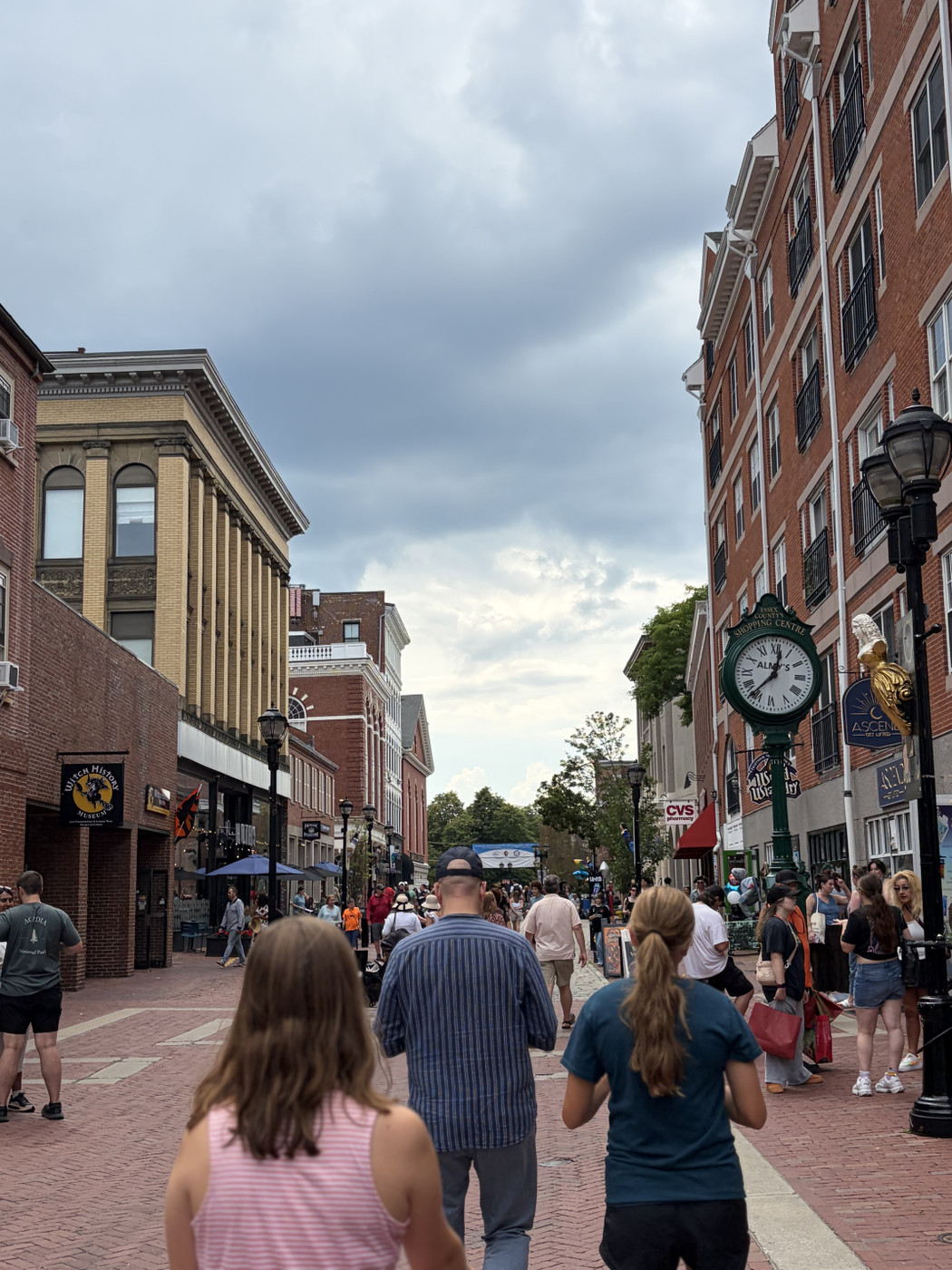


In the back of my mind I’ve always wanted to do some sort of goofy Amazon Mechanical Turk project. I guess it’s now or never. But I don’t have any ideas…


Competition’s Good

A friend let me know about Olly’s recent blog post. Olly owns and operates Pagecord, a very nice blogging service running in the same world as Pika. It sounds like another indie blogging developer accused Olly of plagiarism, and that makes me sad. I’ve had a couple conversations with Olly, and he sure seems like a nice guy who just wants to build the blogging software he wants to use. He offers it for a fair price for others to use if they have the same attitude toward blogging that he does. It’s a very familiar story to me!

Olly shared that he doesn’t read the blogs or socials of competitors. I’ll admit that I do check in on the blogs of other indie blogging services, as well as the blogs of their creators. The primary reason is that I’m a geek about blogging, so naturally I find it interesting. Reading the personal blogs of the creators also makes sense because we have something pretty big in common.

Olly also mentioned that the news from other blog builders doesn’t make him feel good, and I’ll also admit that at times I feel that way. If someone else builds something cool, after the cool wears off, of course I’m a bit disappointed in myself.

I was having an email conversation with Tom recently, and he brought up the subtle difference between when a group/network/piece of writing is more aspirational than inspirational. Keeping up with competition feels like something that should inspire me to build my own cool stuff. Yet it seems pretty self-evident that reading about the things competitors have built is much more likely to make me feel like I need to keep up with them, or, worse, disappointed in myself. Perhaps I should limit myself to the creators’ personal blogs?

At the end of Olly’s post (go read it before reading this!), he says:

The more people who want to blog, the better it is for all of us! We need to support each other’s work and focus on the greater goal of getting people blogging again.

I’ve most certainly written this sort of thing before as well. I’m not saying that Olly is copying me, though! This is a very natural conclusion. WordPress powers like 40% of the internet. I’m sure there’s some stupid-high percent of people that use social media. The more people know that there are alternatives to these options for self-expression, the more likely it is that they’ll learn about each of our indie blogging services. And that’s a very good thing!


Parking for a Concert at Gillette Stadium

Parking a vehicle for a concert at Gillette Stadium in Foxborough, Massachusetts, is quite a challenge. Before heading to the BTS concerts this past week I did some research, even asking Chat GPT about how to handle parking. To its credit, with my hints about what I wanted, it ended up putting us at a pretty good spot in someone’s yard. The spot was a 25-minute walk from the stadium.

We were staying at a hotel about four miles south of the stadium. Our tickets provided us free parking in the general parking lot across US-1, but I was skeptical. A bit of reading said you could end up waiting in that lot for quite a while after a concert. After day one, we talked to some folks who parked there and discovered they had literally not moved their car in the lot for about two hours. Not waiting in line, but literally just sitting in their car unable to move into a line.

Continue reading…


Do We Need Billionaires?

A significant portion of the population in the USA still thinks of Reaganomics as certified fact rather than a largely discredited theory. By this mindset the engine of our economy requires people to strive for a ton of money. A rising tide lifts all boats and all that.

First, I got to wondering, were US billionaires even a thing at the end of Reagan’s term? As a tween at the time, I couldn’t really remember. Turns out, yes:

  1. Sam Walton • $6.7 billion • Wal-Mart Stores 

  2. John Kluge • $3.2 billion • Metromedia 

  3. Ross Perot • $3.0 billion • Electronic Data Systems 

  4. Donald Newhouse • $2.6 billion • Publishing 

  5. Samuel Newhouse Jr. • $2.6 billion • Publishing 

  6. Henry Hillman • $2.5 billion • Industrialist 

  7. Lester Crown • $2.3 billion • Inheritance / investments 

  8. Anne Cox Chambers • $2.25 billion • Inheritance / Cox Enterprises 

  9. Barbara Cox Anthony • $2.25 billion • Inheritance / Cox Enterprises 

  10. Warren Buffett • $2.2 billion • Stock market

Then, I needed some context for the difference between a million and a billion dollars. It kind of sounds like a similar thing, yes? Well, a clever internet person said, “The difference between a million dollars and a billion dollars is approximately a billion dollars.” In reality there’s a big difference between a million and a billion dollars, and I think it’s hard to understand it. Here are some comparisons between a million and a billion of something. Maybe one of these comparisons will help to register the vastness of the difference for you:

  • A million seconds is 11.57 days. A billion seconds is 31.71 years.

  • A million marbles fills a bedroom closet. A billion marbles fills over one hundred 12 × 12 × 8 foot bedrooms.

  • Flying a million miles will have you circling the earth 40 times. Flying a billion miles circles the earth 40,000 times.

  • A million miles gets you two round trips to the moon. A billion miles gets you 2,000 round trips.

  • A million dollars in a stack of $100 bills is 3.6 feet tall. A billion dollars in $100 bills is almost ¾ of a mile tall.

  • A million dollar bills laid end-to-end would stretch 97 miles. A billion dollar bills laid end-to-end would circle the earth nearly four times.

  • If you spend $1,000 a day, a million dollars would last 2.7 years. A billion dollars would last 2,740 years.

  • If you spend $1,000,000 a day, a million dollars would last one day. A billion dollars would last 2.7 years.

Wow!

Continue reading…


Happy Anniversary

It’s our 26th anniversary today. We had a nice lunch at Jesse's favorite restaurant. Very nice meal.

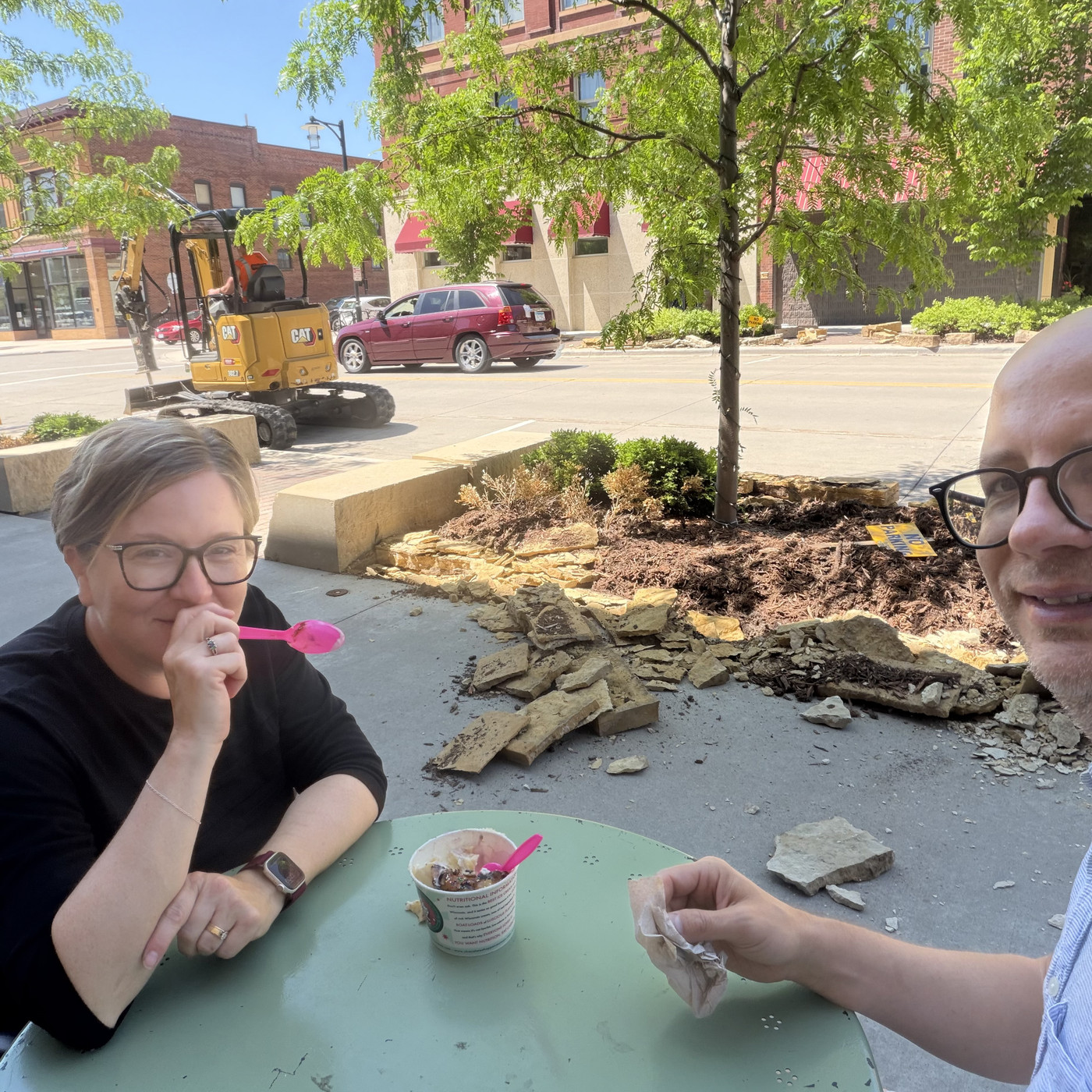
I've never had a banana split and have been trying to get Jesse to share one with me for a couple of years. So we walked to the ice cream shop and they had it on the menu.

We were too deep into it when we discovered that no one working had ever made a banana split before, so we got what you see in the picture complete with bruised banana, no whipped cream, and no cherry.

We went outside to eat at the sidewalk seating. Then construction workers started jack hammering the decorative rock the city installed just a couple years ago. We have no idea why.

Thankfully the wasps in the wasp nest that was at eye level about 18 inches from our faces didn't sting us. And the ice cream part of the banana split was good! 🤣


A Dynamic Now Page with Pika

Since building Pika I’ve wanted to incorporate a “now and then” sort of now page with dynamic history. With the recent flurry of updates to Pika variables, I realized that my dream could now be made reality. It turns out that my recent habit of writing Friday posts is effectively me writing what I’m doing/seeing/thinking, well, now(ish).

So now my now page is no longer chronically stale! If you happen to write a “general state of things” post every week or month, you can do the same thing on your own Pika site.

The page is pretty simple. First I wrote “Now” as my title. Then in the page body:

{{ posts_in_stream tag: “Friday” with_excerpts: no limit: 1 }}

### Then

Here’s to now pages past:

{{ posts tag: “Friday” skip: 1 }}

I put the body text above in a code block and wrote it as Markdown to avoid variables rendering on this post here. You may or may not be able to copy-paste the above variables into your Pika editor.

And that’s it. You may notice that my “Then” pages are linked dates without any titles. AI helped me with some wild CSS to modify Pika’s default output to what you see there. If you want something similar, you’re welcome to look at the CSS in my now page’s source to get started. Just look for .post-link in the page source.


The HomePod Can Hear Alarms

Did you know that the Apple HomePod can recognize alarms in your home and alert you about them?

We discovered this a few weeks ago while we were vacationing in Phoenix. While relaxing in the sun, every member of our household received an alert on their phones. I cannot remember exactly what it said, but it was in notification center and said something to the effect of, “An alarm is sounding in your home.”

This certainly got our adrenaline pumping! We quickly checked the other smart device we have in our home: Nest smoke detectors. There were no alerts, neither of the smoke nor carbon monoxide variety, coming from those devices.

I was a bit confused at this point as tapping the notification center alert took me to Apple Home, but I could not see any alerts on the screen it took me to, nor could I find any notifications within the app. Perhaps this is because “The notification remains in the Home app until the alarm sound stops”? That seems like an odd implementation.

Continue reading…