Six Ethereum execution clients. Same bare-metal hardware. The fastest fully syncs in 1.5 hours. The slowest takes 8+ days.
Cross-client behavior on Ethereum is more uneven than most people assume. So we measure it.
stereumlabs.com
The Identified DVT Clusters type is the interesting one here. Stereum Launcher already handles Obol and SSV cluster setup, plus Lido CSM, across 10+ EL and CL clients. Free and open source.
stereum.com
2. CSMv3: Expanding Permissionless Staking
Through this upgrade Lido CSM becomes even more reliable and operator-friendly.
Alongside multiple under-the-hood technical improvements, the primary new features are:
• New Node Operator type: Identified DVT Clusters
• Native Node
The client diversity pillar is the one we can actually help with. Every EC x CC pairing on our fleet runs on identical hardware, and the per-pairing numbers are public.
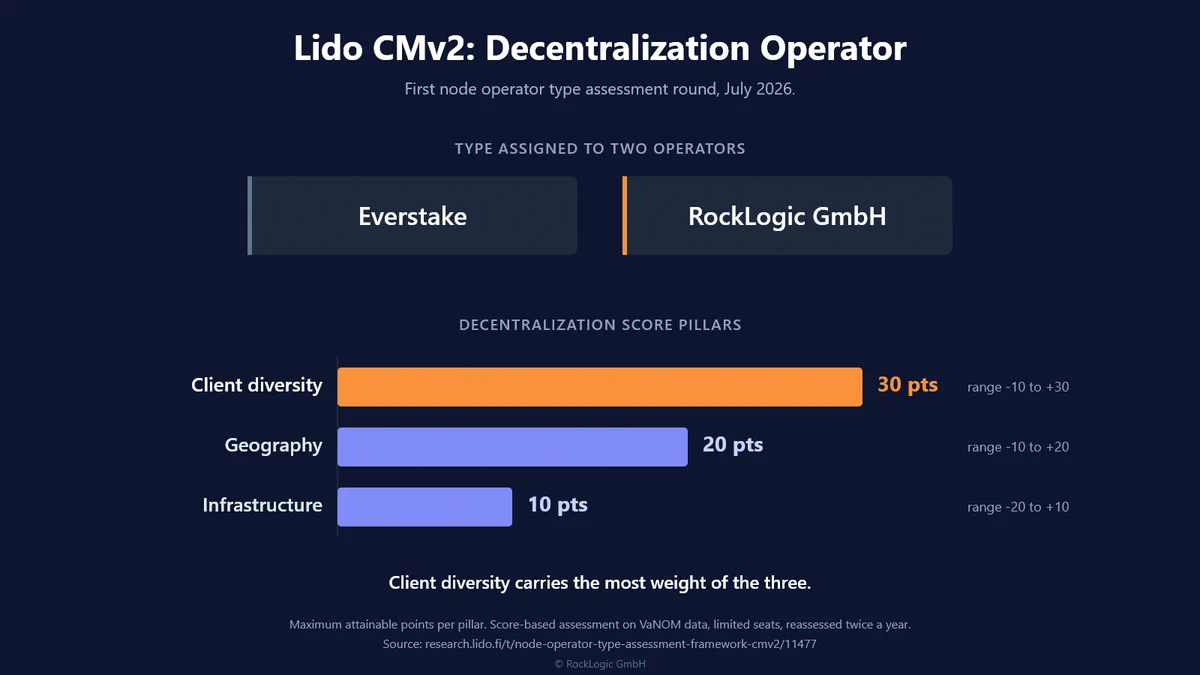
Lido (@LidoFinance) published the first CMv2 operator type assessment. Two operators were assigned the Decentralization Operator type: @everstake_pool and RockLogic.
Client diversity is the heaviest pillar in that score: up to 30 points, geography 20, infrastructure 10.
Five synced ECs on the same Ethereum mainnet:
Erigon: ~509 GB
Ethrex: ~598 GB
Nethermind: ~1,225 GB
Besu: ~1,261 GB
Geth: ~1,688 GB
3.3× spread, driven by retention architecture. Numbers are upper bounds (hosts rebuilt in 7-16 days). And disk is only half of it.
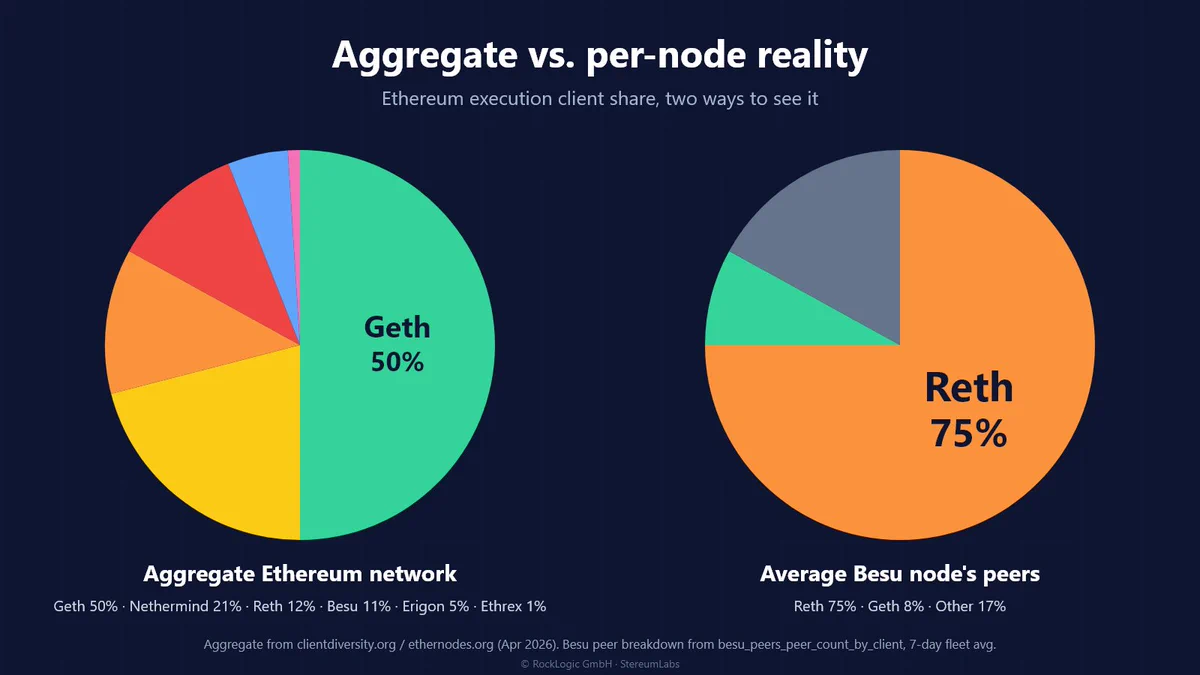
Aggregate Ethereum client diversity: 'no client over 55%.'
The view from an average Besu node on our fleet: 75% of its 24 peers are Reth.
A 12% slice of the network becomes 75% of one node's reality.