Buy

CoinGape has been covering cryptocurrency and blockchain markets since 2017. Our editorial team evaluates projects and platforms using structured review frameworks focused on transparency, utility, and risk assessment. You can explore our review methodologies to see how we assess and rate different categories. We maintain clear editorial standards and disclose advertising or affiliate relationships where applicable.
Cross-chain swap platforms enable users to trade digital assets between different blockchains. They use bridges, wrapped assets, and cross-chain messaging to move capital without relying on centralized exchanges.
In recent years, cross-chain interoperability has become a key part of DeFi. Its transaction volume hit $56.1 billion in July 2025, and TVL for cross-chain platforms grew by 35.5% in Q2 2025, according to Velvosoft. This growth comes from Ethereum L2 expansion, high-performance L1s, modular architectures, and rising institutional crypto adoption.
Yet, as volume increases, the choice of cross-chain platform matters. Some offer simple, non-custodial swaps, while others have tighter limits and compliance checks. This guide reviews the best cross-chain swap platforms in 2026. We compare their security, supported blockchains, fees, and compliance risks.
| Platforms | Best For | Cross-Chain Swap Type | Fees | Supported Chains | Ratings |
|---|---|---|---|---|---|
 1. THORChainRead More | Native cross-chain swaps | Liquidity pool-based | Network gas + liquidity pool swap fees | Bitcoin, ETH, BNB Chain, Avalanche, 14 others | 4.6 |
 2. PancakeSwapRead More | AMM-based token swaps | Liquidity pool-based, Cross-chain aggregation | Trading fees + bridge fees | BNB Chain, ETH, SOL, Arbitrum, Base, zkSync, Linea, Monad | 4.4 |
 3. Symbiosis FinanceRead More | Multi-route cross-chain swaps | Liquidity pool-based, Cross-chain aggregation | Trading fees + network gas | ETH, BNB Chain, Polygon, ARB, OP, Avalanche, Base, SOL, 40+ others | 4.5 |
 4. Wormhole Portal BridgeRead More | Cross-chain messaging and wrapped asset bridging | Wrapped token model, Arbitrary Messaging Bridge | Network gas + bridge fee | ETH, SOL, BNB Chain, Polygon, Sui, 20+ others | 4.4 |
 5. 1inchRead More | DEX aggregation | Cross-chain aggregator | Network gas + bridge fee | SOL, ETH, BNB Chain, Polygon, 10 others | 4.5 |
 6. RelayRead More | Intent-based cross-chain swaps | Intent-based executions and cross-chain aggregator | $0.02 flat execution fee + swap fees + 25% relay fee | ETH, Base, ARB, SOL, Polygon, 70+ others | 4.5 |
 7. Jumper ExchangeRead More | Multi-bridge cross-chain swaps | Cross-chain aggregator | Network gas + bridge fee | ETH, ARB, Polygon, Avalanche, BNB Chain, 55+ others | 4.6 |
 8. UniswapRead More | Deep On-Chain Liquidity And Efficient AMM Execution | Liquidity pool-based swaps | 0.3% swap fee | 17 networks, including ETH, BNB Chain, SOL, Unichain | 4.8 |
 9. Bungee ProtocolRead More | Low-fee cross-chain swap | Cross-chain aggregator and Bridge + DEX routing | Zero platform fee | 29 networks, including Abstract, ARB, Base, ETH, and BNB Chain | 4.3 |
We reviewed 20 cross-chain swap platforms across bridges, blockchain networks, and many of the “top-rated” platforms most reviewers swear by. We evaluated each protocol using CoinGape’s review methodology, which assesses what each platform claims to offer and compares that against its performance in practice.
In our review, we focused on execution reliability and speed, liquidity, network support, fee transparency, security, and user experience. Of the 20 platforms, we selected 9 that consistently perform well for cross-chain swaps.
Best for Native Cross-Chain Swaps
Founded in 2018, THORChain operates on its own blockchain. It enables native swaps across many networks by converting your coin into RUNE, then swapping RUNE into the target coin. On the front end, this appears as a simple swap, and you don’t need to hold or manage RUNE yourself.
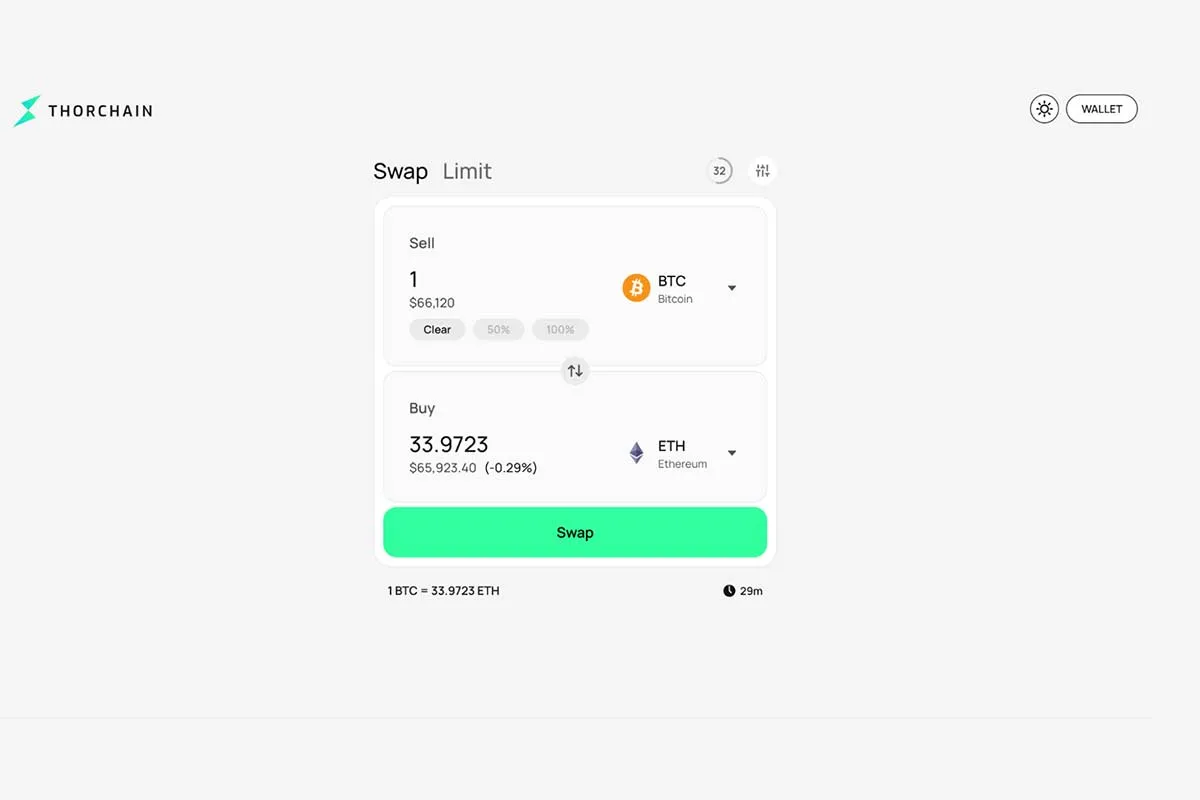
THORChain uses several methods to secure the network. One of which is granular halting controls via node Nimir and an automatic solvency checker.
Supported Chains: Bitcoin, Ethereum, BNB Chain, Avalanche, Cosmos Hub, Dogecoin, Bitcoin Cash, Litecoin, Base, Ripple, TRON, Radix, Maya, Kujira, Dash, Arbitrum, Zcash, Solana, THORChain.
| Parameters | Details |
| Cross-Chain Swap Type | Liquidity pool-based |
| Security Architecture | BFT consensus, Smart contract-based |
| Liquidity Depth | Community liquidity pools |
| Decentralization Level | Non-custodial |
| Swap Speed and Reliability | Dependent on the source and destination chain |
| Fees and Cost Transparency | Network gas fees + liquidity pool swap fees |
| Regulatory and Custody Risk | Self-custodial |
Best for AMM-based Token Swaps
PancakeSwap is a decentralized exchange originally built on BNB Smart Chain. It operates through smart contracts, allowing users to swap tokens without transferring custody.
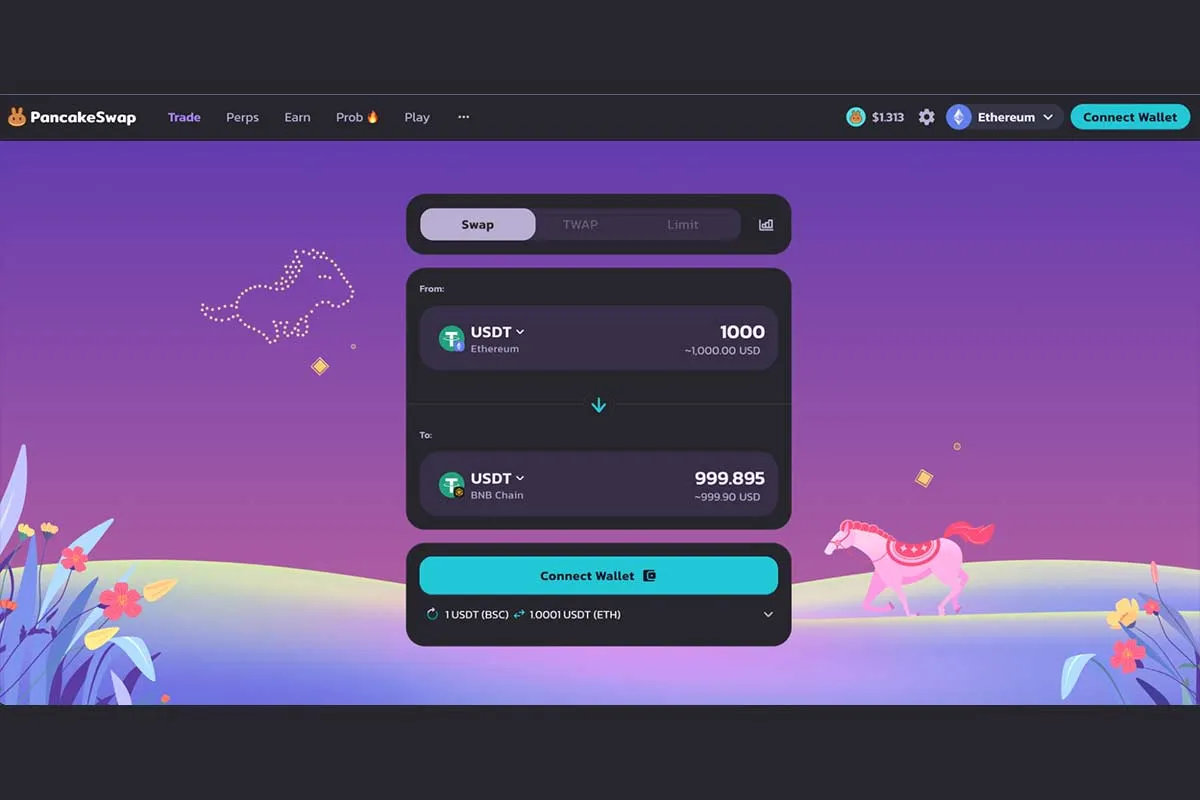
Users select source, destination chain, and tokens. Then, the PancakeSwap router determines the most efficient route and executes swaps via its liquidity pools (v2, v3, Infinity, StableSwaps).
Supported Networks: BNB Chain, Ethereum, Solana, Arbitrum, Base, zkSync, Linea, Monad.
| Parameters | Details |
| Cross-Chain Swap Type | Liquidity pool-based, Cross-chain aggregation |
| Security Architecture | Smart contract-based |
| Liquidity Depth | AMM pools |
| Decentralization Level | Non-custodial |
| Swap Speed and Reliability | Dependent on bridge execution (Usually <7 seconds) |
| Fees and Cost Transparency | Trading fees + bridge fees |
| Regulatory and Custody Risk | Risks associated with self-custody |
Best for Multi-Route Cross-Chain Swaps
Symbiosis Finance routes swaps via transit tokens such as USDC, WETH, or WBTC. When a swap is initiated, Symbiosis identifies multiple routing paths and selects the most efficient. If necessary, the assets are first swapped into the chosen transit token on the source chain via DEX aggregators.

The transit token is then moved across chains through the Symbiosis Octopool and swapped into the target asset on the destination chain. At the front end, the user signs a single transaction on the source chain, pays the gas fee, and receives the final asset directly in their destination wallet.
Supported Networks: Ethereum, BNB Chain, Polygon, Arbitrum, Optimism, Avalanche, Base, Solana, Linea, and 40+ other networks (including Symbiosis Host Chain).
| Parameters | Details |
| Cross-Chain Swap Type | Liquidity pool-based, Cross-chain aggregation |
| Security Architecture | Smart contract-based |
| Liquidity Depth | Aggregated liquidity |
| Decentralization Level | Non-custodial |
| Swap Speed and Reliability | Near-instant to <8 minutes, depending on the network |
| Fees and Cost Transparency | Trading fees + network gas |
| Regulatory and Custody Risk | Self-custodial risks |
Best for Cross-Chain Messaging And Wrapped Asset Bridging
Wormhole operates through a decentralized guardian network. When a user bridges assets, the original tokens are locked in a smart contract on the source chain. A corresponding Wormhole-wrapped asset is then minted on the destination chain and swapped with the target token.

Wormhole relies on 19 nodes called Guardians to track and perform actions. The Guardians observe events on the source chain, co-sign a Verified Action Approval (VAA), and authorize minting assets on the destination chain.
Unlike simple token bridges, Wormhole functions as an Arbitrary Messaging Bridge (AMB), meaning it can transmit complex cross-chain messages and asset transfers.
Supported Networks: Ethereum, Solana, BNB Chain, Polygon, Arbitrum, Optimism, Base, Aptos, Sui, and 20+ other networks.
| Parameters | Details |
| Cross-Chain Swap Type | Wrapped token model, Arbitrary Messaging Bridge |
| Security Architecture | Guardian validator-based (Proof of Authority) |
| Decentralization Level | Hybrid (incorporates both on-chain and off-chain) |
| Swap Speed and Reliability | Near-instant to <10 minutes, depending on the network |
| Fees and Cost Transparency | Network gas + bridge fee |
| Regulatory and Custody Risk | Non-custodial risk |
Best for DEX Aggregation
1inch is an exchange aggregator that routes trades across multiple DEXs rather than using its own liquidity pools. At the core is 1 inch’s aggregation protocol, Pathfinder. It analyzes available liquidity across supported exchanges and determines the most cost-efficient execution path. Sometimes, it splits orders across several pools to reduce slippage and gas costs.

1inch also supports classic aggregation swaps, intent-based swaps, intent-based atomic cross-chain swaps, on-chain limit orders, and RFQ functionality for customized trade execution.
Supported Networks: Solana, Ethereum, Unichain, Optimism, Arbitrum, zkSync Era, Base, Linea, BNB Chain, Sonic, Polygon, Gnosis, and Avalanche.
| Parameters | Details |
| Cross-Chain Swap Type | Cross-Chain Aggregator |
| Security Architecture | Smart contract-based, Resolver network |
| Decentralization Level | Non-custodial |
| Fees and Cost Transparency | Network gas + bridge fee |
| Regulatory and Custody Risk | Self-custodial, smart contract and resolver model risk |
Best for Intent-Based Cross-Chain Swaps
Relay enables bridging, swapping, and contract calls using an intents-based model. When a user initiates a swap, Relay details the estimated cost and execution time. If accepted, same-chain swaps are executed instantly.

In comparison, cross-chain swaps require a deposit to the Relay Depository Contract, where a relayer fills the transaction on the destination chain and unlocks funds on the origin chain. Relay integrates deep DEX meta-aggregation to source liquidity and optimize pricing across chains.
Supported Networks: Ethereum, Base, Arbitrum, Solana, Polygon, and 70+ other networks.
| Parameters | Details |
| Cross-Chain Swap Type | Intent-based executions and cross-chain aggregator |
| Security Architecture | Smart contract-based, Resolver network |
| Decentralization Level | Non-custodial |
| Fees and Cost Transparency | $0.02 flat execution fee + swap fees + relay fees. The relay fee is 25% of swap fees and the app fee |
Best for Multi-Bridge Cross-Chain Swaps
Jumper is a cross-chain swap and bridge interface powered by LI.FI’s routing infrastructure. It aggregates liquidity, bridge providers, and solver networks into a single interface. This allows users to swap and bridge assets without manually coordinating many steps.

Hence, when a user selects a token and destination chain, Jumper’s routing engine assembles the most efficient routes. Then, it displays each route’s gas fees, price impact, bridge, and estimated execution time.
Supported Networks: Ethereum, Arbitrum, Polygon, Avalanche, BNB Chain, and 55+ other networks.
| Parameters | Details |
| Cross-Chain Swap Type | Cross-chain aggregator |
| Security Architecture | Smart contract-based |
| Liquidity depth | Aggregated across 30+ DEXs (such as Uniswap, 1inch, Sushi, PancakeSwap) and 15+ bridges (Connext, Hop, Stargate, Across, Celer cBridge, and Symbiosis). |
| Decentralization Level | Non-custodial |
| Fees and Cost Transparency | Network gas + bridge fee |
| Regulatory and Custody Risk | Risk inherited from integrated bridges |
Best for Deep On-Chain Liquidity And Efficient AMM Execution
Uniswap is an automated market maker (AMM) that enables users swap tokens without transferring custody. Instead of matching buyers and sellers through an order book, trades execute against smart contracts that hold trading pairs.
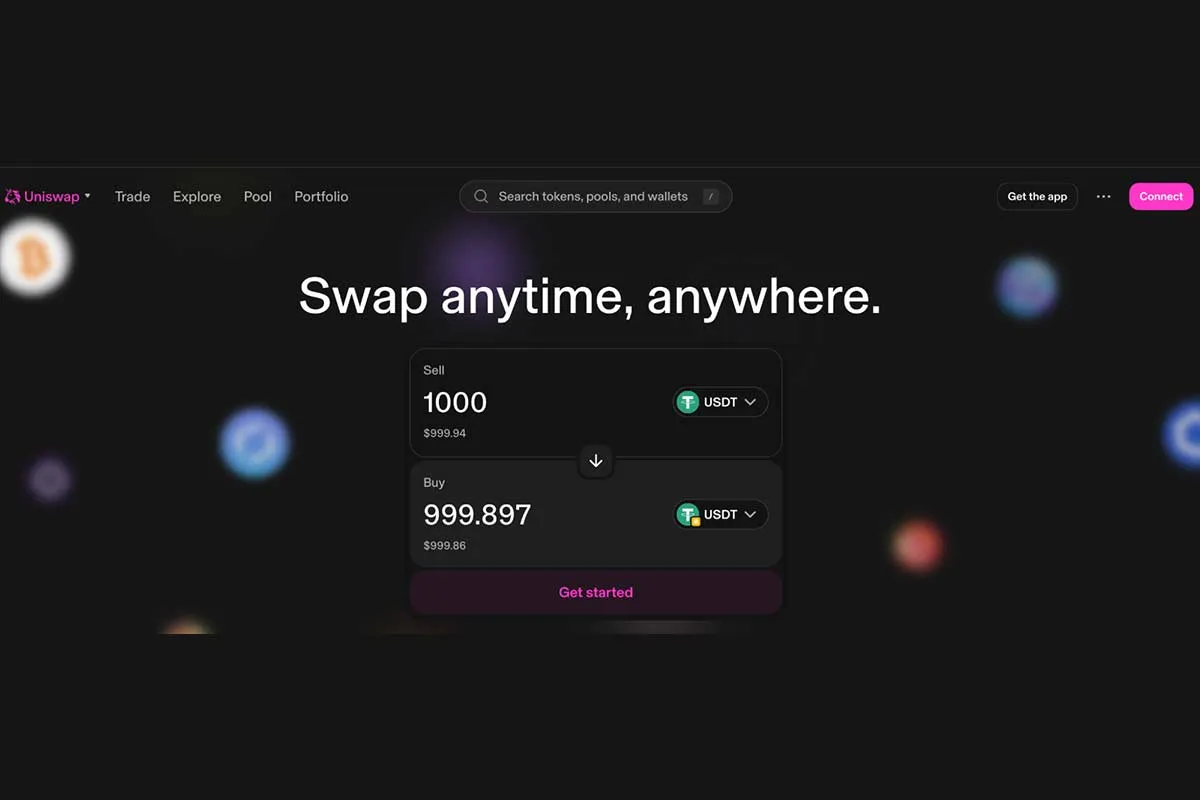
After each transaction, the AMM algorithm adjusts token prices automatically based on the pool’s updated balances. With the introduction of Uniswap V3, the protocol added concentrated liquidity, allowing providers to allocate capital to specific price ranges where trading occurs most. This improves capital efficiency, offers passive income to LPs, and reduces slippage for traders.
Supported Networks: 17 networks, including Ethereum, BNB Chain, Solana, and Unichain.
| Parameters | Details |
| Cross-Chain Swap Type | Liquidity pool-based swaps |
| Security Architecture | Smart contract-based |
| Liquidity depth | Deep liquidity for major pairs |
| Decentralization Level | Non-custodial |
| Fees and Cost Transparency | 0.3% swapping fee |
| Regulatory and Custody Risk | Risks associated with self-custody |
Best for Low-Fee Cross-Chain Swap
Bungee Protocol is a bridge aggregator built on the Socket infrastructure. It routes cross-chain transfers by analyzing multiple bridges, DEXs, and DEX aggregators. Then, it determines the most efficient path based on fees, liquidity, speed, and swap rates.

Hence, when you start a transfer, Bungee presents available routes to move the token across the blockchain.
Supported Networks: 29 networks, including Abstract, Arbitrum, Base, Ethereum, and BNB Chain.
| Parameters | Details |
| Cross-Chain Swap Type | Cross-chain aggregator and Bridge + DEX Routing |
| Security Architecture | Smart contract-based |
| Liquidity depth | Aggregated across integrated bridges and DEXs |
| Decentralization Level | Non-custodial |
| Fees and Cost Transparency | Zero |
| Regulatory and Custody Risk | Risks associated with integrated bridges |
A cross-chain swap platform lets users trade tokens between different blockchains. It manages value transfers using smart contracts, liquidity pools, validator networks, or cross-chain messaging.
While each platform differs slightly, most cross-chain swaps follow a similar process:
Cross-chain infrastructure is often grouped together, but bridges, swap platforms, and aggregators differ in execution flow, asset handling, and routing logic.
Here’s a simple breakdown:
| Type | Function |
| Cross-chain Bridge | A bridge transfers your asset between blockchains. It locks it on the source chain and mints a corresponding version on the destination chain. |
| Cross-chain Swap Platform | A cross-chain swap platform allows users to exchange one asset for another across different blockchains. |
| Cross-chain Aggregator | An aggregator routes swaps across multiple bridges and exchanges to find the most efficient path based on liquidity, fees, and execution speed. |
Cross-chain platforms introduce additional complexity compared to single-chain DEXs. Hence, to review and rate the best cross-chain swap platforms, we focused on these key factors:
1. Security model: We assessed how each platform secures cross-chain transactions. This includes whether it uses trustless smart contracts, validator networks, MPC systems, oracle-based validation, or guardian models.
2. Audit history: We reviewed whether the platform has had independent smart contract audits and the auditing firm’s reputation. We also checked for past vulnerabilities, if they were disclosed, and how they were resolved.
3. Liquidity depth: We analyzed total value locked (TVL), pool depth for major pairs, and whether liquidity is native, aggregated, or dependent on third-party bridges.
4. Swap speed: We examined average settlement times, execution consistency, reliance on relayers or solvers, and the protocol’s handling of congestion.
5. Fees transparency: We evaluated how clearly fees are disclosed, including swap fees, bridge fees, relayer fees, gas abstraction costs, and any hidden spreads.
6. Supported chains: We assessed the number of supported blockchains, inclusion of non-EVM networks, and integration with major DeFi solutions.
7. Compliance risk: We assessed whether the platform is fully non-custodial, whether it operates within regulated exchange environments, and whether users need to complete KYC before swapping.
Each cross-chain swap platform handles interoperability differently and comes with its own trade-offs in security, liquidity, complexity, and cost. The best choice depends on what you need.
Here’s how the top platforms compare, based on our review and analysis.
The safety of a cross-chain swap depends on the platform’s security model, liquidity depth, audit history, level of decentralization, and past exploit record.
There is no single “safest” platform, but protocols that use trust-minimized smart contracts and decentralized validators reduce custodial risk.
Platforms such as THORChain and Rango support native Bitcoin-to-other-chain swaps, while some bridge-based platforms, such as Uniswap and PancakeSwap, support wrapped Bitcoin transfers. Verify which Bitcoin is supported before swapping.
Cross-chain swap fee is mostly a swap fee, a bridge or relayer fee, and a network gas fee. Some aggregator-based platforms may also include solver or routing fees.
Yes, they are, but the levels of decentralization vary. Some platforms rely on validator or guardian networks to confirm cross-chain transactions, while others depend on third-party bridges or solver networks.
Yes, institutions can use cross-chain swaps, especially through a platform’s API integrations, aggregators, or white-label routing solutions.


 2M+ Monthly Readers
 50k+ Articles