




Thursday, April 2, 2026
Image

Appeals Court Orders Tina Peters to Be Resentenced, Citing First Amendment Concerns.

PULSE POINTS

WHAT HAPPENED: The Colorado Court of Appeals upheld the conviction of Tina Peters for election interference, but ordered a review of her nine-year prison sentence over its harsh nature and potential First Amendment concerns.

👤WHO WAS INVOLVED: Tina Peters, Colorado Court of Appeals, Colorado Attorney General’s Office, Governor Jared Polis (D-CO), and President Donald J. Trump.

📍WHEN & WHERE: The announcement was made by the Colorado Attorney General’s Office on April 2, 2026.

🎯IMPACT: The court ordered a re-evaluation of Peters’ sentence due to First Amendment concerns.

IN FULL

The Colorado Court of Appeals has upheld the conviction of former Mesa County Clerk Tina Peters, 70, who was found guilty of election interference for allowing unauthorized access to voting machines following the 2020 presidential election. However, the court also ordered a review of Peters’s nine-year prison sentence on First Amendment grounds.

Notably, the decision, announced on Thursday by the Colorado Attorney General’s Office, means there could be a significant reduction in Peters’s jail time. The former Mesa County Clerk was sentenced to nine years in prison in October 2024.

Governor Jared Polis (D-CO) has previously suggested that Peters‘ nine-year sentence might have been excessively harsh. Meanwhile,  President Donald J. Trump has been advocating for the release of the 70-year-old Peters, having pardoned her late last year. However, presidential pardons do not apply to state charges, and the court rejected the Peters pardon this week.

Join Pulse+ to comment below, and receive exclusive e-mail analyses.

show less
show more
Image

Senate Unanimously Approves DHS Funding – But Now It Must Pass the House.

PULSE POINTS

WHAT HAPPENED: The U.S. Senate unanimously passed a bill to partially reopen the Department of Homeland Security (DHS), with the funding deal now advancing to the House for approval.

👤WHO WAS INVOLVED: Senate Majority Leader John Thune (R-SD), House Speaker Mike Johnson (R-LA), and members of Congress in both chambers.

📍WHEN & WHERE: The Senate vote took place on Thursday in Washington, D.C., as Congress approaches a two-week recess.

🎯IMPACT: The bill’s passage signals a potential resolution to the partial government shutdown, contingent on further action by the House.

IN FULL

The U.S. Senate unanimously approved a bill on Thursday to partially reopen the Department of Homeland Security (DHS), marking a step toward ending the longest-ever partial government shutdown. Last week, House Republicans rejected a nearly identical funding bill over its failure to include appropriations for U.S. Immigration and Customs Enforcement (ICE) and Customs and Border Protection (CBP) deportation operations. However, on Wednesday, President Donald J. Trump assured Republican lawmakers that DHS immigration enforcement operations will be funded through the end of his term in a second budget reconciliation bill he intends to sign by June 1.

With the deal’s adoption by the Senate, the DHS funding bill will now be sent back to the House for consideration. Still, the timeline for a House vote remains unclear, as lawmakers are currently on a two-week recess. Despite this, brief “pro forma” sessions continue on Capitol Hill, meaning Speaker Mike Johnson (R-LA) could bring the bill to the floor for adoption by unanimous consent, barring any objections.

Notably, the Senate vote follows a joint statement issued on Wednesday by Senate Majority Leader John Thune (R-SD) and Speaker Johnson laying out their plan for a two-step process to reopen DHS and fund ICE and CBP. Earlier in the day, President Trump announced that his administration was working with Republican lawmakers to craft a new budget reconciliation bill to fund the immigration enforcement operations and deportation actions, with the reconciliation process allowing the Senate to effectively circumvent the Democrat filibuster blocking the funding.

Join Pulse+ to comment below, and receive exclusive e-mail analyses.

show less
show more
Image

Paul Dans Picks Up Major Endorsement in Bid to Oust Lindsey Graham.

PULSE POINTS

WHAT HAPPENED: Former U.S. Border Patrol Commander-at-Large Gregory Bovino is backing Project 2025 architect and former Trump administration official Paul Dans in his primary challenge against neoconservative Senator Lindsey Graham (R-SC).

👤WHO WAS INVOLVED: Gregory Bovino, Paul Dans, Sen. Lindsey Graham, and South Carolina voters.

📍WHEN & WHERE: Bovino’s endorsement was announced at the end of March after a meeting with Dans.

💬KEY QUOTE: “Paul, you’re a thoughtful patriot who cares deeply about family, community safety and restoring America. You are needed in SC – I fully endorse you!! Good luck, sir!” — Gregory Bovino

🎯IMPACT: The endorsement is likely to increase Dans’s standing with MAGA voters opposed to illegal immigration, and starkly contrasts with Sen. Graham’s pro-amnesty, pro-mass immigration positions.

IN FULL

Former U.S. Border Patrol Commander-at-Large Gregory Bovino is backing Project 2025 architect and former Trump administration official Paul Dans‘s primary challenge against neoconservative Senator Lindsey Graham (R-SC). Bovino, who retired from the Border Patrol at the end of March after his removal earlier this year from leading immigration enforcement operations in Minnesota, recently met with Dans, where the latter emphasized his commitment to deporting all illegal immigrants.

“Paul, you’re a thoughtful patriot who cares deeply about family, community safety and restoring America,” Bovino wrote in a post on X (formerly Twitter). He added, “You are needed in SC – I fully endorse you!! Good luck, sir!”


The former chief of the Heritage Foundation’s Project 2025 effort to staff the second Trump administration, Dans announced his primary challenge against Graham—a 23-year incumbent—last July in Charleston, South Carolina.

“What we’ve done with Project 2025 is really change the game in terms of closing the door on the progressive era. If you look at where the chokepoint is, it’s the United States Senate. That’s the headwaters of the swamp,” Dans said at the time, while singling out Sen. Graham as a central figure in the political establishment’s obstruction of the MAGA agenda: “It’s time to show him the door.”

Notably, Bovino was a key force within President Donald J. Trump’s immigration enforcement initiatives, directing operations in major urban areas including Los Angeles, Chicago, and New Orleans. In Los Angeles, the “Operation Trojan Horse” effort resulted in more than 5,000 arrests, while “Operation Midway Blitz” in Chicago led to over 3,000 arrests. Bovino often deployed alongside agents in person, tangling with pro-illegal immigrant agitators hand-to-hand.

Image via @DansForSenate.

Join Pulse+ to comment below, and receive exclusive e-mail analyses.

show less
show more
Image

ActBlue Faces DOJ Investigation for Misleading Congress About Foreign Donation Vetting.

PULSE POINTS

WHAT HAPPENED: ActBlue is under investigation for potentially misleading Congress about its vetting of foreign donations.

👤WHO WAS INVOLVED: ActBlue executives, Covington & Burling law firm, Regina Wallace-Jones, and congressional Republicans.

📍WHEN & WHERE: Investigations began in early 2025, with events unfolding through 2026.

💬KEY QUOTE: There was “a substantial risk that some of the funds received were impermissible contributions from foreign nationals,” noted Covington & Burling.

🎯IMPACT: The investigations and internal turmoil could destabilize Democratic fundraising efforts ahead of the midterm elections.

IN FULL

ActBlue, the leading Democrat fundraising platform, is now under heavy scrutiny from the Department of Justice (DOJ) and Republican lawmakers in Congress. The pressure follows a warning from its own law firm that CEO Regina Wallace-Jones may have misled Congress about how thoroughly the organization screened foreign donations.

In a 2023 letter sent to Republican investigators, Wallace-Jones stated that ActBlue operated a “multilayered” screening process designed to block foreign contributions. However, the law firm Covington & Burling, working for ActBlue, later determined that these procedures were not consistently applied. Internal memos from the lawyers noted that, for instance, donors who paid via third-party apps like Apple Pay, PayPal, and Venmo were not asked to provide their passport information, despite Wallace-Jones assuring Congress they were.

Covington & Burling warned that there was “a substantial risk that some of the funds received were impermissible contributions from foreign nationals,” and that ActBlue’s claims to Congress could trigger a criminal investigation if federal prosecutors concluded that the platform had hidden information about its actual efforts to stop foreign donations. The disclosures have already triggered multiple high-level resignations at the organization.

ActBlue has pushed back against its former legal advisers at Covington, claiming the firm failed to properly review the 2023 letter before it went to Congress. The platform has since ended its relationship with the law firm, claiming it has introduced new safeguards to block foreign donations.

The combination of federal and congressional investigations, plus internal turmoil, is raising serious concerns about ActBlue’s ability to support Democrat fundraising efforts ahead of the upcoming midterm elections. Since its founding, the organization has processed nearly $19 billion in donations and now faces mounting pressure to resolve the legal and compliance issues.

Join Pulse+ to comment below, and receive exclusive e-mail analyses.

show less
show more
Image

Trump Says 2-3 More Weeks of War, Tells Allies to Secure Hormuz Themselves.

PULSE POINTS

WHAT HAPPENED: President Trump delivered a special address to the nation regarding the ongoing conflict with Iran.

👤WHO WAS INVOLVED: President Donald Trump and the United States military forces engaged in Operation Epic Fury against Iran.

📍WHEN & WHERE: The address was given on Wednesday, April 1st, at 9 PM.

💬KEY QUOTE: “Countries of the world that do receive oil through the Hormuz Strait must take care of that passage.” – Donald J. Trump

🎯IMPACT: The conflict is expected to continue for another 2-3 weeks, with significant implications for global oil security.

IN FULL

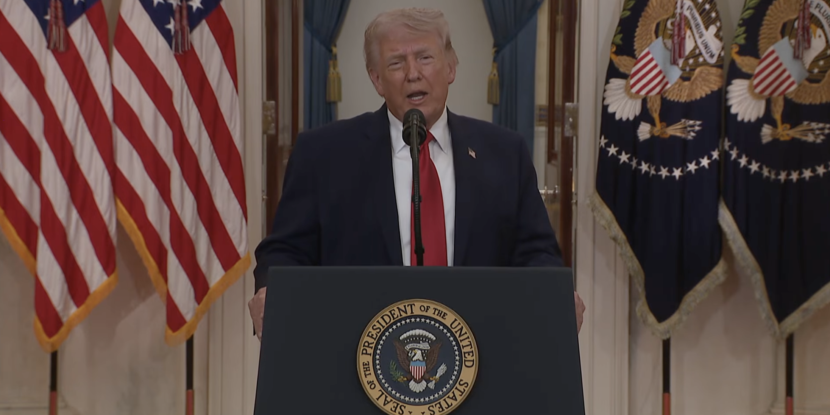
President Trump addressed the nation on the evening of April 1st, offering an update on the military engagement with Iran, known as Operation Epic Fury. The President highlighted that the operation, which commenced a month ago, has nearly achieved its core objectives, but stated there will be 2-3 weeks more military activity.

During his speech, President Trump emphasized the responsibility of other nations, particularly those reliant on oil passing through the Strait of Hormuz, to ensure their own security.

“Countries of the world that do receive oil through the Hormuz Strait must take care of that passage.” he stated, underscoring a shift in U.S. foreign policy expectations and effectively leaving the Strait of Hormuz for other nations to deal with.

The President also projected the continuation of the military operation for an additional two to three weeks, suggesting that the conflict is far from over.

He said: “I made clear from the beginning of Operation Epic Fury that we will continue until our objectives are fully achieved. Thanks to the progress we’ve made, I can say tonight that we are on track to complete all of America’s military objectives shortly. Very shortly. We’re going to hit them extremely hard over the next two to three weeks. We’re going to bring them back to the Stone Ages, where they belong.”

The address served not only to inform the American public but also to send a clear message to international partners and adversaries about the United States’ stance on energy security and military engagement.

“In the meantime, discussions are ongoing, regime change was not our goal. We never said regime change, but regime change has occurred because of all of their original leader’s death. They’re all dead,” President Trump said.

Join Pulse+ to comment below, and receive exclusive e-mail analyses.
show less
show more
China Spying

FBI Declares ‘Major Incident’ Following Cyberattack by Chinese Hackers.

PULSE POINTS

WHAT HAPPENED: The Federal Bureau of Investigation (FBI) declared a suspected Chinese hack a major incident under the Federal Information Security Modernization Act (FISMA).

👤WHO WAS INVOLVED: Chinese hackers, U.S. officials, and FBI personnel.

📍WHEN & WHERE: The breach was reported to Congress in March.

🎯IMPACT: FISMA-designated “major incidents” are rare, meaning the breach poses significant risks to U.S. national security.

IN FULL

The Federal Bureau of Investigation (FBI) has classified a recent cyber intrusion, believed to be carried out by Chinese hackers, as a “major incident” under the Federal Information Security Modernization Act (FISMA). FISMA guidelines classify a “major incident” as an intrusion that compromises personal data and presents risks to the national security, foreign relations, public confidence, or civil liberties of Americans.

The FBI first alerted Congress to suspicious activity on March 4, reporting that the affected system contained law enforcement-sensitive material. Although officials did not initially identify the source of the intrusion, investigators now suspect the operation was linked to China.

Under FISMA, federal agencies must notify lawmakers within seven days of discovering a cyberattack likely to cause significant harm to U.S. national security. FISMA-designated “major incidents” are uncommon and only happen a few times per year.

Officials said the compromised system contained data including “returns from legal process, such as pen register and trap and trace surveillance returns, and personally identifiable information pertaining to subjects of FBI investigations.” Pen register and trap-and-trace devices allow law enforcement agencies to monitor phone calls and websites visited by any device connected to the Internet. This information can be used by foreign intelligence to identify targets of criminal investigation and FBI surveillance.

China has carried out a number of major cyberattacks against the U.S. in recent years. Last July, The National Pulse reported that Chinese hackers had exploited vulnerabilities in Microsoft SharePoint software, breaching multiple U.S. agencies, including the National Nuclear Security Administration (NNSA). The same year, U.S. energy officials uncovered undocumented communication devices in Chinese-made solar inverters and batteries, raising fears of remote cyberattacks that could disrupt America’s power grid.

In 2024, under the former Biden-Harris government, a state-sponsored actor from China also breached the U.S. Treasury Department.

Join Pulse+ to comment below, and receive exclusive email analyses.

show less
show more
Image

U.S. Energy Security Boosted by New Polar LNG Alaskan Energy Project.

PULSE POINTS

WHAT HAPPENED: Polar LNG announced its launch and the appointment of Joel Riddle as President and CEO.

👤WHO WAS INVOLVED: Joel Riddle, Polar LNG, and the U.S. energy sector.

📍WHEN & WHERE: Wednesday, Prudhoe Bay, Alaska’s North Slope.

💬KEY QUOTE: “Polar LNG is uniquely positioned to bring this resource online—delivering reliable energy for Alaska and a strategic supply for the United States that strengthens energy security, supports American leadership, creates new jobs, and provides trusted energy to our allies.” – Joel Riddle

🎯IMPACT: The project aims to strengthen U.S. energy leadership and create economic opportunities in Alaska.

IN FULL

Polar LNG has officially launched and named industry veteran Joel Riddle as its President and Chief Executive Officer. The company is moving forward with a nearshore liquefied natural gas (LNG) project at Prudhoe Bay on Alaska’s North Slope. The initiative is intended to accelerate the development of Alaska’s large untapped natural gas reserves for market, while creating American jobs and strengthening U.S. energy dominance.

“Alaska’s North Slope holds one of the most significant undeveloped natural gas resources in the world,” stated Joel Riddle, President & CEO of Polar LNG, adding: “Polar LNG is uniquely positioned to bring this resource online—delivering reliable energy for Alaska and a strategic supply for the United States that strengthens energy security, supports American leadership, creates new jobs, and provides trusted energy to our allies.”

Notably, Polar LNG’s strategic location in Alaska positions it on one of the shortest LNG shipping routes from North America to major Asian markets. For instance, it is roughly 3,600 miles from Japan, compared with more than 10,000 miles from the U.S. Gulf Coast. This will allow it to become an important energy exporter to allied economies throughout the Pacific, whose existing supplies via the Strait of Hormuz have been exposed as highly vulnerable by the Iran war.

Image by Richard Martin.

Join Pulse+ to comment below, and receive exclusive e-mail analyses.

show less
show more
Image

‘Reevaluating Everything’ — U.S. NATO Ambassador Confirms Trump Could Exit Alliance.

PULSE POINTS

WHAT HAPPENED: U.S. Ambassador to NATO Matthew Whitaker suggested that the United States could leave NATO, confirming similar comments made by President Donald J. Trump and some of his Cabinet members.

👤WHO WAS INVOLVED: Matthew Whitaker, President Trump, Secretary of State Marco Rubio, Secretary of War Pete Hegseth, and members of NATO.

📍WHEN & WHERE: Remarks were made on Wednesday, April 1, 2026.

💬KEY QUOTE: “I think that it’s very clear right now that President Trump is evaluating and reevaluating everything,” said Matthew Whitaker.

🎯IMPACT: The comments raise questions about the future of U.S. involvement in NATO and its broader commitments to European allies in light of their refusal to assist with the ongoing military operations against Iran.

IN FULL

U.S. Ambassador to NATO Matthew Whitaker on Wednesday confirmed that President Donald J. Trump is considering the possibility of the United States leaving the alliance. “I think that it’s very clear right now that President Trump is evaluating and reevaluating everything,” Whitaker said. “Whether that is our involvement with NATO, whether that is our support to the European effort in Ukraine, or whether that is anything else the United States is doing.”

The National Pulse reported earlier on Wednesday that the President has signaled a strong possibility of withdrawing the United States from NATO, criticizing the alliance for not joining his military efforts against Iran. Trump described NATO as a “paper tiger” and said he was “never swayed” by the alliance.

Whitaker, who served as Acting Attorney General during Trump’s first term, made the remarks as other Cabinet secretaries, including Secretary of State Marco Rubio and Secretary of War Pete Hegseth, have questioned the merits of the alliance in light of NATO members refusing to help the U.S. amid the Iran war.

Hegseth told reporters that “[a] lot has been shown to the world about what our allies would be willing to do for the United States of America when we undertake an effort of this scope. When we ask for additional assistance… we get questions, or roadblocks, or hesitation.”

“Why are we in NATO?” Rubio posited during a recent television interview. “You have to ask that question. Why do we send trillions of dollars and have all of these American forces stationed in the region, if in our time of need, we won’t be allowed to use those bases?”

Join Pulse+ to comment below, and receive exclusive e-mail analyses.

show less
show more
Image

NYT Dismisses Writer Amid AI Plagiarism Controversy.

PULSE POINTS

WHAT HAPPENED: The New York Times severed ties with a freelance writer after discovering he used artificial intelligence (AI) to assist in writing a book review, which included unattributed similarities to a review published in The Guardian.

👤WHO WAS INVOLVED: Freelance writer Alex Preston, The New York Times, and The Guardian.

📍WHEN & WHERE: The incident came to light following a January book review and was addressed by the NYT in March with an editor’s note.

💬KEY QUOTE: “Reliance on AI and inclusion of unattributed work by another writer is a serious violation of The Times‘s integrity and fundamental journalistic standards.” – NYT spokesman

🎯IMPACT: The case has heightened concerns about AI’s role in journalism and its potential to undermine trust in major publications.

IN FULL

The New York Times has cut ties with freelance writer Alex Preston after it was revealed that he used artificial intelligence (AI) to assist in drafting a book review. Published in January, Preston’s essay included sections that closely resembled a review of the same book written by Christobel Kent and published in The Guardian last August. The issue was flagged by a reader who noticed the similarities between the two separate reviews of Watching Over Her by Jean-Baptiste Andrea.

Following an internal investigation, Preston admitted to using an AI tool to draft the review and failing to identify the plagiarized sections. Subsequently, the freelance writer expressed regret, stating he was “hugely embarrassed” and described his actions as a “serious mistake.”

A spokesman for the newspaper stated, “Editors have appended a note to a book review written earlier this year by a freelance critic, who told The Times after publication that he had used an AI tool to assist him in producing the piece. This tool produced similarities to a book review published in The Guardian, which our editors’ note makes clear. For staff journalists and freelance writers alike, reliance on AI and inclusion of unattributed work by another writer is a serious violation of The Times‘s integrity and fundamental journalistic standards.”

The National Pulse previously reported that Sports Illustrated nearly closed down after being rocked by a scandal the magazine initially tried to deny, involving the use of AI-generated content published under the bylines of fictitious journalists. Additionally, in 2023, Axel Springer SE laid off around one-fifth of the staff at Bild—Europe’s highest-circulation newspaper—with their workflow being handled by AI tools instead. Likewise, CNN has also engaged in layoffs, with staff being replaced by AI.

This past March, The National Pulse revealed that Google had begun testing a feature that rewrites article headlines without seeking publishers’ permission or even notifying them. The trial expands on earlier artificial intelligence (AI) tools, such as AI Overviews, which condense articles into short summaries.

According to data shared by ARK Invest, annual written output by AI exceeded that of humans in 2025. Projections suggest AI could surpass the entire written record of human civilization by the end of this decade.

Image by Adam Jones.

Join Pulse+ to comment below, and receive exclusive e-mail analyses.

show less
show more
Image

Trump Demands Congress Deliver Major DHS Funding Bill by June Deadline.

PULSE POINTS

WHAT HAPPENED: President Donald J. Trump announced Wednesday afternoon that his administration is working with Republican leaders in the House and Senate to draft a second budget reconciliation bill aimed at funding the Department of Homeland Security (DHS) for the remainder of his second term.

👤WHO WAS INVOLVED: President Trump, Senate Minority Leader Chuck Schumer (D-NY), Senate Majority Leader John Thune (R-SD), Senate Republicans, and Senate Democrats.

📍WHEN & WHERE: The funding lapse has lasted 47 days as of April 2026. Discussions are ongoing in Washington, D.C., with potential legislative action by June 1.

💬KEY QUOTE: “I am asking that the Bill be on my desk NO LATER than June 1st.” – Donald Trump

🎯IMPACT: The budget reconciliation process could bypass Democratic opposition, but it may extend the funding lapse and require significant spending cuts to succeed.

IN FULL

President Donald J. Trump announced Wednesday afternoon that his administration is working with Republican leaders in the House and Senate to draft a second budget reconciliation bill aimed at funding the Department of Homeland Security (DHS) for the remainder of his second term. The move, if successful, would bring to an end the Senate Democrat-led partial government shutdown that has withheld funding for DHS, including core subagencies like the Transportation Security Administration (TSA) and the Federal Emergency Management Agency (FEMA), for 47 days so far.

“[W]e are going forward to fund our incredible ICE Agents and Border Patrol through a process that doesn’t need Radical Left Democrat votes, and bypasses the Senate Filibuster (which should be repealed, IMMEDIATELY!), working in close conjunction with House Speaker Mike Johnson and Senate Leader John Thune,” President Trump wrote in a post on Truth Social. He continued, “I am asking that the Bill be on my desk NO LATER than June 1st.”

“In the meantime, we will continue to use funding from THE GREAT BIG BEAUTIFUL BILL, which is giving Record Tax Rebates to Citizens all over the Country, to ensure that ICE and Border Patrol Agents are paid ON TIME, and IN FULL, as we have been doing for them throughout the Democrat Shutdown,” the President added.

Since the partial government shutdown began in late February, multiple Republican attempts to pass DHS funding in the Senate have been defeated by Democrats. Senate Minority Leader Chuck Schumer (D-NY) has leveraged the chamber’s 60-vote cloture rule to end debate and exert veto power over any DHS appropriations package unless Republicans agree to progressive-backed provisions that would effectively gut President Trump’s immigration enforcement actions.

By using the budget reconciliation process, Senate Republicans would be able to sidestep the Democrats’ use of the filibuster and adopt DHS funding by a simple majority vote. Notably, Senate Majority Leader John Thune (R-SD) had previously floated using budget reconciliation to pass certain election integrity provisions in the SAVE America Act. However, the lack of revenue provisions in the election integrity bill would likely result in the Senate parliamentarian ruling them out under the Byrd Rule, which prohibits non-budgetary provisions in reconciliation bills.

Republican leaders quickly announced they will back President Trump’s plan, with Sen. Thune stating, “In the coming days, Republicans in the Senate and House will be following through on the President’s directive by fully funding the entire Department of Homeland Security on two parallel tracks: through the appropriations process and through the reconciliation process.”

Join Pulse+ to comment below, and receive exclusive e-mail analyses.

show less
show more