-
-
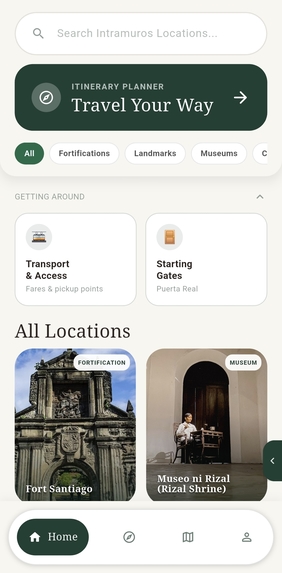
HOME PAGE
-
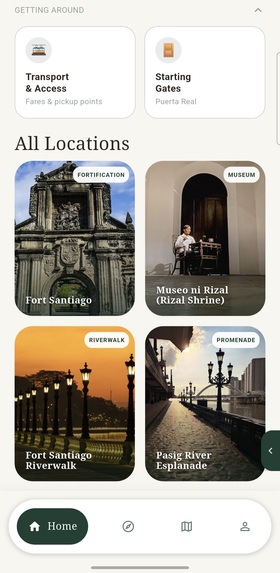
HOME PAGE
-
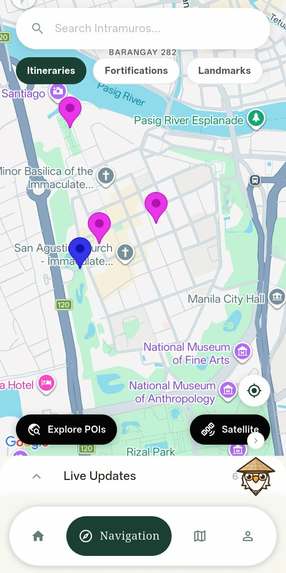
NAVIGATION
-
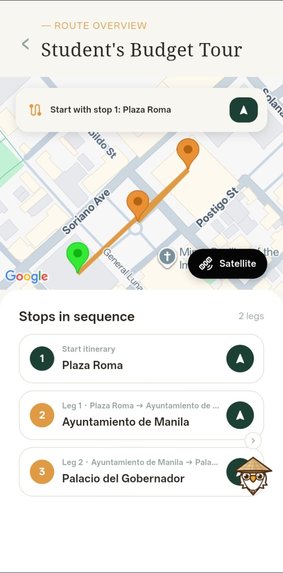
NAVIGATION
-
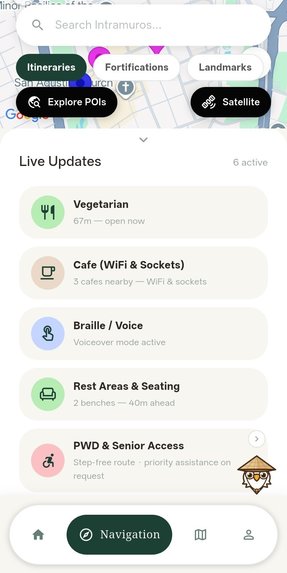
NAVIGATION FILTER
-
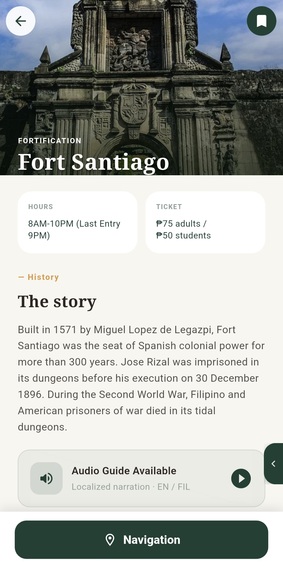
LOCATION DETAIL
-
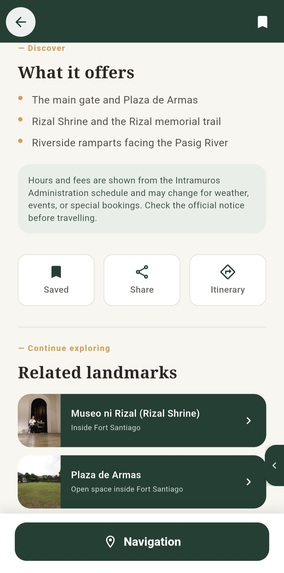
LOCATION DETAIL
-
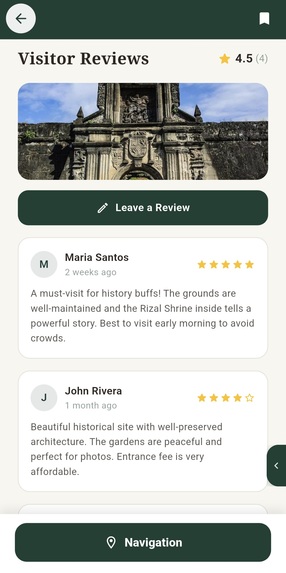
LOCATION DETAIL + RATING
-
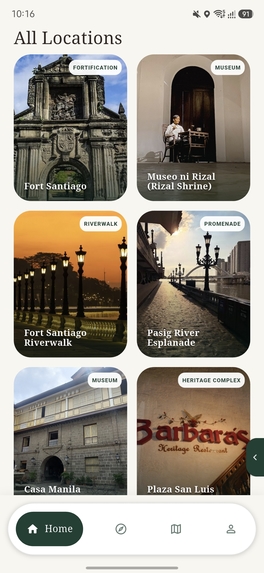
LOCATIONS
-
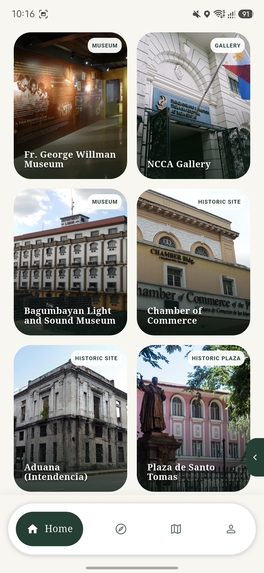
LOCATIONS
-
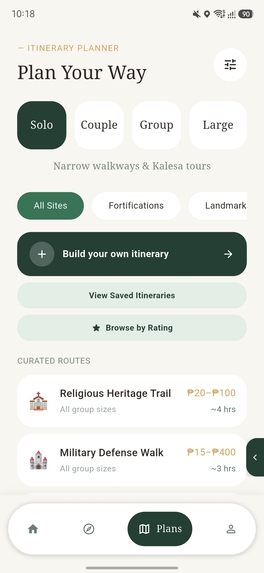
ITINERARY PLANNER
-
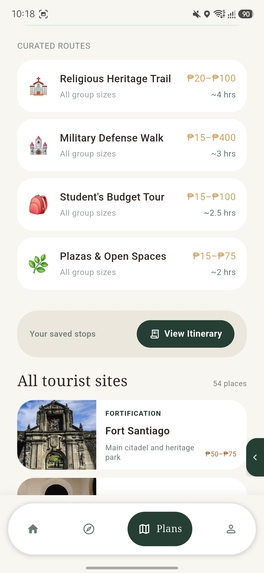
ITINERARY PLANNER
-
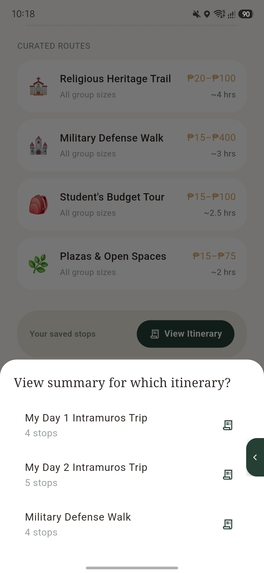
CREATED ITINERARIES
-
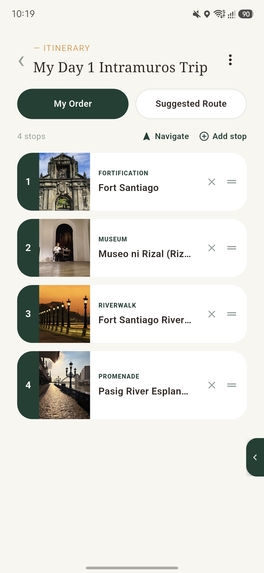
ITINERARY DETAIL
-
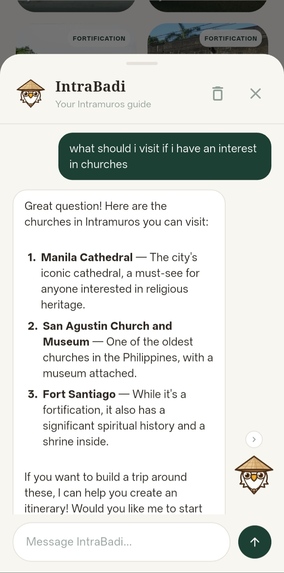
CHATBOT


Inspiration
What began as a simple academic project built just for course compliance – in fact just a raw concept with minimal framework– quickly evolved into a real project when we realized a real problem right in our backyard: Intramuros is notoriously tricky to navigate.
As the historic "Walled City" of Manila, Intramuros is filled with centuries-old cobblestone streets, and hidden historical landmarks that generic navigation apps often struggle to route accurately. Visitors frequently get lost, miss out on cultural gems, or deal with spotty mobile data within thick stone fortifications. We wanted to build something far beyond a standard map—a smart, offline-ready cultural companion that preserves the heritage experience while taking the friction out of exploring.
We also wanted to build something that mattered to the people who actually live and study there. Our team includes students from PLM, Pamantasan ng Lungsod ng Maynila, a university that sits right inside the walled city itself. Through them, Intramuros stopped being a postcard image and became a real, living neighborhood: a place with foot traffic, small eateries, quiet corners, and daily routines layered on top of centuries of history. That mix of the historic and the everyday is what pushed us to ask: what if getting around Intramuros could be just as rich as the history it holds?
What it does
InTravel is a navigation app built specifically for Intramuros, designed to help people move through the walled city while actually understanding what they're walking past. Instead of just pointing you from Point A to Point B, it weaves in the historical and cultural context of the streets, landmarks, and buildings along the way.
We leaned heavily on what our PLM teammates already knew from living the Intramuros experience firsthand, the shortcuts, the hidden spots, the places that don't always make it into a typical tourist guide. That local knowledge shaped how we thought about the app's features, because we didn't just want to build something for tourists passing through. We wanted it to be useful for the students, workers, and residents who walk those same cobblestone streets every single day. At its heart, InTravel is our attempt to make a centuries-old part of the Philippines feel a little more approachable, whether you're visiting for the first time or you've called it home for years.
How we built it
We built InTravel using Dart, which gave us the flexibility to design an app experience that felt smooth and responsive, something that mattered a lot to us given how much walking and real-time navigating the app needed to support.
Since this was our first big hackathon, we also made full use of Kiro AI and Backboard, the assistant tools provided by the hackathon organizers. It became something like an extra teammate during crunch time, helping us work through logic problems, speed up parts of our development process, and troubleshoot issues when we were low on time and even lower on sleep. It didn't build the project for us, but it definitely helped us build it faster and with fewer headaches along the way.
Challenges we ran into
This was our first real hackathon, and that showed in the best and worst ways. In the beginning, we struggled just to get our footing. We had so many ideas for features we wanted to include that it became difficult to figure out where to even start. Everything felt important, and narrowing that down without losing the heart of the project was harder than we expected.
On top of that, we were working with limited resources, limited time, limited manpower, and limited access to Intramuros itself since most of us weren't nearby. We had to lean on our PLM teammates' firsthand knowledge and get resourceful about the rest, piecing together a picture of the walled city from research, conversations, and whatever documentation we could find.
Accomplishments that we're proud of
We are incredibly proud to have built and shipped a fully working, polished application from scratch in our very first hackathon. Moving past a basic school submission to solve genuine, ground-level navigation hurdles in a complex walled city was a huge milestone for us. Taking unfamiliar platforms like Kiro and Backboard, integrating them with multiple APIs, and turning our ideas into a functioning product within hours felt deeply rewarding.
We're also proud of what InTravel represents beyond the code. It's a project that doesn't just try to attract visitors to Intramuros, it's built to serve the people who already live, work, and study within its walls too. Creating something that speaks to both sides, the newcomer and the local, felt like exactly the kind of project worth building.
What we learned
Diving into our very first hackathon was a huge leap for us. It pushed our coding skills big time—we had to get comfortable with fast Git collaboration, juggling different APIs and backend setups on the spot. But honestly, the biggest lessons weren't just about the code.
While AI tools like Kiro helped us build faster, they showed us that tech can't replace actual creative thinking. What really made InTravel work were the late-night brainstorming sessions and debates about what we actually wanted this to be. Most of all, we learned to put the user first. The moment we stopped thinking about school rubrics and started focusing on real travelers trying not to get lost, every design and coding choice just clicked.
What's next for InTravel
We're just getting started. Looking ahead, we want to grow InTravel with more restaurants, local businesses, and MSMEs so it becomes a real support system for the small enterprises that keep Intramuros alive day to day.
This app isn’t just limited to Intramuros – In fact, it is just the starting point. Our broader vision is to turn InTravel into a universal Framework for navigating complex landmarks worldwide – to inspire developers across the globe to build the same idea to make exploration easier and accessible for everyone.
Built With
- backboard.io
- c++
- claude
- cmake
- dart
- flutter
- gemini
- geolocator
- html
- openrouteservice




Log in or sign up for Devpost to join the conversation.