◦ Setup in under 1 hour
◦ User-friendly API
What is bare metal?
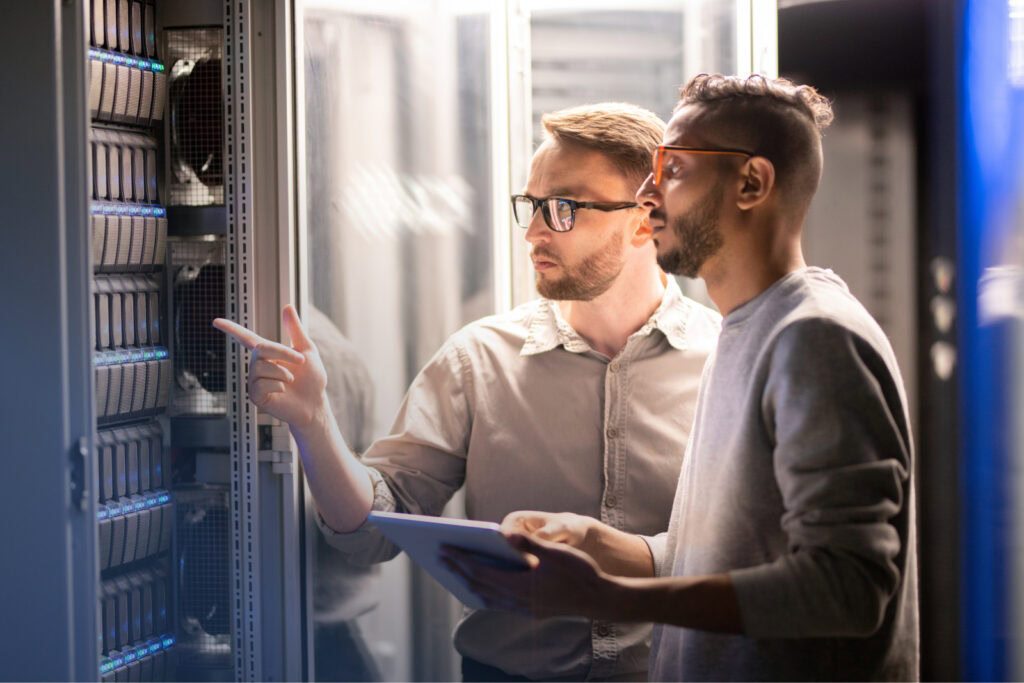
What does “bare metal” mean?
In computing, bare metal refers to a physical server that isn’t running a hypervisor, shared operating system, or virtual machine layer. You interact directly with the hardware. This includes installing an OS, configuring BIOS settings, or optimizing performance.
Bare metal servers differ from cloud or virtual servers. No abstraction layer exists between your software and the server’s CPU, RAM, storage, and I/O.
Key characteristics of bare metal servers
Bare metal servers provide dedicated CPU, RAM, and storage, ensuring that 100% of the server’s resources are available to a single customer. This is ideal for applications that demand consistent, high-level performance.
Some of the characteristics of bare metal servers are:
- Dedicated resources, no sharing: You never share CPU cycles, RAM, storage, or network IOPS, so workloads run at full, predictable capacity. All compute, memory, and storage are 100% yours.
- Full control over software and OS: Install any Linux or Windows distribution, compile custom kernels, and tweak BIOS or firmware settings to match your needs.
- High performance and low latency: No virtualization overhead means bare metal delivers faster processing and responsiveness, which is ideal for real-time apps and compute-heavy tasks.
- Stronger isolation and security: Physical isolation simplifies HIPAA, PCI-DSS, and other compliance requirements and enhances data privacy while eliminating “noisy neighbor” risks.
- Direct-to-hardware programming: Talk straight to GPUs, NVMe drives, or specialized accelerator cards for workloads that demand low-level tuning. This is critical for embedded systems, specialized workloads, and performance-tuned environments.
Taken together, these capabilities give bare metal its reputation as the go-to foundation for high-stakes, performance-hungry infrastructure.
What is a bare metal server?
A bare metal server is a physical computer dedicated to one user. It provides exclusive access to all hardware resources. Unlike virtual servers, bare metal servers run applications directly on hardware.
Bare metal servers excel for:
- Database hosting requiring consistent IOPS.
- Gaming servers needing low latency.
- Financial applications demanding security.
- Development environments requiring full control.
Bare metal programming explained
Bare metal programming is writing code that runs directly on hardware. Developers bypass operating systems and virtualization layers. This approach provides maximum control over system resources.
Applications include:
- Embedded systems development.
- Bootloader creation.
- Firmware programming.
- Real-time system design.
Understanding bare metal software
Bare metal software operates directly on physical hardware. These applications run without an OS layer, so performance-critical systems often use bare metal software.
Common examples:
- Type 1 hypervisors.
- Network operating systems.
- Industrial control software.
- Custom firmware.
Bare metal vs virtual machines (VMs)
A bare metal server is a single-tenant physical machine that runs an operating system directly on its hardware. A virtual machine is a software-defined instance that lives inside a hypervisor, which manages multiple users on one physical host.
| Feature | Bare metal server | Virtual machine |
| Resource allocation | 100 % dedicated CPU, RAM, and storage. | Shared slices of host resources. |
| Performance consistency | Predictable, no hypervisor overhead. | Varies with neighbor activity. |
| Control level | Full root access, BIOS and firmware settings. | Limited to guest OS settings. |
| Security isolation | Single-tenant hardware. | Multi-tenant environment. |
| Provisioning time | Minutes to hours, depends on hardware build. | Seconds to minutes, created from templates. |
| Scalability path | Manual upgrades or API-based automation. | Elastic scaling inside the cloud. |
Benefits of using bare metal servers
Bare metal infrastructure excels when you need maximum performance and control, offering:
- High performance. Direct access to the CPU, RAM, and NVMe storage removes latency introduced by a hypervisor.
- Stronger security. Single-tenant hardware helps meet HIPAA, PCI-DSS, or FedRAMP requirements without “noisy neighbor” risks.
- Complete customization. Install any operating system, adjust kernel parameters, or add GPU and FPGA cards to match your workload.
- Consistent throughput. Resource guarantees keep real-time apps, for gaming, video, and VoIP, running smoothly.
- Optimized private clouds. Build Kubernetes clusters or virtualization stacks on a stable, hardware-level foundation.
Common use cases for bare metal hosting
Bare metal excels when you need more horsepower, tighter security, or total control of your server stack.
Real-time applications
Real-time software delivers data or interactions the instant a user performs an action. Multiplayer games, live video chats, VoIP calls, and AR/VR platforms fall into this group. A bare metal server removes virtualization latency, so every frame, packet, or voice snippet arrives on time.
AI and machine learning
AI/ML projects train and run models that consume huge CPU, GPU, and memory resources. Data scientists and engineers use bare metal for training models, running inference engines, and scaling GPU workloads without virtualization bottlenecks.
High-security workloads
Regulated industries, such as healthcare (HIPAA), finance (PCI-DSS), and the government (FedRAMP), handle data that must stay isolated. Single-tenant bare metal hardware keeps neighbors out, makes audits simpler, and supports custom firewalls or HSMs.
Private cloud infrastructure
A private cloud is a self-managed environment running containers, Kubernetes, or traditional virtualization for internal teams. Building that stack on a bare metal server guarantees predictable performance and keeps full control over hypervisors, storage, and networking.
Media streaming and content delivery
Streaming services move large audio and video files to users in real time. Dedicated bandwidth and disk I/O on bare metal minimize buffering and keep global audiences happy, even at peak traffic.
Bare metal vs cloud: complementary or competitive?
While cloud platforms emphasize elasticity and managed services, bare metal gives you raw compute power and direct control. They’re not mutually exclusive.
- Hybrid cloud: Use bare metal for base infrastructure and scale with cloud VMs as needed
- Private cloud: Run your own virtualization or container stack on bare metal
- Cloud-native tools: Tools like Terraform and Ansible can automate bare metal provisioning in modern environments
Bare metal with cloud APIs lets you blend performance and flexibility in one environment.
Bare Metal as a Service (BMaaS)
BMaaS delivers the feel of cloud with the power of hardware. You rent a physical server, which is already racked, networked, and monitored, through an on-demand portal or API. Key points:
- Speed of cloud. Deploy, resize, or rebuild bare metal in minutes, not days.
- Full tenancy. Enjoy dedicated CPU, RAM, and disks with no “noisy neighbor” effects.
- Unified toolchain. Use the same infrastructure-as-code scripts for BMaaS nodes and cloud VMs, simplifying workflows.
- Cost clarity. Pay for the exact hardware you order, with predictable monthly or hourly pricing.
With BMaaS, you get both raw performance and cloud agility, combining them. Spin up a powerful bare metal server for your core workload, keep cloud instances ready for sudden surges, and manage everything through a single pane of glass.
Bare metal FAQs
Next steps for understanding bare metal
Bare metal is the go-to solution when performance, control, and security matter most. It’s ideal for teams running demanding workloads that can’t afford virtualization overhead.
Want to see if bare metal hosting is right for your next project? Compare specs, pricing, and management options to get started.
When you’re ready to upgrade to a dedicated server—or upgrade your server hosting—Liquid Web can help. Our dedicated server hosting options have been leading the industry for decades, because they’re fast, secure, and completely reliable. Choose your favorite OS and the management tier that works best for you.
Click below to explore dedicated server options or start a chat with one of our experts to learn more.
Additional resources
Bare metal vs hypervisor →
Key differences between bare metal and hypervisors, and some of their best functions and use cases
What is bare metal programming? →
Benefits, challenges, use cases, and more
IaaS vs bare metal →
Definitions, differences, and how to choose

Zachary Armstrong is a writer who specializes in breaking down complex subjects and making them easy to understand. He has a passion for technology, believes it can change the world for the better, and wants to tell the whole world about it.
