@platformatic/memcached, a @nodejs client built on memcached's modern meta protocol.
Full pipelining on one connection, opaque-token verification, zero deps.
350k+ SETs/sec, 369k+ GETs/sec, ~3x the fastest client we tested.
Speeding up your autoscaler doesn't speed up @kubernetesio.
Scheduling, startup, readiness checks, routing, that all still takes real time, no matter how fast you detect the spike. Reacting faster has a ceiling.
Knowing what's coming doesn't.
Stop tuning your autoscaler for speed. Lower thresholds, tighter polling, faster triggers.
None of it moves the needle if @kubernetesio scheduling and pod startup are your real bottlenecks.
You can't outpace the platform's own limits.
If your traffic spike happens every
𝐀 𝐧𝐞𝐰 𝐛𝐚𝐧𝐭𝐞𝐫 𝐞𝐩𝐢𝐬𝐨𝐝𝐞!
What if you could execute a package without ever unzipping it?
What if npm had no central server, just a peer-to-peer mesh with cryptographic integrity baked in?
No slides, no answers, no agenda.
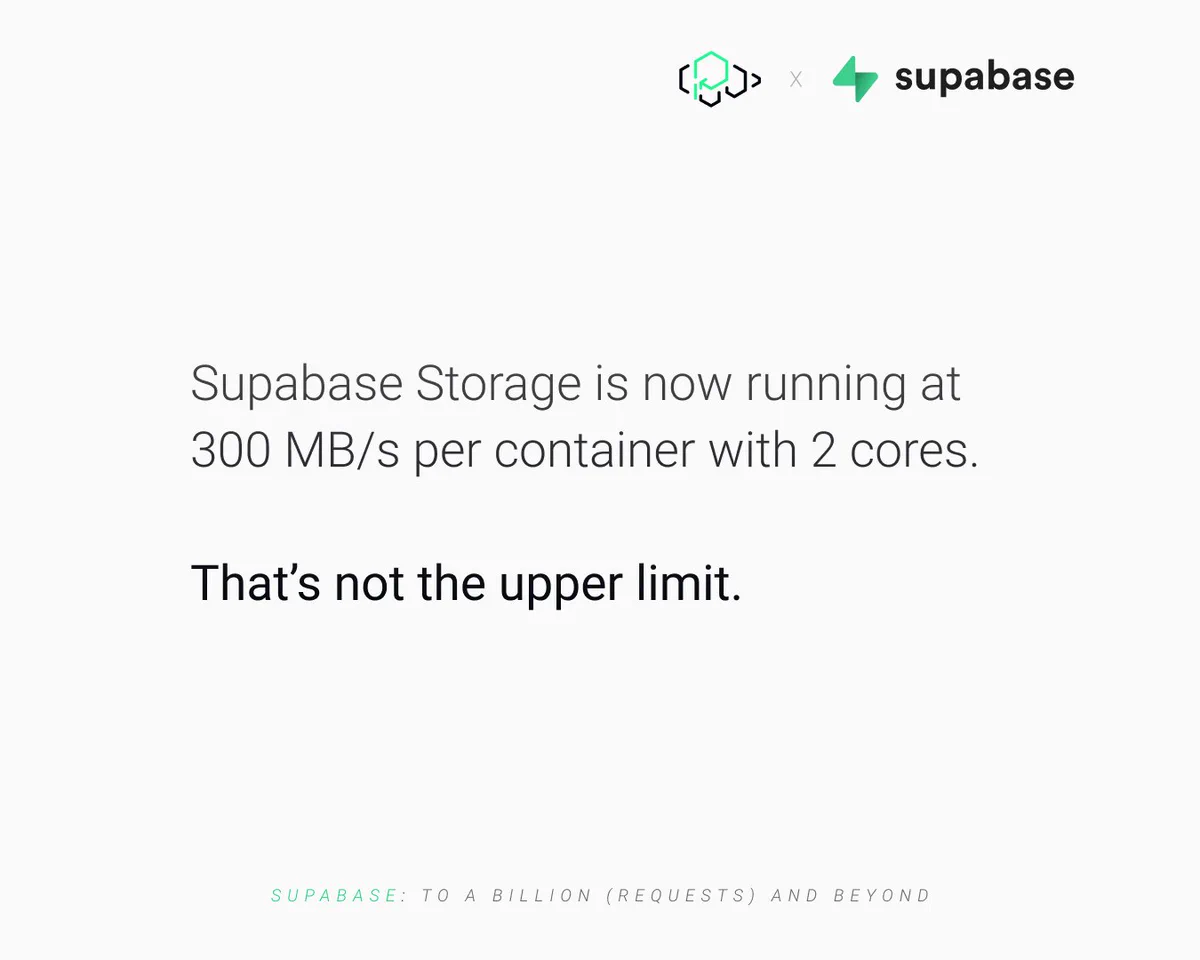
"We're not done yet. Once we complete the last three or four improvements, we think we can get our Node.js system to 500–600 MB/s per second per container."
Fabrizio Fenoglio, @supabase
Currently at 300. Target: 500–600.
No new hardware. Same architecture, pushed further.
@vercel 's engineering blog:
"The best workflow engine is a programming language."
We couldn't agree more! it's the whole idea behind Platformatic's durable, version-safe workflows for @kubernetesio, cited in the piece as a working example.