Read https://www.simonandschuster.com.au/books/Old-Games/Fiona-Hardy/9781761638275

Morally flexible best mates and private investigators Alice and Teddy pride themselves on fixing every kind of mess imaginable, no questions asked. So, when they’re tasked with locating the recently-stolen ashes of long-dead celebrity tennis player Ashley “Perry” Perrineau, it should be a routine job.

But it quickly becomes clear that everyone who knew Perry is keeping secrets: his accountant despises Perry’s widower; the sculptor of his statue is hiding something in her studio; his ex-doubles partner is a compulsive liar; and his mother is obsessed with preserving his legacy and her image at all costs.

Alice and Teddy will need to travel up and down Melbourne’s Mornington Peninsula – all while avoiding more than one person on their tail – to uncover the truth and keep the body count from rising. But will they and the people they love survive what they find?

Old Games | Book by Fiona Hardy | Official Publisher Page | Simon & Schuster AU 


With Old Games, Fiona Hardy again takes us into the world of private investigators, Alice and Teddy. Again the dead are back to haunt us, this time in the form of a stolen urn. There are the usuals, high rollers and celebrities, as well as some new famiky additions.

I think what this book does is give us a portal into another world, a hidden world existing seemingly beneath the surface, extraordinary circumstances of ordinary people. Not quite in the fashion of Thomas Pynchon, but hidden none the less. It makes me think about how boring and mundane life can feel at times, whether it be the food, culture or place. To borrow from Mae quips:

Life is very boring if you live life as it is

In the end though it makes me appreciate life that little bit more.

I listened via Audible.

Read https://www.penguin.com.au/books/this-is-what-it-sounds-like-9781529114010

This Is What It Sounds Like is a journey into the science and soul of music. It’s also the story of a musical trailblazer who began as a humble audio tech in L.A. to become Prince’s chief engineer for Purple Rain and one of the most successful female record producers of all time.

This Is What It Sounds Like by Dr. Susan Rogers – Penguin Books Australia 


This Is What It Sounds Like explores the music that delivers the maximum gratification to you is determined by seven influential dimensions of musical listening that make up a unique profile. I wrote a longer response here.

Continue reading “📚 This Is What It Sounds Like (Susan Rogers)”

Read https://en.wikipedia.org/wiki/Flaubert%27s_Parrot

The novel follows Geoffrey Braithwaite, a widowed, retired English doctor, visiting France. While visiting sites related to Flaubert, Geoffrey discovers two museums claiming to display the stuffed parrot which sat atop Flaubert’s writing desk for a brief period while he wrote “Un Cœur Simple”. While trying to identify which is authentic, Braithwaite learns that Flaubert’s parrot could be any one of fifty (“Une cinquantaine de perroquets!”, p. 187) that had been held in the collection of the municipal museum.

Flaubert’s Parrot – Wikipedia by Flaubert’s Parrot – Wikipedia


Julian Barnes’s Flaubert’s Parrot (1984) is a blend of fiction, biography, and literary criticism that manages to turn the banal parts of life of a dead French writer into a high-stakes investigation of truth and memory. It is an example of historiographic metafiction, novels that are intensely self-conscious about being “made up” while simultaneously being obsessed with real historical events or figures.

Julian Barnes has a magical knack of seemingly lulling the reader into another world only to remind us every so often of the fascade. Although it can be read on the surface as being about Flaubert, the more one pulls at the threads, the more it all untangles to be about so much more. It is much a book about the author as it is about the subject matter. In some ways it is fictional exploration of Roland Barthes’ essay “Death of the Author”. With the novel creating a strange tension: Braithwaite is failing to find the “real” Flaubert, while we are failing to find the real Geoffrey Braithwaite, who is a proxy for Julian Barnes.

Continue reading “📚 Flaubert’s Parrot (Julian Barnes)”

Bookmarked https://www.goodreads.com/book/show/231411074-the-little-book-of-miriam (goodreads.com)

Deliciously dip-in-able, thought-provoking and mirth-inducing, elegantly designed and always interesting — whether sharing daring declarations, behind-the-scenes antics or talking about the indignities of ageing, this is a book as unique and extraordinary as Miriam herself.

The Little Book of Miriam by Miriam Margolyes | Goodreads by The Little Book of Miriam by Miriam Margolyes | Goodreads


I would argue that Miriam Margolyes has written the same book for the third time. She takes many of the same stories presented in This Much Is True and Oh, Miriam and presents them in a new format. John Banville once said in an interview that,

I know there are failures on every page and I am tormented by that. That is why I write another book, so that I can get it right.

Source: BBC

It feels like Margolyes is starting again each time in an effort to get her story write. Even with that, all the repetition, I listen on. Reminded of stories I had forgetten and laughing once again at those I remember. I am not sure if it is Margolyes’ voice or the raw honesty of her story, but I am still left captivated.
It was I threshing listening after reading Flaberts Parrot and the different takes on the same subject.

Once you talk to someone they become interesting

Listened 1991 studio album by Prince and The New Power Generation by Contributors to Wikimedia projects from Wikimedia Foundation, Inc.

Diamonds and Pearls is the thirteenth studio album by American recording artist Prince, and the first with his backing band The New Power Generation. It was released on October 1, 1991, by Paisley Park Records and Warner Bros. Records. The album produced several hit singles, including “Gett Off”, “Cream”, “Money Don’t Matter 2 Night”, “Insatiable”, and the title track. Dancers Lori Werner (then dancing under the stage name of Lori Elle) and Robia LaMorte, known as “Diamond” and “Pearl” respectively, appeared on the holographic cover (re-pressings of the album are non holographic). Diamond and Pearl also appeared in the music videos for “Cream”, “Strollin'”, “Gett Off”, and the title track, and also participated in Prince’s Diamonds and Pearls Tour.

Diamonds and Pearls contains a hybrid of music styles, from the funk of “Daddy Pop”, “Jughead”, and first single “Gett Off”, to some of the more mainstream pop/rock songs Prince had recorded in some time, such as “Cream”, “Money Don’t Matter 2 Night” and the title song. “Willing and Able” was used in a video montage during the closing credits of CBS’ coverage of Super Bowl XXVI.[15]

Diamonds and Pearls – Wikipedia 


Released on October 1, 1991, Diamonds and Pearls was a defining moment for Prince as he entered the 1990s. It was his thirteenth studio album and the first to officially credit his new backing band, The New Power Generation (NPG).

The album was released in a music landscape undergoing a massive shift from 80s pop to the early 90s alternative and hip-hop explosion. Other major albums on the Billboard 200 around its release included:

  • Guns N’ Roses: Use Your Illusion I and II (which had just been released in late September).
  • Nirvana: Nevermind (released just a week prior, sparking the grunge movement).
  • Metallica: Metallica (The Black Album).
  • Natalie Cole: Unforgettable… with Love.
  • Garth Brooks: Ropin’ the Wind.

The album was a major “comeback” for Prince after the more mixed reception of Graffiti Bridge. It peaked at number 3 on the Billboard 200.

This album shifted away from Prince’s solo “one-man-band” approach toward a full-group dynamic. The NPG band included Rosie Gaines (keyboards/vocals); Levi Seacer Jr. (guitar), Sonny T. (bass), Michael B. (drums), Tommy Barbarella (keyboards), and Tony M. (rapping/dance). Although many had been involved with previous albums, such as Graffiti Bridge, this was the first album where the contribution was explicit.


Thunder

This track serves as a grand introduction to the New Power Generation era. It opens with an ominous, dark groove that quickly shifts into a distinctive sitar-style melody reminiscent of “Around the World in a Day”. The production is dense with “sample stabs” and deliberate text painting, while the staccato piano work during the chorus leans heavily into the aesthetic of 90s dance music.

Lyrically, “Thunder” is a theological exploration filled with Prince’s trademark blend of sacred and profane allusions. It frames a journey toward a “promised land,” weaving together themes of divine intervention and romantic love.

Daddy Pop

Driven by a sharp, funky drum beat, the track features a recurring organ sound that lends it a slightly whimsical, “fairground” atmosphere. It highlights the collaborative nature of the NPG, featuring a variety of vocal textures from Rosie Gaines, Elisa Fiorillo, and Tony M., all punctuated by crisp, sample-based breaks likely sourced from high-end tech like the Fairlight or an MPC.

The song appears to be Prince’s rebuttal to his critics, asserting his dominance in the industry. The title “Daddy Pop” carries multiple layers, playing with Prince’s persona as a father figure of the genre while hinting at more suggestive connotations.

Diamonds and Pearls

An airy synth-pop ballad characterized by “twinkly” arrangements and a heavy, booming drum sound in the chorus. The track notably detours into a Baroque pop interlude reminiscent of The Beatles, though the overall grandiosity of the production carries a theatrical weight similar to the work of Meat Loaf.

While appearing to be a straightforward love song, the lyrics utilize mineral metaphors—the “hard” diamond and the “pearl” produced in soft tissue—as cheeky innuendos. It is a classic example of Prince hiding provocative double entendres behind a polished, radio-friendly exterior.

Cream

A sleek, mid-tempo groove defined by a prominent lead guitar line. The bluesy, rhythmic “chug” of the instrumentation has a crossover appeal that brings to mind the polished pop-country production styles later popularized by artists like Shania Twain.

True to Prince’s playful nature, the song centers on “cream” as a central metaphor. Whether interpreted literally or as a suggestively “classic” innuendo, the lyrics focus on self-confidence, “getting to the top,” and indulgence.

Strollin’

Breaking the expected flow of the album, this track is a swinging, jazz-inflected number. It is anchored by choppy, rhythmic guitar licks that give the song a light, effortless feel compared to the heavier production found elsewhere on the record.

The lyrics depict a simple, romantic escape—rocking and rolling through a world that is otherwise defined by tumult and chaos. It serves as a moment of calm and connection amidst a frantic world.

Willing and Able

An upbeat, rhythmically complex track that successfully integrates rap into a soulful foundation. The arrangement feels organic and live, showcasing the tight chemistry of the New Power Generation.

The song deals with the theme of total commitment. It remains ambiguous whether Prince is “laying his cards on the table” for a romantic partner, a higher power, or perhaps both simultaneously.

Gett Off

A thumping, aggressive track driven by heavy percussion reminiscent of the Batman era’s “Electric Chair.” It is famous for its iconic, trilling flute line and serves as Prince’s most direct dive into the New Jack Swing movement, creating a slick and undeniable groove.

This is an unashamed ode to the erotic potential of a one-night stand. The lyrics are bold and celebratory, focusing entirely on physical attraction and the “possibilities” of the moment.

Walk Don’t Walk

A bright and upbeat composition that maintains a steady, driving energy throughout. The production is clean and accessible, acting as one of the more straightforward pop moments on the album.

Prince delivers a gospel-tinged exhortation toward self-confidence. It is a song about nonconformity, encouraging the listener to follow their own path regardless of societal “traffic signals” or expectations.

Jughead

This is a true “band track” that showcases the various voices of the NPG. It is built on a strong, sample-based groove (likely MPC-driven) that emphasizes the hip-hop influences Prince was exploring at the time.

The lyrics focus on the “Jughead” character and dance, calling back to the high-energy, community-focused funk of earlier tracks like “Uptown” or “Housequake.”

Money Don’t Matter 2 Night

Despite its serious subject matter, the music is smooth and upbeat. The arrangement is sophisticated and soulful, leaning into a mid-tempo R&B vibe that allows the message to resonate without feeling heavy-handed.

One of Prince’s more overtly political tracks, it critiques the obsession with wealth and the grip money has on society. The lyrics touch on global issues, including references to the conflict in Iraq, to emphasize that human value transcends financial status.

Push

A deep funk groove that provides another playground for Prince to experiment with rap and spoken word elements. The track is percussive and rhythmic, designed to keep the energy of the album’s second half moving.

The song explores the “push and pull” dynamics inherent in relationships. It examines the struggle for balance and the effort required to keep a connection moving forward.

Insatiable

A slow, sensual ballad defined by its warm, lush keyboard arrangements. Its atmospheric and stripped-back production often draws comparisons to the moody, erotic “Scandalous!” from the Batman soundtrack.

The lyrics are a direct exploration of intense erotic desire. It is a quintessential Prince slow-jam, focusing on the vulnerability and heat of a private encounter.

Live 4 Love

The album’s closing track feels like a sonic manifesto on the evolution of technology. From the opening “computer voice” to the futuristic production, it represents Prince’s embrace of the digital era and the New Power Generation’s technical prowess.

The song explores the philosophy of living for love as an ultimate truth. It suggests that choosing love is a transformative act that outweighs any previous assumptions or historical prejudices.


Diamonds and Pearls represents an embrace of a new beginning with the NPR. With this, there is a move to more of a band sound. This album bridged the gap between Prince’s signature “Minneapolis Sound” and the burgeoning New Jack Swing and Hip-Hop trends.

Listened https://www.bbc.co.uk/programmes/p033smwp from bbc.co.uk

Listen to Brian Eno deliver his John Peel Lecture on the ecology of culture.

BBC Radio 6 Music – The John Peel Lecture, Brian Eno’s BBC Music John Peel Lecture 2015


In his 2015 John Peel Lecture, Brian Eno challenged the idea that the arts are merely a secondary “luxury” compared to STEM fields, instead asking the fundamental question: “Is art a luxury, or does it do something for us beyond that?” To structure the conversation, he provided a broad definition of art to frame the conversation.

Art is everything you don’t have to do

While we must eat and move to survive, the way we style our food or the way we dance are the essential sylisations that make us human. Just as children learn through play, Eno argued that “adults create little worlds through art,” immersing ourselves in alternate realities that act as a psychological flight simulator. These spaces provide a “safe place for interesting experiences,” allowing us to explore the joys and freedoms of a false world so we can better navigate the complexities of the real one. In our modern era, where “we are all specialists now” and often isolated in our professional silos, Eno sees art as a vital cultural ritual we are contributing to. Ultimately, he suggested that to help the arts flourish, we must recognise the power of “scenius,” the idea that while individuals may capture new ideas, they are truly generated by communities and the collective intelligence of the scene. Or as Austin Kleon summarises:

Genius is an egosystem, scenius is an ecosystem.

Source: Further notes on scenius by Austin Kleon

Read Night People by Mark Ronson

The raucous memoir from pop’s most influential producer

Mark Ronson was born a night person. With hedonistic creatives for parents, parties became his playground. Yet, having moved to New York City from London at a young age, he always felt like a bit of an outsider, until discovering himself in the pulsing, unifying joy of the city’s parties and hip-hop scene. Each night brought a heady mix of music, ambition, danger, delight, and possibilities. Having well and truly caught the DJing bug, he worked to find his place and make his name in the city that never sleeps.

Night People conjures the undeniable magic of ’90s New York, when clubs were diverse, glamorous, a little lawless. It evokes the rush of a time and place where fashionistas and rappers on the rise danced alongside club kids and 9-to-5’ers – and invites us into the tribe of creatives and partiers who came alive when the sun went down.

A heartfelt coming-of-age tale, Night People is the definitive account of a cultural moment and the making of a musical mastermind.

Night People by Mark Ronson – Penguin Books Australia by Night People by Mark Ronson – Penguin Books Australia


Night People provides an insight into not only Mark Ronson, but a world now seemingly lost. Although he has discussed this world in the past (see his Crate Diggers interview for Fuse), the book goes into more detail. I wrote a longer response here.

It was also made even better having it read by Ronson himself, which I found via Libby.

Continue reading “📚 Night People (Mark Ronson)”

Watched https://en.wikipedia.org/wiki/Tenet from en.wikipedia.org

Several characters have complex timelines in the film due to inverting and reverting, notably Neil, the Protagonist, Sator and Kat.[186][185][187] Inversion allows multiple versions of a character to exist simultaneously; for instance, there are five simultaneous Neils (that are known) in the world during the moments of the climactic scene inside the Stalsk-12 hypocenter where he dies (two inverted and one normal on the battlefield, one normal at the opera siege and one more normal somewhere else in the world who will later meet the Protagonist in Neil’s first appearance of the film),[187] and the implication is that an older future Protagonist is orchestrating the events of the film behind the scenes without ever being seen by the viewer or his past self, in an example of a temporal pincer movement.[188] Inversion also sets up bootstrap paradoxes, whereby events are caused by themselves in a “chicken or the egg” scenario.[189]

Tenet – Wikipedia by Tenet – Wikipedia


I watched Tenet, but still am not sure what happened. I get the principle of stopping armageddon, but I am still confused how there can five versions of Neil in the final scene. It is one of those films where you want to go back and watch it all over again once it is finished. I think I probably need to read more on entropy to be honest.

I did enjoy the soundtrack by Ludwig Göransson and was interested in reading about the use of retrograde composition to generate melodies that would sound the same forward and backward.

Bookmarked TN: 176 FRED AGAIN – OUT NOW! (patreon.com)

In our brand new episode, John is joined once again by Fred Gibson, better known as Fred again.., to talk about how he wrote, recorded and produced the album USB ! If you’re not already a paid member, scroll down to get 20% off our Extended Players Premium tier and watch the full video episode! Fred Gibson is an award-winning British songwriter, multi-instrumentalist and producer. Alongside his studio output, from his acclaimed ‘ Actual Life ’ trilogy to the record ‘ ten days ’. Fred’s live shows have become global events, while his evolving USB project culminated in sold-out international performances and four homecoming shows at London’s Alexandra Palace last month. Sitting down once again at Fred’s house, Fred and John discuss the unlikely inspirations behind the songs on USB , his advice for aspiring musicians and producers, the gear essential to his process and much more! Plus Fred answers questions from our Patreon subscribers! Tracks discussed: solo, ..FEISTY, HARDSTYLE 2 Get 20% off your first month’s membership of our Extended Players Premium tier : Enter the code 3C0F1 at the checkout to claim!* *Offer open to new paying subscribers only

I have listened and watched a number of Fred Again .. interviews, performances in his studio and for Tiny Desk. He always comes across as both passionate and humble. I think what stood out in his latest TapeNotes interview was just how much time he spends creating, a lot of which is ‘rubbish’ (in his opinion). He estimated that only 2% of what he creates actually gets released. This reminded me of Damon Albarn and the idea of creativity as a disease.

Another interesting aspect to the interview was the use of prompts (similar to Brian Eno’s oblique strategies) to spark creativity. This reminded me of a strategy I heard once of putting on a voice when trying to find your way with a song to break-through any inhibitions.

Fred Again .. also pushed back on the dangers of getting caught up in hundreds of plugins. He suggests finding a couple and simply sticking to them.

I’ve spent so many thousands of hours wasted on plugins, getting into the weeds with these things. I’ve made it so that my Logic, I’ve just got this one menu that only has the eight plugins I use, or whatever that is, 12 plugins. It just doesn’t matter.

You want to do the things that liberate your mind to be hearing well, not whether or not [you’re using] this compressor or this distortion or this distortion… the thing that’s most dangerous about getting into that is that you’ll forget about whether or not the chorus is wrong, or whether or not the chord progression is actually not serving the feeling right.

A reminder of the power of constraint.

Read Nothing to be Frightened Of by Julian Barnes

A brilliant, discursive, very funny book about death and the fear of death, god, nature, nurture and the author’s childhood. The closest thing to a memoir Barnes will ever write.

A brilliant, discursive, very funny book about death and the fear of death, god, nature, nurture and the author’s childhood. The closest thing to a memoir Barnes will ever write.

Source: Penguin


Nothing to Be Frightened Of is Julian Barnes’ autobiography crossed with an inquiry into the nature of death. I wrote a longer response here.

Continue reading “📚 Nothing to Be Frightened Of (Julian Barnes)”

Read FUTOROMANIA: Electronic Dreams, Desiring Machines, and Tomorrow’s Music Today

  My ninth book is out  in a couple of weeks time:   Futuromania,  a themed collection about music and the future. This blog will be a place…

Futuromania shapes over two-dozen essays and interviews into a chronological narrative of machine-music from the 1970s to now. The book explores the interface between pop music and science fiction’s utopian dreams and nightmare visions, always emphasizing the quirky human individuals abusing the technology as much as the era-defining advances in electronic hardware and digital software.

Source: Futuromania blog by Simon Reynolds


With Futuromania: Electronic Dreams, Desiring Machines, and Tomorrow’s Music Today, Simon Reynolds collects together a range of essays and interviews that explore various scenes, artists and moments associated with electronic music and its promises of the future. I wrote a longer response here.

Continue reading “📚 Futuromania: Electronic Dreams, Desiring Machines, and Tomorrow’s Music Today (Simon Reynolds)”

Listened 1990 studio album by Prince by Contributors to Wikimedia projects from Wikimedia Foundation, Inc.

Graffiti Bridge soundtrack was released on August 20th, 1990. It stands as a transitional monument in Prince’s career—a sprawling, 17-track double album that served as the soundtrack to his fourth motion picture. It was a project defined by a tension between his 1980s mastery and the shifting landscape of the 1990s.

When Graffiti Bridge debuted, the charts were dominated by a mix of “New Jack Swing,” hair metal, and early 90s pop. Other albums in the Billboard 200 at the time included:

  • M.C. HammerPlease Hammer, Don’t Hurt ‘Em
  • Wilson PhillipsWilson Phillips
  • PoisonFlesh & Blood
  • Mariah CareyMariah Carey (her debut album)
  • Jon Bon JoviBlaze of Glory

The album reached on the Billboard 200 and in the UK, eventually being certified Gold in the US. While it was a commercial success by most standards, it didn’t reach the multi-platinum heights of Purple Rain or Batman. Critically, it was viewed as a fascinating, if overstuffed, collection of songs that some felt lacked the tight thematic cohesion of his mid-80s work.

Graffiti Bridge was unique because it functioned almost like a variety show, featuring a massive roster of legendary talent:

  • The Time: Morris Day, Jerome Benton, and the full band reunited for several tracks (e.g., “Release It”).
  • Mavis Staples: Provided powerhouse vocals on “Melody Cool.”
  • George Clinton: The P-Funk architect appeared on “We Can Funk.”
  • Tevin Campbell: A then-13-year-old prodigy who sang lead on “Round and Round.”
  • The Steeles: The Minneapolis gospel ensemble provided essential backing vocals.
  • Engineers: Longtime collaborators like Michael Koppelman helped capture the dense, layered arrangements.

Moving away from the raw, dry “Minneapolis Sound” of the early 80s, this album featured the high-gloss, digital sheen of the Roland D-50. You can hear these “workstation” synthesizers providing the lush pads and orchestral stabs that define the album’s atmosphere.


Can’t Stop This Feeling I Got

This track serves as a high-energy “jive” opener, characterized by a steady build that erupts into an upbeat refrain. Driven by a classic Prince combination of kinetic guitar work and punching drums, the sound is fleshed out by layered keyboards. The “jam” session at the end, where the tape was famously left running, captures a raw, live-in-the-studio energy that provides a glimpse into Prince’s spontaneous recording process.

Lyrically, the song explores an unstoppable conviction—whether rooted in romantic love, spiritual devotion, or the simple defiance of being right when others doubt you. It frames personal truth as an undeniable force of nature.

That’s like trying to tell Columbus that the world is flat
If the song we’re singing truly is the best


New Power Generation, Part 1

Falling squarely into the New Jack Swing genre, this track shares the rhythmic DNA of contemporary hits like MC Hammer’s “U Can’t Touch This.” The production relies heavily on the “sampler” aesthetic of the era, particularly with the choir voices that feel digitally triggered. A tapestry of diverse voices moves in and out of the mix, signaling the arrival of the New Power Generation ensemble.

This serves as both an introduction to the new band and a manifesto for Prince’s 90s philosophy. It acts as a spiritual successor to the Lovesexy era, asserting that creativity and intimacy are the only causes worth the struggle.

Making love and music’s the only things worth fighting for


Release It

Performed by The Time, this track is a masterclass in upbeat funk. The skeletal arrangement of prominent bass and drums, punctuated by “chopped up” horn stabs, creates a rhythmic urgency that prefigures the cadence of modern alternative hip-hop. The blend of singing and rhythmic rapping showcases the band’s signature swagger.

The lyrical focus is singular and physical: the act of releasing “the funk.” It is a call to let go of inhibitions through the power of the groove.


The Question of U

A “slow stomp” that utilizes a dramatic contrast in textures. The foundation of drums, bass, and keys is suddenly pierced by a tight, distorted guitar solo and the unexpected, baroque shimmer of a harpsichord. The haunting whistles at the beginning evoke a cinematic, gothic atmosphere similar to The Cure’s more atmospheric soundtracks.

The song grapples with existential curiosity, pondering the dual mysteries of life’s meaning and the nature of a specific, elusive “U.”


Elephants & Flowers

The percussion here is massive, likely utilizing a combination of the LinnDrum and the MPC for a heavy, digital thud. This “big” sound is contrasted by two distinct guitar tracks—one clean and one distorted—that weave around each other. The inclusion of record scratching highlights Prince’s embrace of hip-hop techniques as he took advantage of the expanded track counts available in modern studios.

The song is a deeply spiritual meditation on finding meaning through the Divine. It positions God as the ultimate source of personal agency and affection.

Love the one who is love
The one who gives us the power


Round and Round

Featuring Tevin Campbell, this track floats on a synth pad with a rhythmic “Vogue-esque” house pulse. The production is intricate, with various instrumental “ear candy” popping in and out of the stereo field to add depth. It represents Prince’s ability to produce high-gloss pop that still maintains a sophisticated harmonic structure.

The lyrics serve as a warning against circular, unproductive energy. It suggests that talk is cheap and that the world continues its momentum regardless of human vanity.

Nothing comes from talkers but sound
We can talk all we want to
But the world still goes around and ’round


We Can Funk

A dense, multi-layered funk workout featuring a collaboration with George Clinton. The track features a complex interplay between multiple basslines and shifting synth patterns. It captures the “lost in the jam” feeling of a full band working in total synchronization, where the loose threads of the arrangement are part of the intended charm.

The song explores the multifaceted meaning of “funk”—as a musical style, a lifestyle, and a physical encounter—even touching on the provocative idea of “testing positive” for the groove.


Joy in Repetition

This track feels like a hypnotic, halftime extension of the previous funk explorations. It anchors itself on a repeating drum and bass phrase, slowly building in intensity until it reaches a blistering guitar climax. The dual-guitar work at the end creates the illusion of two distinct “Prince personas” dueling for sonic space.

A narrative-driven song in the vein of “Raspberry Beret,” it tells the story of an encounter in a club that evolves into a deeper meditation on the comfort of consistency.

Holding someone is truly believing there’s joy in repetition


Love Machine

The glitchy drum programming—reminiscent of the LinnDrum’s “robotic” precision—gives this track a mechanical, proto-IDM feel. The “Machine” is represented by a chorus of male and female voices, many of which are processed to sound like digital samples, creating a humanoid-meets-hardware aesthetic.

The lyrics deal with the requirements of modern romance, playfully suggesting that love in the technological age might require a few “toys” or mechanical aids to keep the fire burning.


Tick, Tick, Bang

In a sharp turn, the drums here feel live, loose, and slightly chaotic. The integration of record scratching and aggressive rhythms gives it a frenetic energy that bridges the gap between Grebo-pop and early industrial drill-and-bass. It is one of the more experimental rhythmic moments on the album.

This is a high-tension song about sexual and emotional anticipation. Prince shifts the metaphor from a “boom” to a “bang,” emphasizing immediate impact over a slow burn.


Shake!

Despite the “carnival” keyboards and plucky guitar, the track possesses an aggressive underlying tension. The rhythmic drive is so potent that it invites comparisons to industrial rock, suggesting a shared DNA with the high-energy percussion found in the works of Nine Inch Nails.

The message is a simple, universal command: regardless of the complexity of the “funk,” the ultimate goal is to move the body.


Thieves in the Temple

The song famously starts “in search of a beat,” allowing the tension to coil before the rhythm finally drops. It is perhaps the most densely layered track on the album, with harmonic information arriving from multiple directions, creating a dizzying, psychedelic pop experience.

Returning to the themes of Lovesexy, the lyrics explore the violation of a sacred emotional or spiritual space. It balances the high stakes of divine devotion with the pain of romantic betrayal.


The Latest Fashion

This track features Prince leaning into the New Jack Swing “fashion” of the time, aided by the return of Jimmy Jam and Terry Lewis’s influence. The production features prominent rapping from Prince and heavy support from male backing vocals, capturing the competitive, stylish energy of The Time.

The “fashion” described here is the act of lying during moment of intense passion. It highlights the recurring rivalry and psychological contrast between Prince’s solo persona and the “cool” artifice of The Time.


Melody Cool

Sung by the legendary Mavis Staples, this track blends traditional Gospel power with a contemporary New Jack Swing pulse. The song uses a slow-burn intro to build anticipation before asserting itself with a forthright, rhythmic authority that allows Staples’ vocals to soar.

The lyrics propose that music and harmony—specifically through the “New Power Generation” philosophy—can act as a universal savior. It suggests that communal alignment is the key to social and spiritual peace.

Every woman and every man (Melody)
One day, they just got to understand (Melody)
That if we play in the same key everything will be
Melody Cool


Still Would Stand All Time

A lush “slow jam” that begins with a somber piano arrangement before expanding into a big, reverb-drenched production. While it lacks the coldness of “Sometimes It Snows in April,” it carries the sophisticated, soulful balladry that would later define the Diamonds and Pearls era.

This is a grand rebuke of violence and a plea for love to act as the ultimate governing force. It lists the “sins” of dishonesty and greed as obstacles that only love can dismantle.

No one man will be ruler, therefore, love must rule us all
Dishonesty, anger, fear, jealousy and greed will fall
Love can save us all


Graffiti Bridge

The album’s title track is a “We Are the World” style anthem, featuring a communal vocal arrangement where nearly every contributor is given a moment to shine. It is a maximalist, soaring production designed to feel like a grand finale.

The “Bridge” serves as a metaphor for a love that spans the gap between the earthly and the divine. It represents the universal human desire for something transcendent to believe in.

Everybody wants to find Graffiti Bridge
Something to believe in, a reason to believe that there’s a Heaven above


New Power Generation, Part 2

Functioning like a closing credits sequence, this track provides a musical summary of the album’s themes. Its rhythmic structure and sample-heavy approach evoke the “Wild Bunch” era of UK club culture, blending hip-hop, soul, and technological experimentation.

The final word of the album is a meditation on the relationship between truth and success. Prince asserts that true success is an internal state achieved by remaining steadfast to one’s personal reality.

Success is something that’s deep within
So remember the truth you can’t go wrong


The central theme of Graffiti Bridge (and so much of Prince’s work) is transcendence through synthesis. Prince is obsessed with bridging the gap between seemingly opposing worlds: the sacred and the profane, the past (The Time) and the future (The New Power Generation), and the physical act of “funking” versus the spiritual act of salvation. The “Bridge” itself serves as a metaphor for a path out of the “temple” of worldly distractions and toward a “Heaven above” that is accessible here on Earth through music and love. There is a recurring sense of urgency and communal responsibility – a plea for a “New Power Generation” to reject the violence and greed of the previous decade in favour of a collective, spiritual “melody.” Ultimately, the album argues that success is not about ranking, but an internal alignment with one’s own truth.

What is interesting about Graffiti Bridge as opposed to say the Batman soundtrack is the way in which expands his voices and perspectives. Whereas Batman had the internalised multi-sided Gemini persona, we get different externalised voices presenting different perspectives in this album, whether it be The Time’s penchant for pleasure, Mavis Staples hope for something big, greater, more unifying, and Tevin Campbell’s representation of youthful innocence. This expansion of voices reinforces the “Bridge” metaphor. Rather than a heroes’ path, a bridge is a structure that supports many travellers. Prince therefore turned the soundtrack into a tapestry of the many voices that have bridged Minneapolis and Funk history.
Read https://en.wikipedia.org/wiki/A_Feast_for_Crows

A Feast for Crows is the fourth of seven planned novels in the epic fantasy series A Song of Ice and Fire by American author George R. R. Martin. The novel was first published in the United Kingdom on October 17, 2005,[1] with a United States edition following on November 8, 2005.[2]

A Feast for Crows – Wikipedia by A Feast for Crows – Wikipedia


With each move, another three seem to unravel. Cersei increasingly paranoid and deluded. Jaime conflicted and constricted without his hand. Arya learns what it means to be faceless. Sam the slayer goes in search for answers. Sansa, I mean Alayne, learning about the Game of Thrones on the job.

Continue reading “📚 A Feast for Crows (George R. R. Martin)”

Read https://en.wikipedia.org/wiki/Surrounded_by_Idiots

Surrounded by Idiots (Swedish: Omgiven av idioter)[1] is a 2014 self-help book by Swedish author Thomas Erikson.[2][3] It became an international bestseller, being translated into 55 languages and selling 1.5 million copies worldwide.[4][5]

The book categorizes people into four personality types using the DISC assessment and is meant to help readers understand and adapt to different behavioral styles in personal and professional interactions.[6][7]

Surrounded by Idiots – Wikipedia by Surrounded by Idiots – Wikipedia


Thomas Erikson’s Surrounded by Idiots explores the use of DISC Assessment to help appreciate our differences. I wrote a longer response here.

Continue reading “📚 Surrounded by Idiots (Thomas Erikson)”

Listened 1989 studio/soundtrack album by Prince by Contributors to Wikimedia projects from Wikimedia Foundation, Inc.

The Batman soundtrack for Tim Burton’s film was released on June 20, 1989. It sat in contrast to Danny Elfman’s score. Prince provided the songs that played within the world of the film. The two prodominantly worked in isolation, even though the producers had originally hoped that the two would work together.

The soundtrack was a hit on the Billboard 200, spending six consecutive weeks at 1. Other albums charting on the Billboard 200 in 1989 included:

  • Fine Young CannibalsThe Raw & the Cooked
  • Millie VanilliGirl You Know It’s True
  • MadonnaLike a Prayer
  • Janet JacksonRhythm Nation 1814

The bulk of the album was recorded between mid-February and late March 1989 at Paisley Park. The Batman era saw Prince exploring sampling and digital sequencing. While Prince produced, arranged, and performed almost everything himself, he did have a few key collaborators, such as Sheena Easton who duetted on “The Arms of Orion”.

The album was recorded quickly following the Lovesexy tour and it has a dark, stripped back sound. After several albums featuring full band performances, Batman was recorded almost entirely by Prince, with Eric Leeds and Atlanta Bliss being the only other instrumentalists. It is the first album to feature extensive sampling, with Prince using the Publison IM-90 Infernal Machine for sampling everything from guitars and keyboards to film dialogue.

Source: 1989 Batman by Guitarcloud

In addition to recording much of the album himself, Prince created a persona to help with the process. His Gemini persona represented the idea that every person has a “Batman” (order/justice/suppression) and a “Joker” (chaos/desire/liberation) inside them.

While Camille saw Prince firmly embrace an ongoing dalliance with his feminine side, Gemini allowed his hairy-chested masculine self out to play. One of the strongest drawcards for Prince taking on the Batman project was how much he identified with the dark/light struggle within AND between the lead characters. He would never have been satisfied with simply recording a soundtrack to a film in which he did not have a part, and so Prince created roles for himself.

Source: My Name Is…?: When Prince Was Not Prince by lEIGh5


The Future

Musically, the track is an example of late-80s “industrial funk,” (Janet Jackson’s “Rhythm Nation” is another example) built on a foundation of sampled choir hits and a relentless, programmed, rigid beat. The “sonic scaffolding” includes eerie, atmospheric synths and an undulating bass-line that creates a sense of urban dread. The arrangement is dense but clinical, moving away from the organic swing of his earlier work, such as “Raspberry Beret”, toward a more programmed, futuristic aesthetic that mirrors Tim Burton’s image of a decaying Gotham.

Lyrically, Prince adopts the persona of Batman, offering a prophecy of a world consumed by greed. He argues that political or physical strength isn’t enough to save the city; instead, the oppressed must find a “spirituality that will last.” By framing the struggle as a spiritual war rather than just a crime-fighting mission, Prince aligns the character of Bruce Wayne with his own career-long obsession with the struggle between the flesh and the spirit. Nobody puts Prince in the corner?

Electric Chair

Musically, the song is driven by a heavy, distorted, industrial stomp that feels far more aggressive than his standard funk. The keyboard line The jagged, staccato, “Superstition”-esque synth riff that works in counterpoint to the overdriven guitar. This is a constant through Prince’s work, with tracks such as “Darling Nikki”, Prince used the Zoom 9002 multi-effects processor to achieve the thin, “buzzy” guitar tone, which creates a sharp, digital edge. The heavy use of the Boss OC-2 Octave pedal on the bass and guitar riffs provides the “weight” that defines its threatening, high-voltage sound. These effects were connected direct-to-board. The song was made more synonymous by Prince’s 1989 SNL performance, which transitioned from machine-driven studio track to the thunderous live drumming of Michael Bland demonstrating the song’s rock potential.

Lyrically, the song is performed from the Joker’s perspective, portraying a mind so chaotic that “future crimes” are already being committed in thought. The metaphor of the electric chair serves as a dual-purpose image: it represents the literal punishment for a criminal and the “jolts” of lust Prince frequently wrote about.

The Arms of Orion

Musically, this is a lush, mid-tempo power ballad that leans heavily on the “pop” side of the soundtrack. While the LinnDrum provides a steady, understated pulse, the heavy lifting is done by Clare Fischer’s orchestral arrangement and synthesisers programmed to emulate high-end strings. The use of rain and thunder samples provides a literal “atmospheric” bridge to the film’s rainy Gotham setting. The piano-led melody is classic Prince balladry, utilising wide-open chords to create a sense of vast, celestial space.

Lyrically, the song was a collaboration with Sheena Easton, who penned the lyrics about the Orion constellation acting as a silent guardian for distant lovers. Assigned to Bruce Wayne and Vicki Vale, it highlights their inability to be together in the “light.” The arms of the constellation serve as a metaphor for an embrace that can only happen at night, echoing Bruce’s dual existence as a creature of the dark who can only find “safety” under the stars.

Partyman

Musically, this is the most “Oingo Boingo-esque” track on the album, featuring a frantic, horn-heavy arrangement and a “bouncing” bass groove. The track is famous for the “Joker” laugh samples and the sped-up, “Camille”-style vocal flourishes that add to the manic, unpredictable energy. It is a dense “audio collage” that fits the museum-vandalism scene in the film perfectly.

Lyrically, the song is an anthem for The Joker. It celebrates chaos and the subversion of order, with the Joker declaring himself the “Partyman” who has come to turn Gotham upside down.

Vicki Waiting

Musically, this mid-tempo track features a restless, wandering bassline that provides a “busy” counterpoint to the steady drum beat. The “bending” keyboard lines are likely produced by a Fairlight CMI or a Yamaha DX7 using a pitch-bend wheel or a “glide” (portamento) setting to mimic the sliding notes of a cello or violin. The “jam” at the end, featuring live drums and jazzy flourishes, is a hallmark of Prince’s tendency to let the tape roll to capture a spontaneous groove.

Lyrically, the song is a direct address to Vicki Vale. While it originated as “Anna Waiting” (for his then-girlfriend Anna Fantastic), the rewrite successfully captures the tension of a woman waiting for a man (Bruce Wayne) who is perpetually distracted by the “chaos” of his secret life. The lyrics bridge the gap between a standard love song and a film tie-in, using the Joker’s presence in Gotham as a metaphor for the external forces that keep lovers apart.

Trust

Musically, this is high-energy “techno-funk.” The repetitive, building structure uses the Fairlight CMI to trigger the orchestral stabs and the “vocal chops” that punctuate the rhythm. The “Mel & Kim” style vocal effect is a result of digital sampling and sequencing, where a snippet of a vocal is looped or triggered rapidly to create a rhythmic “stutter.” The inclusion of live horns gives the track a “big band” feel that contrasts with the cold, digital drums.

Lyrically, the song is credited to The Joker, famously used during the parade scene where he throws money to the citizens of Gotham. The central question—“Who do you trust?”—is a cynical taunt. While it fits the film, it could also be seen to reflect Prince’s feelings toward his former band The Revolution and his management, as he was navigating a period of intense professional reorganisation and was emphasising “trust” as his most valued currency.

Lemon Crush

Musically, this track serves as a precursor to the 90s “New Jack Swing” and boy-band pop. The Roland R-8 drum machine provides the crisp, “clicky” percussion, while the vocal chops create a rhythmic texture that serves as a second drum kit. Prince uses distorted guitar licks to “stab” through the polished production, ensuring the song retains a rock edge despite its slick, pop-oriented foundation. The density of the vocal layering is a classic Prince technique, used here to simulate the “rush” mentioned in the title.

Lyrically, the song is presented from Vicki Vale’s perspective (or rather, Prince’s interpretation of her “crush” on Bruce). The “Lemon Crush” is a metaphor for a refreshing but sharp romantic sensation. Unlike the darker themes of the album, this song focuses on the sensory experience of attraction, using bright imagery to contrast with the “black and gray” palette of the rest of the soundtrack.

Scandalous

Musically, this bedroom ballad turns the lights down low. It moves at a glacial pace, allowing the synth-string arrangements (again by Clare Fischer) to swell and breathe. The drum groove is minimal, leaving space for Prince’s multi-octave vocal performance. The song is an edit of the nearly 20-minute Scandalous Sex Suite, which used the Fairlight CMI to incorporate “environmental” samples (like Kim Basinger’s breathing and dialogue) to heighten the intimacy.

Lyrically, the song is an unabashed exploration of desire. In the context of the film, it serves as the “Love Theme” for Bruce and Vicki, playing during the closing credits to resolve the tension built up throughout the movie. It is “scandalous” not just because of the eroticism, but because it represents Bruce Wayne allowing his “human” side to emerge from behind the mask, even if only for a fleeting moment.

Batdance

Musically, “Batdance” is a revolutionary audio collage. It is not a traditional song but a 6-minute suite divided into movements (“The Bat,” “The Joker,” and “Rave”). Prince utilized the MPC60 to trigger dialogue samples from the film as rhythmic elements—treating Michael Keaton’s “I’m Batman” and Jack Nicholson’s “Gentlemen, let’s broaden our minds” as instruments. The track features a heavy industrial beat, chaotic guitar solos, and a mechanical “funk” that defined the cutting edge of 1989 production.

Lyrically, the “song” doesn’t have a traditional narrative. Instead, it serves as a meta-commentary on the film. By sampling the hero, the villain, and the love interest, Prince acts as a musical director, “remixing” the movie’s plot into a dance track. It is the ultimate expression of his “Gemini” persona—the artist who can inhabit both the light and the dark, the hero and the villain, all within a single rhythmic structure.


The Batman soundtrack represents a fascinating pivot where Prince’s ‘Gemini’ persona acts as a mediator between his internal dualities and the external archetypes of Gotham. Much like David Lynch’s recontextualization of Roy Orbison, Prince infects these characters with his own spiritual and carnal struggles. Using Winnicott’s framework, we see Gemini not as a mask, but as a ‘Potential Space’.

In our adult lives, potential space is the secret ingredient in enduring relationships. It lives in private jokes, silly games, inside references, mutual daydreams. Friends and partners create shared playgrounds, places where honesty and invention can flourish, and where new things can be dared. Even the grown-up worlds of art, science, and philosophy feed on this same in-between—anything that asks “what if?” and welcomes what hasn’t yet been worked out.

Source: The Magic of Potential Space: Why Grown-Ups Still Need Play by Stephen Salter

Ultimately, the album proves that for an artist of Prince’s complexity, the ‘Real’ is never found in a single identity, but in the friction between the personas he creates.

It is a crazy time of year when everyone comes back and start raising issues. Sadly, it feels like there are a lot of people questioning who does what, with some teams seemingly working in isolation and then wondering what the issue is. I am left wondering if this is this about process? Or being more human? Or is it about the spectre of AI?


We have so many tools for self-help, we are so impoverished for tools for group help – Priya Parker

Source: The Ezra Klein Show – Is Your Social Life Missing Something? This Is For You.


On the home front, it feels like it has been a busy month. We have started the second part of our renovations. This time we were better prepared for the mess and chaos, so it has been good … so far.

Extra-curricular activities started up again. New tennis group and dance class for our youngest provide the opportunity to start again.

We visited my grandfather in his new retirement village. It was strange. In part it was ‘perfect’ in the same way that an IKEA store is perfect. Just not sure how practical it is? Also managed to find time to get and about in Williamstown and Mt Dandenong.

I have started jogging again after dropping off over the summer. Opps. Managed to clock up 60km. Feels good to be back. I have also been walking more with the opening of the new Metro Tunnel.

Technologically, been battling with website and why Anubis was blocking RSS and comments.


We look up at the same stars and see different things.

Source: A Storm of Swords by George R. R. Martin


Here is a list of books that I read this month:

  • Departures by Julian Barnes: Part memoir, part essay, part novella, Departures is Barnes’ final novel which explores life, memory and identity.
  • Surrounded by Idiots by Thomas Erikson: A breakdown of the four key personality types—Red, Yellow, Green, and Blue—offering a practical guide on how to communicate with people who think differently than you do.
  • Bowie: A Life by Dylan Jones: An oral history of David Bowie, which creates a tapestry of perspectives and contradictions constructed from hundreds of interviews.
  • A Storm of Swords by George R.R. Martin: The third volume of A Song of Ice and Fire, where the War of the Five Kings reaches a brutal turning point and the threat from the North grows more dire.
  • Belonging by Peter Read: A look at the relationship between non-Indigenous Australians and the land, exploring how a sense of “home” is constructed and what it means to belong in Australia in a post-colonial context.

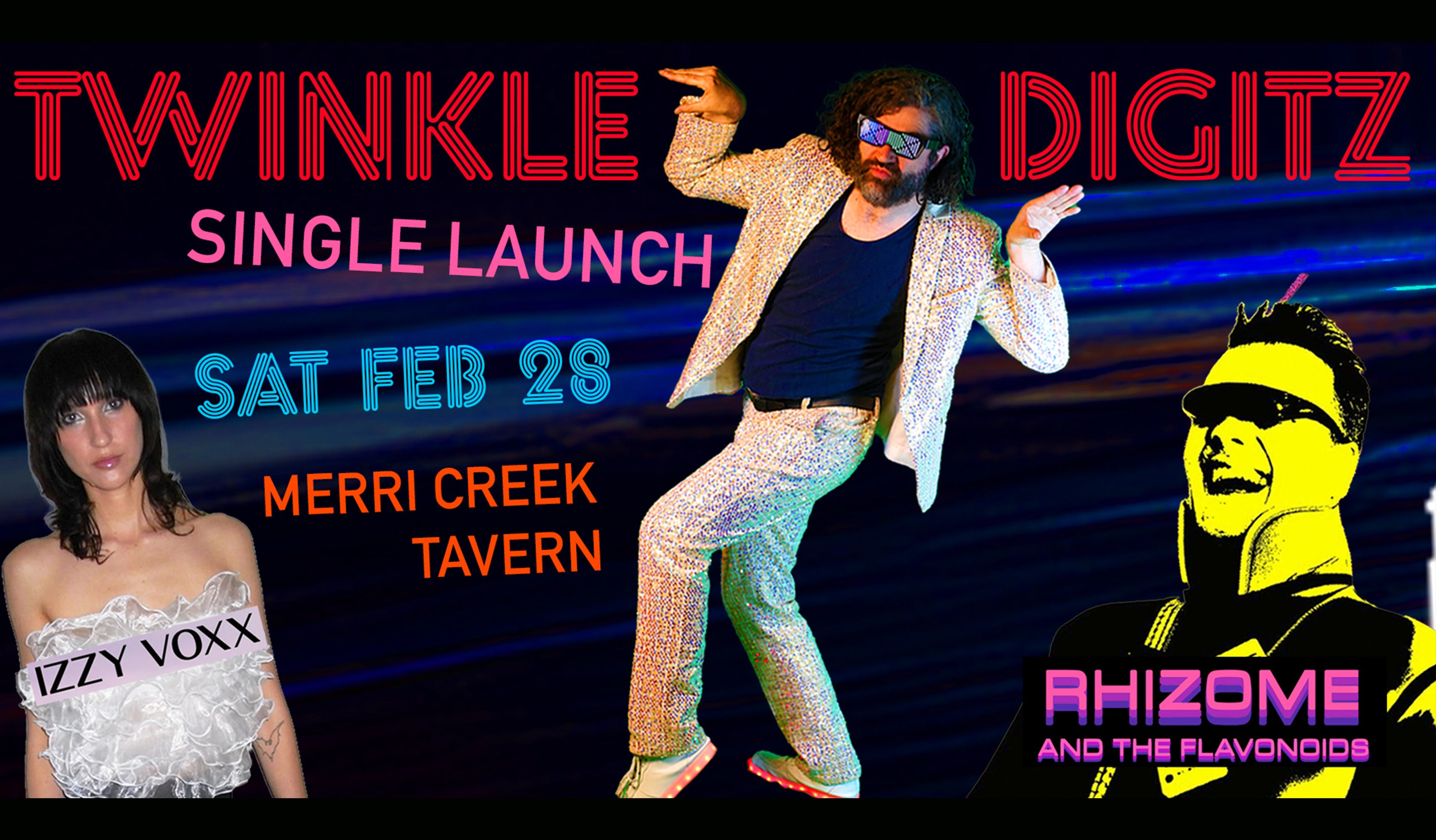
The only acquisition with regards to music was Twinkle Digitz’ new single “Do It Rightly”. This included attending the single release at the Merri Creek Tavern, supported by Izzy Voxx and Rhizome and the Flavonoids.

I continued my deep dive into Prince, listening to Parade, Sign o’ the Times and Lovesexy. I also listened to a bit of David Bowie after watching Bowie: The Final Act and reading David Bowie – A Life by Dylan Jones.


With regards to my writing, I wrote the following:

I also finished my reflection on 2025.


Podcasts that stood out this month:

Listened Paul Dempsey’s Rock Playlist from abc.net.au

Paul Dempsey shares songs that have influenced his musical career

I stumbled upon this interview with Paul Dempsey driving home from Twinkle Digitz. It was interesting to hear Dempsey talk about his upbringing and the music that has inspired him. Also, another musician benefited by older sisters.

Interestingly, the Shotgun Karaoke tracks are supposedly one-takes. I swear listening that they have layers in the instrumentation? If not, Dempsey surely had the tracks down-pat before clicking record.

Checked into https://www.trybooking.com/events/landing/1526523

I had never been to The Merri Creek Tavern. I felt warned by a comment Dave Graney made in an interview with Will Hindmarsh on RRR—that synths and drum machines were not the usual du jour. I was not wrong.

Izzy Voxx

Izzy Voxx opened the night. While the recorded music is a combination of synths, bass, and drums, the stage setup consisted of a backing track, vocals, and guitar. She was supported on guitar by Jarra Grigg (of The Dharma Chain?), who utilized a pedalboard of delays, reverb, and even an EBow. The washed-out guitar added an ethereal feel often missing from the recorded tracks—a layer that reminded me of Davey Lane’s performance on FOSAGAWI. Musically, the sound sat somewhere between Montgomery and Washed Out.

Rhizome and the Flavonoids

Having followed the discussion between Dave Graney and Wes Smith, I knew there were multiple members and wondered how they would all fit. Miraculously, they squeezed a bassist, backing singer, guitarist, and keyboardist onto the stage.

The sonic palette was defined by the contrast between an Arp Odyssey, a Korg MS-20, and a drum machine (though I couldn’t quite spot where the machine was hidden). This setup provides a clear sonic link to post-punk acts like Devo. I was also reminded of Workers & Parasite, both for the synth usage and that characteristically sharp, angular sound.

Twinkle Digitz

The set featured a handful of new songs, including the latest single, “Do It Rightly.” Another track, perhaps titled “Heaven is a Letdown?” (I may have misremembered that), exploring the idea that heaven is a disappointment without a specific someone – and the oddity of being able to eat infinite snacks without consequence. Twinkle is also tapping into the zeitgeist with “Aurnj Man”, supposedly the next single.

The days of covers are long gone. No Tina Turner or old Go-Go Sapien songs. Sadly, we didn’t get “It’s Autonomous, Thomas,” but something always has to give. Will continues to evolve his setup, adding a new guitar pedal, FreqOut, for more dynamics. Thankfully, he outsourced the slides to someone else, one less obsticle – I wonder if moving toward controlling both slides and music via MIDI is possible?

I really liked the Merri Creek Tavern. The only minor letdown was that the red background didn’t always provide the best backdrop for the visual extravaganza.