-
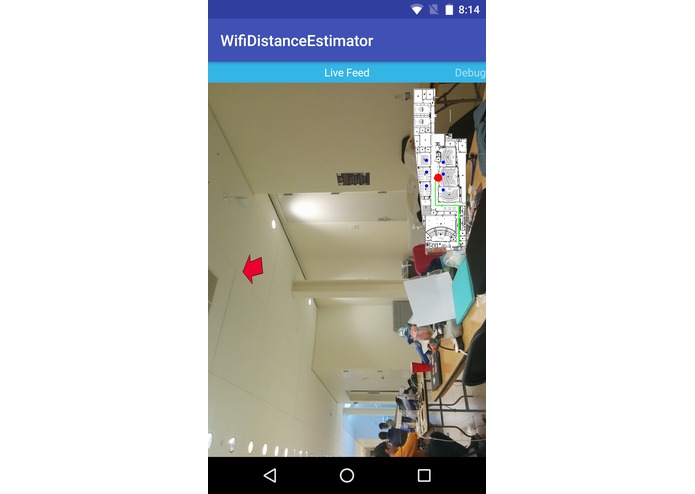
AR indoor navigation
-
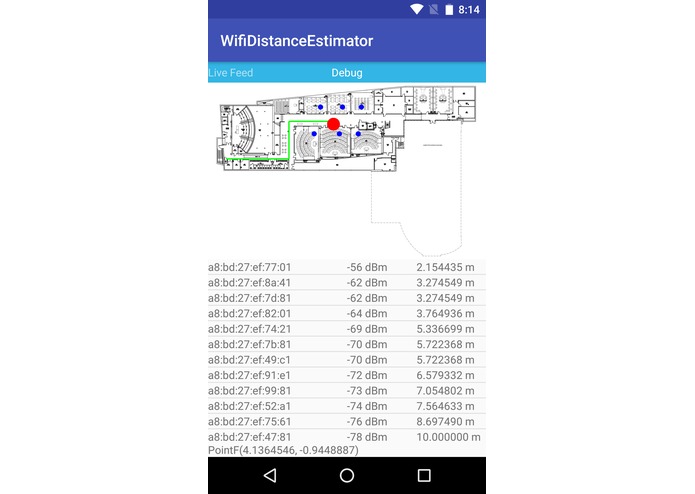
AR indoor navigation
-
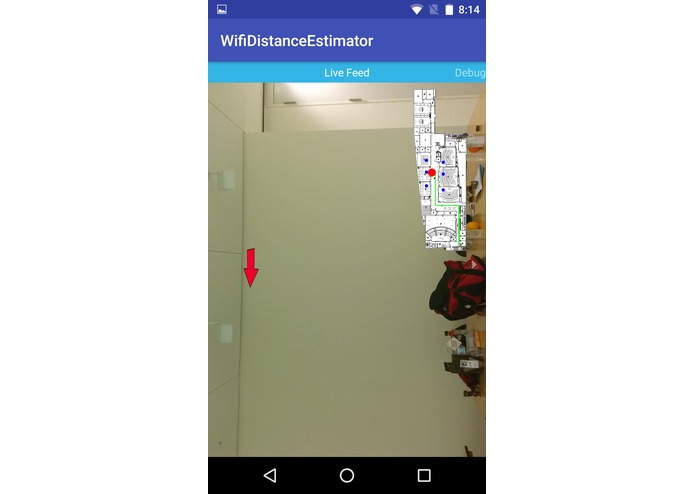
AR indoor navigation


Inspiration
People in high stress situation (e.g. evacuation due to a natural disaster) may have difficulty finding their way along even familiar routes due to cognitive overload, landscape alteration, weather, darkness and many more reasons. We created this app with the goal of providing augmented reality navigation assistance in order to help the user(s) escape safely.
What it does
This android app localizes the user inside a building and provides navigation to the user(s) using AR directional symbols.
How we built it
Utilizing low-level Android WiFi APIs, we built a mathematical model to correlate 802.11 WAP signal strength (RSSI) to distance, and then perform trilateration to estimate the location of the phone. From there, we were able to incorporate route planning and AR capabilities to improve the UX of the solution.
Challenges we ran into
We struggled to generate a high-fidelity model due to the variable interference of the walls, elevators, and support beams that blocked the transmission paths of the WAPs to the handset. After reaching a moderate compromise between variability and accuracy, we were able to apply digital signal processing techniques to eliminate some of the high frequency noise that was being induced into the signal.
Accomplishments that we're proud of
We developed a mathematical model that works reasonably well with non-ideal access point locations.
What we learned
We discovered some limitations to the RSSI localization approach that may be difficult to overcome. We estimate that RSSI produces a minimum mean error of a couple meters, so we intend to approach the localization problem from another perspective or by utilizing sensor fusion.
What's next for AR Indoor Navigation
We plan on continuing developing this app and integrating real time data from connected IoT sensor data (smoke, fire, water quality, thermostats, etc) spread across geographies to improve the planning algorithm that recommends the user the best escape route. Furthermore, AR Indoor Navigation will likely be improved by the use of Kalman Filtering (nicknamed "Sensor Fusion"), to correlate several distinct classes of localization sensors to reduce the mean error of our localization algorithm. We also plan to incorporate more advanced AR features to improve the UX design of the application.


Log in or sign up for Devpost to join the conversation.