-
-
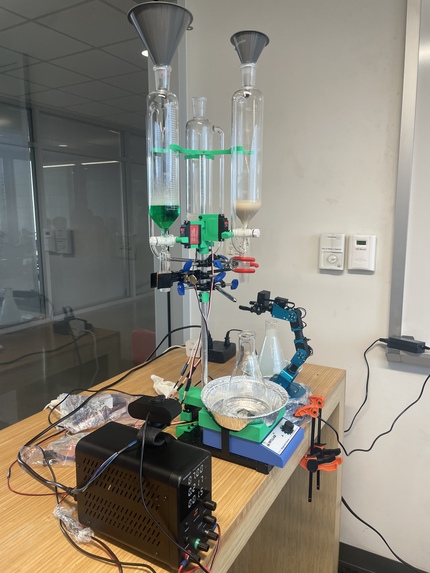
Laboratory
-
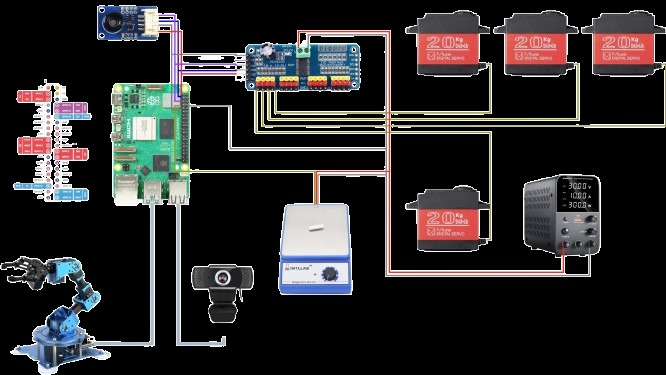
Wiring Diagram
-
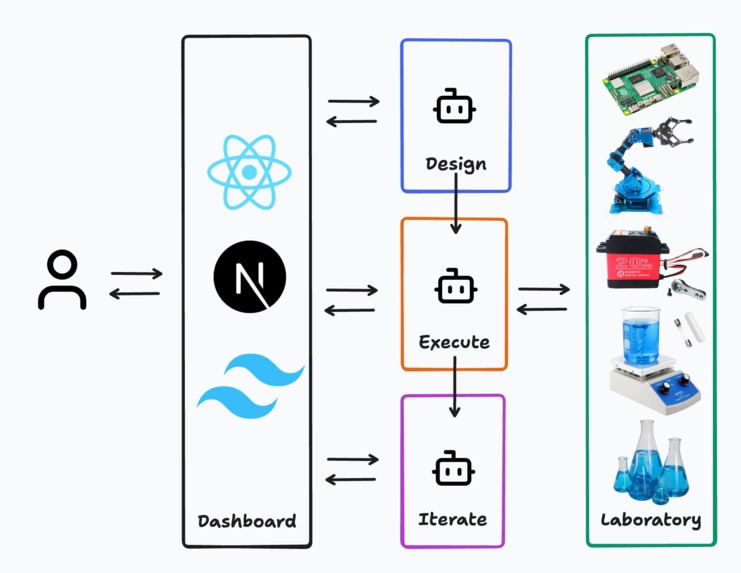
System Architecture
-

A sprinkle of patriotism


Co:Lab: AI-Accelerated Scientific Discovery
Inspiration
Agentic intelligence is rewriting the rules of knowledge work. By dissolving intelligence bottlenecks in fields like software and finance, AI agents are decoupling general productivity from human availability.
Inspired by this propagation of intelligence across digital industries, we identified the physical sciences (e.g. Biology, Chemistry) as a next frontier for agentic integration. Researchers today are stalled by rote, manual tasks: running physical experiments, parsing fragmented data, or pipetting. In many cases, these low-leverage procedural tasks can consume over 40% of a researcher’s time, slowing discovery.
We envision a solution which bridges the gap between LLMs and lab hardware, closing the loop between experiment design, execution, and iteration and unlocking scientists to focus on high-leverage research direction and novel work.
What it does
Co:Lab is an AI integrated laboratory that accelerates experimental design, execution, and iteration. Our platform enables researchers to focus more on high-level research direction and novel investigations, rather than rote labor.
Our system has three core features:
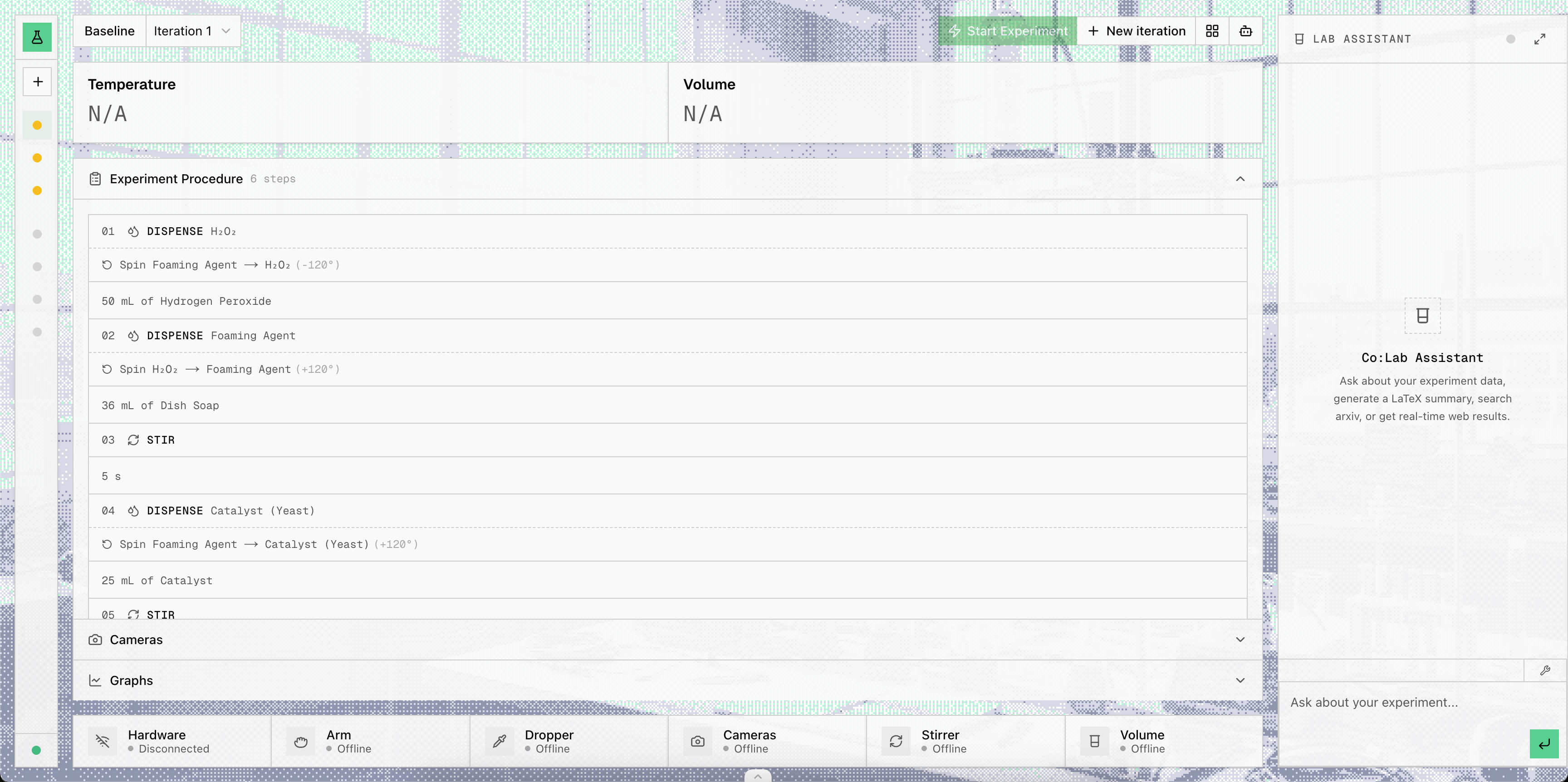
Researcher-in-the-loop: We believe that effective agentic systems know when to request human confirmation, especially in high-impact, technical environments. Rather than being a black box, Co:Lab’s interface enables researchers to confirm experiment design and observe experiment progress, with the ability to jump in if needed.
Real-time observability: Experiments should be highly visible, both to the agent and the researcher. Our integrated system has a variety of cameras, sensors, and measurement devices which collect data that we pass to the user interface. This enables researchers and agents to get on-demand visibility into experiment state. Further, we believe in a future where researchers will commonly run concurrent experiments, making effective observability even more critical.
Ability to iterate: Being able to perform one experiment isn’t enough. Scientific discovery and confidence is built by iterative experiments — refining hypotheses, adjusting parameters, validating results — which uncover new information or confirm prior assumptions. Co:Lab’s agentic loop enables it to analyze prior experiments and incorporate external research to propose subsequent experiments. This enables it to make well-informed, high-confidence decisions about what to test next.
Altogether, Co:Lab bridges existing LLM capability with non-agentic lab benches to create an adaptive, agentic laboratory — one that thinks, runs, and improves experiments alongside researchers.
How we built it
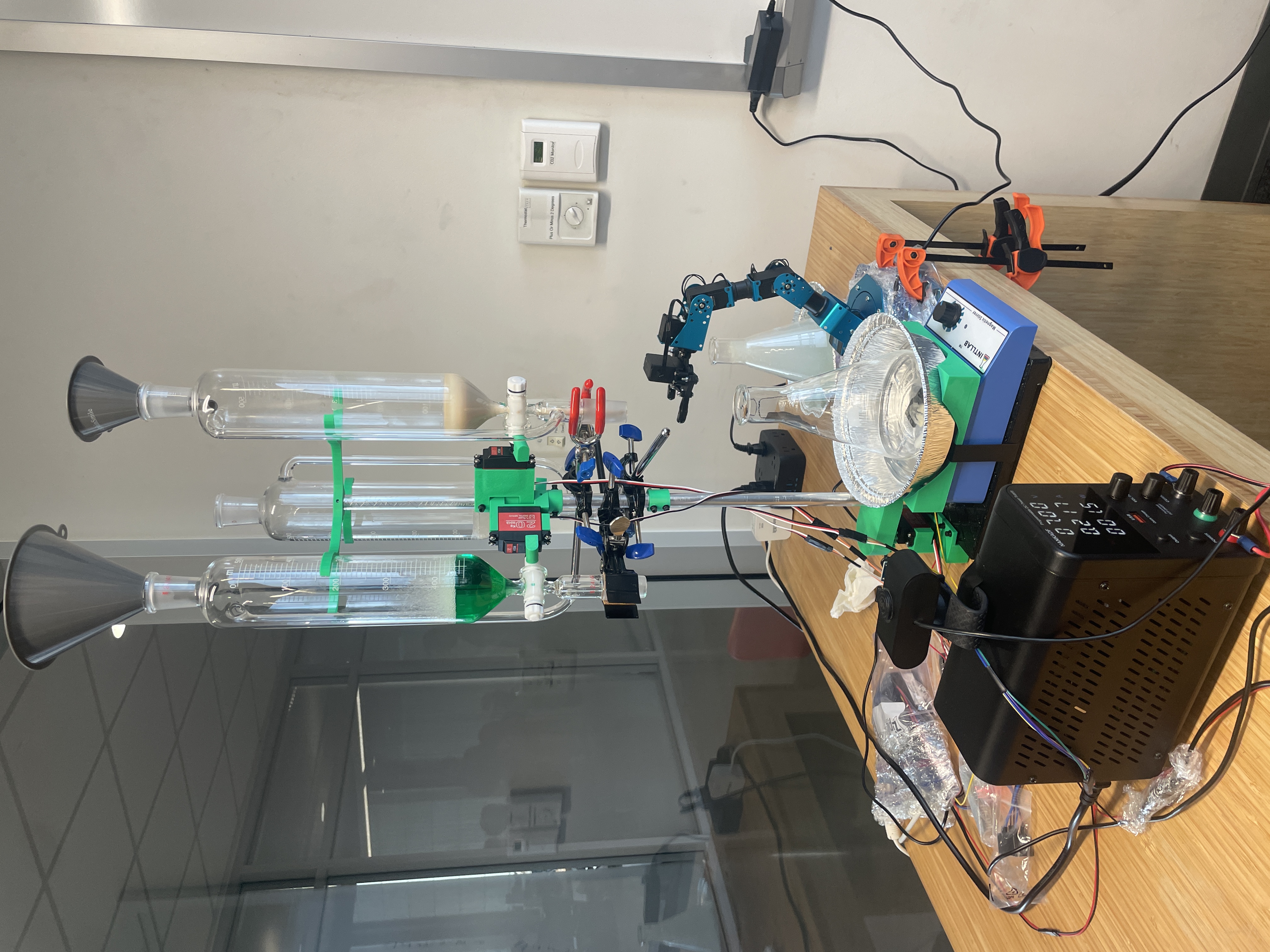
Our project implements a comprehensive system architecture that combines our hardware, user interface, and agentic harness. We created a system diagram to demonstrate the information flow between each component.
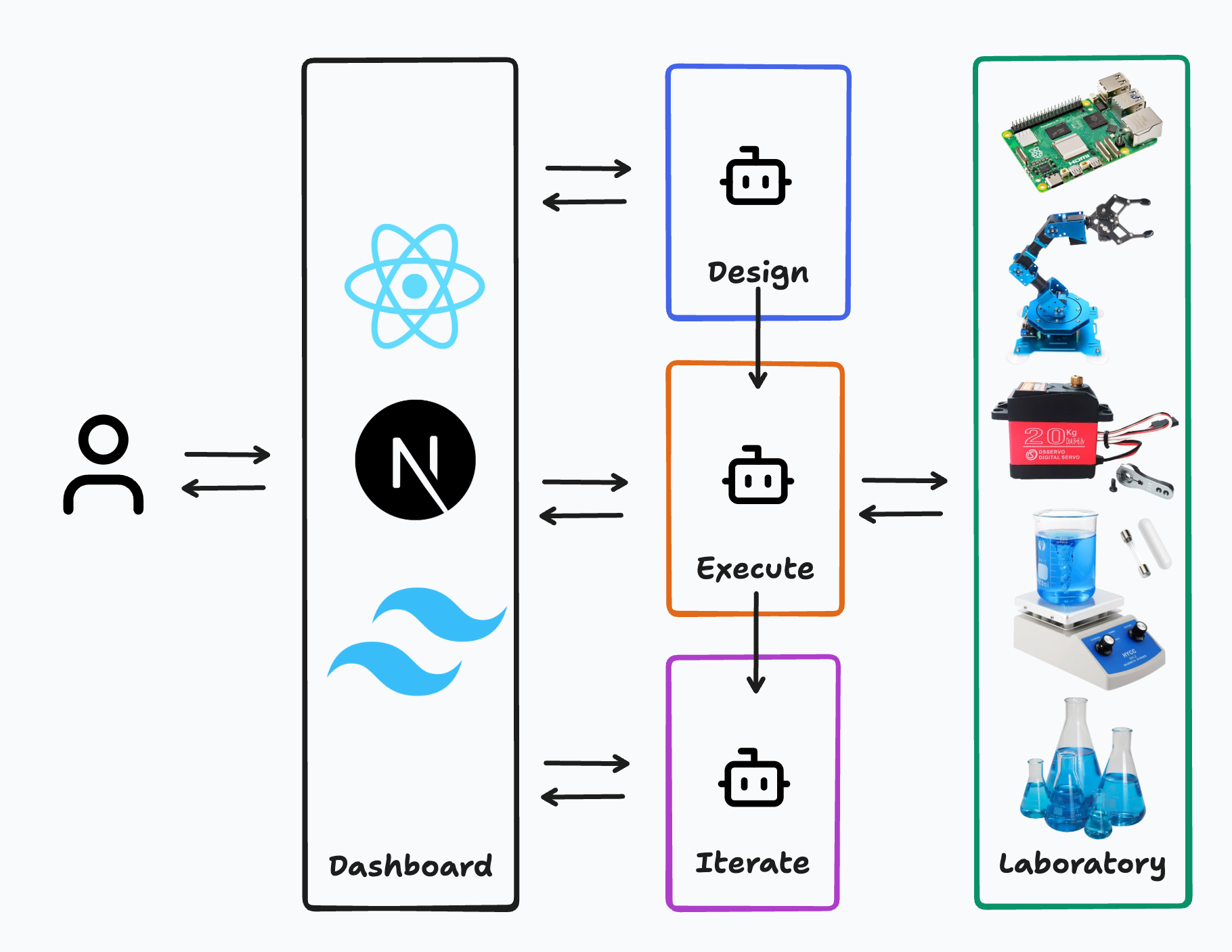
Hardware:
Our autonomous laboratory is built using standard laboratory instruments:
- Servos
- Raspberry Pi
- 3D printed components
- Pulse width modulator
Frontend:
Our frontend uses React, Next.js, Typescript, Tailwind and Shadcn for a performant, modern application.
Backend:
Our backend API layer is written in Python, facilitating realtime communication between our frontend, hardware, and agents using websockets.
Challenges we ran into
- Transforming standard laboratory instruments into an autonomous lab
- Integrating hardware, frontend, and backend together as a two-person team
- Fine tuning agentic loops
Accomplishments that we're proud of
- Working with microcontrollers and electronics to build a custom autonomous lab
- Demonstrating how AI can accelerate iteration loops
What we learned
- Real-time integration of hardware into frontend interfaces
- How to design for an experiment, both in terms of experiment design and in terms of architecting the laboratory itself
What's next for Co:Lab
- Expand and modularize lab setup to support more systems and use cases
- Further optimize and fine-tune agent harnesses (e.g. better web search) for lab work
Built With
- arduino
- nextjs
- python
- raspberry-pi
- react
- react-grab
- tailwind
- typescript
- vercel


Log in or sign up for Devpost to join the conversation.