-
-
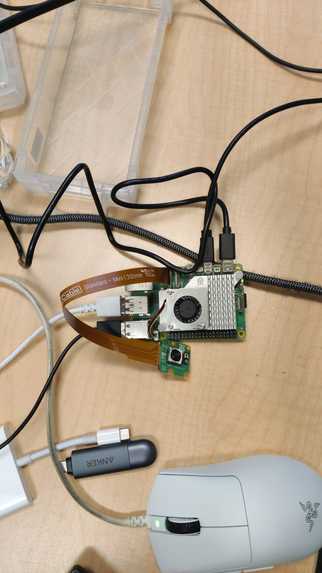
The RasberryPi and Camera Using which the overall project will work

Inspiration
We wanted to build a system that could give visually impaired individuals or anyone with face blindness the ability to identify people around them in real time, knowing not just who someone is, but when and where they were last seen.
What it does
FaceScan is a real-time face-recognition and audio-memory system. It detects faces through a camera, identifies known individuals, and speaks their name along with the date and location they were last seen. For new faces, it records their name through a microphone and stores it permanently. Every person is remembered across sessions.
How we built it
OpenCV LBPH for fast local face recognition AWS Rekognition as a high-accuracy backup for uncertain matches, running all comparisons in parallel for speed AWS Comprehend to extract just the name from natural speech (strips filler words like "hey" or "my name is") Google STT for speech-to-text transcription ElevenLabs TTS for natural, human-sounding voice output SQLite for persistent memory of all persons, locations, and timestamps pygame for cross-platform audio playback and beep tones
Challenges we ran into
LBPH confidence thresholds needed careful tuning to avoid misidentifying returning faces as new people AWS Rekognition sequential comparisons caused 10–15 second delays, solved by running all comparisons in parallel with ThreadPoolExecutor macOS quarantine flags on downloaded files made the SQLite database read-only ElevenLabs TTS using afplay (Mac-only) needed to be replaced with pygame. mixer for cross-platform support Cooldown logic needed to persist across restarts so the same person isn't announced repeatedly
Accomplishments that we're proud of
Sub-2-second face identification after initial training Fully cross-platform (Mac and Windows) with the same codebase Natural human-sounding voice responses via ElevenLabs Persistent memory that survives restarts, the system truly "remembers" people
What we learned
Combining a fast local model (LBPH) with a cloud fallback (AWS) gives the best balance of speed and accuracy Parallel API calls dramatically reduce latency in multi-person scenarios An audio pipeline on different OSes requires abstraction to work reliably
What's next for FaceScan
Mobile app version using the phone camera Emotion detection to add context ("Jasnoor looks happy today") Multi-camera support for wider environments A web dashboard to manage known persons and view history
Built With
- amazon-web-services
- elevenlabs
- geocoder
- opencv
- pygame
- python
- rasperrypi


Log in or sign up for Devpost to join the conversation.