-
-
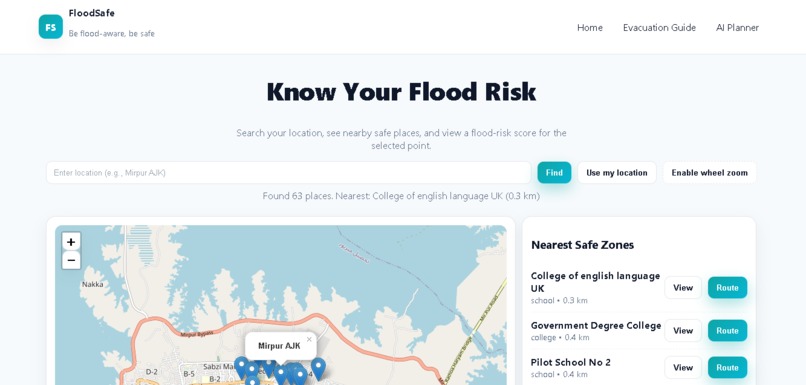
home page
-
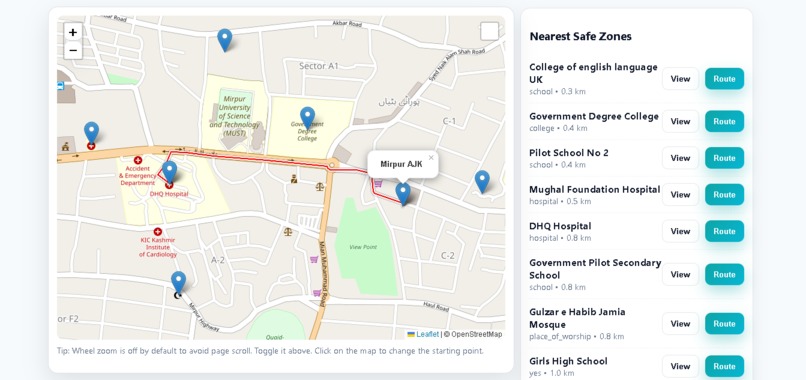
map/routes/safe zones
-
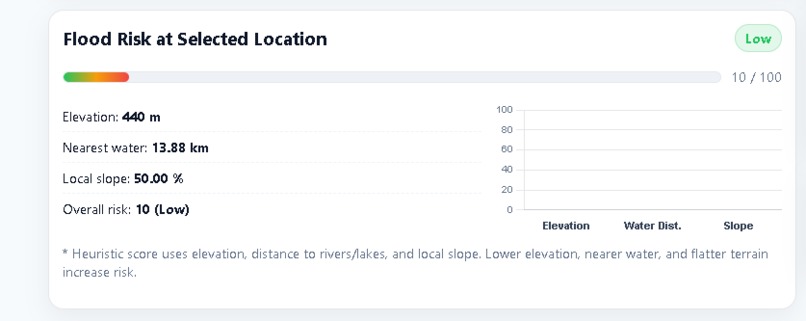
risk level
-
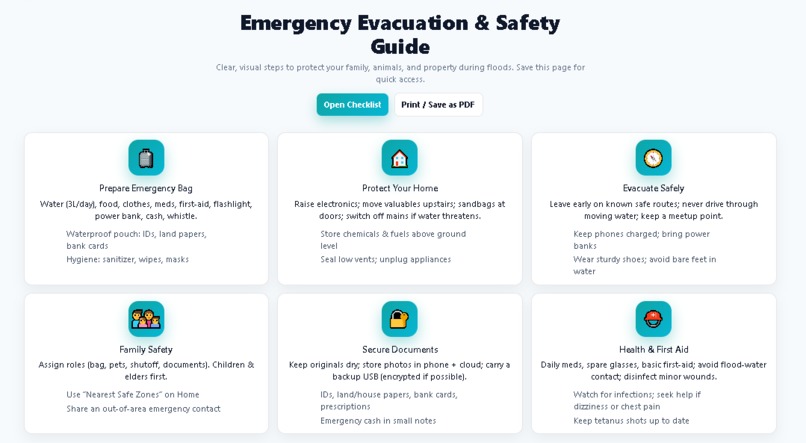
evacuation guide
-
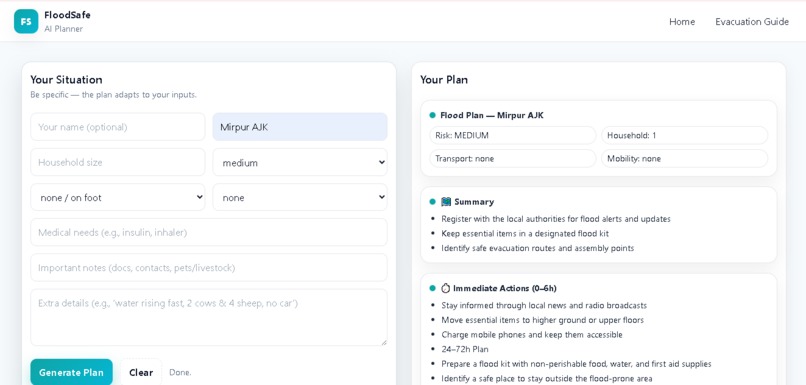
ai planner
-
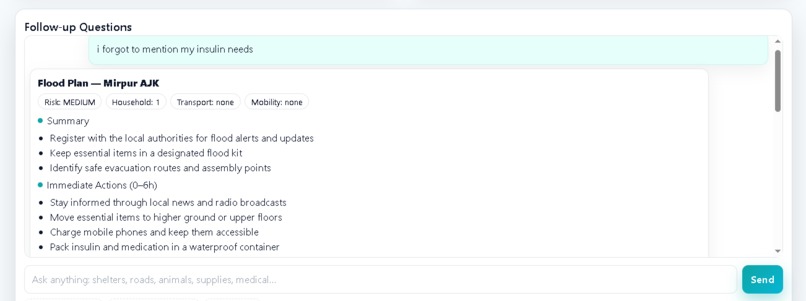
follow up questions to update plan


FloodSafe 🌊 — Project Story
Inspiration
In 2025, climate change is no longer a distant threat — it’s a daily reality.
This year alone, multiple countries have faced severe floods, displacing millions and damaging infrastructure.
Seeing these disasters motivated me to build a solution that helps communities stay informed, prepare early, and act confidently.
I wanted to make something lightweight, accessible, and intelligent — something that even works on basic browsers and can still guide people during an emergency. This is how FloodSafe was born.
What it does
FloodSafe is a three-page web application designed to keep users safe during floods:
Home Page (Map & Risk Level):
- Users can search or click a location on an interactive map.
- The system highlights safe zones and shows the best routes to reach them.
- Below the map, users can see the flood risk level for that location (Low / Medium / High).
Evacuation Guide (Printable):
- A step-by-step checklist on what to do before, during, and after a flood.
- A printable list of items to keep ready: food, water, medicine, clothes, and documents.
AI Planner (Powered by Groq):
- Users enter their details: location, household size, transport, pets, and medical needs.
- The backend calls Groq’s AI API to generate a personalized evacuation plan in natural language.
- If offline, the system falls back to a heuristic model that still gives useful guidance.
How we built it
- Frontend: Built with HTML, CSS, and vanilla JavaScript for maximum portability and speed.
- Backend: A single PHP file (
backend.php) receives user input, calls Groq AI via REST API, and returns structured JSON. - Risk Model: A simple scoring algorithm estimates risk even without AI
Challenges we ran into
- Setting up Groq API calls in PHP and parsing responses as strict JSON.
- Ensuring the app worked offline with heuristics when API access was unavailable.
- Designing a calm, modern UI that feels reassuring during stressful situations.
- Keeping the architecture framework-free (no Node.js) while still supporting server logic.
Accomplishments that we're proud of
- Delivered a fully functional AI-powered evacuation planner that runs in any browser.
- Designed a map-based risk detection system that shows safe zones and routes.
- Built a printable evacuation checklist, bridging online and offline preparedness.
- Achieved a clean architecture using just HTML, CSS, JS, and PHP — simple to set up for anyone.
What we learned
- How to integrate Groq AI for fast and cost-effective inference.
- How important it is to provide graceful fallback when internet or AI services are unavailable.
- The power of good UX: clear, structured output reduces confusion and panic in emergencies.
- Writing secure backend code to keep API keys private while sharing open-source code.
What's next for FloodSafe
- Integrate real-time flood alerts from government APIs.
- Build SMS notification support for low-connectivity regions.
- Add multi-language support for wider accessibility.
- Package as a PWA so it can work like a native mobile app offline.


Log in or sign up for Devpost to join the conversation.