-
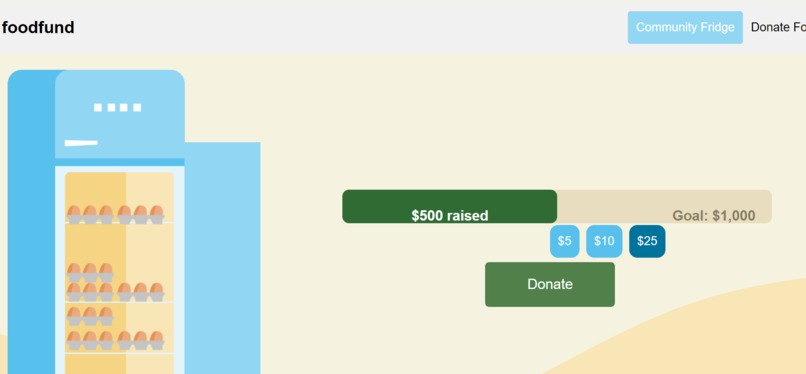
Dynamically rendered items in the fridge to visualize donor impact
-
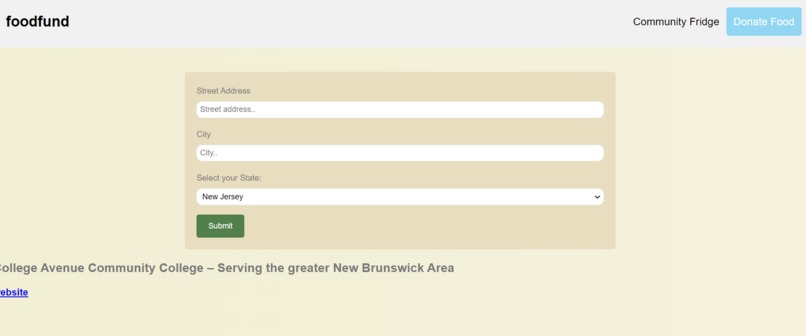
Form
-
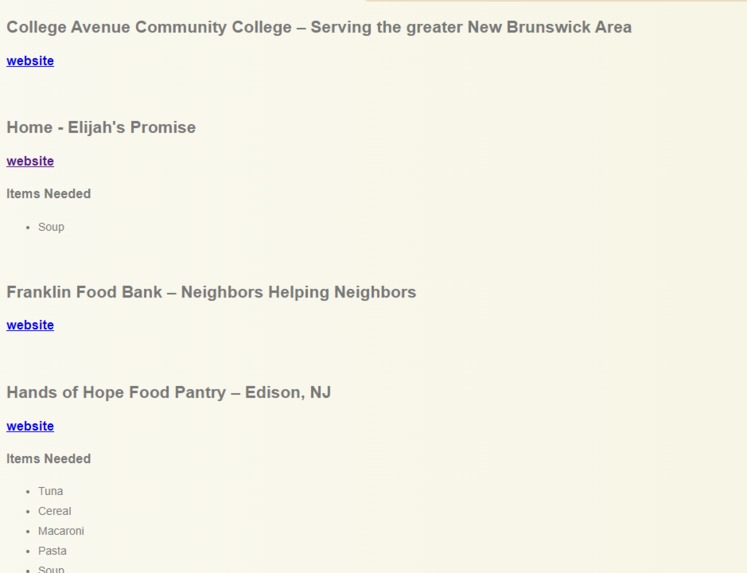
List of food items, website, and pantry name
-
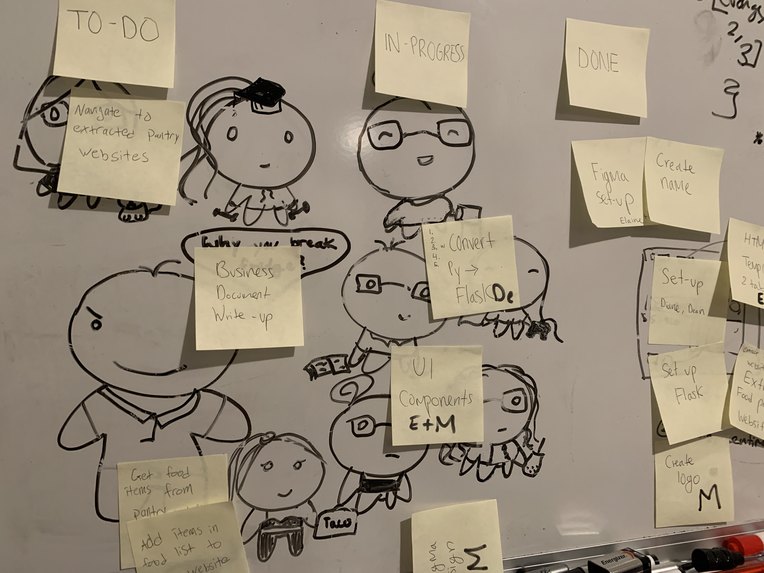
Our "jira" board
-
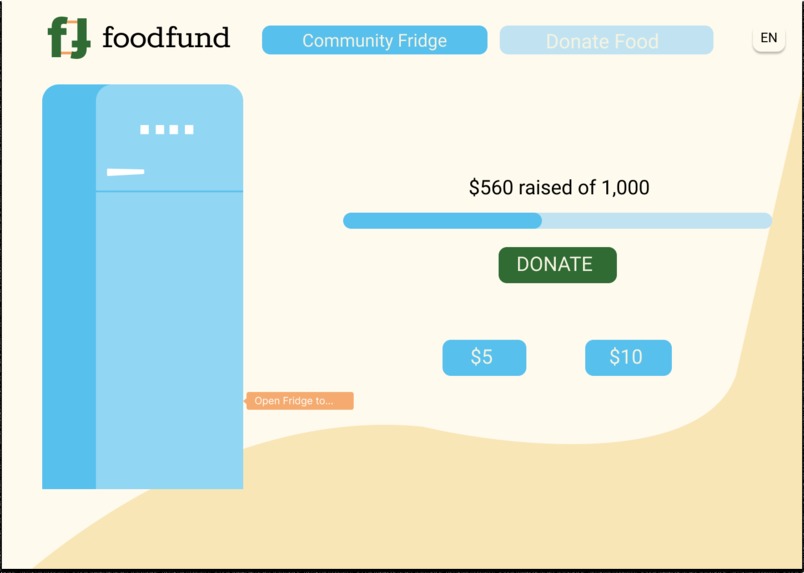
Figma mock-up
-
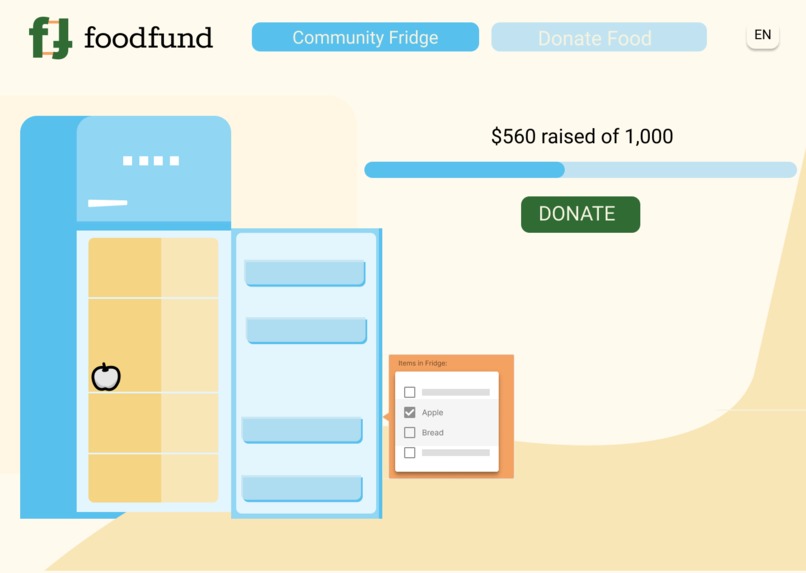
Figma mock-up 2


Inspiration
In Los Angeles, there is a system of community fridges- decentralized, independent fridges to support local communities through mutual aid. This community fridge system helps combat food insecurity within people's own communities.
Food Insecurity is defined as limited or uncertain access to food. Food insecurity is a household-level economic and social condition of limited access to adequate food.
Inspired by this program, and understanding the limits of this LA-centric program- we wanted to create a website that would help visualize donations within our version of a "community fridge" as well as provide people with resources for local food item donations to pantries.
What it does
Foodfund is two-fold. It helps you..
1) Community Fridge:
Visualize where donation funds are going
- Many non-profit organizations are relying on visualizations to transform the way they reach their communities; visualizations are the intersection of storytelling and quantitative data.
- When you visualize a story that clearly defines the problem you are addressing, donors are more willing to contribute
2) Donate Food: Connects you to food pantries near your address and displays a list of product donations they need
- There is no existing resource that combines local food pantries, as well as the food items they need, so our solution addresses this gap
How we built it
1) Community Fridge We built this by leveraging Flask, HTML/CSS, and JavaScript to display the UI components that made up this page including a donation progress bar, a click to donate button, and the fridge.
2) Backend We built this using mechanize (a Python library for web-scraping) to find the nearest food pantries to a location, and then scrape the items needed from those food pantries. We organized this information into a data structure to then pass on the information to the front-end user.
2 cont.) Donate Food We built this by utilizing Flask to capture the client-side form information and connecting it to our backend. We then ran our backend code, and displayed the information returned by our backend scripts.
Challenges we ran into
- This was 2 out of the 4 members first time using Flask and Web-scraping tools
- Thinking of a good web-scraping path to find the information we needed
- Deciding which words were key words to search for
- Figuring out where the information we wanted was based on proximity to other keywords
- Learning animations in CSS
- Using new and improved ways to animate our components
- Setting up our IDE and git environment
- Muskan was the only member who was using MacOS!
Accomplishments that we're proud of
- Creating a MVP in <24 hours while fully remote
- Learning so many new technologies in a short time period
- An impactful project idea
What we learned
- Flask: How to set-up a Flask env. in PyCharm (no default Flask support for Community edition)
- Python: It was Diane's first time using Python! (She had to look up how to concatenate a string)
- The power of visualization: We read lots of cool literature on why non-profits need to be able to visualize their data!
- Webkit: Performing basic animations using CSS
- Github: How to successfully use Git in a collaborative environment where a lot of work is overlapping
What's next for Foodfund
1) A deeper web-scraping algorithm that has more general extendability 2) Cleaning up the UI with a React or other framework front-end 3) Being able to share our product with non-profits to encourage donors 4) Hosting our web-scraper on a server as an actual API for others to use




Log in or sign up for Devpost to join the conversation.