-
-
-
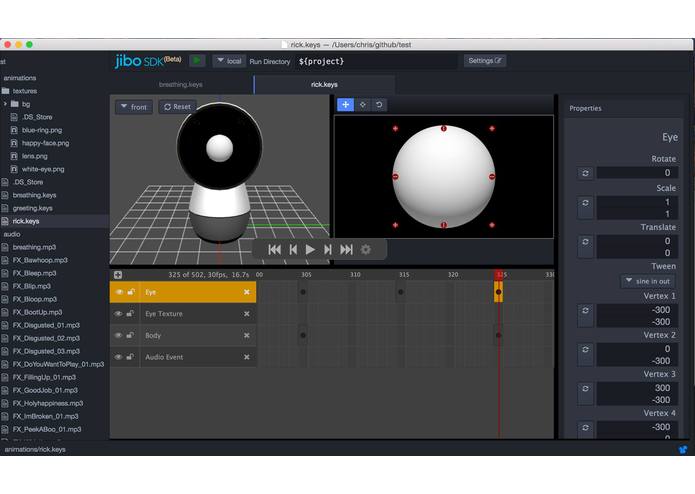
Jibo SDK demo environment.
-



CONCEPT + GOALS
We are trying to improve mental well-being by integrating therapeutic breathing training into JIBO. This program would be especially useful for people who are living on their own, and who might not be able to recognize their own symptoms which might lead to further mental disintegration if not recognized in time (such as mental exhaustion, depression, etc.).
** The goal of this program is to identify stress symptoms that the own user might not be aware of, and to reduce the displays of these stress expressions, which in turn could reduce the person’s anxiety. **
AUDIENCE
Adults living alone, children, etc. JIBO is our tool of choice because it is easy to use for people who may not want to seek professional help, but who still need a resource + strategies to help against stress.
WHY JIBO?
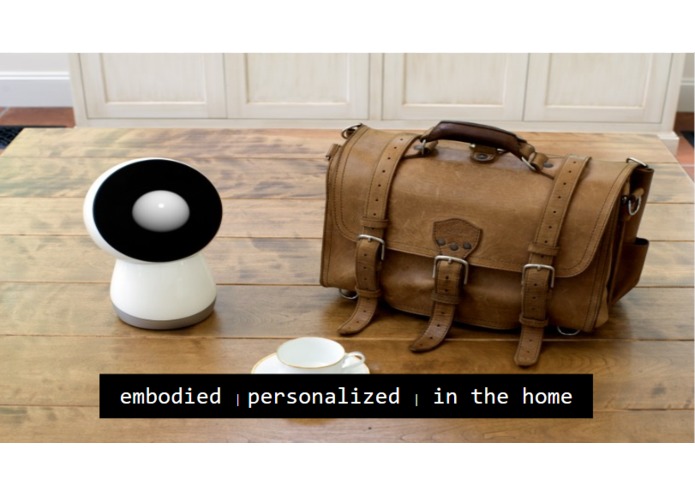
We were interested in using JIBO because of its distinctive and approachable social personality. It also has Bluetooth capabilities, which would be used to connect to existing wireless pulse sensor devices, such as FitBit and the Smart Watch.
Beyond what is already projected for [project name], JIBO has additional capabilities that leave lots of room for expansion. Its facial recognition functionality, for example, is particularly promising; in the future, it would be possible to program JIBO to recall which user has frequent high-stress levels and could be in need of reminders for meditation practices.
Additionally, JIBO can keep files on the different family members and tailor its meditative practices to each specific user, which entails some interesting Machine Learning applications.
FUNCTIONALITY
Again, JIBO serves as a sympathetic companion to the user. The general interaction sequence is as follows:
a. Initiates dialogue user based on indirect/direct cues
Indirect: input from external devices (heart rate from FitBit, Apple Watch) or Google Calendar/Mail (on particularly busy days), which are both possible with the commercial version of JIBO biofeedback
Direct: user greeting Jibo directly
b. After listening to the user’s response, it gauges mood by sorting responses into one of three categories--negative answer, positive answer/positive tone, and positive answer/negative tone--and responds accordingly.
If the user responses negatively (be it in the form of a negative answer or positive answer/negative tone), Jibo will offer to accompany user in one of a number of basic mindfulness exercises Offers a number of alternatives
Built With
- javascript
- jibo-sdk


Log in or sign up for Devpost to join the conversation.