-
-
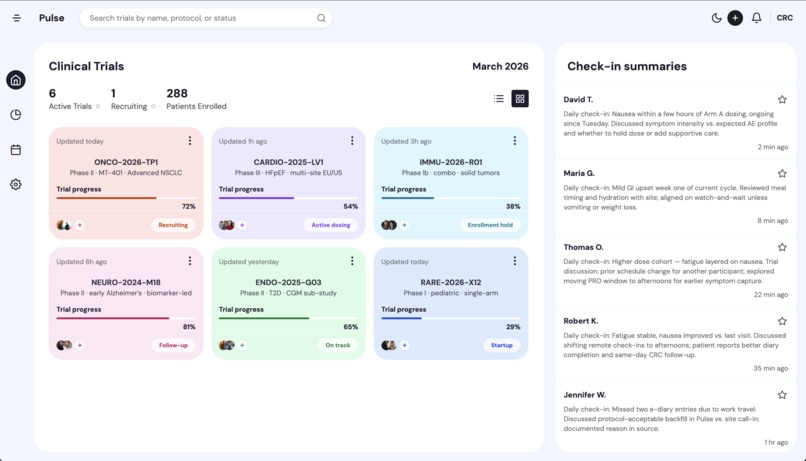
Landing Page
-
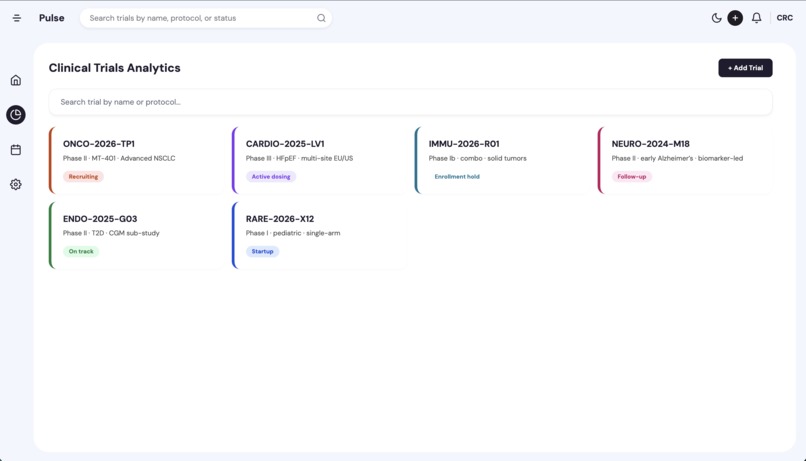
Clinical Trials Page
-
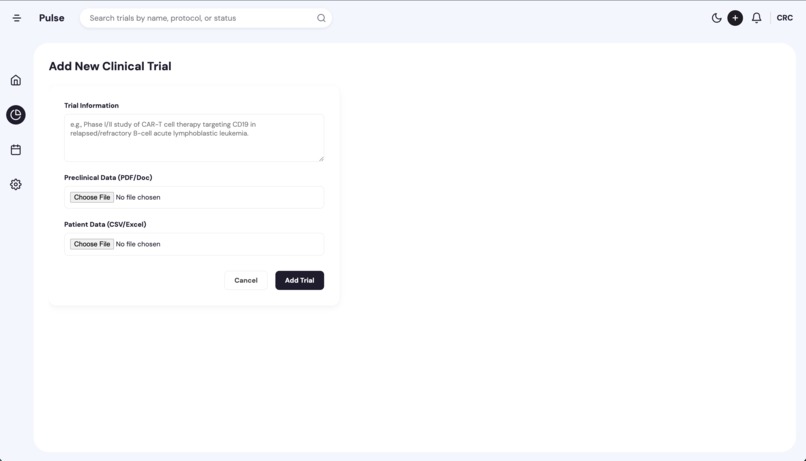
Add a New Clinical Trial
-
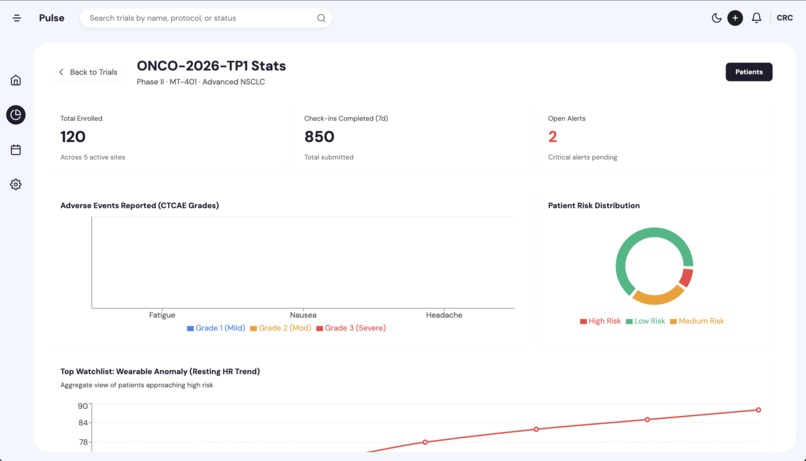
Clinical Trials Analytics
-
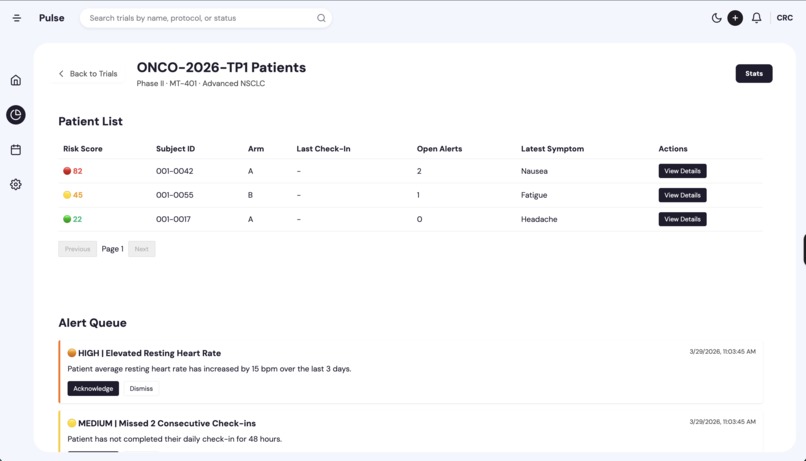
Patients Page
-
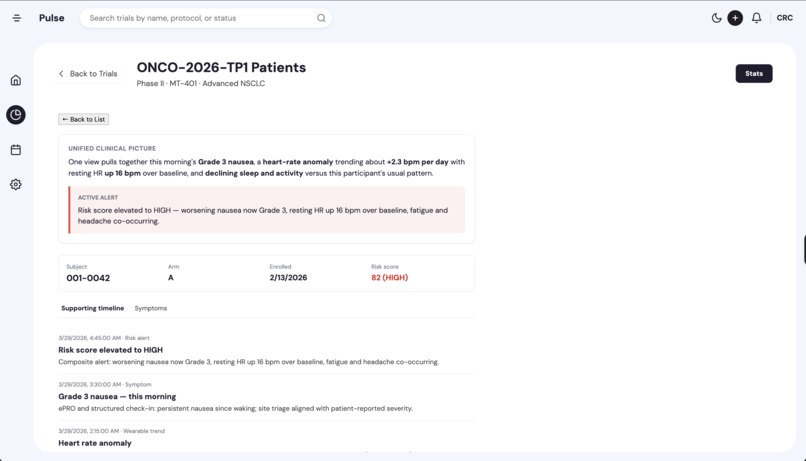
Patient Page
-
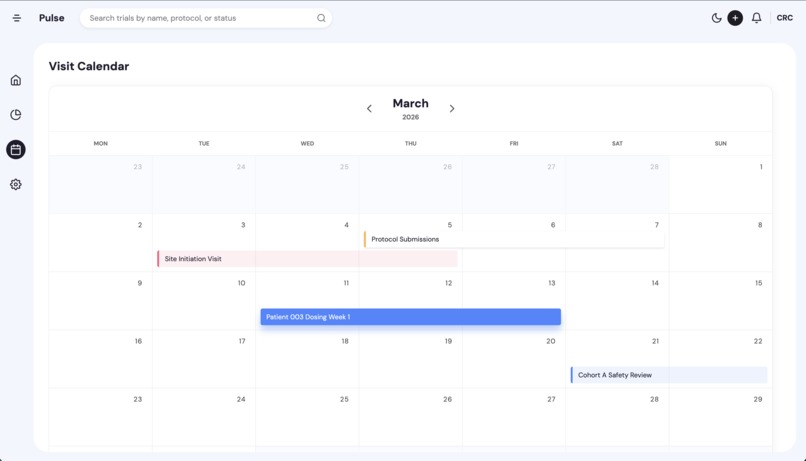
Calendar
-
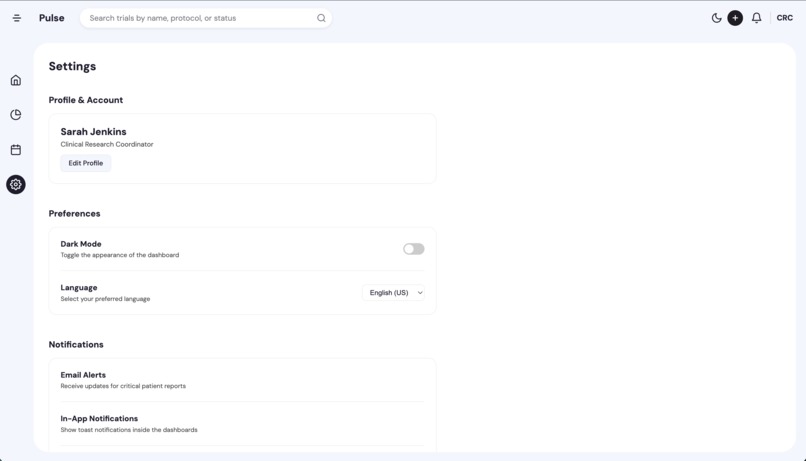
Settings
-
-
-
-
-
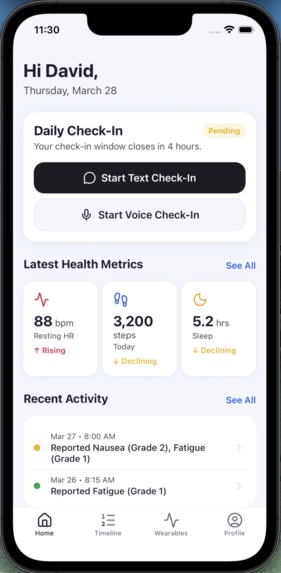
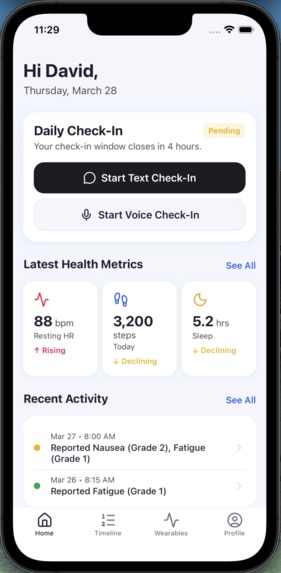
Home Page
-
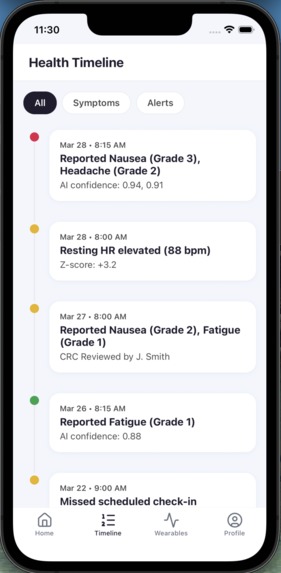
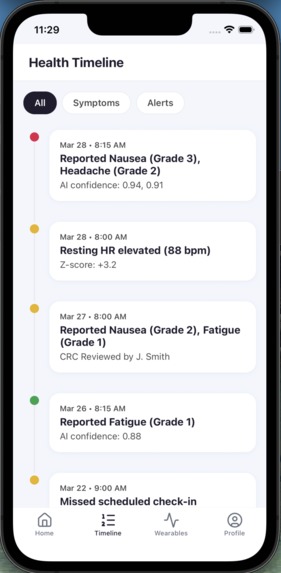
Timeline
-
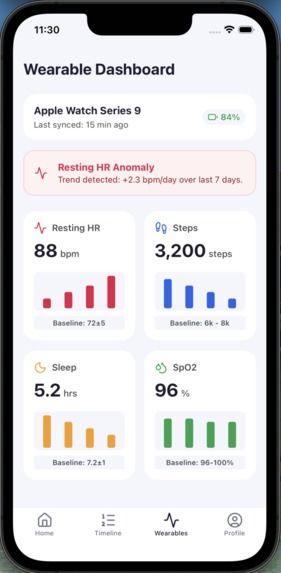
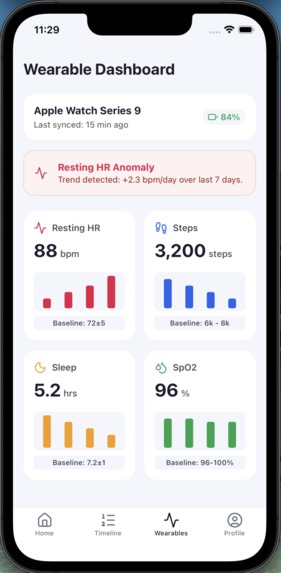
Wearables
-
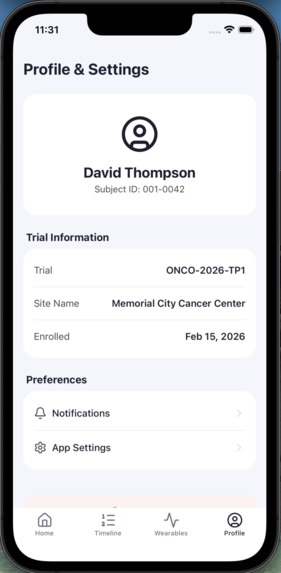
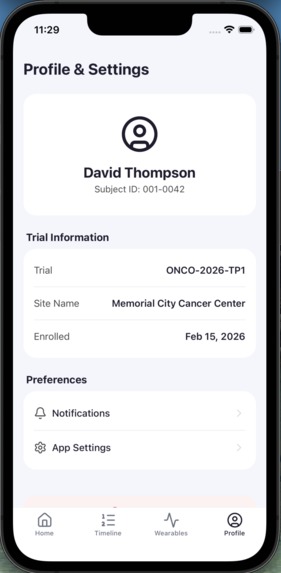
Profile


Pulse
AI-powered clinical trial patient safety and engagement platform.
Inspiration
Trial safety often depends on sparse site visits and delayed paper trails, while patients experience symptoms and behavior changes every day. We wanted a continuous signal—not to replace regulated workflows, but to help sites and sponsors see risk earlier, keep patients engaged, and reduce the gap between what happens in real life and what makes it into a safety narrative.
What it does
Pulse (TrialPulse) connects patients, wearables, and study teams in one loop:
- Mobile app — Daily check-ins, structured capture of how patients feel, and pathways for voice/chat-style support (e.g. LiveKit-backed flows in the stack).
- Backend — FastAPI services for auth, patients, check-ins, wearables, alerts, voice, and analytics; AI-assisted classification and check-in reasoning (LangGraph-style flows); risk scoring and alert generation when patterns worsen.
- CRC dashboard — Trial overview, patient list, alert queue, visit calendar, and cohort analytics (risk distribution, AE-style views, wearable trends) so coordinators can prioritize who needs attention.
The goal: one place to monitor engagement, symptoms, and device-derived trends so escalations are timely and explainable.
How we built it
- Monorepo with a Python/FastAPI backend (async SQLAlchemy, Pydantic), PostgreSQL for trial/patient/alert data, Redis for events and coordination, MinIO for object storage, and Docker Compose for a reproducible dev stack.
- AI layer — LLM access via OpenRouter (and Gemini-related paths for voice/agent experiments), with graphs/agents for check-in and classification workflows.
- Real-time / voice — LiveKit in the compose stack for future or demo-grade realtime/voice paths.
- Dashboard — React + Vite, TanStack Query, Recharts, and a proxy to the API for local development.
- Mobile — Expo / React Native app for the patient experience, wired to the same API concepts.
Challenges we ran into
- Glueing clinical nuance to engineering — Balancing realistic CRC workflows (triaging alerts, audit-friendly language) with hackathon scope.
- End-to-end environments — Coordinating Postgres, Redis, LiveKit, and backend ports across laptops and Docker (e.g. host port conflicts, env parity between dashboard proxy and API).
- Native + web + AI — Keeping mobile, dashboard, and LLM pipelines aligned on the same domain models (patients, trials, symptoms, wearables) without over-building schema migrations mid-hack.
Accomplishments that we're proud of
- A credible vertical slice: patient-facing app, API with multiple modules, and a researcher dashboard that tells a coherent safety story.
- Risk and alerts tied to symptoms + wearable logic, not just static mock UI.
- Dockerized stack others can actually run: DB seed paths, health checks, and a Makefile for common tasks.
- Unified patient narrative on the dashboard (e.g. combining check-in severity, HR trends, and fatigue context) to show how Pulse summarizes signal for busy CRCs.
What we learned
- Safety UX is product work — Clear copy, alert wording, and “unified clinical picture” views matter as much as the model.
- Async FastAPI + event bus patterns scale better for notifications and future realtime than a purely CRUD API.
- DevEx details (Vite proxy to correct API port,
.envparity) save hours when judges or teammates try to run the demo.
What's next for Pulse
- Deeper EDC / CTMS integration hooks (exports, reference IDs) without storing PHI beyond policy.
- Prospective validation of risk scores with study statisticians; calibration per indication and arm.
- Patient — richer adherence nudges and localized content; Site — workload views and SLA-style alert routing.
- Hardening voice flows for regulated use (consent, retention, redaction) and expanding wearable normative baselines per protocol.
Built With
- alembic
- api
- apscheduler
- docker
- fastapi
- gemini
- javascript
- langchain
- langgraph
- livekit
- numpy
- openrouter
- postgresql
- pydantic
- python
- redis
- scikit-learn
- sql
- sqlalchemy
- sqlmodel
- typescript
- uvicorn
- websockets


Log in or sign up for Devpost to join the conversation.