-
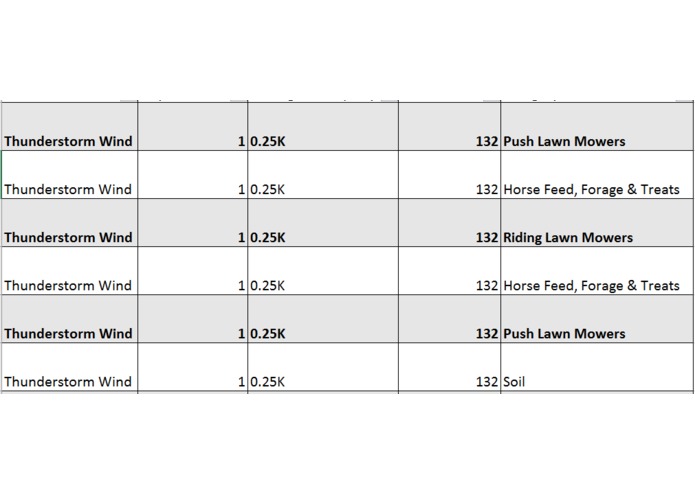
Database Visualization
-
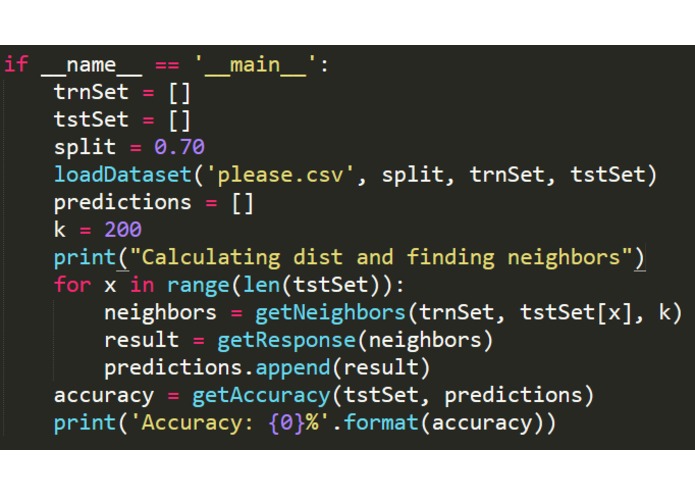
Machine Learning Algorithm


When storms damage property, it's important that people have the resources they need available to them. Food, water, and shelter are all major points of focus during times like these, but what happens after the storm clears?
We sought to make an app that predicts what people will need after storms and natural disasters based on type of weather, time of year, and estimated extent of damage.
First we took data provided by Tractor Supply Co and cross referenced it with public historical weather records. For the sake of expediency we chose to limit our focus to the state of Pennsylvania (we chose this state because it had the most seasonal sales records to reference). We trained a Machine Learning algorithm built with python on two thirds of the dataset, and tested it on the other third.
The biggest problem we ran into was the data itself. As explained by representatives from TSC, legal complications kept them from disclosing specific locations within states. This means that any time there was a storm in the state of Pennsylvania it looked to the algorithm as if it were affecting all locations in Pennsylvania.
Another problem we faced was that only one of our group members had ever worked on a remotely similar project compared to the role they were assigned.
We learned a decent amount about the machine learning as a subject. We also learned that there is beyond any form of doubt a correlation between the what people buy from TSC and the weather, time of year, and damages to property.
Hopefully the next step for RdE would be to become more location specific. The app already estimates products that should be stocked when a storm is coming towards the state reasonably well, but will only become more accurate as the data becomes even more location specific.
Built With
- google-cloud
- machine-learning
- pandas
- python
- r
- sql
- ubuntu-linux


Log in or sign up for Devpost to join the conversation.