-
-
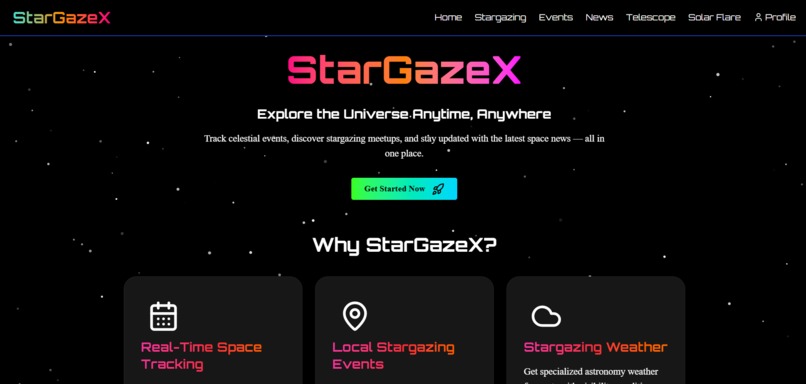
Home page
-
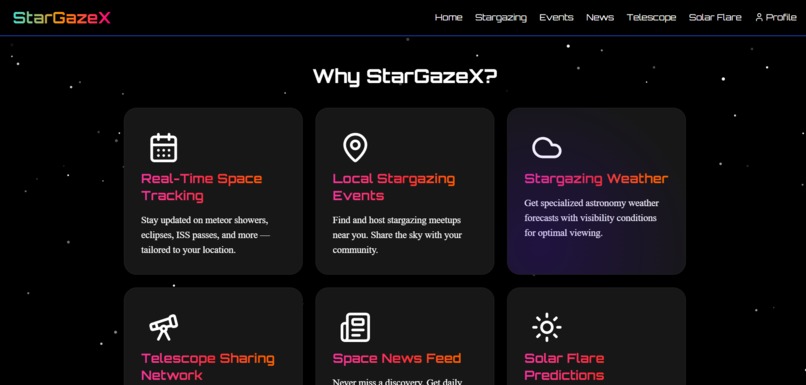
Home page
-
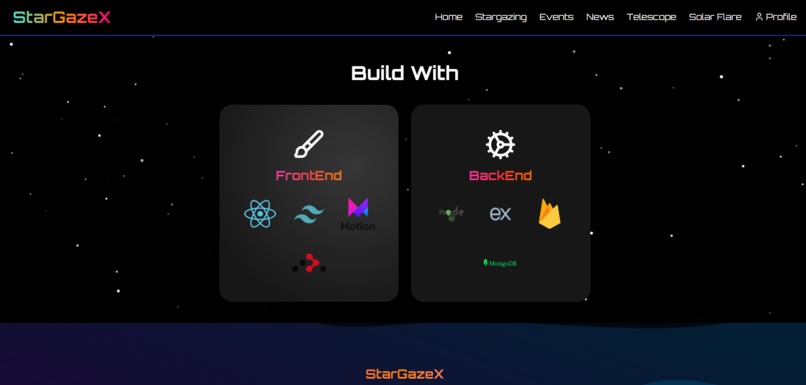
Home page
-
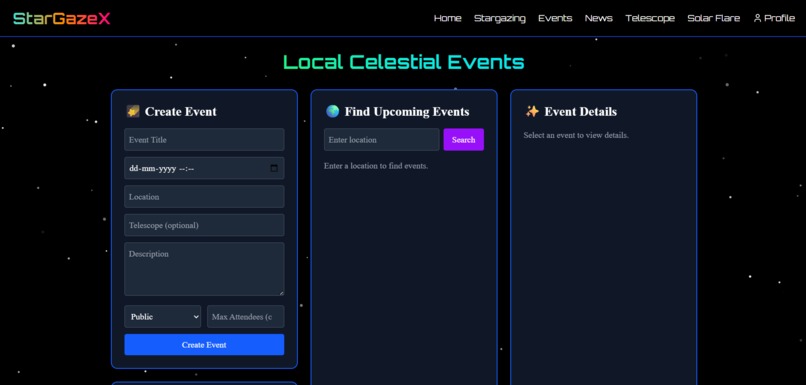
Local Celestial Events page
-
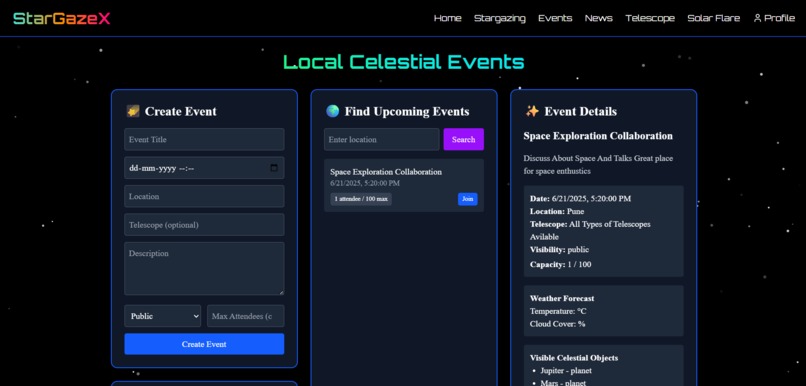
Local Celestial Events page
-
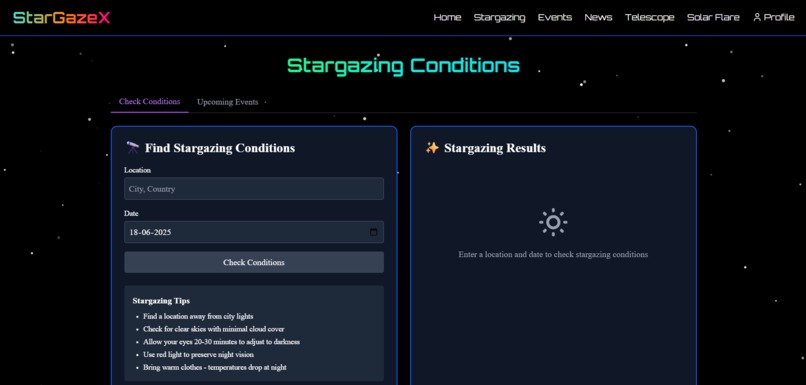
Stargazing conditions page
-
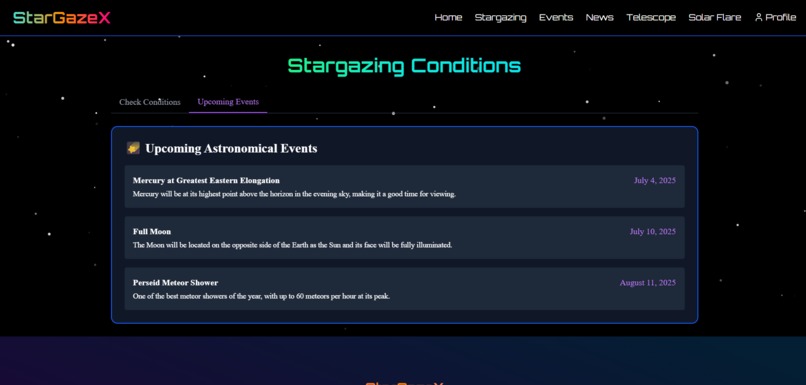
Upcoming events page
-
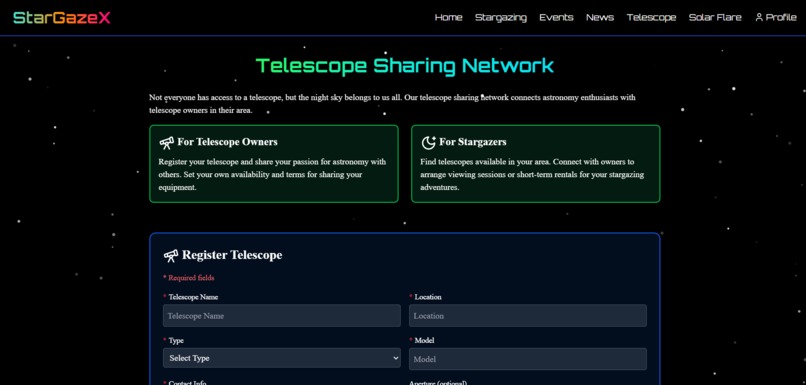
Telescope Sharing Network page
-
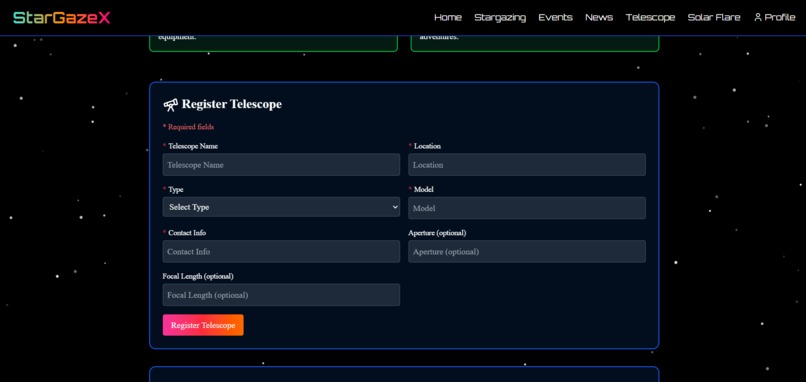
Telescope Sharing Network page
-
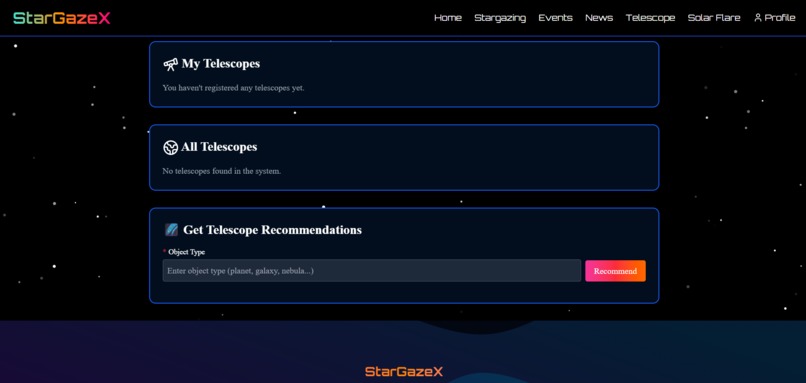
Telescope Sharing Network page
-
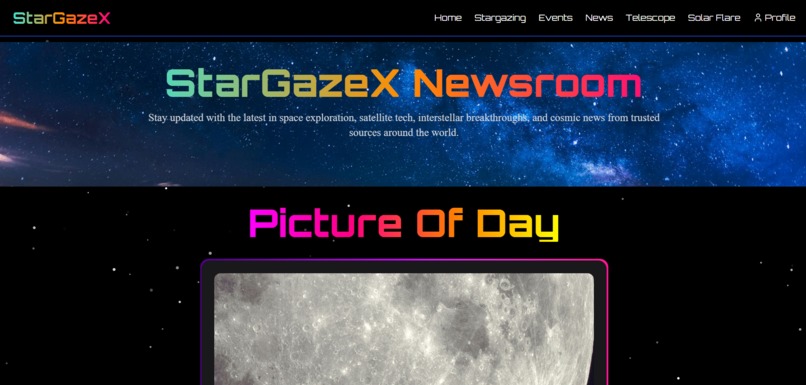
Space News page
-
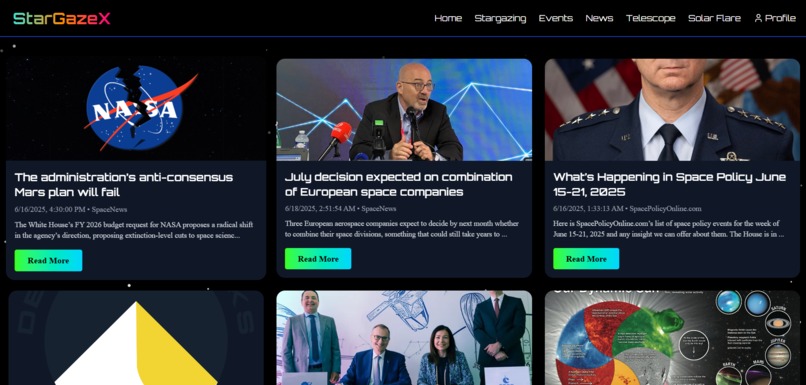
Space News page
-
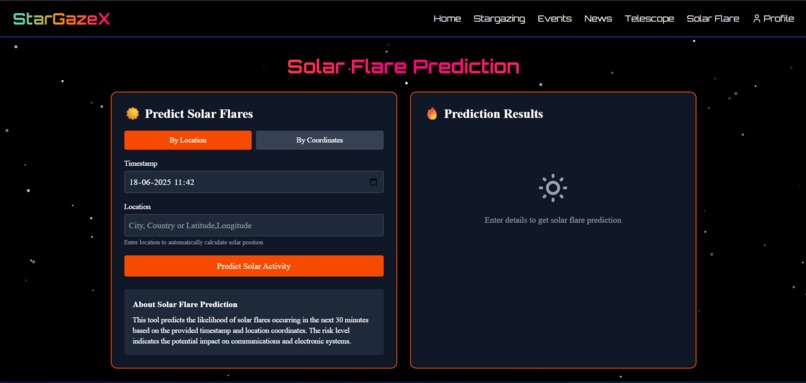
Solar Flare Prediction page
-
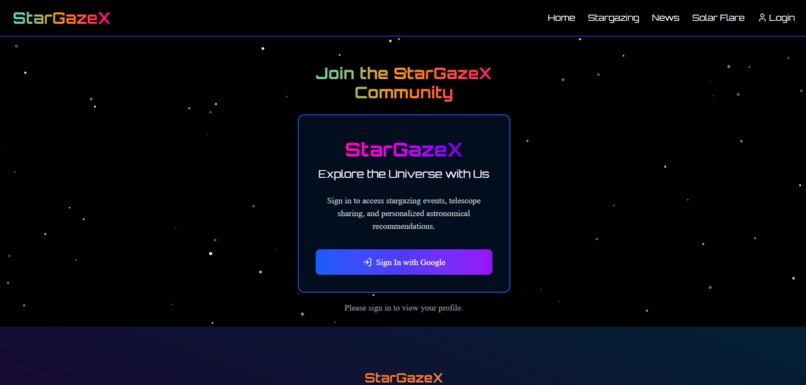
Login page


1. Inspiration
The night sky has always sparked wonder, curiosity, and a sense of belonging in the vast universe. However, for many, light pollution, lack of astronomical knowledge, or limited access to equipment can make stargazing inaccessible. We created StarGazeX to bridge this gap - a platform where space enthusiasts, amateur astronomers, and curious minds can explore the universe together, right from their local skies.
2. What it does
StarGazeX is an all-in-one space companion that:
- Analyzes stargazing conditions based on real-time weather, light pollution, and location data.
- Tracks local celestial events like meteor showers, ISS flyovers, eclipses, and planetary alignments.
- Curates space-related news from top scientific and astronomical sources.
- Connects users in a telescope-sharing network, enabling people to share or borrow telescopes locally.
- Provides real time predictions of Solar Flares upcoming in next 30 mins based on location or coordinates.
3. How we built it
We built StarGazeX using a combination of:
- Frontend:
React.jsfor a responsive, intuitive user experience. - Backend:
Node.jsandExpress.jsto handle API calls and data aggregation. - APIs: NASA APIs and local astronomical event data from various observatories.
- ML Prediction: Used XGBoost in
Pythonfor predicting upcoming Solar Flares. - Database:
FirebaseDBto store user profiles, shared telescope data, and location history. - Geo-location: Integrated GPS and geolocation APIs to deliver local data.
- Authentication:
Firebasefor secure user logins.
4. Challenges we ran into
- Integrating external APIs like weather, space data, or stargazing conditions required managing latency, failed responses, and inconsistent data formats.
- Ensuring smooth user experience despite slow or failed API calls was tricky.
- Handling invalid locations, blank inputs, or empty API responses without breaking the flow required robust error management logic.
- Some API responses either returned missing, broken, or encrypted image links, which made parts of the UI look incomplete or unpolished.
- To maintain a consistent visual experience, we curated and integrated custom fallback images that aligned with the theme of space and astronomy. This added manual effort but greatly improved the aesthetic and reliability of the app.
- Training an ML model that predicts upcoming Solar Flares was tough due to vast data. It was difficult to correctly predict due to many missing values.
5. Accomplishments that we're proud of
- Our first group project.
- Developed a real-time stargazing index that combines multiple variables into a single intuitive score.
- Created a location-based celestial event tracker that updates automatically.
- Launched a working prototype of the telescope-sharing platform.
- Built a user-friendly, visually appealing UI that keeps users engaged and curious.
6. What we learned
- Importance of Teamwork and Communication.
- The importance of user-centric design in simplifying complex astronomical data.
- How to coordinate multiple APIs and ensure data consistency.
- The value of community-driven features like telescope sharing in building a connected user base.
- Techniques for handling real-time geo-location data effectively in a privacy-conscious way.
7. What's next for StarGazeX
- Mobile App Launch for stargazing alerts and telescope bookings on the go.
- Satellite tracking and AR overlays to visualize constellations and space stations in real-time.
- Partnerships with local astronomy clubs and observatories for event promotions and telescope sharing verification.
- AI-based recommendation system for news, events, and optimal stargazing spots.
- Global expansion with multilingual support and localized celestial calendars.
Built With
- express.js
- firebase
- node.js
- python
- react.js


Log in or sign up for Devpost to join the conversation.