-
-
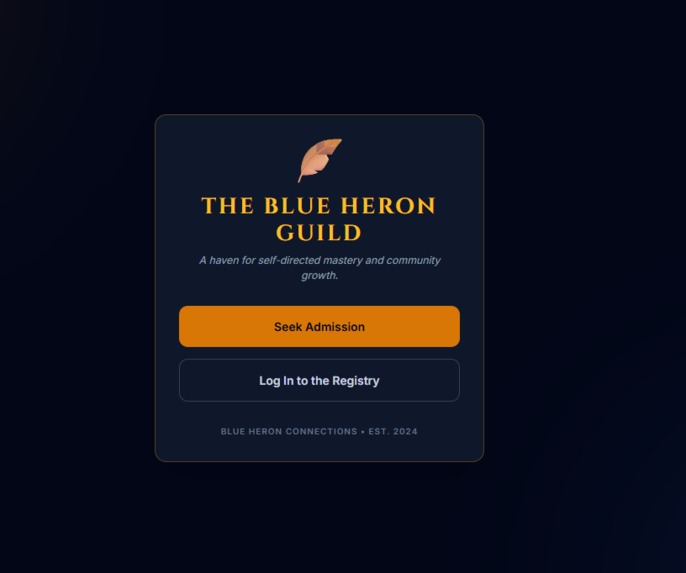
Login page
-
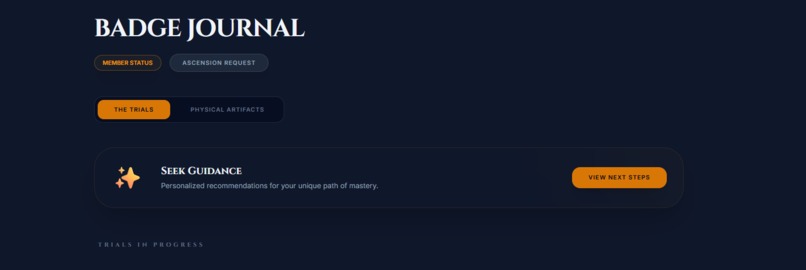
Badge Journal and Progres
-
-
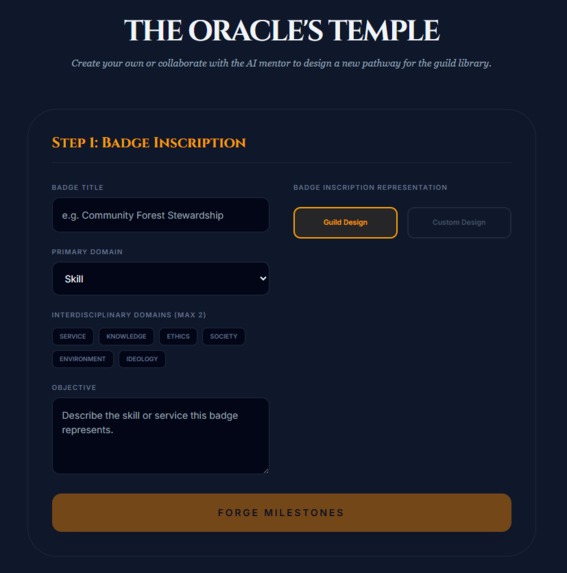
Building your own badge, can use AI assistance
-
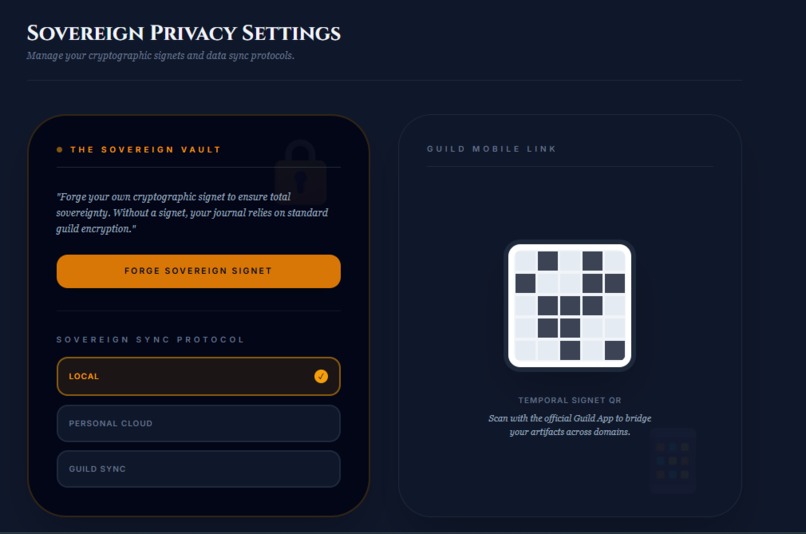
Concept behind a decentralised accounts that you could potentially connect with a mobile app
-
-
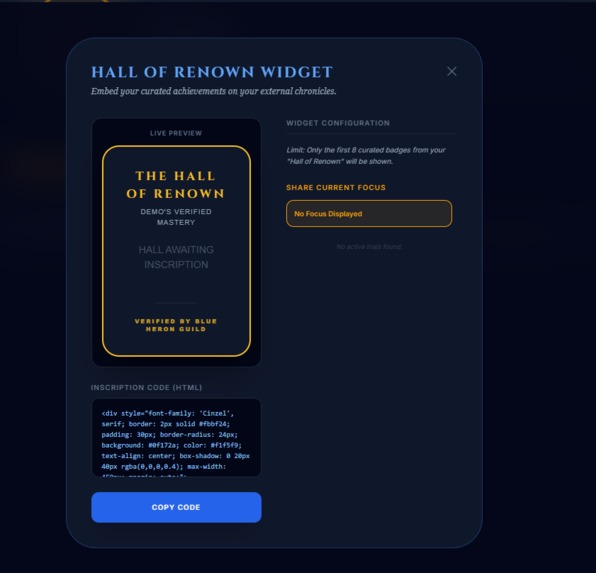
Sharing your badges with others
-
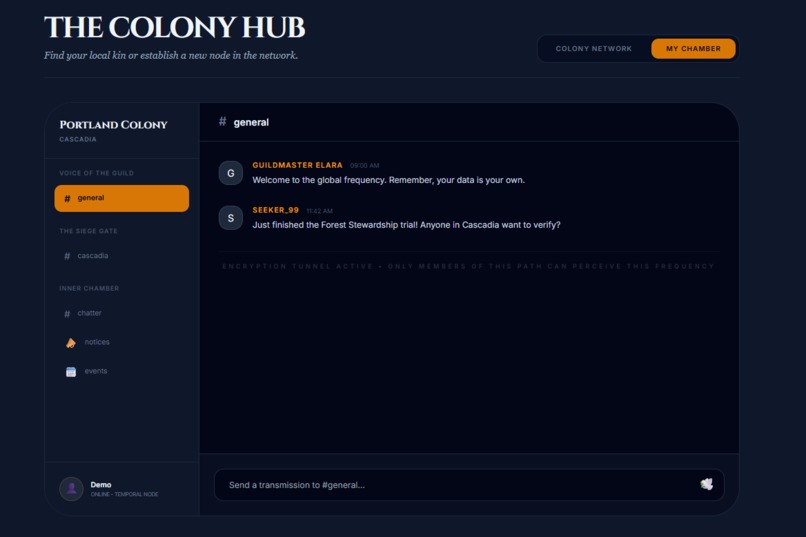
Example of a Colony chatroom
-
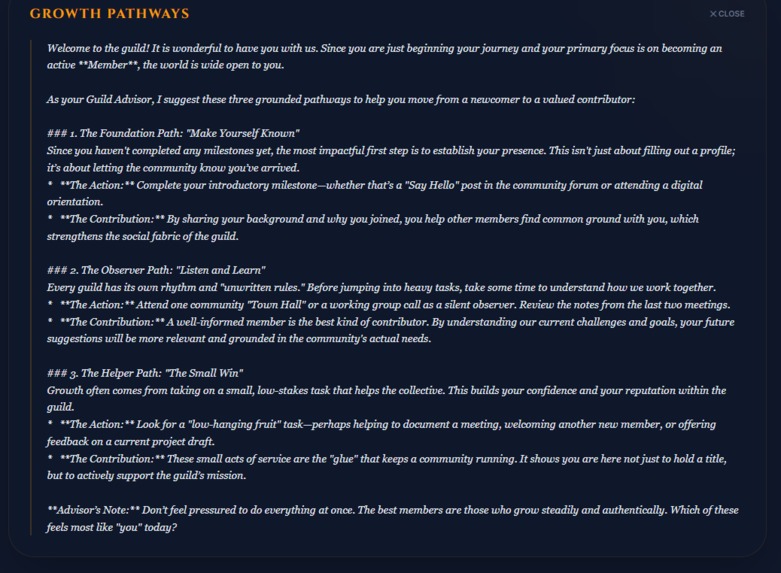
AI agent providing guidance based on Badge Journal progression
-
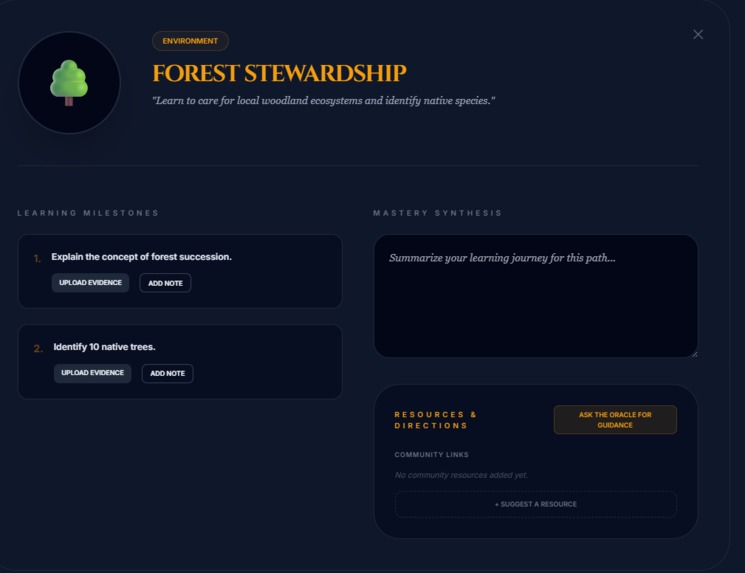
Milestone and Badge progress tracker and evidence upload
-
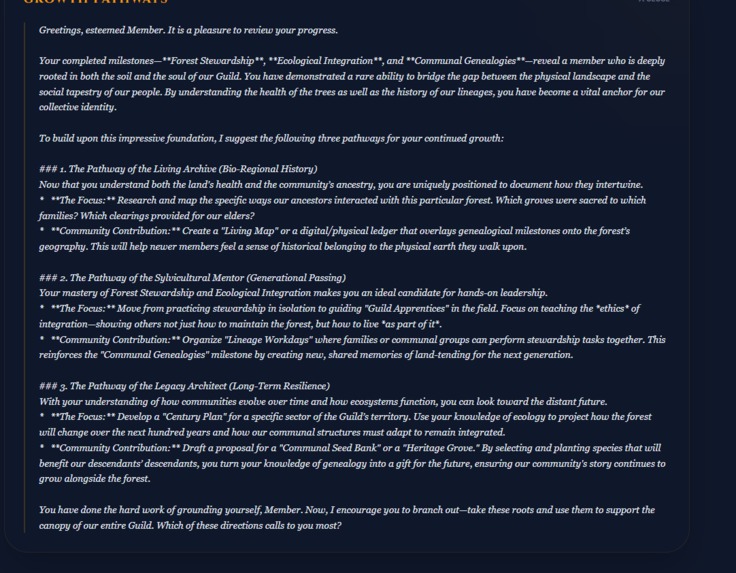
AI agent providing guidance based on completed or in progress badges
-
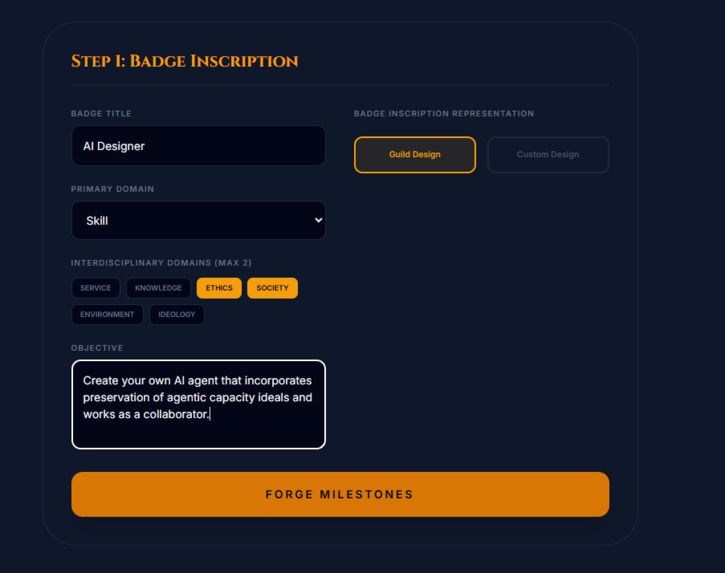
Example of designing a Badge
-
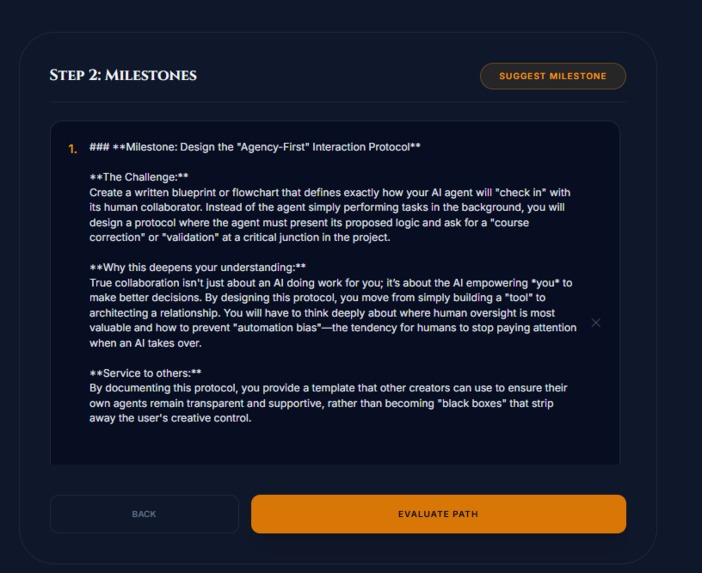
AI providing suggestions based on badge description. Must be approved by admin still
-
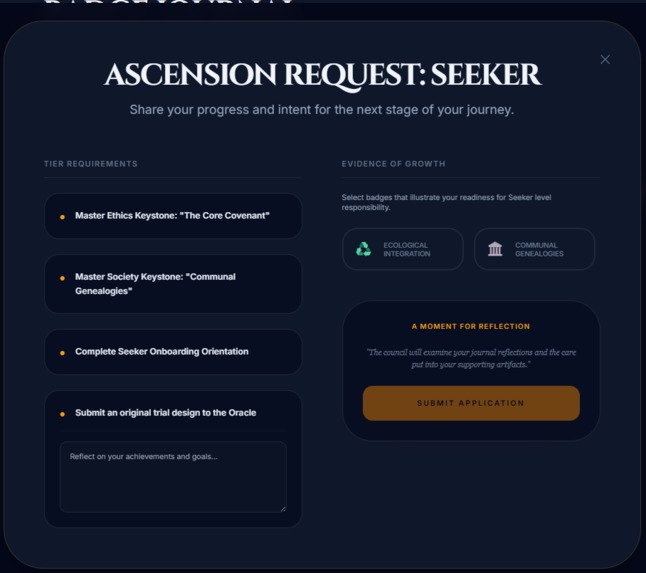
Application to move up tiers and providing evidence based on user preferences
-
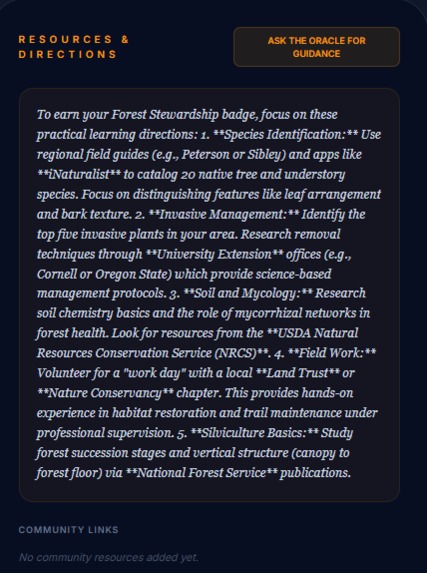
Stuck on progression? The AI agent can guide you on suggestions how to progress forward
-
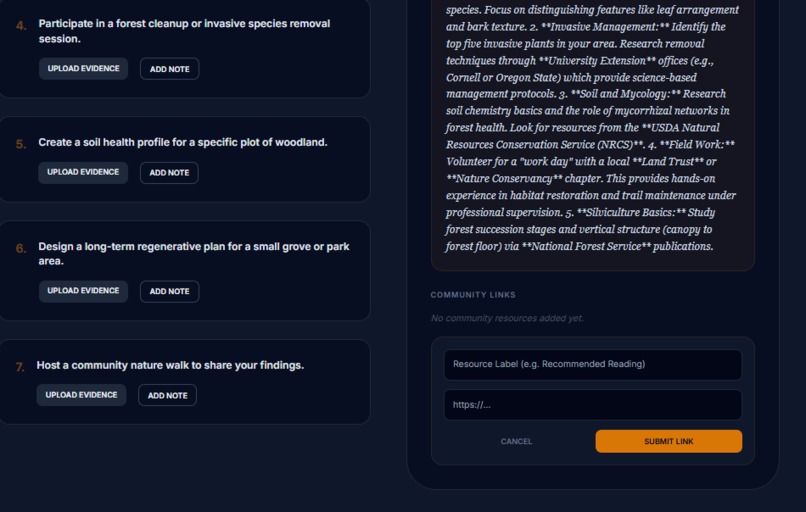
Have some knowledge you want to share? Submit it for it to become part of the permanent shared knowledge


Inspiration
How many times have you Googled something along the lines of "How do I make...?" or wanted to start a project but didn't know where to begin?
When it came to clubs or activities, often my peers didn't share the same passions or joys. It made getting into the activities that much harder, especially as someone diagnosed with autism and ADHD.
Even as I get older, my love for engaging in activities, learning new skills, and bettering myself hasn't waned. However, sometimes it still feels lonely. What if there was a way to bridge the camaraderie of Boy Scouts or 4H and not be limited by demographics or the types of skills you want to learn?
Enter The Guild, a self-directed application with extrinsic motivation designed with the neurospicy in mind, based on the agentic preservation framework.
What it does
Did you create a project and have people asking how you did that? Do you cook, and everyone asks how you got to be so good at it when it feels like you just threw things together? The Guild allows you to create badges and the requirements to complete the badge and progress through The Guild by supporting others. Use the AI guide to utilise instructional design techniques to develop the badge requirements. Or use the AI guide to connect with others and form a Colony. Stuck on what to do next? The AI Guide can review your work and suggest which badge to go for next.
The Guild sees AI systems as collaborators to help support human creativity and skill development. The best part of it is that you can access your badge journal offline as well. This ensures that your data is yours. You can complete tasks without having to share your data, but if you want a badge, you only need to send in the completed requirements, which you can do within your badge journal. Upload photos, documents, or write responses to reflections, all within the application. And whether you are a high school student or 99, learning never has to end.
How we built it
Utilising system and instructional design techniques, I documented the application's entire functionality and hierarchy, along with designs for user flows and interactions. Using various GPT systems, I had them analyse the design and structure and tweaked it. Afterwards, I had it create a prompt based on the design and had it tailored for an LLM to comprehend.
The system uses a privacy-first architecture that allows the user to dictate how they share their personal data with the world. Their information is dictated by them, on how they want to store it and where. It is designed to utilise an on-device agent to reduce reliance on an online connection without sacrificing the benefits of AI integration.
This application is also a user-directed learning system. Following examples of Montesorri education systems or other student-centred learning techniques, it puts education into the hands of the user. It allows it to be shared knowledge without infringing on human creativity. AI is treated and utilised as a collaborator rather than a workhorse. It is meant to support your journey without infringing on your ability to write your own narrative.
Challenges we ran into
Since this is an agency-centric framework application, balancing each option to allow users to exit the additive functions for data privacy without losing engagement has been challenging, but a fun problem-solving experiment.
Creating an application that is fun, accessible, and educational is a fine line in itself, and adding AI and data sovereignty to the mix has required many nights of figuring out possible solutions.
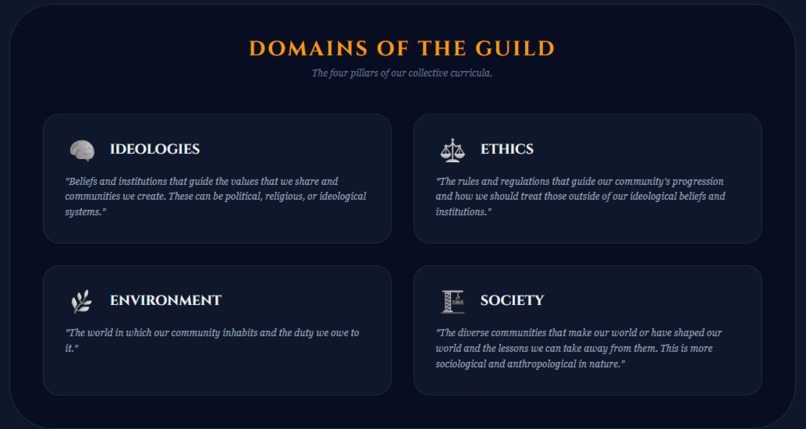
Another challenge was designing an application that embodies the excitement of other social clubs without reducing access or the educational value. Further, most of these clubs are built on value-centric frameworks, whether ideological or religious. The Guild seeks to develop well-rounded individuals who can contribute to society and their communities, regardless of their ideological beliefs or alignment with specific values that are not inherently part of their culture or ethical system.
Accomplishments that we're proud of
The fact that the system works according to design principles and ethos makes this project worthwhile from the outset.
What we learned
Designing a badge system requires in-depth knowledge of curriculum design and workflow management skills. Too complex tasks reduce engagement, but too easy tasks don't offer satisfaction. I had to learn about staggering complexity and, from the Boy Scouts of America, about creating diverse badge requirements that effectively measure knowledge gained and skill development.
What's next for The Guild
I hope to have The Guild serve as the educational component of a company/non-profit called Blue Heron Connections that encourages diverse learning styles and further pushes the boundaries of knowledge in novel forms. Knowledge isnt a silo, it's a vast expanse that needs signposting.
Before this becomes a deployable app, I will implement a password management system to ensure user data is encrypted and protected.


Log in or sign up for Devpost to join the conversation.