-
-
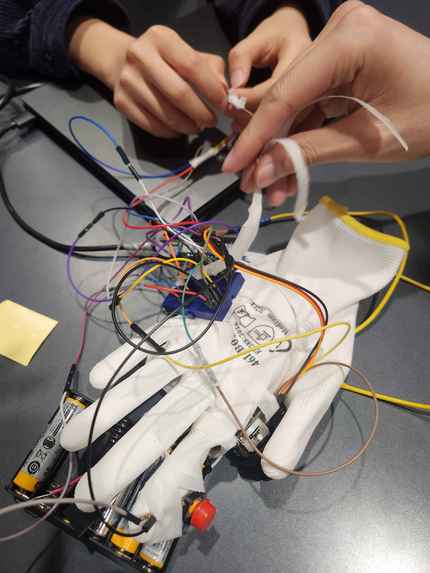
The glove being built
-
-
-


Inspiration
Before the Hackathon began, our team aimed to incorporate the three themes of wearable technology, environmentalism, and video game design. This led us to create an environmentalism themed video game that is operated by wearable technology.
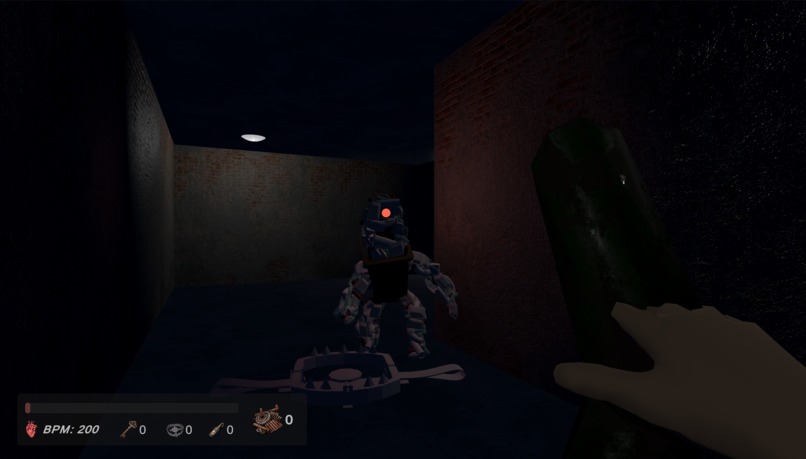
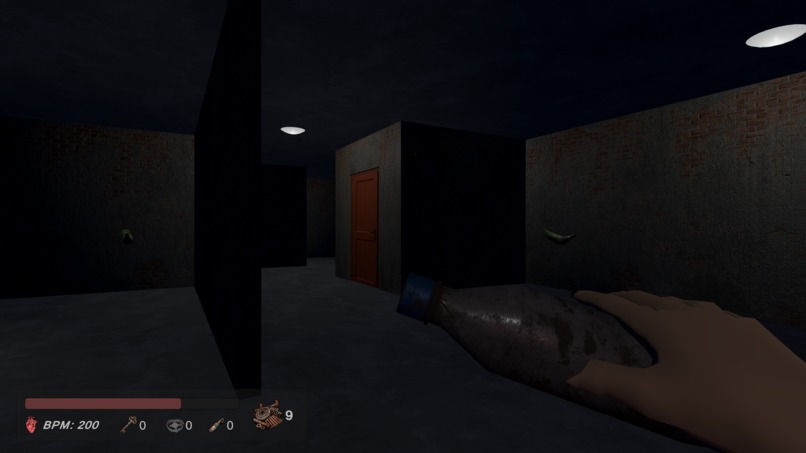
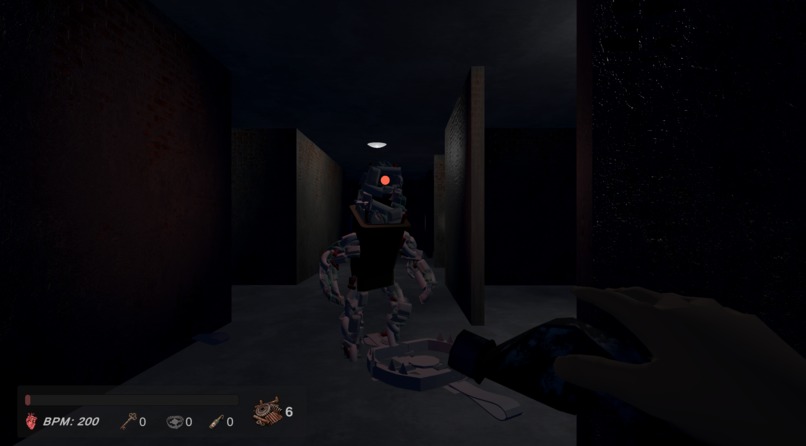
The game is set in a maze-like house where the player is trapped with a monstrous entity formed by their previously improperly disposed waste. The object is to recycle the garbage in the house to either create weapons to defeat the monster, or to craft the proper key to escape the house.
What it does
We designed a 3D game where player movement and actions are controlled by a wearable glove that tracks hand orientation, motion, finger flex, and joystick inputs. This allows for a diverse range of interactions, such as crafting, running, and attacking. A unique feature of our game is its integration of the player’s heart rate with in-game mechanics—higher heart rates translate to increased running speed, which adds a dynamic, immersive challenge.
How we built it
The development process was divided into two components: hardware and software. On the hardware side, we built a motion-sensing glove equipped with an accelerometer, heart rate tracker, gyroscope, flex sensors, a button, and a joystick. This combination provides an intuitive and diverse control system. The glove’s sensors communicate with an Arduino board, which wirelessly transmits data through Bluetooth to the computer running the game. For software, we created a 3D game environment using the unity game engine, integrating character movement and game mechanics. The Arduino transmits sensor data, which is then interpreted and mapped to in-game actions. The game’s logic includes real-time recycling mechanics, a monster AI, and the heart rate-dependent running feature, adding a unique layer of interactivity to the game.
Challenges we ran into
Two of our three team members were new to hardware development, making the learning curve for Arduino programming and circuit design steep. Setting up and calibrating multiple sensors correctly was time-consuming and required a lot, a lot, of troubleshooting. Additionally, managing a limited number of jumper wires and components forced us to find creative solutions. Establishing stable communication between the Arduino and the game engine was another major challenge, since connectivity issues demanded extensive debugging.
Accomplishments that we're proud of
Despite these challenges, our two hardware newbies successfully integrated multiple sensors to create a functional motion-sensing glove. We established stable communication between the Arduino and the game, allowing for seamless interaction. Our MVP managed to create a fully playable 3D game with innovative mechanics and a unique environmental theme—all within just 24 hours. One of our most exciting accomplishments was implementing the novel gameplay mechanic where heart rate affects movement speed, enhancing player immersion.
What we learned
Throughout the hackathon, we gained valuable knowledge in circuit design and sensor integration using Arduino. We learned some fundamentals of game development and, especially, how to link external hardware inputs to in-game actions effectively. Additionally, we developed soldering skills and learned how to use breadboards efficiently. Another important lesson was finding creative ways to work around hardware limitations, such as optimizing the use of jumper wires.
What's next for Wasteland
We plan to enhance the game’s graphics and diversify game mechanics, and incorporate AI into our monster to create a more immersive horror experience. We also want to expand the recycling mechanics to include more types of materials and crafting options, making the gameplay richer and more educational (such as what materials can be recycled into what). Finally, we want to improve the hardware setup (and design) to increase accuracy and responsiveness.


Log in or sign up for Devpost to join the conversation.