-
-
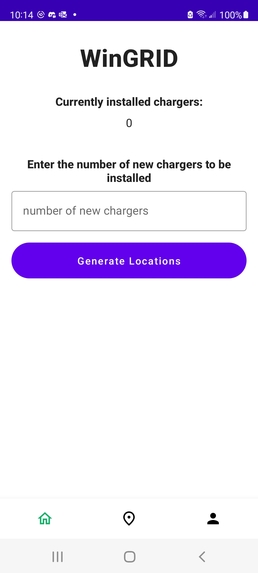
Home Screen
-
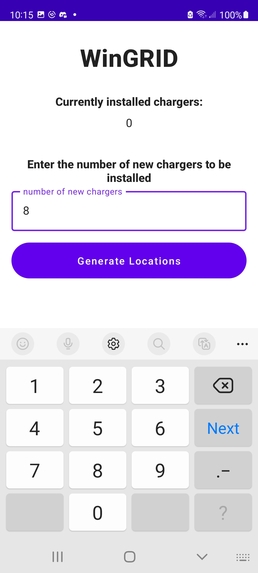
User Input (# of new EV stations to install in Win/Essex)
-
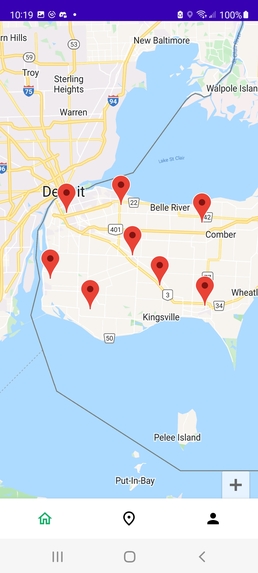
Map with Generated Outputs (optimized using K-Mean Algorithm)
-
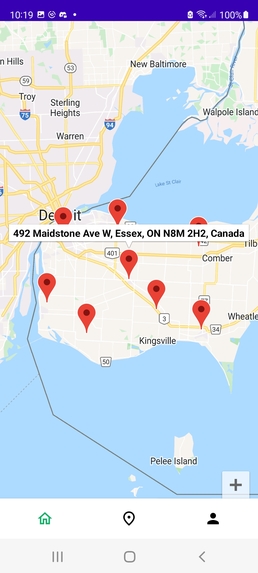
Charging Station Address (reverse geocoded)
-
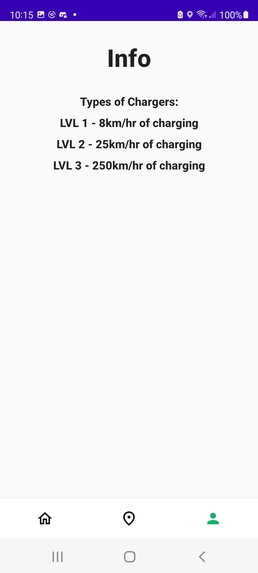
Info Screen (charging tiers)


WinGrid
WinGrid was designed to be used by municipal staff or city planners to be able to get suggestions from an intelligent and evolving algorithm which strategically suggests locations for new electric vehicle chargers in the Windsor / Essex region. It is an entire Client-Server software solution which makes it easy to use and to get suggestions. We are quite proud of what we were able to accomplish during this short amount of time and appreciate you guys being here to check it out.
What We Were Able to Accomplish
MVP:
- [x] User Inputs
- [x] Program Outputs
- [x] Charger location
- [x] User Interface
Additional Functionality:
- [ ] Different charger types (Extremely close to implementing)
- [x] Detailed location output
- [x] Zone consideration
- [ ] Trip length consideration (Wasn't able to implement)
- [x] Road quality
- [x] Web-based application
Advanced Functionality:
- [x] Show charger location on map
- [ ] Consider the location of existing chargers (Extremely close to implementing)
Installation
Our project consists of both an Android Client App (called WinGrid) and a Backend Custom API Server which is set up to be able to communicate and make suggestions to our front-end client.
To install the android app, it is as simple as going to the project's github page and downloading the APK file from Releases.
To set up the server, clone the repository and do the following:
Navigate to the main project folder and you will see a file called
requirements.txt. You can install all thePythondependencies by opening up a terminal session there and executingpip install -r requirements.txt. This will install all the necessary dependencies for the server to be able to run. Be sure that yourPythonversion isv3.9.Next, be sure you have
Golanginstalled on your system and run the commandgo run main.go. Running this command will cause the server to launch onport 8000 on localhostand now your android app will be able to communicate with the server and make suggestions to you on optimal locations for charging stations.
How We Built It
Throughout this project, we've been using really exciting technologies such as Jetpack Compose and Android Studio Bumblebee for our mobile app. Additionally, we've been using Python 3.9 in tandem with a Golang api server architecture so that we get to enjoy the ease of programming in an idiomatic language such as Python while also using the blazing fast heavy weight of server side development - Golang.
Contributing and What's Next
Pull requests are welcome. For major changes, please open an issue first to discuss what you would like to change.
Please make sure to update tests as appropriate.
As for what's next for us, we would really love to hop back on this project sometime when we are free from school. We feel like we've learned quite a lot from this experience and would love to complete this project or some variation of it some other time properly.


Log in or sign up for Devpost to join the conversation.