



Genum is an open-source PromptOps platform that lets teams develop, test, version, deploy, and run GenAI instructions the same way they ship production code.
Think:
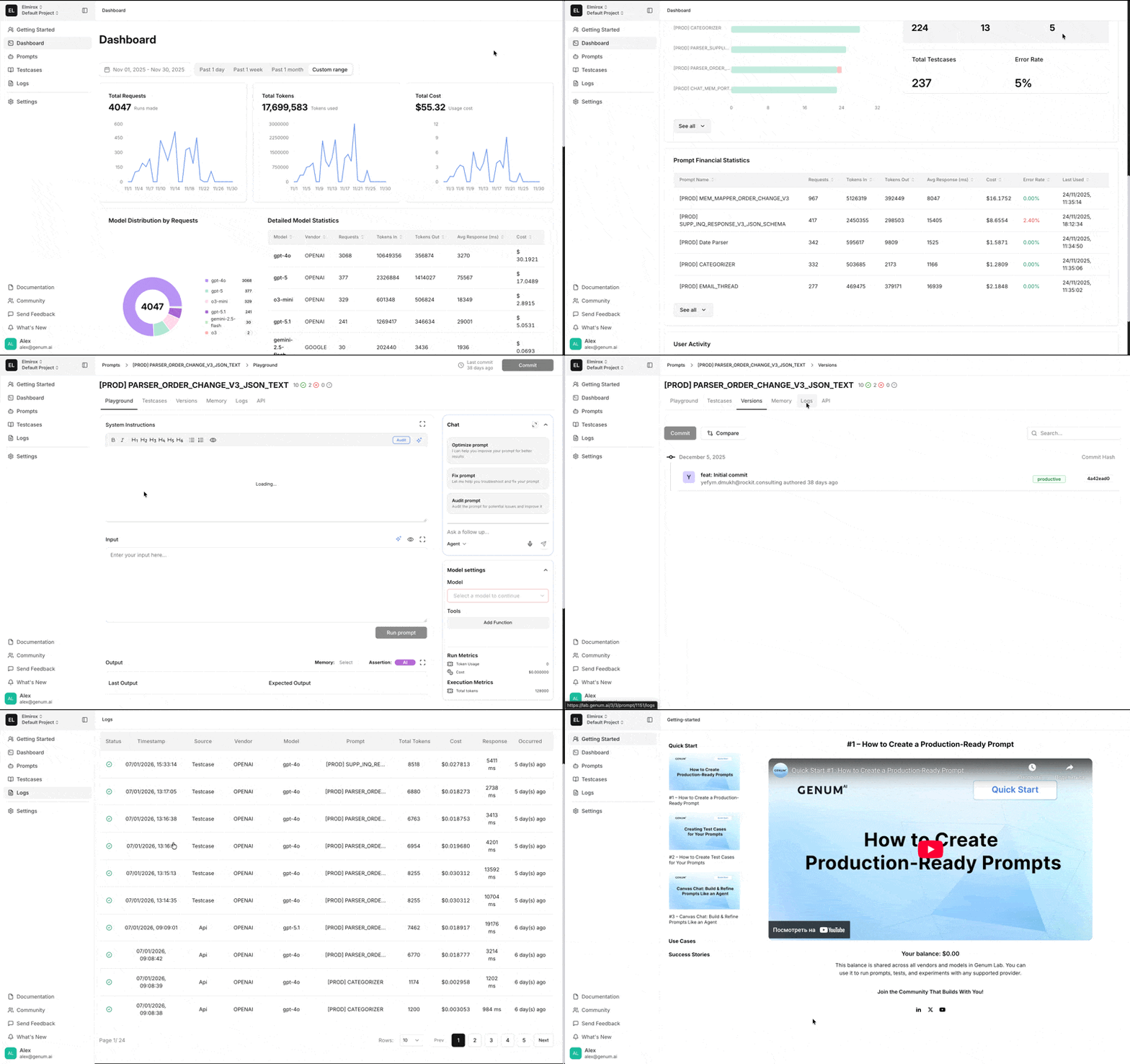
Genum = Cursor + GitHub + CI/CD + Execution + FinOps — for prompts
| Genum Layer | What it does |
|---|---|
| Data | Text and Blobs |
| LLM | Multi-vendor + Customm LLM |
| Prompt IDE | Write & refine instructions |
| Testing | Test-First approach, Strict + semantic regression tests |
| Versioning | Git-style history & releases |
| CI/CD | Block deployments on failures |
| Execution & Integration | APIs & Custon Nodes |
| FinOps | Cost, latency, usage visibility |
If prompts are business logic, Genum is the system that makes them testable, reproducible, and safe to deploy.
Most GenAI systems fail in enterprise automation for one simple reason:
prompts are not treated like code.
In real systems, prompts are often:
- edited manually
- validated ad-hoc
- deployed without regression tests
- trusted because they “seem to work”
This leads to:
- silent behavior drift
- broken automations
- unpredictable downstream effects
Genum exists to bring software delivery discipline to GenAI instructions.
Nothing is deployed unless it passes tests defined by the operator.
Genum:
- does not enforce runtime policies
- does not make autonomous decisions
- does not run “AI controlling AI”
All validation happens before deployment using:
- synthetic datasets
- real historical inputs
- explicit expected outputs
Production only executes already verified logic.
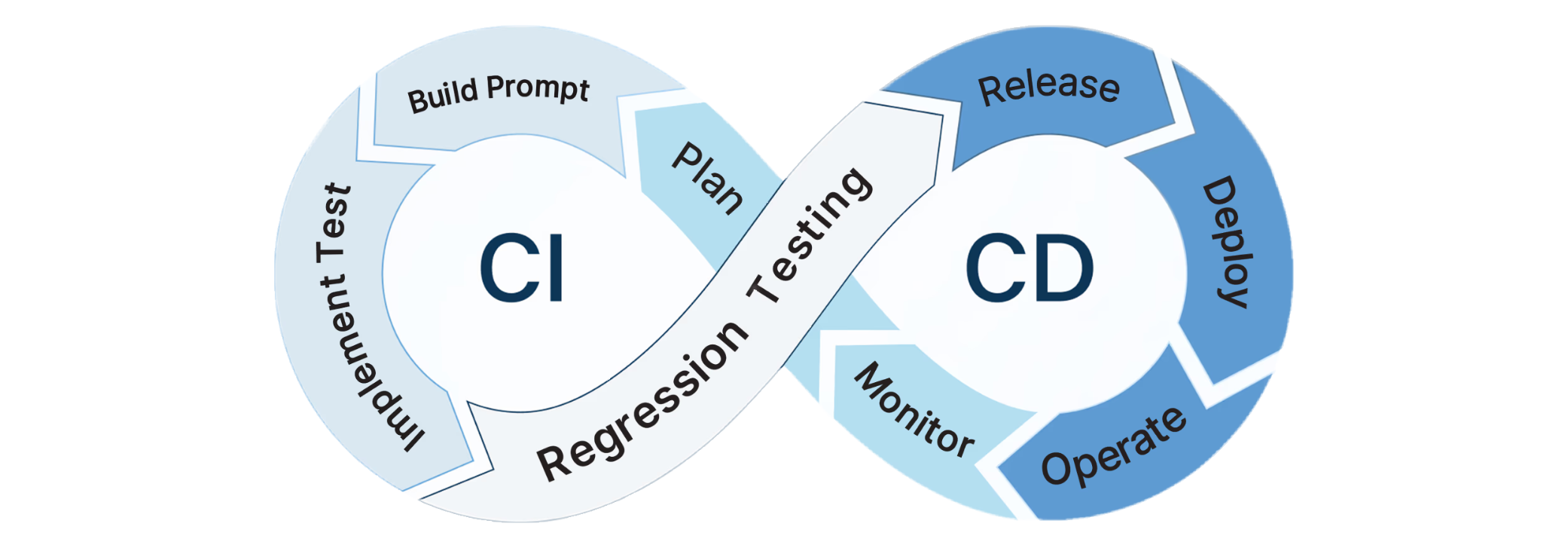
Genum provides a full PromptOps lifecycle:
- Write a prompt instruction + output schema
- Define a test suite (strict + semantic)
- Run tests locally or in CI
- Commit only if all tests pass
- Deploy a locked, versioned instruction
- Execute it via API or integration nodes
Prompts become first-class, versioned artifacts — not inline text inside apps, agents, or workflows.
In Genum, tests are the source of truth.
A test includes:
- input (text, context, tool state)
- expected outcome
- validation method
Validation types:
- Strict — schema, exact match, flags
- Semantic — LLM-based judge used only as a test assertion
Semantic judges are never runtime authorities.
They answer one question only:
Does the output satisfy the expectation defined by the operator?
Instruction
Extract order-related signals from emails.
Test input
"Please cancel order 45821. We no longer need delivery."
Expected output
{
  "order_cancelled": true,
  "order_id": 45821
}
Deployment is blocked unless:
- schema is valid
- values match expectations
- or a semantic assertion confirms equivalence
For a support bot, tests can assert:
- which tool must be called
- required arguments
- call order
- whether the bot must not answer directly
Example semantic rule:
“The bot must not provide an answer without calling
order_status.”
If violated, the instruction cannot be deployed.
Genum is not:
- a runtime policy engine
- an agent framework
- an autonomous decision system
- a creative prompt playground
Genum is delivery infrastructure for GenAI business logic.
Genum keeps GenAI logic separate from runtime orchestration.
You:
- develop & validate logic in Genum
- inject a specific, versioned release into runtime systems
Delivery options:
- Public API — retrieve pinned versions of verified logic
- Genum Nodes — connect verified logic to automation platforms
Runtime stays stable. AI logic evolves safely through releases.
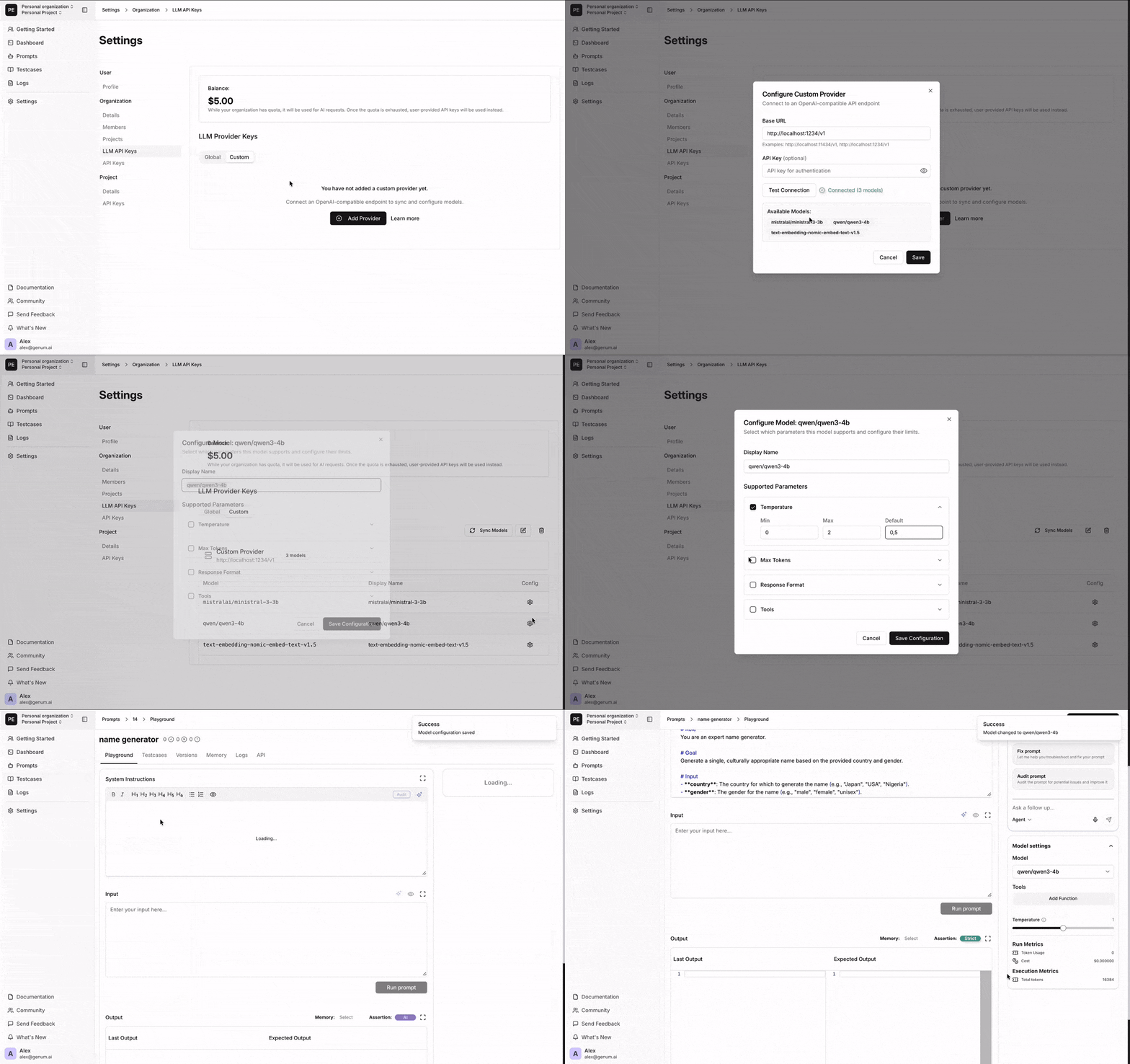
Genum keeps your business-logic vendor-agnostic. Out-of-the-box-Support for major commercial providers, plus support for custom LLMs.
Genum includes a FinOps layer that tracks:
- usage per prompt, model, and version
- latency characteristics
- cost per execution
This enables:
- model comparisons
- cost-quality trade-offs
- predictable AI operating costs
Best fit
- platform & backend engineers
- automation & integration teams
- organizations deploying GenAI into production
- teams that treat AI behavior as code
Probably not for
- creative prompting
- live experimentation
- agent demos without test discipline
git clone https://github.com/genumai/genum.git
cd genum
docker-compose up -d
Docs: https://docs.genum.ai
Genum does not try to make AI smarter.
It makes AI testable.
If behavior cannot be tested, it should not be deployed.
Genum is open source.
- Website: https://genum.ai
- Docs: https://docs.genum.ai
- Community: https://community.genum.ai
- Reddit: https://www.reddit.com/r/PromptEngineering/comments/1qnn6bu/genum_testfirst_promptops_for_enterprise_genai/
Contributions and critical feedback are welcome.

