-
AI Construction Statistics for 2026

Construction AI adoption is growing fast, despite 79% of the industry not yet moving past early testing. Where companies have implemented AI, results depend almost entirely on the quality of data underneath it. With a workforce that needs half a million new workers this year alone and an aging population that compounds the pressure, AI
-
Behind Bridgit AI: What we’ve learned building our AI stack

This post was written by Vincent Seguin, Bridgit’s Chief Technology Officer Bridgit AI has now been in the hands of customers for several months, and we’re working every day to further its capabilities and provide more value to our customers. At the same time, we’re continuing our commitment to transparency by offering another look behind the
-
How to manage construction teams working across multiple locations

Your Phoenix office is scrambling to staff a new $20 million healthcare project. Meanwhile, your Denver team has two senior project managers with significant healthcare experience who are wrapping up their current assignments and looking for what’s next. The $20 million project sits in limbo while Phoenix and Denver wait for their weekly sync-up meeting.
-
Behind Bridgit AI: Cultivating a culture of AI curiosity

This post was written by Vincent Seguin, Bridgit’s VP of Engineering Launching Bridgit AI was a huge milestone for our company, and the customer feedback we’ve heard so far has been positive. It has been extremely rewarding to further equip those who rely on our software everyday with additional tools for building project teams and winning
-
Rookie Ratio and How to Balance Experience on Construction Project Teams

Most contractors track headcount and utilization across their projects. Few track the balance of experienced and newer team members. Rookie ratio, the proportion of seasoned people to newer ones on any given project, fills that gap. It’s not a formal industry metric, and that’s part of the problem. A project can be fully staffed by
-
How Contractors Use Revenue Per Person Per Month to Benchmark Staffing Efficiency

Revenue per person per month divides a project’s total revenue by the number of salaried team members assigned to it. It connects two numbers most contractors already have, revenue and headcount, in a way that makes staffing efficiency visible at the project level. The industry tracks utilization rate and labor cost as a percentage of
-
Why connecting your CRM with workforce planning is a must

You just won three major projects, but operations won’t find out until next week’s meeting. By then, HR will have to scramble to fill positions that should have been posted a month ago. Meanwhile, everyone’s entering the same project data into different systems, creating a maze of spreadsheets that nobody trusts and everybody dislikes. Sound
-
The art and science of construction labor forecasting
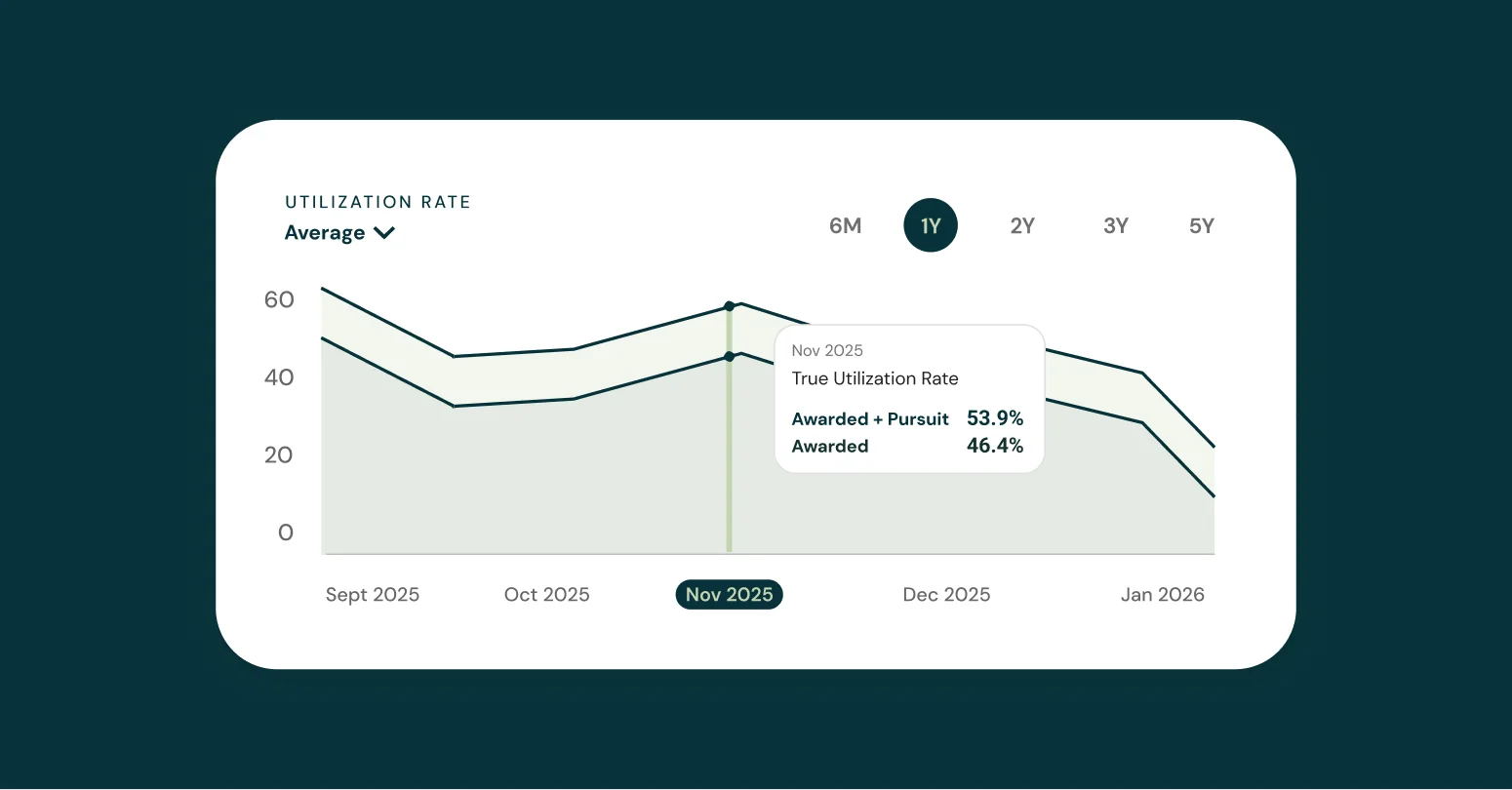
You’re at an industry conference, catching up with someone you haven’t seen in years. They’ve just landed three major projects. Good news, right? Except they look exhausted. “We bid these jobs assuming we had the people,” they tell you. “Now we’re scrambling. I have no idea if we can actually deliver.” You win work, but
-
How AI helps contractors build stronger construction project teams

“Team dynamics are really important to us,” says Jamie Miller, Director of Engineering Development at Sellen Construction. “We don’t just throw people on a project without thinking about how they’ll work with each other. We look for strengths that complement each other.” Miller is describing what good team building looks like. The problem is that
-
AI in construction workforce planning: A practical guide for general contractors

“Now I can click a button and see that I need four more engineers in October, or it’s showing me that I’m short three engineers today,” says Jamie Miller, Director of Engineering Development at Sellen Construction. Miller is describing visibility that didn’t exist before. Not because the information didn’t exist, but because extracting it from