Image

Cleaning An IBM 5150, And The Perfect Period PCB Soldermask

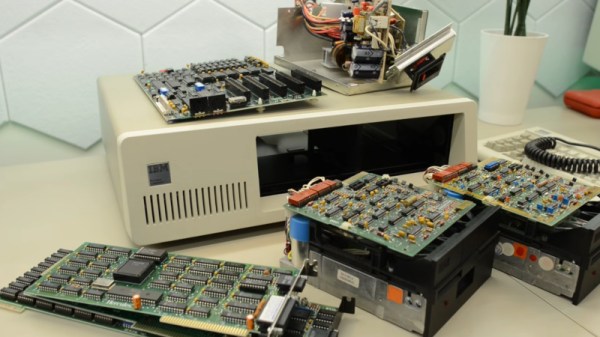
Now that early PCs have moved firmly from the realm of e-waste into being collector’s items, it’s worth putting in some effort to restore them if you find one. [Epictronics] has an early IBM 5150, the ancestor of all today’s PCs, and is bringing it back to life. Along the way, he’s building a replica AdLib sound card, making a useful discovery about how to make new parts look authentic.

The video below the break is a gentle journey through an early PC teardown, followed by the construction of the replica sound card. Here’s the interesting nugget of information: these new cards are careful recreations of the originals, but they just don’t look right. It seems modern soldermask is too shiny, and as luck would have it, there’s another option that is much more period-authentic. We hadn’t noticed matte green was available, but it certainly captures the look of those days much better.

As you might expect, such an old machine has a range of dead capacitors and a few chips. There’s a lucky escape with a Varta battery on an expansion card, having very little leakage, and part of one of the floppy drives needs some surgery. It’s gentle hacking that’s engaging to watch, and of course, at the end, we’re rewarded with the thing booting properly.

You might think reproducing a sound card is unusual, but we’ve seen it a number of times.

Continue reading “Cleaning An IBM 5150, And The Perfect Period PCB Soldermask”
Image

The Smallest Dialup ISP Is A Raspberry Pi And A Prison Phone

There were a plethora of tiny, local ISPs in the days of dial-up internet. Along with the big providers, many cities would have more than one. Some of those have survived broadband, but none of them were as small as [Jeff Geerling]’s Pi ISP — a tiny dialup ISP built so his Aunt’s old G3 MacBook can get online at 36kbps, as God and [Robert Khan] intended.

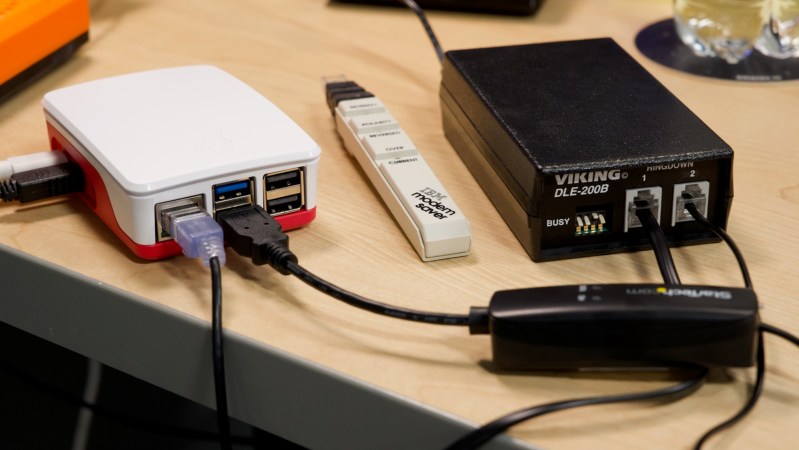
Hardware-wise, the Raspberry Pi is at one end of the chain, and your retrocomputer at another. In between, you’ll have a USB modem plugged into the Pi, and a device called a “two-way line simulator” to create a dial tone for that plain-old-telephone goodness. [Jeff] notes that these were commonly used in prisons for the phones that visitors use to talk to inmates.

Of course, since these devices are designed strictly for voice transmissions, which POTS was built for, you’re not going to get over 36 kbps, and that’s even with high-quality gear. The cheaper options might drop you down to 28k… just like with an ISP back in the day. ‘You get what you pay for’ is very rarely false.

Now, you can use this technology to just connect two computers together — as we’ve featured previously — but [Jeff] has gone the extra mile to put together, via Ansible, an easy-to-install software package that will let the Raspberry Pi act just like your ISP’s servers once did, and connect you to that series of tubes once called the World Wide Web. Of course, the World Wide Web isn’t built for dial-up anymore, so you’re going to be waiting… a while. Hackaday’s front page isn’t especially heavy, weighing about 4MB at the time of this writing, but that’s 15 minutes of load time, and you still aren’t reading the articles.

You also won’t be able to access much on old machines that can’t do HTTPS, but [Jeff] thought of that and bundles [rdmark]’s MacProxyClassic to translate the modern web into HTML tags that Netscape can understand and serve them over HTTP. You’ll still be waiting for our modern bloat, but perhaps not quite so long.

If you want the “authentic” dial-up experience, you’ll need to see the lightweight webpages of Yesteryear, and MacProxyClassic contains a Wayback Machine extension for that purpose. We featured a similar project a while back that did that, but without all the joys of dial-up. Now get off the computer, we’re expecting a call!

Continue reading “The Smallest Dialup ISP Is A Raspberry Pi And A Prison Phone”

Image

For Such A Small Program, ZX81 1K Chess Sure Packs A Lot In

The Sinclair ZX81 was hardly the most accomplished of 1980s 8-bit microcomputers, but its ultra-low-budget hardware was certainly pressed into service for some impressive work. Perhaps the most legendary piece of commercial software in this vein was 1K Chess, which packed an entire chess engine into the user-available bytes in the unexpanded 1K ZX’s memory map. [MarquisdeGeek] has taken this vintage piece of code in 2026 and subjected it to a thorough analysis, finding all the tricks along the way.

Though hackers have since found ways to trick the ’81 into displaying bitmap graphics, using it as intended is text-only with some limited block graphics. The chess board then is text-only, and its illusion of “thinking” about moves comes courtesy of the on-screen board doubling as the play area memory. In the GitHub repository you can find decompiled and annotated versions as well as the original ZX binary, with as a bonus a screen capture of the game as it appears as BASIC with the ZX’s odd means of storing Z80 code in REM statements.

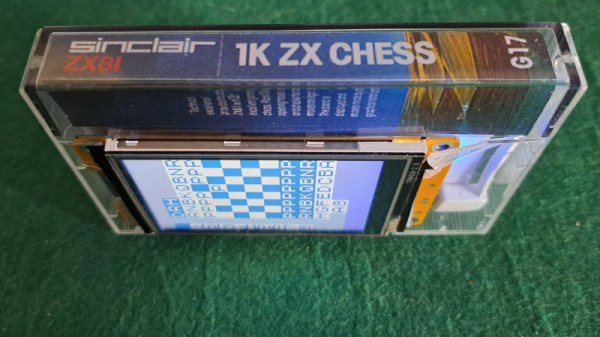
If that wasn’t enough, in his note giving us the tip he reveals that much of the work was done in a ZX emulator running in a Dragon emulator, and gives us a fun glimpse of the game running in an emulator on a Cheap Yellow Display inside 1K Chess cassette box. We like it, a lot!

If you need a greater ZX81 fix, take a look at how this machine chased the beam to make TV graphics on the cheap.

Image

Fixing An E-Waste ASUS P5A-B Socket 7 Mainboard

A fun part of retro computing is saving ‘e-waste’ that was headed for certain destruction. These boards can have any number of defects, modifications and more that have to be remedied prior to using them. In the case of the Asus P5A-B Socket 7 mainboard that [Bits und Bolts] rescued from the scrapheap at least one issue was obvious: someone had ripped off the plastic part of the ZIF socket, leaving only the metal pins poking out like an awkward kind of LGA socket.

In addition to the busted PGA ZIF socket there was additional damage, including a broken SMT capacitor and missing resistor. Interestingly, someone had apparently modded the ATX power connector to permanently power on the system by removing a pin and bridging to the power-on signal. Obviously this mod had to be undone by removing the bridge and installing a new pin. After this cracked solder joints had to be addressed, before the tedious task of removing the stray PGA socket pins one by one started.

Exactly what was done to this mainboard and why will likely forever remain a mystery, but at least there didn’t seem to be any serious damage. After installing a CPU it was possible to boot and access the BIOS as well as run a couple of tools, confirming that one more Socket 7 board has been saved from the scrapper.

Continue reading “Fixing An E-Waste ASUS P5A-B Socket 7 Mainboard”

Image

Windows 3.1 On A Modern AM5-Based PC Is Surprisingly Usable

Although Windows 95 stole the show, Windows 3.0 was arguably the first version of Windows that more or less nailed the basic Windows UI concept, with the major 3.1 update being quite recognizable to a modern-day audience. Even better is that you can still install Win3.1 on a modern x86-compatible PC and get some massive improvements along the way, as [Omores] demonstrates in a recent video.

The only real gotcha here is that the AMD AM5 system with Asus Prime X670-P mainboard is one of those boards whose UEFI BIOS still has the ‘classic BIOS’ Compatibility Support Module (CSM) option. With that enabled, Win 3.1 installs without further fuss via a USB floppy drive from a stack of ‘backup’ floppies that someone made in the early 90s. [Omores] also tried it with CSMWrap, but with this USB to PS/2 emulation didn’t work.

Windows 3.1 supports ‘enhanced mode’ by default, which adds virtual memory and multi-tasking if you have an 80386 CPU or better. To fix crashing on boot and having to use ‘standard mode’ instead, the ahcifix.386 fix for the responsible SATA issue by [PluMGMK] should help, or a separate SATA expansion card.

For the video driver the vbesvga.drv by [PluMGMK] was used, to support all VESA BIOS Extensions modes. This driver has improved massively since we last covered it and works great with an RTX 5060 Ti GPU. There’s now even DCI support to enable direct GPU VRAM access for e.g. video playback, with audio also working great with only a few driver-related gotchas.

Continue reading “Windows 3.1 On A Modern AM5-Based PC Is Surprisingly Usable”

Image

Sega Meganet: Online Gaming In 1990

It’s easy to think of online console gaming as an invention of the 2000s. Microsoft made waves when Xbox Live dropped in 2002, with Nintendo and Sony scrambling to catch up with their own offerings that were neither as sleek or well-integrated.

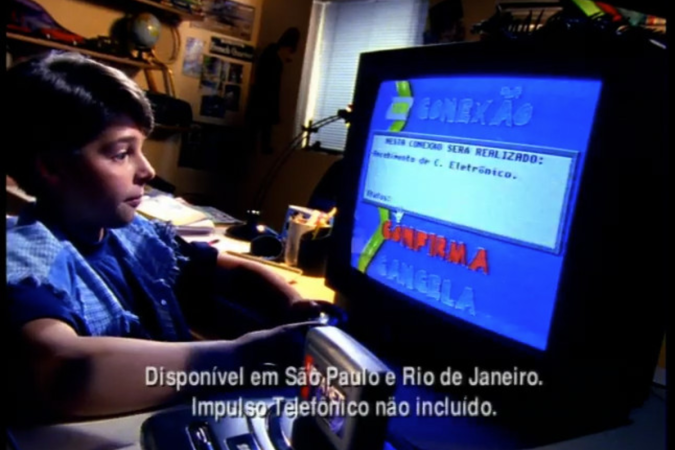
However, if you were around a decade earlier, you might have experienced online console gaming much closer to the dawn of the Internet era. As far back as 1990, you could jump online with your Sega Mega Drive. But what did an online console feel like in the dial-up era?

Continue reading “Sega Meganet: Online Gaming In 1990”

Image

OldVersion Is Back, And Better Than Ever

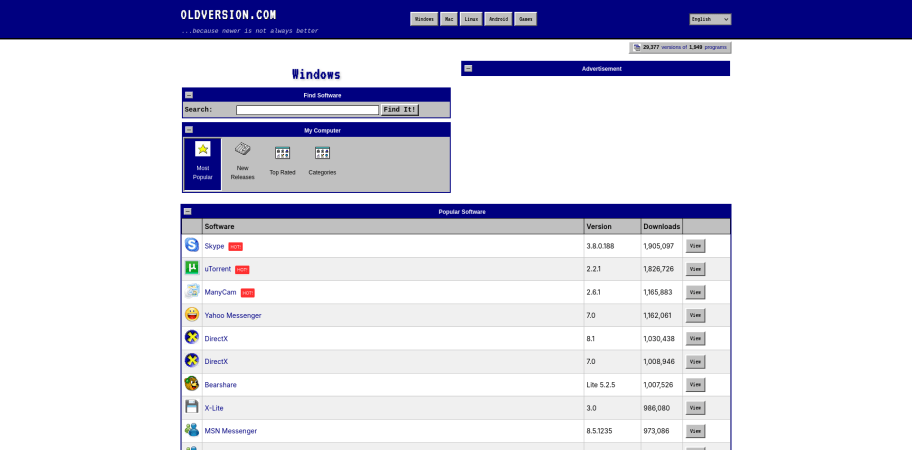
You know what they say — you can’t keep a good website down. OldVersion.com, the repository of outdated software that has been serving up old versions of tools you need for the last twenty-five years, is not going away as we reported last year. Not only is it sticking around, it’s gotten a retro facelift inspired by Windows 3.1 or OS/2. Mostly Windows, given the screensaver, but we’ll let you find that for yourself.

We’re thrilled to see that OldVersion has gotten the support they need to keep going after running into financial troubles. According to founder Alex Levine, some of that support came as a result of the Hackaday article reporting on the then-upcoming closure, so kudos to you guys for stepping up.

While we absolutely love the retro redesign of the new website, that’s one thing notably lacking — an obvious donation button. Well, that and old-school HTTP support so you can get on with your retromachines, but that, at least, is in the works according to the site roadmap. It’s a little weird that in this year of the common era 2026 you have to do extra work to give up on HTTPS functionality, but it is the way it is.

In the meantime, the site is fully usable as long as you have HTTPS capability, or go through a proxy. Perhaps you could use this ESP8266 code to get started making one, if you don’t want to embarrass your old computer by using something more powerful than it as a pass-through.

Speaking of proxies, if old versions of software aren’t enough for you, how about an old version of the internet? We heard you like old versions, so you can visit an old version of OldVersion!


Note that if you’re reading this after 01/04/2026, the look-and-feel of OldVersion.com may not match what’s depicted here.