Image

In Space (Probably) Everyone Can Hear You.. Well, You Know

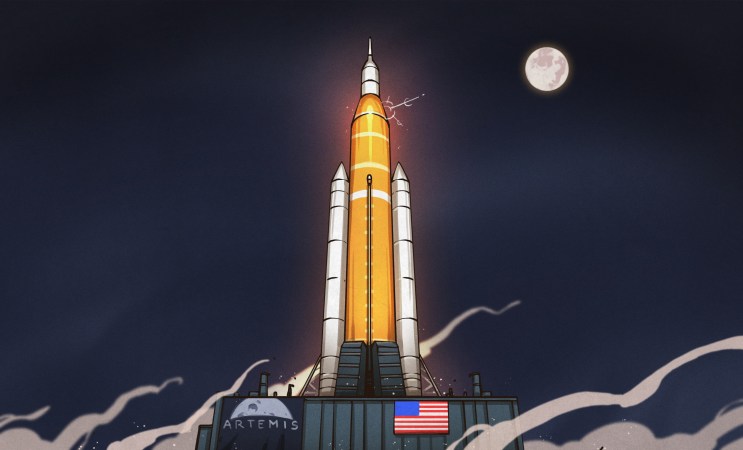
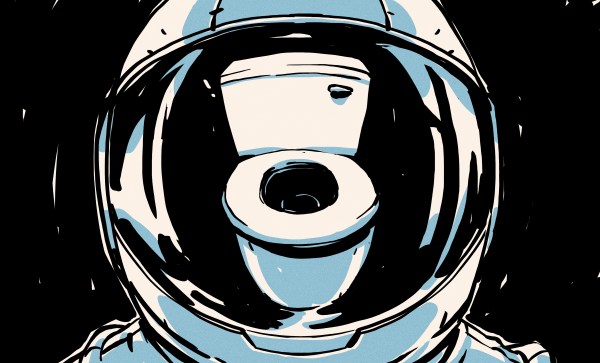
The news is full of reports from the moon-bound Integrity, otherwise known as Artemis II. Mostly, the news is good, but there has been one “Houston, we have a problem…” moment. The space toilet, otherwise known as the Universal Waste Management System or UWMS is making a burning smell while in use. While we would love to be astronauts, we really don’t want to go ten days without using the can, and it made us wonder how, exactly, the astronauts answered the call of nature.

The Old Days

Back in the Apollo-era, going to the bathroom was a messy business. The capsule wasn’t that big, and there were no women on board. So you simply strapped an adhesive-rimmed bag or tube to yourself and answered nature’s call with your two closest coworkers right there.

Image
Space Shuttle facilities (by [Svobodat] CC BY-SA 3.0)
To add insult to injury, the “#2 bags” needed some packet mixed in to keep it from going bad in the bag before it could return to Earth for — no kidding — scientific study.

The system was far from perfect. Apollo 8 and Apollo 10 both had to do some housekeeping due to leaky bags.

Astronaut Ken Mattingly reportedly said, “Man, one of the feats of my existence the other day was, in 42 minutes, I strapped on a bag, went out of both ends, and ate lunch…. I used to want to be the first man to Mars. This has convinced me that, if we got to go on Apollo, I ain’t interested.”

Still, it was better than the first Mercury launch, where Alan Shepard famously relieved himself in his spacesuit while sitting on the pad for over eight hours. Later missions used hoses.

Things got slightly better with Skylab, where there was more room. The Shuttle also had a toilet. You got a curtain for privacy, but you couldn’t go #1 and #2 at the same time. Also, apparently, the contraptions were not easily workable for females.

Continue reading “In Space (Probably) Everyone Can Hear You.. Well, You Know”

Image

Re-Learning How To Run

As I write this, four astronauts are on their way around the moon for the first time in 50 years. A lot us have asked ourselves just exactly why you’d send people out that far when the environment is so hostile and we have increasingly competent robots that could do the jobs in their place. If anything, that’s even more true now than it was back in the day of the Apollo program, when the remote operations capability was a lot more constrained. But having people, potentially in the near future, on the lunar surface remains qualitatively different.

ImageI was recently re-watching some of the footage from Apollo 16 when the astronauts were driving around in the Lunar Roving Vehicle, and the discussions that they’re having about the lunar geology that they can see for the first time with their own eyes is very convincing. Having people in situ tightens the loop of “hey, that’s interesting”, “let’s take a closer look”, and “I wonder what that means” in a way that minutes or hours of transmission time, and sterile observation of photos on a computer monitor just break. In comparison, our Mars rovers move excruciatingly slowly, the data comes back through a very thin pipe, and it takes months or years to analyze.

Of course, there is danger to human life; it’s a lot more expensive to get people safely to, and importantly back from, the moon than it would be with a disposable robot. Comparison with the Mars rovers is also unfair because travel to Mars is another scale entirely. Even if it does make sense to send humans for exploration on the moon, it may not make sense to do the same on the red planet, in the near future or ever. Given all that, I’m stoked that we can see through the robots eyes, but if all else were equal, I’m sure that we’d learn more from human explorers.

While in a lot of ways the Artemis I and now the Artemis II missions are underwhelming in comparison to the many “firsts” of Apollo, I absolutely appreciate them for what they are: a shakedown trial of a set of technologies and practices that we used to grasp, but which have atrophied over the last five decades. If a new generation of scientists is to put feet onto regolith, we need to learn to walk before they can run, or rover. In that spirit, I’ll be crossing my fingers for the future of manned spaceflight over the next week and a half.

Image

A Nebula Straight From The Stars To Your Table

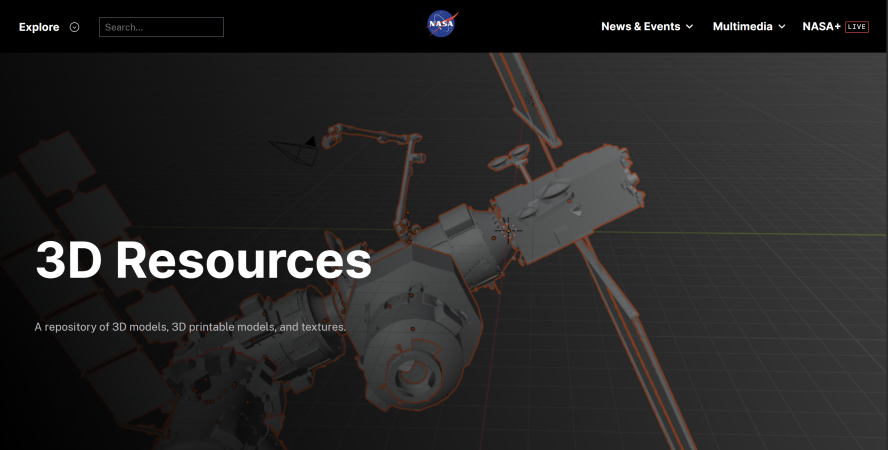
Space may truly be the final frontier, but maybe that frontier can be closer than you thought. Pictures of nebulae and planets bring the colorful sights of deep space right to your screen. You may even have models of some of the rockets used for those missions on a shelf. However, did you know that you could even have a model of those nebulae or planetary surfaces from [NASA]?

While we have covered some distributed models from [NASA] here before, the catalog has expanded far past what 2016 had in store. Additionally, the catalog has been sorted into a more user-friendly, filterable interface than a simple GitHub repository. Most models even have a description attached, giving some basic background information on what the Crab Nebula is, for example.

There could always be more; there don’t appear to be many models of the space shuttle or some other expected files, but what is there is incredible. Some non-3D model files can also be found from star maps to full planetary maps.

While this file repository is cool and all, it’s not all [NASA] does. When not sending rockets deep into space for cool pictures, [NASA] has to make sure the Moon doesn’t explode. Was that a possibility at some point? Of course it has been!

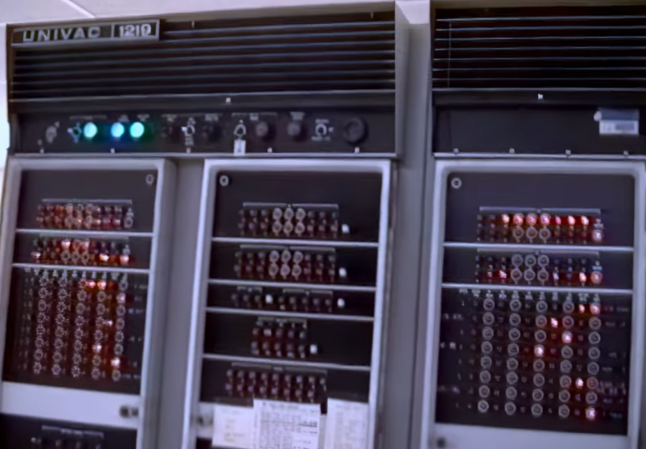
A Univac 1219 cabinet

See The Computers That Powered The Voyager Space Program

Have you ever wanted to see the computers behind the first (and for now only) man-made objects to leave the heliosphere? [Gary Friedman] shows us, with an archived tour of JPL building 230 in the ’80s.

A NASA employee picks up a camcorder and decides to record a tour of the place “before they replace it all with mainframes”. They show us computers that would seem prehistoric compared to anything modern; early Univac and IBM machines whose power is outmatched today by even an ESP32, yet made the Voyager program possible all the way back in 1977. There are countless peripherals to see, from punch card writers to Univac debug panels where you can see the registers, and from impressive cabinets full of computing hardware to the zip-tied hacks “attaching” a small box they call the “NIU”, dangling off the inner wall of the cabinet. And don’t forget the tape drives that are as tall as a refrigerator!

We could go on ad nauseum, nerding out about the computing history, but why don’t you see it for yourself in the video after the break?

Continue reading “See The Computers That Powered The Voyager Space Program”

Image

Laser Ranging Makes GPS Satellites More Accurate

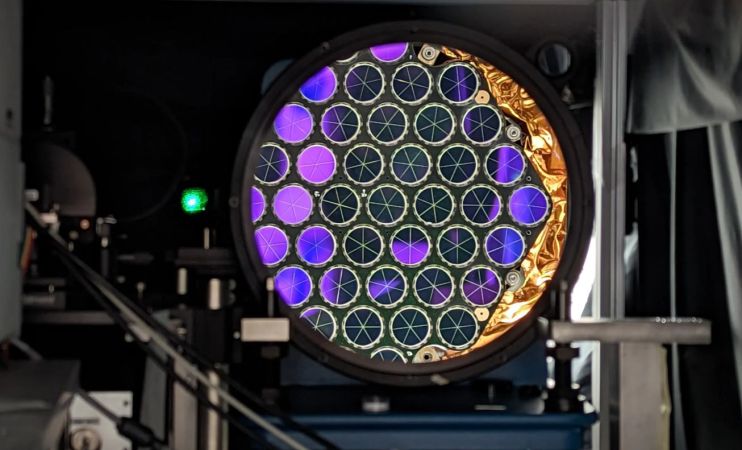
Although GNSS systems like GPS have made pin-pointing locations on Earth’s sphere-approximating surface significantly easier and more precise, it’s always possible to go a bit further. The latest innovation involves strapping laser retroreflector arrays (LRAs) to newly launched GPS satellites, enabling ground-based lasers to accurately determine the distance to these satellites.

Similar to the retroreflector array that was left on the Moon during the Apollo missions, these LRAs will be most helpful with scientific pursuits, such as geodesy. This is the science of studying Earth’s shape, gravity and rotation over time, which is information that is also incredibly useful for Earth-observing satellites.

Laser ranging is also essential for determining the geocentric orbit of a satellite, which enables precise calibration of altimeters and increasing the accuracy of long-term measurements. Now that the newly launched GPS III SV-09 satellite is operational this means more information for NASA’s geodesy project, and increased accuracy for GPS measurements as more of its still to be launched satellites are equipped with LRAs.

Image

Self-healing CMOS Imager To Withstand Jupiter’s Radiation Belt

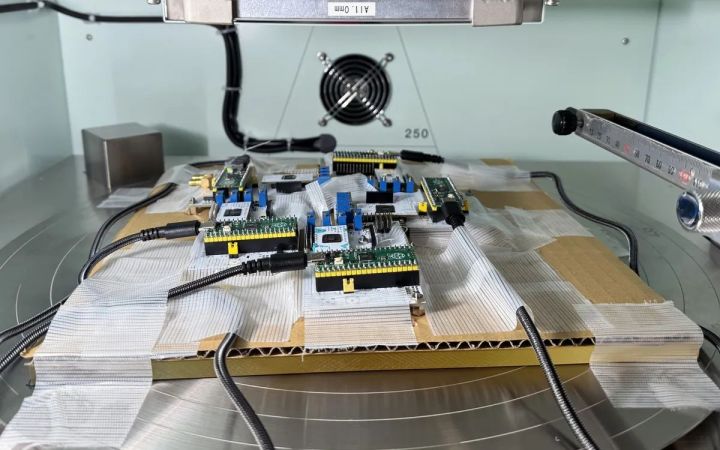
Ionizing radiation damage from electrons, protons and gamma rays will over time damage a CMOS circuit, through e.g. degrading the oxide layer and damaging the lattice structure. For a space-based camera that’s inside a probe orbiting a planet like Jupiter it’s thus a bit of a bummer if this will massively shorted useful observation time before the sensor has been fully degraded. A potential workaround here is by using thermal energy to anneal the damaged part of a CMOS imager.

The first step is to detect damaged pixels by performing a read-out while the sensor is not exposed to light. If a pixel still carries significant current it’s marked as damaged and a high current is passed through it to significantly raise its temperature. For the digital logic part of the circuit a similar approach is used, where the detection of logic errors is cause for a high voltage pulse that should also result in annealing of any damage.

During testing the chip was exposed to the same level of radiation to what it would experience during thirty days in orbit around Jupiter, which rendered the sensor basically unusable with a massive increase in leakage current. After four rounds of annealing the image was almost restored to full health, showing that it is a viable approach.

Naturally, this self-healing method is only intended as another line of defense against ionizing radiation, with radiation shielding and radiation-resistant semiconductor technologies serving as the primary defenses.