Image

The Smallest Dialup ISP Is A Raspberry Pi And A Prison Phone

There were a plethora of tiny, local ISPs in the days of dial-up internet. Along with the big providers, many cities would have more than one. Some of those have survived broadband, but none of them were as small as [Jeff Geerling]’s Pi ISP — a tiny dialup ISP built so his Aunt’s old G3 MacBook can get online at 36kbps, as God and [Robert Khan] intended.

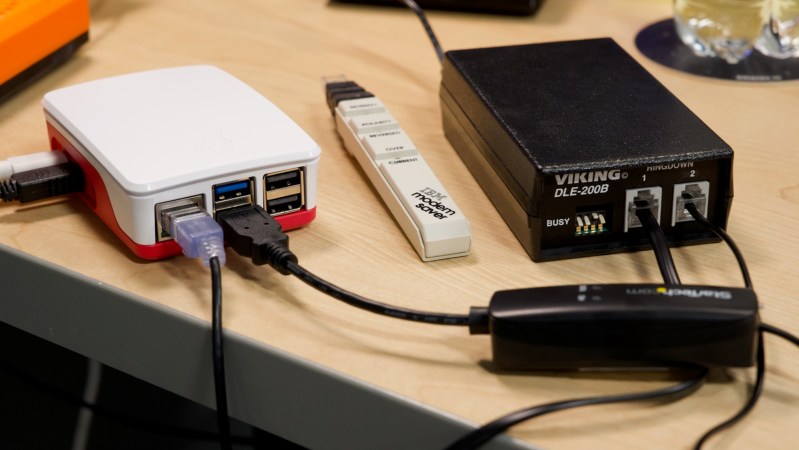
Hardware-wise, the Raspberry Pi is at one end of the chain, and your retrocomputer at another. In between, you’ll have a USB modem plugged into the Pi, and a device called a “two-way line simulator” to create a dial tone for that plain-old-telephone goodness. [Jeff] notes that these were commonly used in prisons for the phones that visitors use to talk to inmates.

Of course, since these devices are designed strictly for voice transmissions, which POTS was built for, you’re not going to get over 36 kbps, and that’s even with high-quality gear. The cheaper options might drop you down to 28k… just like with an ISP back in the day. ‘You get what you pay for’ is very rarely false.

Now, you can use this technology to just connect two computers together — as we’ve featured previously — but [Jeff] has gone the extra mile to put together, via Ansible, an easy-to-install software package that will let the Raspberry Pi act just like your ISP’s servers once did, and connect you to that series of tubes once called the World Wide Web. Of course, the World Wide Web isn’t built for dial-up anymore, so you’re going to be waiting… a while. Hackaday’s front page isn’t especially heavy, weighing about 4MB at the time of this writing, but that’s 15 minutes of load time, and you still aren’t reading the articles.

You also won’t be able to access much on old machines that can’t do HTTPS, but [Jeff] thought of that and bundles [rdmark]’s MacProxyClassic to translate the modern web into HTML tags that Netscape can understand and serve them over HTTP. You’ll still be waiting for our modern bloat, but perhaps not quite so long.

If you want the “authentic” dial-up experience, you’ll need to see the lightweight webpages of Yesteryear, and MacProxyClassic contains a Wayback Machine extension for that purpose. We featured a similar project a while back that did that, but without all the joys of dial-up. Now get off the computer, we’re expecting a call!

Continue reading “The Smallest Dialup ISP Is A Raspberry Pi And A Prison Phone”
Image

Zombie Netscape Won’t Die

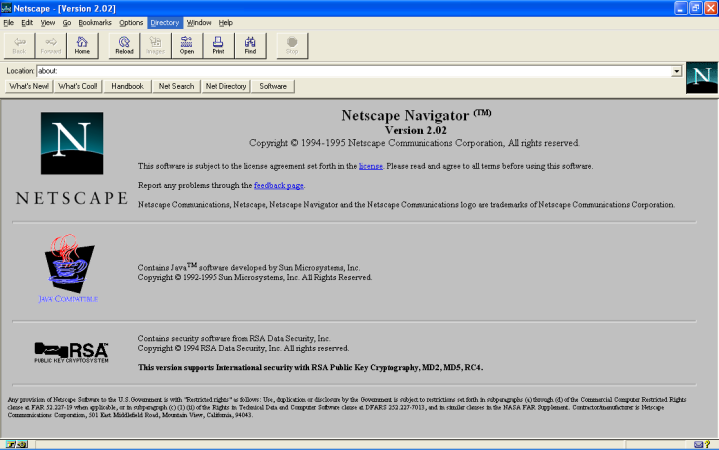
The very concept of the web browser began with a humble piece of software called NCSA Mosaic, all the way back in 1993. It was soon eclipsed by Netscape Navigator, and later Internet Explorer, which became the titans of the 1990s browser market. In turn, they too would falter. Navigator’s dying corpse ended up feeding what would become Mozilla Firefox, and Internet Explorer later morphed into the unexceptional browser known as Edge.

Few of us have had any reason to think about Netscape Navigator since its demise in 2008. And yet, the name lingers on. A zombie from a forgotten age, risen again to haunt us today.

Continue reading “Zombie Netscape Won’t Die”

Image

Remembering The ISP That David Bowie Ran For Eight Years

The seeds of the Internet were first sown in the late 1960s, with computers laced together in continent-spanning networks to aid in national defence. However, it was in the late 1990s that the end-user explosion took place, as everyday people flocked online in droves.

Many astute individuals saw the potential at the time, and rushed to establish their own ISPs to capitalize on the burgeoning market. Amongst them was a famous figure of some repute. David Bowie might have been best known for his cast of rock-and-roll characters and number one singles, but he was also an internet entrepreneur who got in on the ground floor—with BowieNet.

Continue reading “Remembering The ISP That David Bowie Ran For Eight Years”

Hackaday Links Column Banner

Hackaday Links: January 28, 2024

From the “No good deed goes unpunished” files, this week came news of a German programmer who probably wishes he had selected better clients. According to Heise Online (English translation), a freelance programmer — referred to only as “defendant” in the article — was retained by a company to look into a database problem in their system. His investigation revealed that the customer’s database was being filled with log messages from a third-party service called Modern Solution GmbH & Co. KG. over a MySQL connection to a remote server. Assuming this connection was dedicated for his client’s use, the programmer looked at the executable used to make the connection with a text editor, which revealed a password in plain text. Upon connecting to the remote database, he found that it not only contained data for all of Modern Solution’s customers, but also data for all the end users of their customers.

Realizing he’d unintentionally wandered into verboten territory, the programmer immediately backed out and contacted Modern Solutions. They quickly fixed the issue, and then just as quickly reported him to the police. Their “investigation” revealed that the programmer had “decompiled” the executable to obtain the password, in violation of German law. The judge agreed, stating that merely looking at and using the password constituted a criminal offense, regardless of intent and despite the fact that Modern Solution had provided the password to the programmer’s client when they sold them the software. The upshot of all of this nonsense? A €3,000 fine for the programmer, if the verdict stands on appeal. It could have been worse, though; German law allows for up to three years in prison for such offenses.

Continue reading “Hackaday Links: January 28, 2024”

Hackaday Links Column Banner

Hackaday Links: August 14, 2022

What’s this? News about robot dogs comes out, and there’s no video of the bots busting a move on the dance floor? Nope — it looks like quadruped robots are finally going to work for real as “ground drones” are being deployed to patrol Cape Canaveral. Rather than the familiar and friendly Boston Dynamics “Big Dog” robot, the US Space Force went with Ghost Robotics Vision 60 Q-UGVs, or “quadruped unmanned ground vehicles.” The bots share the same basic layout as Big Dog but have a decidedly more robust appearance, and are somehow more sinister. The dogs are IP67-rated for all-weather use, and will be deployed for “damage assessments and patrols,” whatever that means. Although since this is the same dog that has had a gun mounted to it, we’d be careful not to stray too far from the tours at Kennedy Space Center.

Continue reading “Hackaday Links: August 14, 2022”

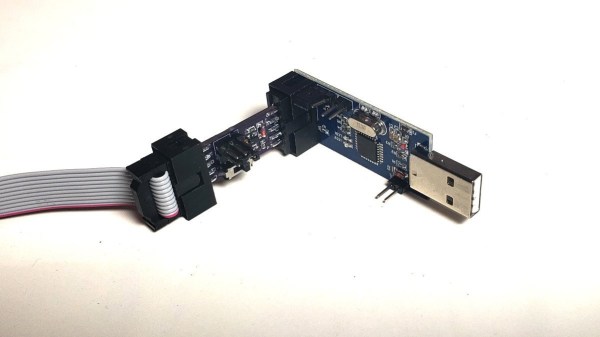
A HVTPI adapter plugged into a USBASP, with a an IDC10 cable plugged into it in turn

HVTPI Primer And Toolkit Equips You For BOM Substitutions

Novel programming interfaces for MCUs might catch us by surprise, but then we inevitably get up to speed with the changes required. Today’s bastion is HVTPI – a “12V reset” addition to the TPI we’ve just started getting used to, and [Sam Ettinger] has shared a simple circuit to teach us all about it, along with PCB files and detailed explanations of how it all works.

HVTPI is an add-on on top of TPI, for which, as Sam explains, you need to hold RST at 12V when TPI would have it be low logic level, and leave it at Vtarget otherwise. For that, he has designed a variety of interposer boards of various complexity and requirements; explaining the choices behind each one and clearing up any misunderstandings that might occur on your way. All of the board files (and the TPI write-up copy) are caringly shared with us in a git repository, too! As a result, if you have an USB-ASP or an Arduino available, now you also have everything to do HVTPI, thanks to Sam’s work and explanations.

We’ve been covering Sam’s exploits before, and can’t help but be grateful for the stop-and-explain detour along the way. HVTPI being used on very small ATTiny parts, we wonder if something new in the vein of his recent FPC board able to fit and function entirely within a Type-C cable end!

With chip shortages, investigating programming interfaces for small and obscure yet in-stock microcontrollers has been, quite literally, paying off, and if you got some projects that need a MCU but won’t consume a whole lot of resources, it could be time to give an ATTiny10 a go. What’s the worst that can happen – you make the smallest chiptunes ever?

Image

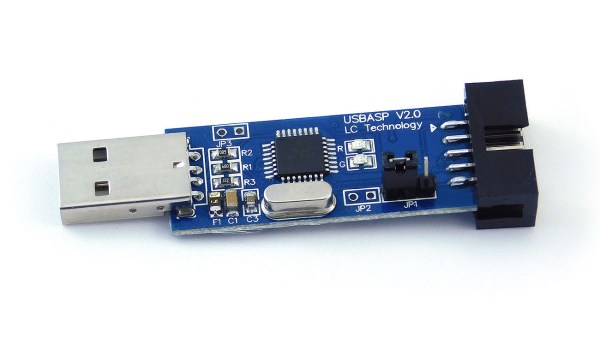
Teaching A USBasp Programmer To Speak TPI

Last Fall [Kevin] wanted to program some newer TPI-only AVRs using an old USBasp he had kicking around his lab. Finding an “odd famine of information” and “forums filled with incorrect information and schematics”, he decided to set the record straight and document things correctly. He sleuthed out the details and succeeded in reprogramming the USBasp, although he did end up buying a second one in the process.

Designers who use AVR microcontrollers have no shortage of programming interfaces — we count at least five different methods: ISP/SPI, JTAG, TPI, PDI, and UPDI. We’re not sure whether this is variety is good or bad, but it is what it is. [Kevin] discovers that for the particular family of Attiny devices he is using, the ATtiny20, TPI is the only option available.

While he normally builds his designs around ARM Cortex-M chips, [Kevin] needed some glue logic and decided to go with an ATtiny20 despite its unique programming requirements. He observes that the price of the ATtiny20, $0.53 last Fall, was cheaper than the equivalent logic gates he needed. This particular chip is also quite small — only 3 mm square (a 20-pin VQFN). We would prefer not to use different MCUs and tool chains on a single board, but sometimes the convenience and economics steer the design in that direction.

If you’re not familiar with the USBasp, our own [Mike Szczys] covered the breaking story over ten years ago. And if you have a lot of free time on your hands, ditch all these nicely packaged solutions and program your chips using an old USB Hub and a 74HCT00 NAND gate as described in this bizarre hack by Teensy developer [Paul Stoffregen].