This comprehensive guide serves as your stepping stone to mastering the fundamentals of Python programming. We’ll delve into the core concepts, explore practical coding exercises, and equip you with the knowledge to confidently navigate your initial Python projects.
Python for Beginners
Why Python? Understanding the Appeal
Before we dive into the specifics, let’s explore what makes Python such a compelling choice for beginners:
Readability:
Python code resembles plain English, making it easier to understand and write compared to languages with complex syntax.
Versatility:
Python’s extensive libraries and frameworks empower you to tackle various tasks, from web development and data analysis to machine learning and scientific computing.
Large and Supportive Community:
Python boasts a vast and active community of developers, offering unparalleled support and resources for beginners.
Free and Open-Source:
Python is completely free to use and modify, eliminating financial barriers to entry.
Setting Up Your Python Development Environment
The first step towards your Python coding adventure is establishing your development environment. Here’s a breakdown of the essential tools:
Python Interpreter:
Download and install the latest version of the Python interpreter from https://www.python.org/downloads/. This software executes your Python code.
Code Editor or IDE (Integrated Development Environment):
While you can write Python code in a simple text editor, using a code editor or IDE offers enhanced features like syntax highlighting, code completion, and debugging tools. Popular options include Visual Studio Code, PyCharm, and Thonny (ideal for beginners).
Let’s Get Coding: Your First Python Program
It’s time to write your first Python program! Here’s a classic example to get you started:
print("Hello, World!")Save this code as a .py file (e.g., hello_world.py) and run it using your Python interpreter. You should see the message “Hello, World!” printed on your screen. Congratulations, you’ve just written and executed your first Python program!
Python for beginners:
Understanding Core Python Concepts
Now that you’ve experienced the thrill of coding, let’s delve into some fundamental Python concepts:
Variables and Data Types:
Variables store data within your program, and data types define the kind of data a variable can hold. Python offers basic data types like integers (whole numbers), floats (decimal numbers), strings (text), and booleans (True or False).
Example of variables and data types
name = “Alice” # String
age = 30 # Integer
pi = 3.14159 # Float
is_coding = True # Boolean
Operators:
Operators perform operations on data. Python provides arithmetic operators (+, -, *, /), comparison operators (==, !=, <, >, <=, >=), and logical operators (and, or, not).
Example of operators
result = 10 + 5 # Arithmetic operator (addition)
is_equal = name == “Alice” # Comparison operator (equal to)
is_adult = age >= 18 # Logical operator (greater than or equal to)
Input and Output:
Your program can interact with the user by accepting input and displaying output. Python provides functions like input() to get user input and print() to display messages.
Example of input and output
user_name = input(“Enter your name: “)
print(“Hello,”, user_name)
Control Flow Statements:
Control flow statements dictate how your program executes by allowing you to control the sequence of code execution. Conditional statements (if, else, elif) enable you to make decisions based on certain conditions, while loops (while, for) allow for repeated execution of code blocks.
Example of control flow statements (if statement)
age = int(input(“Enter your age: “))
if age >= 18:
print(“You are an adult.”)
else:
print(“You are not an adult.”)
Practice Makes Perfect: Essential Beginner Exercises
The best way to solidify your understanding is through practice. Here are some practical exercises to help you master these core concepts:
Number Guessing Game:
Let the computer generate a random number between 1 and 100, and allow the user to guess the number within a limited number of attempts. Provide feedback to the user based on their guess (too high, too low, correct).
Mad Libs Generator:
Create a program that prompts the user for various words (e.g., noun, verb, adjective) and then inserts them into a pre-written story template, resulting in a funny or nonsensical story.
Simple Calculator:
Build a basic calculator that allows users to perform addition, subtraction, multiplication, and division on two user-provided numbers.
Text Analyzer:
Write a program that accepts a string of text from the user and performs basic analysis. Count the number of words, characters, vowels, and consonants in the text.
These exercises allow you to experiment with the core concepts you’ve learned and gain hands-on experience with writing Python code.
Introducing Functions: Building Reusable Code Blocks
Functions are reusable blocks of code that perform a specific task. They promote code modularity, improve readability, and prevent code duplication. Here’s how to define and use functions in Python:
def greet(name):
“””This function greets the user by name.”””
print(“Hello,”, name)
Calling the function
greet(“Bob”)
In this example, the greet function takes a name as input and prints a personalized greeting message. You can call this function multiple times with different names to reuse the same functionality.
Practice Makes Perfect: Exercises with Functions
Area Calculator:
Create a function that calculates the area of a rectangle or circle based on user-provided dimensions (length and breadth for rectangle, radius for circle). Call this function from your main program to calculate the area for different shapes.
Temperature Converter:
Write a function that converts Celsius to Fahrenheit or vice versa based on user input. Utilize this function within your program to offer temperature conversion functionality.
By incorporating functions into your Python programs, you’ll structure your code more effectively and enhance its reusability.
Essential Resources to Fuel Your Python Learning
Official Python Tutorial:
The official Python tutorial from docs.python.org serves as a comprehensive resource for beginners, covering the fundamentals in detail with clear explanations and code examples. https://docs.python.org/3/tutorial/
Learn Python the Hard Way:
This online book by Zed Shaw offers a more hands-on approach, emphasizing practice and problem-solving through a series of exercises. https://learnpythonthehardway.org/
Codecademy’s Learn Python 3 Course:
Codecademy provides an interactive platform to learn Python through a series of bite-sized coding exercises and challenges. https://www.codecademy.com/learn/learn-python-3
Coursera’s Python for Everybody Specialization:
Coursera offers a well-structured online specialization course from the University of Michigan, covering Python programming fundamentals and data structures. https://www.coursera.org/specializations/python
These resources cater to different learning styles and preferences, allowing you to choose the ones that best suit your needs.
The Power of Community: Connect with Fellow Python Learners
The Python community is vast and supportive. Here are some ways to connect with other learners and get help:
Online Forums:
Stack Overflow is a popular forum where you can post your Python coding questions and receive solutions and guidance from experienced developers. https://stackoverflow.com/
Reddit Communities:
Subreddits like r/learnpython offer a platform to connect with fellow beginners, share learning experiences, and ask questions.
Local Meetups:
Many cities host Python meetups where you can network with other Python enthusiasts, attend workshops, and learn from each other.
Data Structures: The Building Blocks of Organized Data
Data structures are fundamental components in programming that organize and store data in a specific way. Python provides various built-in data structures to efficiently manage different types of data:
Lists:
Ordered, mutable collections of items enclosed in square brackets []. Lists can hold elements of different data types.
fruits = [“apple”, “banana”, “cherry”]
numbers = [1, 2, 3, 4, 5]
mixed_list = [10.5, “hello”, True]
Tuples:
Ordered, immutable collections of items enclosed in parentheses (). Once created, the elements within a tuple cannot be changed.
fruits_tuple = (“apple”, “banana”, “cherry”)
coordinates = (3, 5)
Dictionaries:
Unordered collections of key-value pairs enclosed in curly braces {}. Dictionaries provide a flexible way to associate unique keys with their corresponding values.
person = {“name”: “Alice”, “age”: 30, “city”: “New York”}
Sets:
Unordered collections of unique elements enclosed in curly braces {}. Sets eliminate duplicate values.
letters = {“a”, “b”, “c”, “b”} # Duplicate “b” will be removed
Understanding these data structures will empower you to manage and manipulate data effectively within your Python programs.
Object-Oriented Programming (OOP): Organizing Code with Classes and Objects
Object-oriented programming (OOP) is a programming paradigm that revolves around objects, which encapsulate data (attributes) and related operations (methods). This approach promotes code reusability, modularity, and maintainability.
Classes:
A blueprint or template that defines the properties (attributes) and functionalities (methods) of objects.
class Car:
def init(self, brand, model, color): # Constructor method
self.brand = brand
self.model = model
self.color = color
def accelerate(self):
print(“The car is accelerating!”)
def brake(self):
print(“The car is braking!”)
my_car = Car(“Ford”, “Mustang”, “Red”)
my_car.accelerate() # Calling a method on the object
Objects:
Instances created from a class definition. Each object has its own set of attributes and can access the methods defined within the class.
By leveraging OOP principles, you can structure your Python programs for more efficient code organization and reusability.
Modules and Packages: Sharing and Reusing Code
As your projects grow, managing code efficiently becomes crucial. Python offers modules and packages to organize and share code:
Modules:
Python files containing reusable functions, variables, and classes. Modules can be imported into other Python programs to utilize their functionalities.
Create a module named math_functions.py
def add(x, y):
return x + y
def subtract(x, y):
return x – y
Packages:
Create a directory named calculations
Inside calculations, create init.py (an empty file)
Move math_functions.py to the calculations directory
Import the module from the package
from calculations import add, subtract
result = add(10, 5)
print(result)
Beyond the Basics: Exploring Advanced Python Concepts
Once you’ve grasped these intermediate topics, you can delve into more advanced areas of Python programming:
- Exception Handling: Techniques for managing errors and preventing program crashes.
- File Handling: Reading from and writing data to files.
- Regular Expressions: Powerful tools for pattern matching and text manipulation.
- Web Scraping: Extracting data from websites programmatically.
- Databases and SQL: Interacting with databases using Python.
- GUI Development: Building graphical user interfaces (GUIs) for your applications.
- Machine Learning and Data Science: Utilizing Python for data analysis, machine learning algorithms, and data visualization.
The Gratification of Continuous Learning: Your Python Journey Awaits
By diligently working through the concepts and exercises presented in this guide, you’ve established a solid foundation in Python programming. Remember, the key to mastering any skill is consistent practice and exploration. Here are some tips to fuel your ongoing Python learning journey:
Start Small and Build Gradually:
Don’t be intimidated by complex projects. Begin with smaller, manageable programs and progressively increase the difficulty as your skills develop.
Embrace Challenges:
Step outside your comfort zone and tackle problems that require you to learn new concepts. This is how you’ll expand your knowledge and problem-solving abilities.
Personalize Your Learning:
Explore areas of Python that pique your interest. Whether it’s web development, data analysis, or machine learning, delve into topics that motivate you.
Contribute to Open-Source Projects:
Consider contributing to open-source Python projects on platforms like GitHub. This allows you to collaborate with other developers, gain practical experience, and build your portfolio.
Stay Updated:
The world of technology is constantly evolving. Stay informed about the latest Python trends, libraries, and frameworks by following blogs, attending conferences, and participating in online communities.
Conclusion: Python, Your Gateway to a Fulfilling Programming Career
Python has opened its doors to the exciting world of programming. As you continue your Python endeavors, you’ll unlock a vast array of possibilities. From crafting web applications and automating tasks to exploring data science and machine learning, Python empowers you to turn your ideas into reality.
This guide serves as a stepping stone on your Python programming journey. Embrace the challenges, celebrate your achievements, and never stop learning. With dedication and perseverance, you’ll transform your Python proficiency into a valuable asset, propelling you towards a fulfilling career in the ever-growing tech landscape.
]]>This comprehensive guide delves into the core principles of content marketing, empowering you to craft a winning strategy for your business.
Why Content Marketing Matters: The Power of Valuable Content
Content marketing isn’t just about creating random blog posts or social media updates. It’s about developing and distributing high-quality content that resonates with your target audience, addresses their needs, and positions your brand as a thought leader in your industry.
Here are some compelling statistics that highlight the importance of content marketing:
- 84% of consumers expect brands to create content (Demand Metric)
- Content marketing costs 62% less than traditional marketing methods (Demand Metric)
- Content marketing generates over three times the leads compared to paid search advertising (Content Marketing Institute)
The Content Marketing Funnel: Guiding Your Audience Through the Buyer’s Journey
The buyer’s journey represents the different stages a potential customer goes through before making a purchase decision. Effective content marketing caters to each stage, guiding users through the funnel and ultimately converting them into paying customers.
Awareness Stage:
At this initial stage, potential customers recognize they have a problem or need. Create informative content like blog posts, infographics, or videos that address their broad pain points and introduce your brand as a potential solution.
Consideration Stage:
Now, users are actively researching solutions to their problem. Provide in-depth content like case studies, white papers, or webinars that showcase your expertise and differentiate your brand from competitors.
Decision Stage:
Customers are ready to make a purchase decision. Offer compelling content like product demos, free trials, or comparison guides to highlight the value proposition of your product or service.
Content Pillars: The Foundation of Your Content Strategy
Content pillars serve as the thematic cornerstones of your content marketing strategy. They represent broad topics of interest to your target audience, encompassing a range of subtopics and specific content formats.
Here’s how to identify and develop strong content pillars:
Understand Your Audience:
Research your target market to identify their pain points, interests, and content preferences.
Align with Your Business Goals:
Ensure your content pillars support your overall business objectives, whether it’s brand awareness, lead generation, or customer retention.
Consider Content Diversity:
Content pillars should encompass a variety of formats (blog posts, videos, ebooks) to cater to different learning styles and preferences.
A Content Buffet: Exploring Diverse Content Formats
The beauty of content marketing lies in its versatility. You can leverage various content formats to engage your audience and achieve your marketing goals:
Blog Posts:
Informative and engaging articles addressing industry trends, offering practical tips, or delving into specific topics relevant to your target audience.
Videos:
Highly engaging and shareable, videos can explain complex concepts, showcase product demos, or offer behind-the-scenes glimpses into your company culture.
Infographics:
Visually appealing summaries of data or complex topics, infographics offer a quick and digestible way to communicate information.
Ebooks:
In-depth guides or resources covering a specific topic in detail. Ebooks can be used as lead magnets to capture valuable user information.
Case Studies:
Demonstrate the value proposition of your product or service by showcasing real-world customer success stories.
Webinars:
Live or pre-recorded online events that allow you to educate and interact with your audience in real-time.
Podcasts:
Audio-based content that allows for in-depth discussions, interviews, or thought leadership pieces that users can consume on the go.
By strategically utilizing these diverse content formats, you can cater to different audience preferences and maximize the reach and impact of your content marketing efforts.
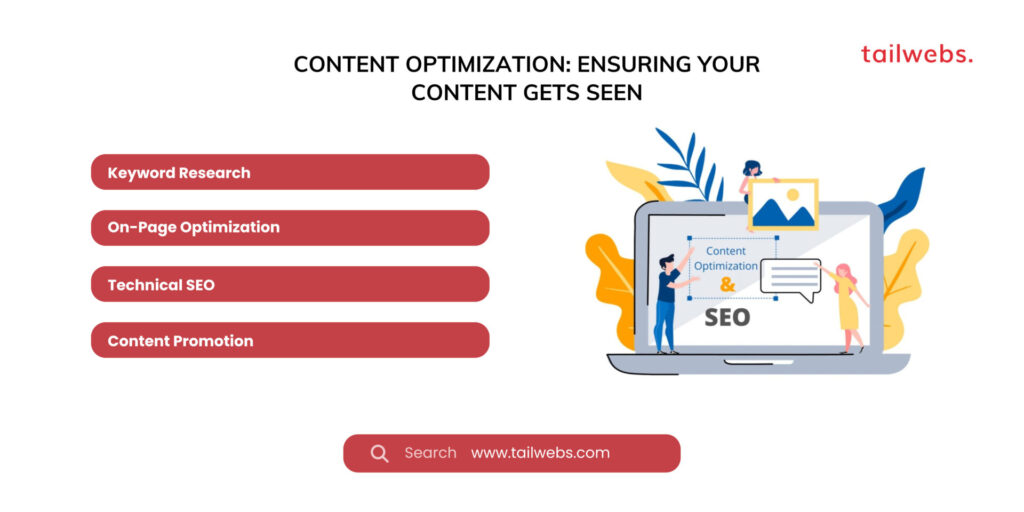
Content Optimization: Ensuring Your Content Gets Seen
Creating valuable content is just half the battle. You also need to ensure your content is discoverable by your target audience. Here are some optimization techniques to enhance content visibility:
Keyword Research:
Identify relevant keywords that your target audience is searching for and integrate them naturally into your content.
On-Page Optimization:
Optimize your website and content for search engines by using relevant title tags, meta descriptions, and header tags.
Technical SEO:
Ensure your website has a clean and mobile-friendly structure with fast loading speeds to improve user experience and search engine ranking.
Content Promotion:
Actively promote your content across various channels like social media, email marketing, influencer outreach, and paid advertising strategies.
The Art of Storytelling: Weaving Captivating Content Your Audience Craves
People connect with stories. Infuse storytelling techniques into your content marketing strategy to captivate your audience and make your brand memorable.
Hook Your Readers:
Grab attention from the outset with a compelling introduction that sparks curiosity and sets the stage for your content.
Focus on Value:
Every piece of content should offer something valuable to your audience. Educate, entertain, or inspire them, but ensure they walk away with a clear benefit.
Embrace Authenticity:
Let your brand personality shine through in your content. A genuine voice fosters trust and connection with your audience.
Data Storytelling:
Use data and statistics to back up your claims and add credibility to your content.
Visual Appeal:
Incorporate high-quality images, videos, and infographics to break up text and enhance visual interest.
Building Relationships: The Power of Content Marketing for Engagement
Content marketing isn’t just about broadcasting messages; it’s about fostering two-way communication and building relationships with your audience. Here’s how:
Respond to Comments:
Actively engage with your audience by responding to comments on your blog, social media posts, or videos.
Encourage Conversation:
Pose questions within your content and invite your audience to share their thoughts and experiences.
Host Interactive Events:
Organize webinars, Q&A sessions, or live streams to interact with your audience in real-time.
Build Community:
Create a space for your audience to connect and share ideas — consider online forums or social media groups.
By fostering engagement, you’ll transform passive viewers into active participants, fostering brand loyalty and advocacy.
Measuring Success: Tracking Your Content Marketing ROI
Content marketing is an investment, and like any investment, you need to track its return on investment (ROI). Here are some key metrics to monitor the success of your content marketing efforts:
Website Traffic:
Track website traffic to see how your content is attracting new visitors.
Lead Generation:
Monitor the number of leads generated through your content marketing efforts (e.g., ebook downloads, webinar registrations).
Social Media Engagement:
Analyze social media metrics like likes, shares, and comments to gauge audience engagement.
Conversion Rates:
Track how many website visitors convert into paying customers as a result of your content marketing efforts.
Brand Awareness:
Monitor brand mentions and sentiment analysis to understand how your content marketing efforts are shaping brand perception.
By closely monitoring these metrics, you can refine your strategy and ensure your content marketing delivers a positive ROI.
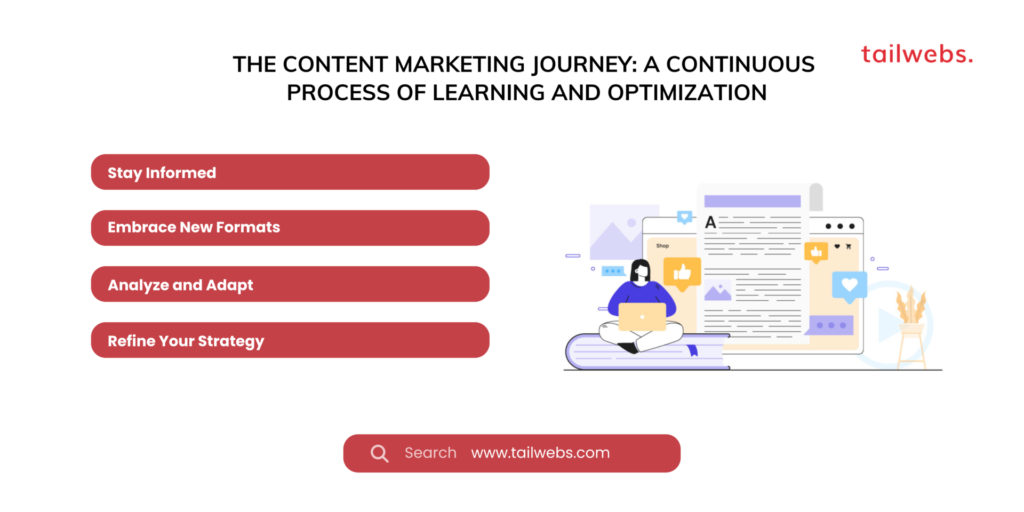
The Content Marketing Journey: A Continuous Process of Learning and Optimization
Content marketing is a continuous process of learning, adapting, and optimizing your approach. Here are some tips for ongoing success:
Stay Informed:
Keep up-to-date with the latest content marketing trends, algorithm changes, and audience preferences.
Embrace New Formats:
Continually experiment with new content formats (e.g., podcasts, live streams) to cater to evolving audience demands.
Analyze and Adapt:
Regularly review your content marketing metrics and make data-driven adjustments to improve performance.
Refine Your Strategy:
As your business and audience evolve, refine your content marketing strategy to ensure it remains effective and aligned with your goals.
Conclusion: Content Marketing – Your Gateway to Sustainable Growth
Content marketing empowers you to build meaningful relationships with your target audience, establish your brand as a thought leader, and ultimately propel your business towards sustainable growth. By following the principles outlined in this guide, crafting high-quality content, and continually optimizing your strategy, you can unlock the full potential of content marketing and achieve your business objectives.
]]>Waterfall Methodology: A Structured, Sequential Approach
Imagine a majestic waterfall cascading down a series of cliffs. The Waterfall methodology mirrors this concept, following a linear, step-by-step approach to software development.
Clear Phases:
Waterfall projects are divided into distinct phases, such as requirements gathering, design, development, testing, and deployment. Each phase must be completed sequentially before moving on to the next.
Detailed Planning:
Extensive planning occurs at the outset, with meticulous documentation outlining project scope, features, and deadlines.
Limited Flexibility:
Once a phase is complete, changes are challenging and costly to implement. The rigid structure is less adaptable to evolving requirements or unforeseen challenges.
Strengths of the Waterfall Methodology
Clear Roadmap:
The structured approach provides a well-defined roadmap for the project, fostering transparency and predictability.
Suitable for Well-Defined Projects:
For projects with clearly defined requirements and minimal change expectations, Waterfall excels in streamlining development and ensuring project completion within budget and timeframe.
Strong Documentation:
The emphasis on documentation facilitates knowledge transfer and project continuity, especially beneficial for large teams or long-term projects.
Drawbacks of the Waterfall Methodology
Limited Adaptability:
The rigid structure struggles to accommodate changes in requirements or technology advancements that may arise during the development process.
High Initial Investment:
The upfront planning and documentation requirements can be time-consuming and resource-intensive.
Potential for Late-Stage Defects:
Since testing occurs towards the end of the development lifecycle, identifying and resolving critical defects at later stages can be expensive and time-consuming.
Agile Methodology: Embracing Change and Iteration
Agile stands in stark contrast to the Waterfall approach. It emphasizes flexibility, collaboration, and iterative development.
Short Iterations:
Agile projects are broken down into smaller, time-boxed sprints (typically 1-4 weeks). Each sprint focuses on delivering a functional set of features.
Continuous Feedback:
Agile fosters continuous feedback loops throughout the development process. Stakeholders are actively involved, providing feedback on deliverables after each sprint.
Adaptability:
Agile embraces change. New requirements or emerging technologies can be readily incorporated into subsequent sprints, ensuring the project remains aligned with evolving needs.
Strengths of the Agile Methodology
Flexibility and Adaptability:
Agile readily adapts to changing project requirements or market demands, making it ideal for projects with uncertain scopes or evolving technologies.
Faster Time to Market:
By delivering functional features in short sprints, Agile allows for early feedback and faster product releases.
Improved Customer Satisfaction:
Continuous stakeholder involvement ensures the final product aligns with their needs and expectations, leading to higher satisfaction.
Drawbacks of the Agile Methodology
Heavy Reliance on Communication:
Effective communication and collaboration are paramount for Agile projects to succeed.
Potential for Scope Creep:
The emphasis on flexibility can sometimes lead to scope creep, where additional features are continuously added without proper planning or prioritization.
Documentation Challenges:
Agile tends to favor working code over extensive documentation. This can pose challenges for onboarding new team members or maintaining long-term project knowledge.
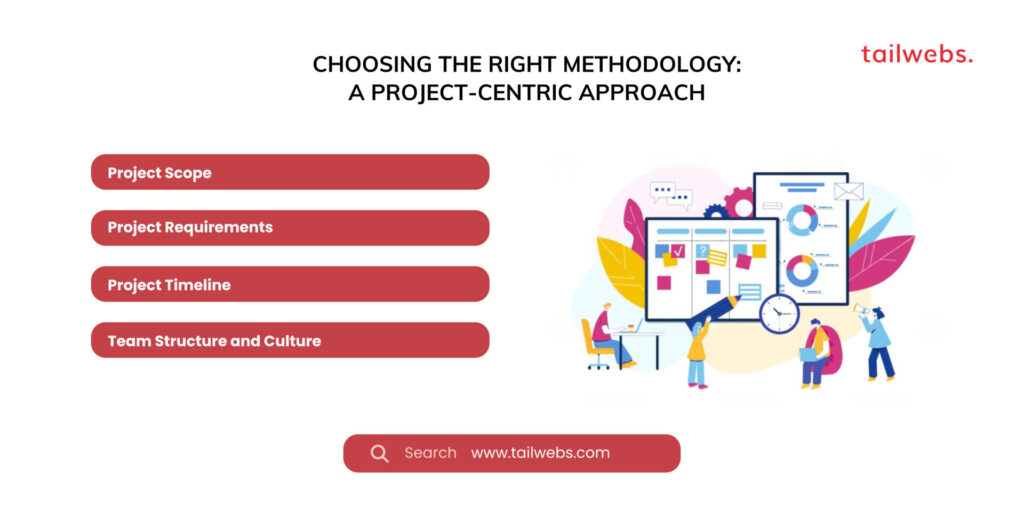
Choosing the Right Methodology: A Project-Centric Approach
The optimal development methodology hinges on several factors specific to your project. Here’s a framework to guide your decision-making process:
Project Scope:
For projects with well-defined, unchanging scopes, Waterfall might be a suitable choice. However, if the scope is likely to evolve, Agile’s flexibility offers significant advantages.
Project Requirements:
If the requirements are clearly understood upfront, Waterfall can efficiently translate them into a concrete development plan. In contrast, Agile is better suited for projects with evolving or uncertain requirements.
Project Timeline:
Waterfall projects excel at delivering projects within a predefined timeframe, assuming requirements remain constant. Agile, on the other hand, provides faster delivery of core functionalities through iterative sprints.
Team Structure and Culture:
Agile thrives in collaborative environments where teams are comfortable with continuous change and feedback. Waterfall, however, might be more suitable for teams accustomed to structured, well-defined processes.
Beyond Waterfall and Agile: Hybrid Approaches
The software development landscape isn’t limited to a strict binary choice between Agile and Waterfall. Many projects successfully leverage hybrid approaches, combining elements from both methodologies to suit their specific needs. Here are some common hybrid models:
Phased Agile:
This approach breaks the project down into larger phases, similar to Waterfall, but utilizes Agile practices within each phase. Requirements gathering and high-level planning might occur upfront in a Waterfall-style phase, followed by iterative development cycles within each subsequent phase.
Agile with Inception:
This model incorporates an initial planning phase inspired by Waterfall, where core requirements and project vision are established. The project then transitions into Agile sprints for development and delivery.
Waterfall with Agile Sprints:
In this variation, the overall project follows a Waterfall structure, but specific development tasks within a phase are executed using Agile sprints. This allows for controlled flexibility within the broader Waterfall framework.
Deciding on the most suitable hybrid approach requires careful consideration of project needs, team dynamics, and risk tolerance.
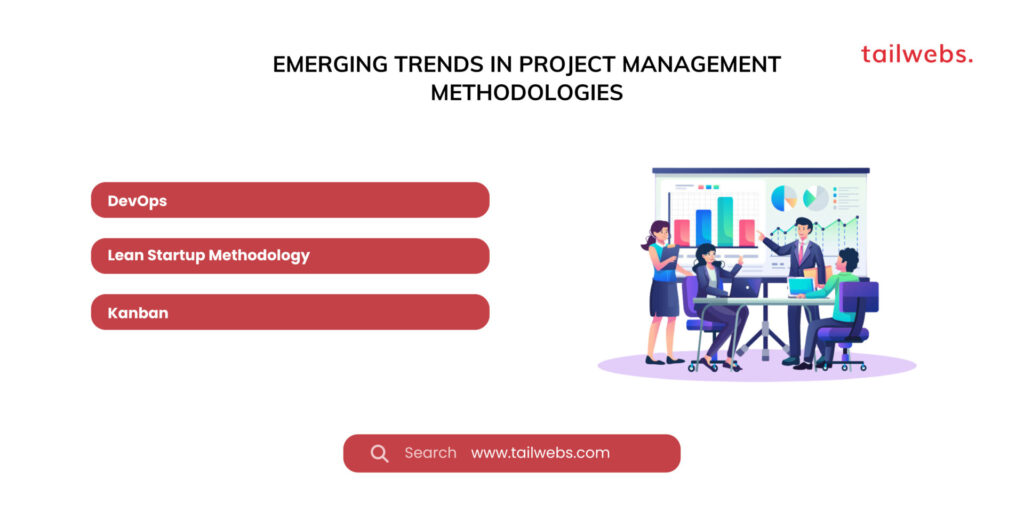
Emerging Trends in Project Management Methodologies
The world of software development is constantly evolving, and project management methodologies are no exception. Here are some recent trends gaining traction:
DevOps:
This philosophy emphasizes collaboration and communication between development, operations, and security teams throughout the entire project lifecycle. DevOps tools and practices streamline software delivery and foster a culture of continuous improvement.
Lean Startup Methodology:
Popularized by Eric Ries, this approach emphasizes rapid experimentation, building a minimum viable product (MVP), and gathering user feedback to iterate and improve the product quickly.
Kanban:
A visual project management system that utilizes boards and cards to represent tasks and their workflow stages. Kanban promotes continuous flow and focuses on limiting work in progress (WIP) to optimize efficiency.
Understanding these emerging trends can empower you to select the most effective approach for your project and stay ahead of the curve in the ever-changing software development landscape.
The Agile vs. Waterfall Debate: Finding the Right Fit
Ultimately, the debate between Agile and Waterfall isn’t about which methodology is inherently superior. It’s about selecting the approach that best aligns with your project’s specific requirements, team dynamics, and risk tolerance. By carefully evaluating the strengths and weaknesses of each methodology, and considering the project context, you can make an informed decision that sets your project up for success.
Remember, the optimal development methodology is not a one-size-fits-all solution. By thoughtfully considering your project’s unique characteristics and leveraging the valuable insights presented in this guide, you can make an informed decision and embark on your development journey with confidence.
]]>Native App Development: Building Apps for Peak Performance
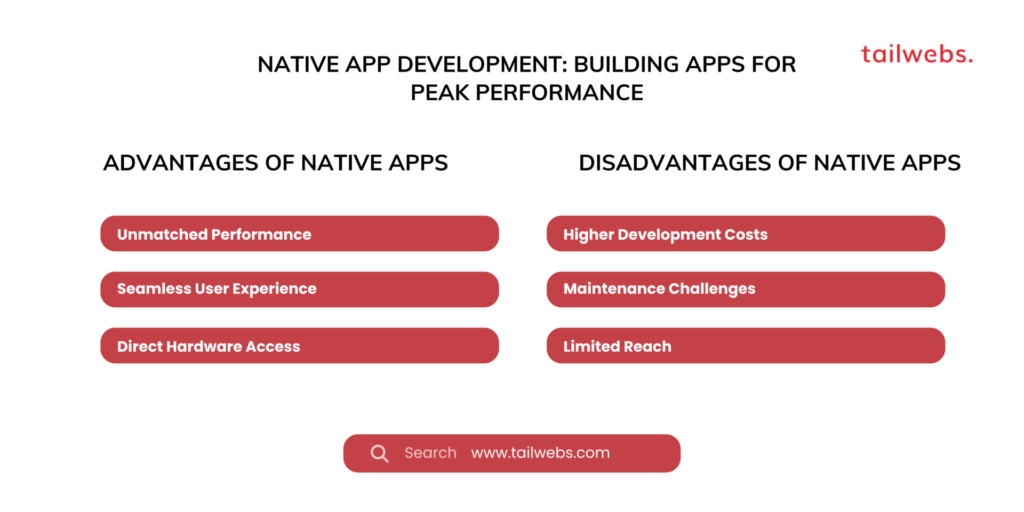
Native apps reign supreme in terms of performance, user experience, and access to device-specific features. They are developed using programming languages specific to each mobile operating system:
Android:
Native Android apps are built using Java or Kotlin and leverage the Android Studio development environment.
iOS:
For iOS app development, Swift is the preferred programming language, utilizing Apple’s Xcode IDE.
Advantages of Native Apps
Unmatched Performance:
Native apps deliver superior performance, speed, and responsiveness, as they are optimized for the specific operating system and hardware they run on.
Seamless User Experience:
Native apps integrate seamlessly with the device’s features and functionalities, like GPS, camera, and offline functionality, offering an intuitive and familiar user experience.
Direct Hardware Access:
Native apps have unfettered access to a device’s hardware capabilities, enabling features like fingerprint authentication, high-resolution graphics, and complex animations.
Disadvantages of Native Apps
Higher Development Costs:
Developing separate native apps for Android and iOS requires a larger investment in time, resources, and potentially, two separate development teams with expertise in each platform’s specific languages and tools.
Maintenance Challenges:
Maintaining two separate codebases for Android and iOS apps can be time-consuming and resource-intensive, especially when addressing bug fixes or adding new features.
Limited Reach:
You essentially create two separate apps, reaching only users on specific platforms (Android or iOS).
Hybrid App Development: A Bridge Between Native and Web
Hybrid apps bridge the gap between native and web development. They are essentially web apps wrapped in a native container, allowing them to be accessed through app stores like Google Play and the App Store.
Development Process:
Hybrid apps are typically built using web technologies like HTML, CSS, and JavaScript, often with the help of frameworks like React Native or Flutter.
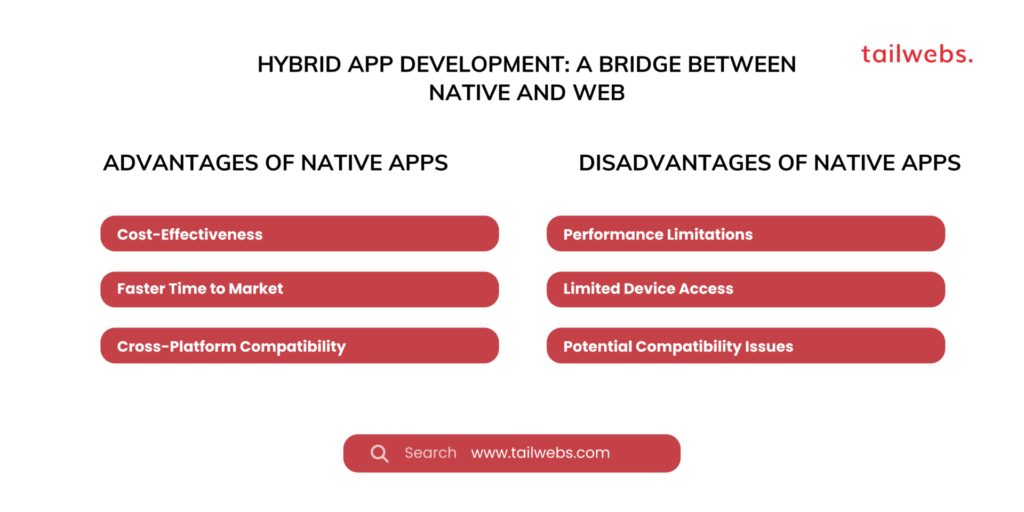
Advantages of Hybrid Apps
Cost-Effectiveness:
Hybrid app development is generally less expensive than developing separate native apps. You can leverage a single codebase for both Android and iOS, reducing development time and resources.
Faster Time to Market:
The streamlined development process allows for quicker development and deployment compared to native app development.
Cross-Platform Compatibility:
With a single codebase, hybrid apps can reach a wider audience by functioning on both Android and iOS devices.
Disadvantages of Hybrid Apps
Performance Limitations:
Hybrid apps may not deliver the same level of performance and responsiveness as native apps, especially for complex functionalities or graphics-intensive tasks.
Limited Device Access:
Hybrid apps might have restricted access to certain device features compared to native apps, potentially hindering user experience.
Potential Compatibility Issues:
Reliance on web technologies can lead to compatibility issues across different devices and operating system versions.
Cross-Platform App Development: Building Once, Deploying Everywhere
Cross-platform app development offers another approach to reach users across multiple platforms. Unlike hybrid apps, they are built using programming languages like C# or JavaScript that are then compiled into native code for each target platform.
Development Process:
Popular cross-platform frameworks like Xamarin, React Native, and Flutter enable developers to write code once and deploy it to various platforms.
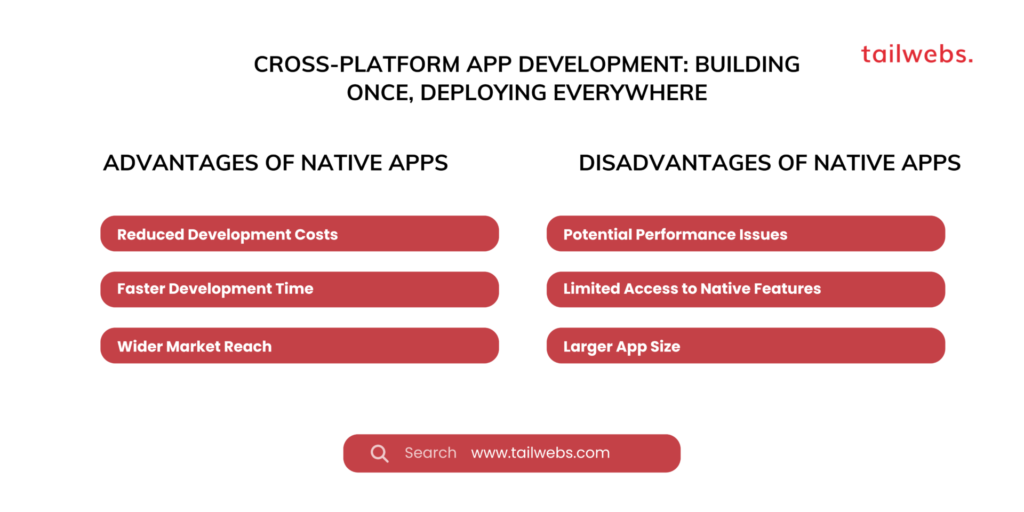
Advantages of Cross-Platform Apps
Reduced Development Costs:
Cross-platform development offers significant cost savings compared to native app development by utilizing a single codebase for multiple platforms.
Faster Development Time:
The ability to write code once and deploy across platforms streamlines the development process, potentially leading to faster time to market.
Wider Market Reach:
Cross-platform apps can reach a broad audience across various operating systems, maximizing your app’s potential user base.
Disadvantages of Cross-Platform Apps
Potential Performance Issues:
While performance has improved considerably, cross-platform apps may not always match the peak performance of native apps, particularly for resource-intensive applications.
Limited Access to Native Features:
Similar to hybrid apps, cross-platform apps might have limitations in accessing certain device-specific functionalities.
Larger App Size:
The compiled code for each platform can increase the overall app size compared to native apps.
Choosing the Right Approach: A Project-Centric Decision
The optimal app development approach hinges on several factors specific to your project and business goals. Here’s a framework to guide your decision-making process:
App Complexity:
For complex apps requiring high performance, extensive device functionality, or exceptional user experience – native development reigns supreme.
Budget and Resources:
If budget and resource constraints are a concern, hybrid or cross-platform development offers a more cost-effective solution.
Target Audience:
Consider your target market’s platform dominance. If you need to reach a specific user base on a particular platform (Android or iOS), native development might be preferable. However, if you aim for a broader audience across platforms, cross-platform development offers wider reach.
Time to Market:
If a rapid launch is crucial, hybrid or cross-platform development can expedite the process compared to building separate native apps.
Project Requirements:
Carefully evaluate your app’s core functionalities and feature requirements. If seamless device integration and access to advanced features are paramount, native development is the way to go. However, if basic functionalities and a broader reach are priorities, hybrid or cross-platform options can be suitable.
Beyond the Core Three: A Look at Emerging Trends
The mobile app development landscape is constantly evolving. Here are some recent trends to consider:
Progressive Web Apps (PWAs):
PWAs bridge the gap between web and native apps. They offer app-like functionality through a web browser, providing an installable experience with features like offline access and push notifications.
Low-Code/No-Code App Development Platforms:
These platforms enable users with minimal coding experience to create basic mobile apps using drag-and-drop interfaces and pre-built components.
Understanding these trends can empower you to explore innovative approaches that align with your project’s specific needs.
The Final Verdict: Choosing the Optimal Path
Ultimately, the decision between native, hybrid, and cross-platform app development doesn’t have a one-size-fits-all answer. By meticulously evaluating your project requirements, target audience, budget, and desired time to market, you can select the approach that best aligns with your business goals.pen_spark
]]>The digital landscape thrives on innovation, and web development frameworks play a pivotal role in building robust and dynamic websites and applications. These frameworks provide developers with a foundation of pre-written code, libraries, and tools, streamlining the development process and fostering efficiency. But with a plethora of frameworks available, selecting the most suitable option for your project can be a daunting task. This comprehensive guide empowers you to navigate the web development framework landscape and make an informed decision for your next project.
Understanding Web Development Frameworks: Building Blocks for Success
Web development frameworks encompass a collection of pre-built code components and functionalities that developers can leverage to expedite the creation of web applications. Imagine building a house – frameworks provide the pre-fabricated walls, electrical wiring, and plumbing, allowing developers to focus on customizing the layout, aesthetics, and unique features of your project.
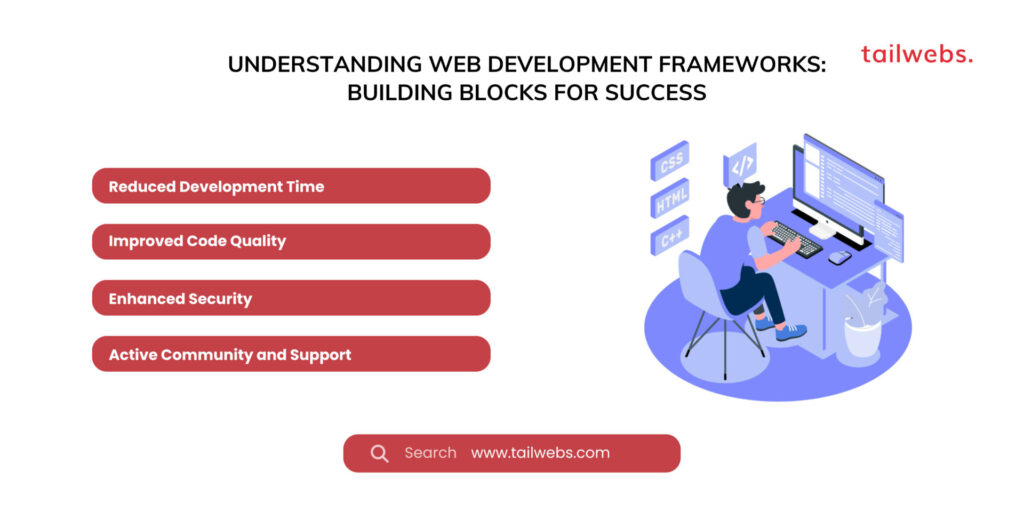
Here are some key benefits of utilizing web development frameworks:
Reduced Development Time:
Frameworks offer pre-written code modules and functionalities, eliminating the need to code everything from scratch. This translates to faster development cycles and quicker time to market for your project.
Improved Code Quality:
Frameworks often enforce coding best practices and conventions, leading to cleaner, more maintainable code. This reduces the risk of errors and simplifies future modifications or maintenance.
Enhanced Security:
Many frameworks prioritize security by incorporating built-in features and libraries to safeguard against common web vulnerabilities.
Active Community and Support:
Popular frameworks typically boast extensive online communities and documentation resources, providing developers with valuable support and troubleshooting assistance.
A Taxonomy of Frameworks: Categorizing Options for Diverse Needs
Web development frameworks cater to various aspects of web application development. Understanding these categories is crucial for selecting the most appropriate framework for your project:
Front-End Frameworks:
These frameworks focus on the user interface (UI) and user experience (UX) of a web application. They handle tasks like DOM manipulation, styling, and user interactions. Popular Front-End frameworks include React, Angular, and Vue.js.
Back-End Frameworks:
These frameworks handle the server-side logic of a web application, including data processing, database interactions, and business logic implementation. Examples of Back-End frameworks include Django (Python), Ruby on Rails (Ruby), and Laravel (PHP).
Full-Stack Frameworks:
These frameworks focus on the user interface (UI) and user experience (UX) of a web application. They handle tasks like DOM manipulation, styling, and user interactions. Popular Front-End frameworks include React, Angular, and Vue.js.
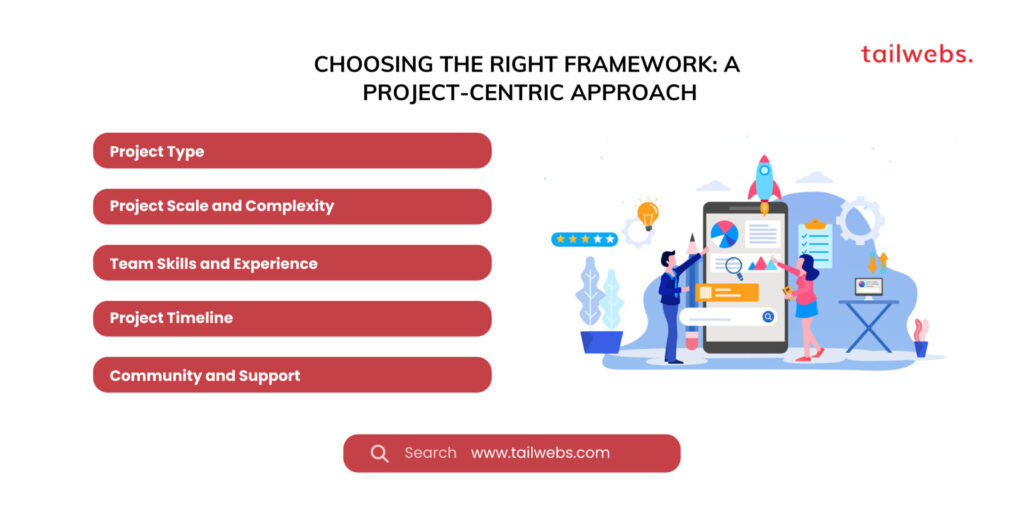
Choosing the Right Framework: A Project-Centric Approach
The optimal web development framework selection hinges on several factors specific to your project’s requirements and goals. Here’s a framework to guide your decision-making process:
Project Type:
Consider the type of web application you’re building. A simple brochure website might have different framework requirements compared to a complex e-commerce platform or a real-time chat application.
Project Scale and Complexity:
For larger, feature-rich projects, robust frameworks like Angular or Django might be suitable. Smaller projects with simpler functionalities could benefit from the flexibility of frameworks like Vue.js or Flask (Python).
Team Skills and Experience:
Evaluate your development team’s expertise. Choosing a framework that aligns with their skillset can optimize development efficiency and minimize the learning curve.
Project Timeline:
Frameworks with extensive pre-built components can expedite development. Consider the time constraints of your project when evaluating framework options.
Community and Support:
A vibrant community and comprehensive documentation resources are invaluable assets. Prioritize frameworks with strong community backing for easier access to support and troubleshooting assistance.
A Glimpse into Popular Frameworks: Understanding Their Strengths
Let’s delve into some of the most popular web development frameworks and explore their key strengths:
React (Front-End):
Developed by Facebook, React is a powerful and versatile framework known for its component-based architecture, virtual DOM for efficient UI updates, and vast ecosystem of libraries and tools. React excels at building complex, interactive user interfaces and single-page applications (SPAs).
Angular (Front-End):
Created by Google, Angular is a comprehensive framework offering a structured, opinionated approach to web development. Angular utilizes TypeScript for enhanced code maintainability and boasts features like dependency injection, routing, and two-way data binding. It’s ideal for building large-scale, enterprise-level web applications.
Vue.js (Front-End):
Vue.js stands out for its simplicity, flexibility, and ease of learning. It offers a progressive approach, allowing developers to choose
Django (Back-End):
Written in Python, Django is a high-level, full-featured framework renowned for its rapid development capabilities, clean syntax, and robust security features. Django is an excellent choice for building complex web applications with intricate back-end functionalities and rapid development cycles.
Ruby on Rails (Back-End):
This popular framework, built on the Ruby programming language, is known for its developer-friendly nature, convention over configuration philosophy, and emphasis on code readability. Ruby on Rails is well-suited for building web applications that require rapid prototyping and a focus on developer productivity.
Laravel (Back-End):
Developed in PHP, Laravel is a feature-rich framework offering a clean MVC architecture, expressive syntax, and a vast ecosystem of packages. Laravel excels at building complex web applications, e-commerce platforms, and content management systems (CMS).
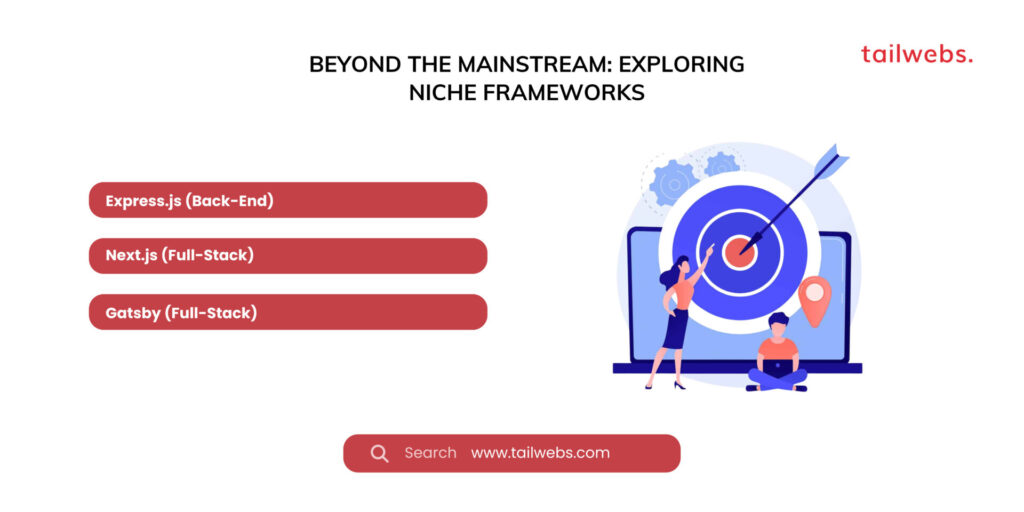
Beyond the Mainstream: Exploring Niche Frameworks
While the aforementioned frameworks dominate the landscape, numerous niche options cater to specific requirements:
Express.js (Back-End):
This lightweight Node.js framework offers a flexible and minimalist approach to back-end development, ideal for building APIs and microservices.
Next.js (Full-Stack):
Built on top of React, Next.js provides features like server-side rendering (SSR) and static site generation (SSG) for enhanced SEO and performance. Next.js is a great choice for building SEO-friendly web applications and e-commerce platforms.
Gatsby (Full-Stack):
Another React-based framework, Gatsby excels at building static websites and progressive web applications (PWAs) that prioritize performance and scalability.
The Continuous Evolution of Web Development Frameworks
The web development landscape is dynamic, and web development frameworks are constantly evolving. Here are some recent trends to watch:
Rise of JavaScript Frameworks:
JavaScript continues to reign supreme on the front-end, with frameworks like React, Vue.js, and Angular remaining dominant players.
Focus on Developer Experience (DX):
Frameworks are increasingly prioritizing developer experience by offering features like improved tooling, hot reloading, and streamlined debugging processes.
Microservices Architecture:
The growing popularity of microservices architectures is influencing framework design, with frameworks offering better support for building modular and scalable web applications.
Static Site Generation (SSG) and Server-Side Rendering (SSR):
The focus on SEO and performance is driving the adoption of frameworks that enable SSG and SSR functionalities.
Staying informed about these trends can empower you to select a framework that aligns with the latest advancements in web development.
The Final Verdict: Making an Informed Choice
Choosing the right web development framework is a crucial decision that can significantly impact your project’s success. By meticulously evaluating your project’s requirements, team expertise, desired development speed, and the importance of community support, you can select the framework that best propels your project forward.
]]>This comprehensive guide explores the opportunities and challenges associated with using Python for blockchain development. We’ll delve into Python’s suitability for blockchain projects, explore key libraries and frameworks, and discuss the advantages and potential drawbacks of using Python in this dynamic field.
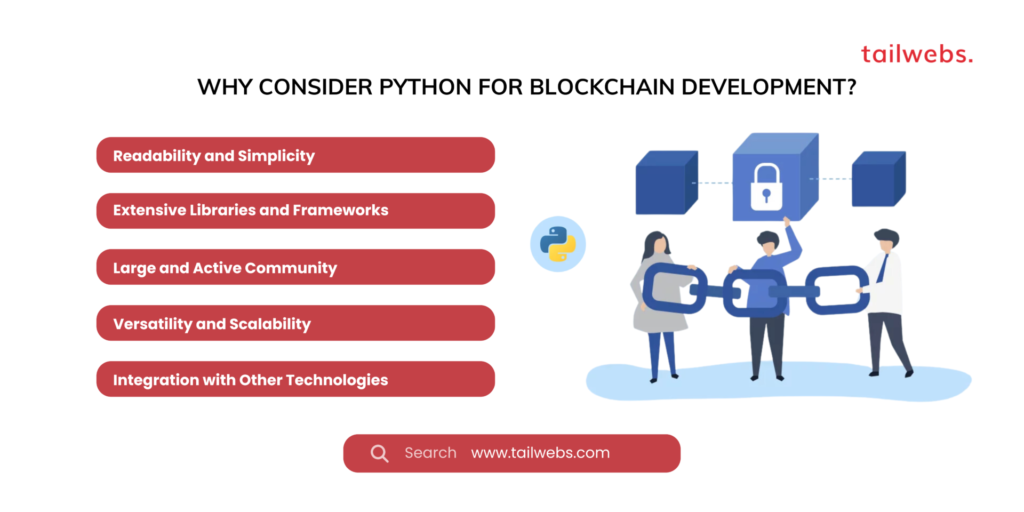
Why Consider Python for Blockchain Development?
Python’s popularity in blockchain development can be attributed to several factors:
Readability and Simplicity:
Python boasts a clear, concise syntax, often referred to as “pseudocode.” This makes it easier to learn, write, and maintain complex blockchain code, even for developers with no prior blockchain experience.
Extensive Libraries and Frameworks:
Python offers a rich ecosystem of libraries and frameworks specifically designed for blockchain development. Libraries like hashlib, web3.py, and Brownie simplify tasks like cryptography, smart contract interaction, and blockchain network communication.
Large and Active Community:
Python enjoys a vast and active developer community. This translates to readily available resources, tutorials, and support for troubleshooting challenges encountered during blockchain development.
Versatility and Scalability:
Python is a versatile language, well-suited for various development tasks beyond just blockchain. This allows developers to leverage their Python expertise across different aspects of a blockchain project.
Integration with Other Technologies:
Python integrates seamlessly with various technologies commonly used in blockchain development, such as web frameworks (Django, Flask) and data science libraries (NumPy, Pandas).
Key Python Libraries and Frameworks for Blockchain Development
Here’s a closer look at some of the most valuable Python libraries and frameworks for blockchain development:
hashlib:
This built-in library provides cryptographic hash functions, essential for ensuring data integrity and security within blockchain applications.
web3.py:
This popular library allows interaction with the Ethereum blockchain. Developers can use web3.py to deploy smart contracts, execute transactions, and access data stored on the Ethereum network.
Brownie:
Brownie is a Python-based framework specifically designed for smart contract development. It offers a streamlined development environment for writing, testing, and deploying smart contracts on various blockchain platforms.
Hyperledger Fabric:
This open-source framework allows building permissioned blockchains for private or consortium use cases. Python is one of the primary supported languages for developing applications on Hyperledger Fabric.
Sawtooth SDK:
Another permissioned blockchain framework, Sawtooth, utilizes Python as its primary development language. The Sawtooth SDK provides tools for building secure and scalable blockchain applications for specific industry needs.
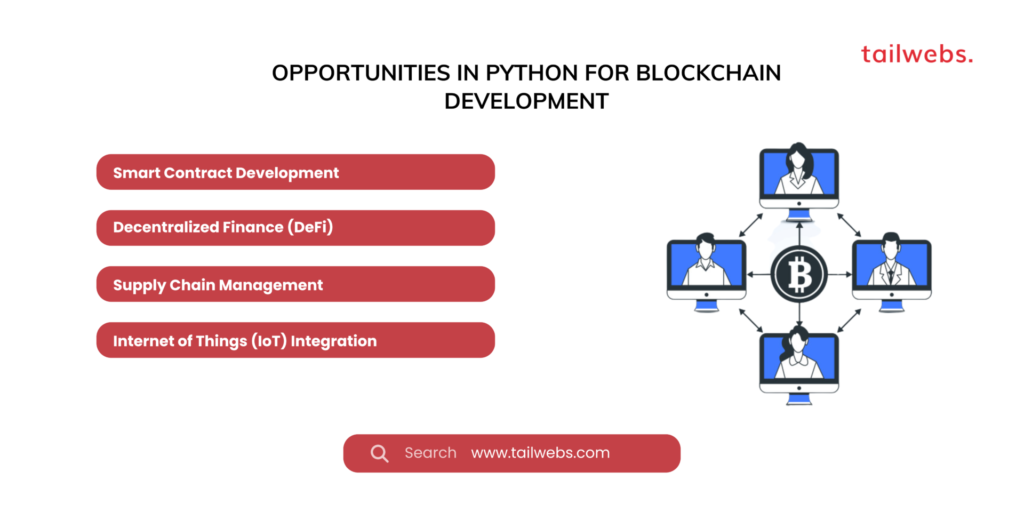
Opportunities in Python for Blockchain Development
The rise of blockchain technology presents exciting opportunities for Python developers:
Smart Contract Development:
Python’s readability and extensive libraries make it ideal for writing secure and efficient smart contracts, the self-executing code that powers decentralized applications (dApps).
Decentralized Finance (DeFi):
DeFi, a rapidly growing sector within blockchain, offers numerous opportunities for Python developers to build innovative financial applications like lending platforms, automated market makers, and more.
Supply Chain Management:
Blockchain technology can revolutionize supply chain management by ensuring transparency and traceability. Python developers can leverage their skills to build applications that track goods and materials throughout the supply chain.
Internet of Things (IoT) Integration:
The convergence of blockchain and IoT has the potential to create a secure and transparent ecosystem for connected devices. Python’s versatility allows developers to build applications that bridge the gap between blockchain and IoT technologies.
These are just a few examples, and as blockchain technology continues to evolve, new opportunities will undoubtedly emerge for Python developers in various industries.
Challenges of Using Python for Blockchain Development
While Python offers significant advantages, there are also some challenges to consider:
Performance:
Compared to languages like C++, Python might not be the most performant choice for highly resource-intensive blockchain applications. However, ongoing advancements in Python optimization techniques and the use of libraries like Cython can help mitigate this challenge.
Scalability:
Scalability concerns can arise when dealing with high-volume blockchain applications. While Python can handle various use cases, for extremely large-scale blockchain projects, other languages like Java or Go might be better suited for optimal scalability.
Limited Blockchain-Specific Libraries:
While Python boasts a rich ecosystem of libraries, the selection of blockchain-specific libraries is still evolving compared to languages with a longer history in blockchain development. However, the Python blockchain development community is actively expanding the available libraries and frameworks.
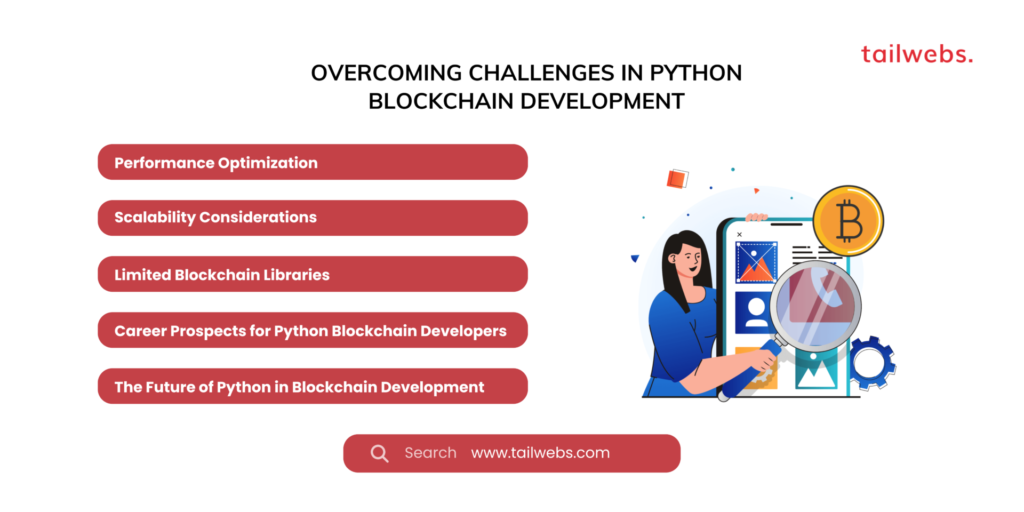
Overcoming Challenges in Python Blockchain Development
While Python offers significant advantages, the identified challenges can be addressed through strategic approaches:
Performance Optimization:
Cython:
Consider using Cython, a tool that translates Python code into optimized C extensions, enhancing performance for computationally intensive tasks within your blockchain application.
Focus on Algorithmic Efficiency:
Prioritize well-optimized algorithms and data structures within your Python code to improve overall application performance.
Scalability Considerations:
Horizontal Scaling:
For high-volume blockchain applications, explore horizontal scaling techniques by distributing workloads across multiple machines running Python code.
Focus on Modular Design:
By implementing a modular design approach, you can potentially isolate performance bottlenecks and rewrite specific modules in more performant languages like C++ if necessary.
Limited Blockchain Libraries:
Stay Updated:
The Python blockchain development ecosystem is constantly evolving. Keep yourself informed about the latest libraries and frameworks emerging to address specific blockchain development needs.
Contribute to Open-Source Projects:
Consider contributing to open-source libraries and frameworks to expand the available Python toolkit for blockchain development.
By implementing these strategies, you can mitigate the potential drawbacks of using Python for blockchain development and leverage its strengths to build robust and scalable blockchain applications.
Career Prospects for Python Blockchain Developers
The demand for skilled blockchain developers is rapidly increasing. Here’s what Python developers can expect in the job market:
High Demand and Salaries:
With the rise of blockchain technology across various industries, the demand for Python blockchain developers is high, leading to potentially attractive salaries and compensation packages.
Diverse Job Opportunities:
Python’s versatility allows developers to explore opportunities in various sectors, from finance and supply chain management to healthcare and voting systems.
Career Growth Potential:
The blockchain industry is still young and evolving. As the technology matures, early adopters with Python blockchain development skills can position themselves for significant career growth.
The Future of Python in Blockchain Development
Looking ahead, Python’s role in blockchain development is expected to remain prominent:
Evolving Libraries and Frameworks:
The Python blockchain development community is continuously innovating. Expect a wider range of specialized libraries and frameworks to emerge, further simplifying and streamlining blockchain application development using Python.
Focus on Interoperability:
As blockchain platforms evolve, interoperability between different blockchains will become increasingly crucial. Python’s versatility can play a significant role in building applications that bridge the gap between different blockchain ecosystems.
Integration with Artificial Intelligence (AI):
The convergence of blockchain and AI presents exciting possibilities. Python’s strength in both domains positions it well for developing intelligent blockchain applications powered by AI and machine learning.
By staying informed about these trends and honing your Python blockchain development skills, you can position yourself to be at the forefront of this exciting and rapidly evolving technological landscape.
In Conclusion: A Rewarding Journey with Python and Blockchain
Python offers a powerful and accessible entry point into the world of blockchain development. Its readability, extensive libraries, and large developer community make it an attractive choice for developers of all experience levels. While some challenges exist, they can be addressed through strategic optimization techniques and a focus on continuous learning.
The future of Python in blockchain development is bright. As the technology matures and new opportunities emerge, Python developers with the right skillset can carve a successful path in this dynamic and transformative field. If you’re a Python developer looking to expand your skillset and explore the exciting world of blockchain, now is the perfect time to embark on this rewarding journey.
]]>This comprehensive guide explores the reasons why Python is the language of choice for data science, delves into the core skills required for success, and outlines practical steps you can take to future-proof your skillset by mastering Python data science.
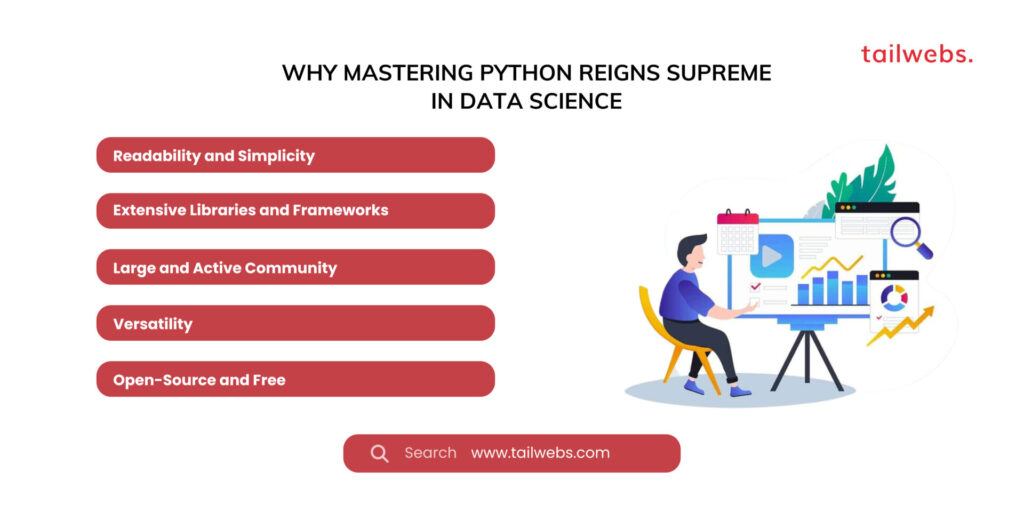
Why Mastering Python Reigns Supreme in Data Science
Python’s dominance in data science can be attributed to several compelling factors:
Readability and Simplicity:
Python boasts a clear, concise syntax, often compared to plain English. This makes it easier to learn, write, and maintain complex data science code, even for those without extensive programming experience.
Extensive Libraries and Frameworks:
The Python ecosystem offers a rich collection of powerful libraries and frameworks specifically designed for data science tasks. Libraries like NumPy, pandas, Scikit-learn, and TensorFlow simplify data manipulation, analysis, machine learning, and deep learning applications.
Large and Active Community:
Python enjoys a vast and active developer community. This translates to readily available resources, tutorials, and support for troubleshooting challenges encountered during your data science journey.
Versatility:
Python is a general-purpose language, well-suited for various tasks beyond just data science. This allows data scientists to leverage their Python expertise across different aspects of a project, from data acquisition to visualization.
Open-Source and Free:
Python is an open-source language, freely available for anyone to use and contribute to. This eliminates licensing costs and fosters a collaborative development environment.
Core Skills for Mastering Python Data Science
To excel in Python data science, mastering these fundamental skills is crucial:
Programming Fundamentals:
A solid understanding of programming concepts like variables, data types, loops, functions, and control flow is essential for writing effective Python code for data science tasks.
Data Wrangling and Manipulation:
Real-world data often comes in messy formats. Python libraries like pandas and NumPy equip you with the skills to clean, transform, and prepare data for analysis.
Exploratory Data Analysis (EDA):
EDA involves visualizing and summarizing data to uncover patterns, trends, and relationships. Libraries like Matplotlib and Seaborn empower you to create informative data visualizations.
Statistics and Probability:
A strong foundation in statistical concepts like central tendency, hypothesis testing, and correlation analysis is crucial for drawing meaningful insights from data.
Machine Learning Fundamentals:
Machine learning algorithms allow computers to learn from data and make predictions. Mastering the core concepts of supervised and unsupervised learning is essential for building intelligent data science applications.
Future-Proofing Your Skills: A Step-by-Step Guide
Here’s a practical roadmap to guide you on your journey towards mastering Python data science and future-proofing your skillset:
Build a Strong Foundation in Python:
Start by learning the basics of Python programming. Numerous online tutorials, courses, and coding bootcamps can equip you with the necessary foundational knowledge.
Explore Essential Libraries:
Familiarize yourself with key Python libraries like pandas, NumPy, Scikit-learn, and Matplotlib. Online resources, tutorials, and data science projects can help you gain hands-on experience with these powerful tools.
Practice Data Wrangling and Manipulation:
Work on real-world or simulated datasets to hone your data cleaning, transformation, and manipulation skills. Platforms like Kaggle offer a wealth of datasets for practice.
Delve into Exploratory Data Analysis (EDA):
Learn how to visualize data effectively using libraries like Matplotlib and Seaborn. Practice creating various charts and graphs to uncover hidden patterns and relationships within datasets.
Strengthen Your Statistical Knowledge:
Brush up on your statistics and probability skills. Numerous online resources and courses can help you solidify your understanding of statistical concepts relevant to data science.
Master Machine Learning Fundamentals:
Explore the fundamentals of supervised and unsupervised machine learning algorithms. Online courses and tutorials can provide a solid introduction to machine learning concepts.
Work on Personal Projects:
Consolidate your learning by undertaking personal data science projects. This allows you to apply your newly acquired skills to solve real-world problems and build a portfolio showcasing your capabilities.
Stay Updated and Engaged:
The data science landscape is constantly evolving. Stay informed about the latest trends, libraries, and advancements by following relevant blogs, attending conferences, and participating in online communities.
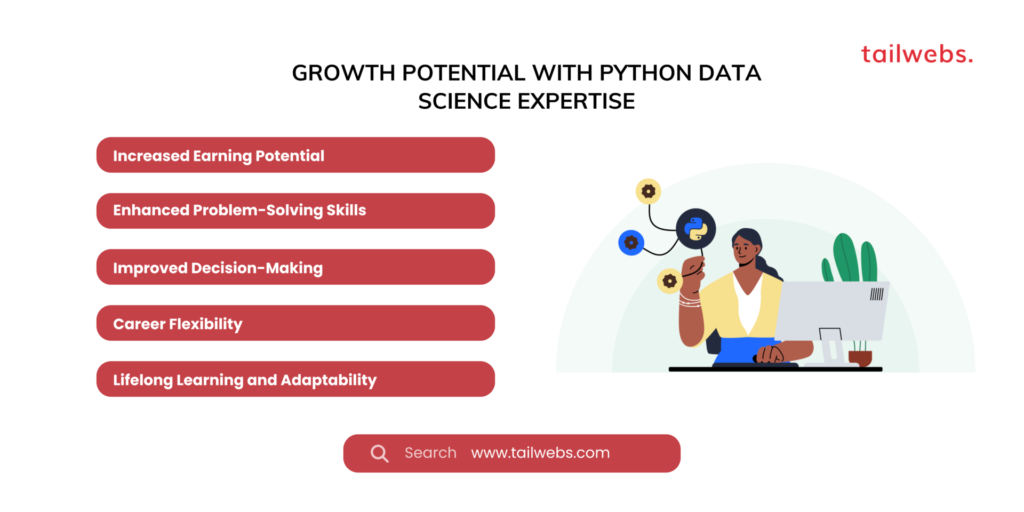
Growth Potential with Python Data Science Expertise
Mastering Python data science empowers you to unlock significant growth potential in various ways:
Increased Earning Potential:
Data scientists are in high demand across various industries. According to Indeed, the average base salary for a data scientist in the US is $120,439 (as of March 17, 2024). With experience and advanced skills, data scientists can command even higher salaries.
Enhanced Problem-Solving Skills:
Data science equips you with a data-driven approach to problem-solving. You’ll learn to analyze complex situations, identify root causes, and develop data-backed solutions for various challenges.
Improved Decision-Making:
By leveraging data insights, you can make more informed and data-driven decisions, leading to better outcomes in any field. This skill is valuable not only in professional settings but also in personal life.
Career Flexibility:
Python data science expertise opens doors to a wide range of career paths. You can work as a data scientist, machine learning engineer, data analyst, business intelligence specialist, or even pursue entrepreneurial ventures involving data analysis.
Lifelong Learning and Adaptability:
The data science field is constantly evolving. Mastering Python data science equips you with the skills and mindset to embrace lifelong learning and adapt to new technologies and trends within the ever-changing digital landscape.
Exciting Career Opportunities with Python Data Science Skills
The demand for Python data science skills spans numerous industries. Here are some exciting career paths to consider:
Data Scientist:
As a data scientist, you’ll be responsible for collecting, cleaning, analyzing, and interpreting data to extract valuable insights. You’ll also develop and implement machine learning models to solve complex business problems.
Machine Learning Engineer:
Machine learning engineers design, build, deploy, and maintain machine learning models. They work closely with data scientists to translate insights into production-ready models with real-world applications.
Data Analyst:
Data analysts collect, analyze, and visualize data to identify trends and patterns. They communicate these insights to stakeholders to inform business decisions.
Business Intelligence Specialist:
Business intelligence specialists leverage data analysis and visualization techniques to provide insights that drive business strategy and improve operational efficiency.
Data Journalist:
Data journalists use data to tell stories and uncover hidden truths. They combine data analysis skills with strong communication and storytelling abilities to create impactful content.
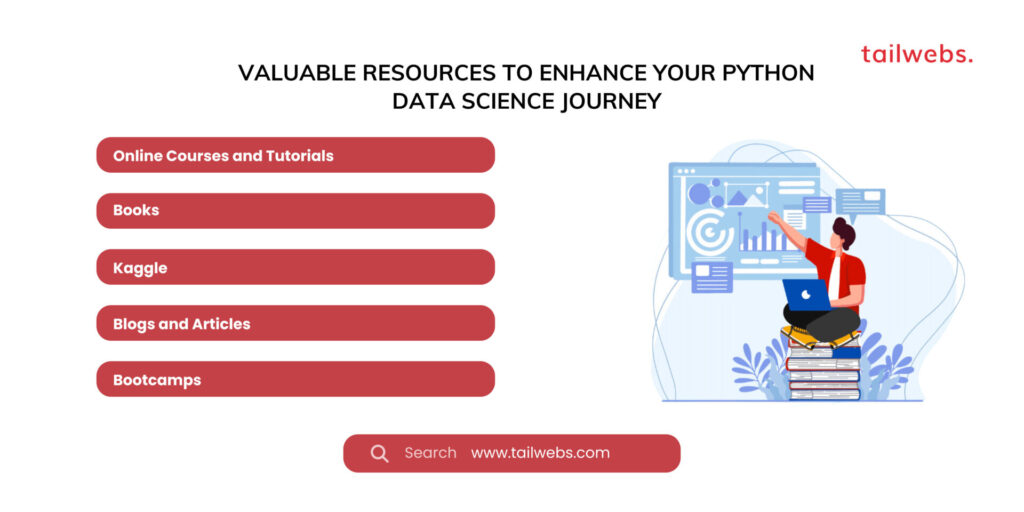
Valuable Resources to Enhance Your Python Data Science Journey
Here are some resources to equip you on your path to mastering Python data science:
Online Courses and Tutorials:
Platforms like Coursera, edX, Udacity, and Kaggle Learn offer a plethora of online courses and tutorials on Python data science, ranging from beginner to advanced levels.
Books:
Numerous excellent books cover Python data science concepts and techniques. Popular choices include “Python for Data Analysis” by Wes McKinney, “Hands-On Machine Learning with Scikit-Learn, Keras & TensorFlow” by Aurélien Géron, and “Data Science for Business” by Foster Provost and Tom Fawcett.
Kaggle:
Kaggle is a vibrant online community for data scientists. It offers a wealth of datasets, competitions, and discussions to help you practice your skills and learn from others.
Blogs and Articles:
Stay updated on the latest trends and advancements in data science by following prominent blogs like “Machine Learning Mastery,” “KDnuggets,” and “The Analytics Vidhya.”
Bootcamps:
Data science bootcamps offer intensive in-person or online programs designed to equip you with the necessary skills to launch a career in data science.
Conclusion: Mastering Python Data Science – A Rewarding Investment
In conclusion, mastering Python data science is a rewarding investment in your future. By equipping yourself with this valuable skillset, you unlock a world of opportunities for growth, enhance your problem-solving and decision-making abilities, and position yourself for a successful career in the ever-growing data-driven world.
Remember, the key to success lies in continuous learning, dedication to practice, and a willingness to adapt to the evolving landscape of data science. Embrace the journey, leverage the available resources, and watch your skills and career flourish in the exciting realm of Python data science.
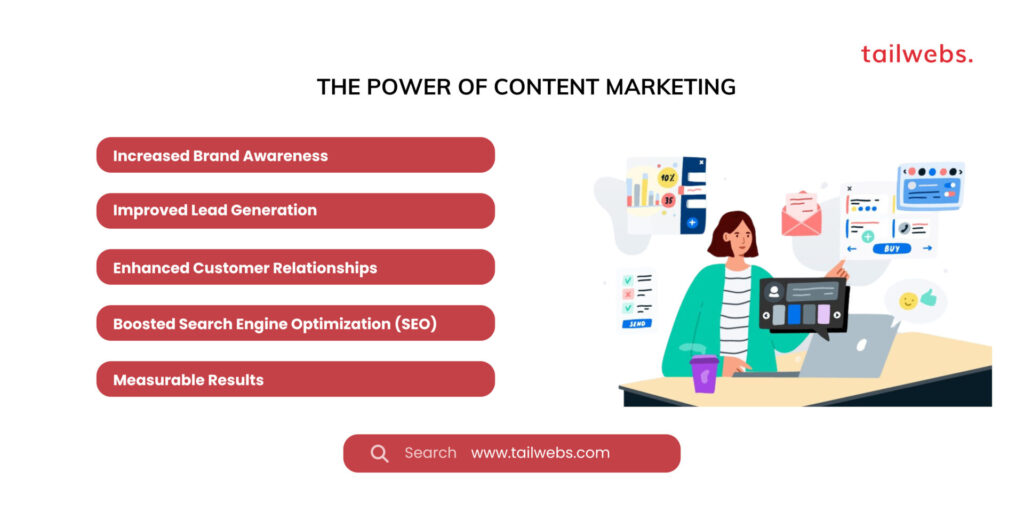
]]>The Power of Content Marketing
Content marketing offers a multitude of benefits for businesses:
Increased Brand Awareness:
High-quality content establishes your brand as a thought leader and a trusted source of information within your industry.
Improved Lead Generation:
Engaging content attracts potential customers and compels them to provide their contact information in exchange for valuable resources like ebooks, white papers, or webinars.
Enhanced Customer Relationships:
Content fosters deeper connections with your audience. By providing valuable information and addressing their pain points, you build trust and loyalty.
Boosted Search Engine Optimization (SEO):
Content rich in relevant keywords improves your website’s ranking in search engine results pages (SERPs), driving organic traffic and increasing website visibility.
Measurable Results:
Content marketing allows you to track key metrics like website traffic, lead generation, and conversion rates, enabling you to measure the effectiveness of your campaigns and optimize your content strategy for better results.
Statistics that Showcase the Content Marketing Magic:
- Content marketing generates about 3x the leads compared to traditional marketing methods. [invalid URL removed]]
- 61% of B2B buyers consume content during the research phase of their buying journey. https://learn.demandbase.com/introduction-to-paid-social-media-advertising-1]
- High-quality content can increase website conversion rates by up to 5%. [invalid URL removed]]
These statistics paint a clear picture: content marketing is a potent force in today’s digital marketing landscape. But how do you create content that truly converts?
The Secrets to Crafting Content Marketing Magic
Here’s a recipe for creating content that not only engages your audience but also drives conversions:
Know Your Audience:
Understanding your target audience is paramount. Conduct thorough audience research to identify their demographics, interests, pain points, and preferred content formats (e.g., blog posts, videos, infographics).
Define Clear Content Goals:
Set specific goals for each piece of content you create. Do you want to generate leads, increase website traffic, educate your audience, or establish brand thought leadership? Having clear goals allows you to tailor your content and measure its success.
Focus on Value Proposition:
Every piece of content you create should offer value to your audience. Address their challenges, provide solutions, educate them on relevant topics, or entertain them with insightful and engaging content.
Content Variety is Key:
Don’t be afraid to experiment with different content formats. Utilize blog posts, infographics, videos, ebooks, case studies, and social media content to cater to diverse learning preferences and keep your audience engaged.
Optimize for Search Engines (SEO):
Integrate relevant keywords organically into your content to improve search engine visibility. However, prioritize creating content for humans first and search engines second.
Compelling Calls to Action (CTAs):
Tell your audience what you want them to do next. Include clear and concise CTAs that encourage them to download an ebook, subscribe to your newsletter, or contact you for a consultation.
Promote Your Content:
Creating amazing content is only half the battle. Promote your content across various channels like social media, email marketing, and influencer outreach to ensure it reaches your target audience.
Content Consistency is Crucial:
Building a loyal audience requires consistent content creation. Develop a content calendar and stick to a regular publishing schedule to keep your audience engaged and coming back for more.
Analyze and Adapt:
Track the performance of your content using analytics tools. Identify what resonates with your audience and what doesn’t. Continuously analyze, adapt, and refine your content strategy based on data-driven insights.
Content Marketing Magic in Action: Examples for Inspiration
Here are some inspiring examples of brands using content marketing magic to achieve remarkable results:
HubSpot:
HubSpot, a leading marketing automation platform, has built a content marketing empire. They offer a wealth of free resources, including blog posts, ebooks, webinars, and video tutorials, covering various marketing topics. This valuable content attracts potential customers, establishes HubSpot as a thought leader, and ultimately drives sales of their marketing software.
Dollar Shave Club:
Dollar Shave Club disrupted the razor industry with their humorous and irreverent video content. Their launch video went viral, garnering millions of views and propelling them to success. This example highlights the power of creating engaging and entertaining content that resonates with your target audience.
Slack:
Slack, a popular workplace communication platform, utilizes content marketing to educate potential customers about the benefits of using their product. Their blog features insightful articles about workplace productivity, remote work best practices, and team collaboration strategies. This valuable content positions Slack as a trusted resource and ultimately influences businesses to adopt their platform.
Red Bull:
Red Bull’s content marketing strategy goes beyond traditional marketing messages. They focus on creating action-packed and inspiring content that aligns with their brand image. Red Bull sponsors extreme sports athletes and events, creating captivating videos and documentaries that showcase human potential and adventure. This approach fosters brand loyalty and emotional connection with their target audience.
Unilever’s “Dove Real Beauty” Campaign:
Dove’s “Real Beauty” campaign is a shining example of content marketing that sparks conversation and social change. This campaign features real women of diverse shapes, sizes, and ethnicities, challenging traditional beauty standards and promoting body positivity. This powerful content marketing initiative resonated with a global audience and significantly boosted brand loyalty for Dove.
These examples showcase the diverse ways brands can leverage content marketing to achieve success. By understanding your target audience, crafting valuable and engaging content, and promoting it effectively, you too can create content marketing magic and achieve your business goals.
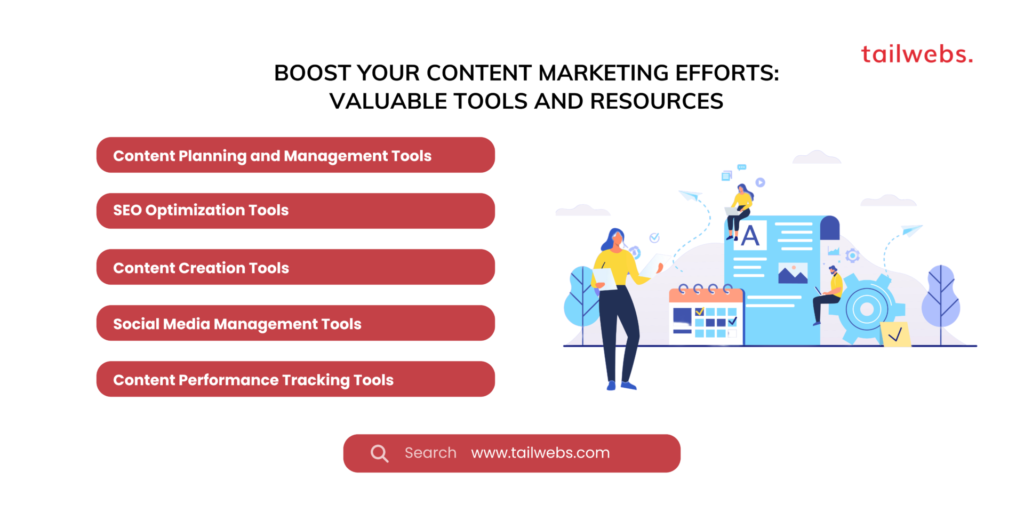
Boost Your Content Marketing Efforts: Valuable Tools and Resources
Here are some valuable tools and resources to elevate your content creation process:
Content Planning and Management Tools:
Trello, Asana, and monday.com can help you plan your content calendar, assign tasks, and collaborate with your team effectively.
SEO Optimization Tools:
SEMrush, Ahrefs, and Moz offer tools to research keywords, analyze competitor content, and optimize your content for search engines.
Content Creation Tools:
Canva and Visme allow you to create visually appealing graphics, infographics, and presentations to enhance your content.
Social Media Management Tools:
Hootsuite, Buffer, and Sprout Social streamline social media scheduling, content promotion, and community engagement.
Content Performance Tracking Tools:
Google Analytics and social media analytics platforms provide valuable insights into your content’s performance, allowing you to track key metrics and optimize your strategy.
By leveraging these tools and resources, you can streamline your content creation workflow, improve the quality and effectiveness of your content, and gain valuable data-driven insights to inform your content marketing strategy.
Overcoming Common Content Marketing Challenges
While content marketing is a powerful tool, it’s not without its challenges. Here are some common roadblocks and how to overcome them:
Lack of Content Ideas:
Combat this by brainstorming with your team, conducting audience research, and staying updated on industry trends. Utilize content curation strategies to share valuable resources from other creators.
Creating High-Quality Content Consistently:
Content creation takes time and effort. Develop a content calendar, delegate tasks, and repurpose existing content into different formats to maintain consistency.
Measuring Content Marketing ROI:
Focus on tracking key metrics like website traffic, lead generation, engagement rates, and conversions. Use analytics tools to demonstrate the value your content brings to your business.
Standing Out in a Crowded Marketplace:
Conduct competitor analysis to understand their content strategy. Focus on creating unique and valuable content that solves your audience’s specific problems and establishes your brand voice.
Content Promotion Challenges:
Utilize social media marketing, email marketing, influencer outreach, and paid advertising to promote your content effectively. Build relationships with other content creators for potential collaborative content efforts.
By acknowledging these challenges and implementing strategic solutions, you can navigate the content marketing landscape
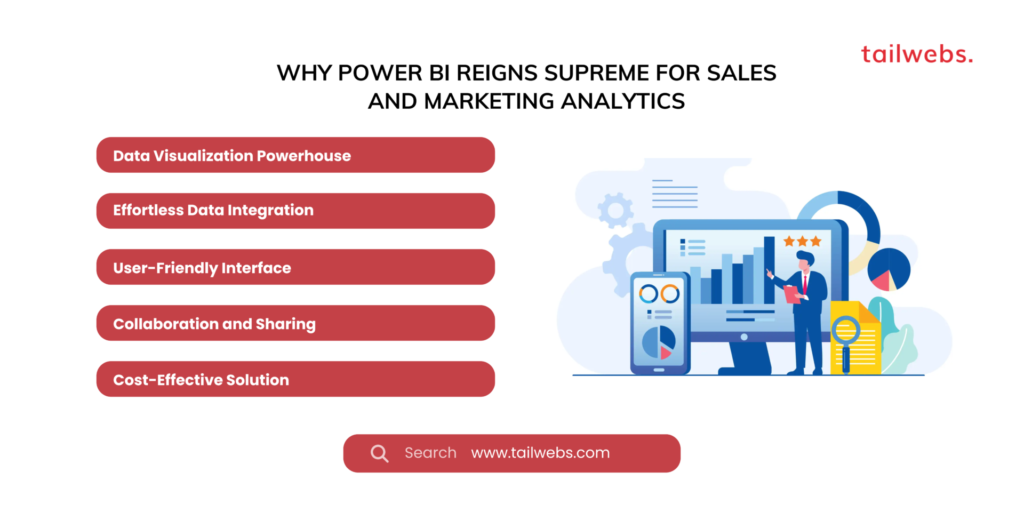
]]>Why Power BI Reigns Supreme for Sales and Marketing Analytics
Power BI offers a compelling set of features that make it a perfect fit for sales and marketing analytics:
Data Visualization Powerhouse:
Power BI boasts exceptional data visualization capabilities. It allows you to create interactive dashboards, charts, and graphs that transform complex data into easily understandable visuals, enabling clear communication of insights to stakeholders.
Effortless Data Integration:
Power BI seamlessly integrates with a wide range of data sources, including CRM systems, marketing automation platforms, social media analytics tools, and even Excel spreadsheets. This eliminates the need for manual data manipulation and ensures you have a unified view of your sales and marketing data.
User-Friendly Interface:
Power BI features a user-friendly interface that makes it accessible to users of all technical skill levels. Sales and marketing professionals without extensive data analysis experience can leverage Power BI to create insightful reports and dashboards.
Collaboration and Sharing:
Power BI fosters collaboration by allowing teams to share reports and dashboards seamlessly. This streamlines communication and ensures everyone is on the same page when it comes to sales and marketing performance.
Cost-Effective Solution:
Power BI offers a freemium model, making it an attractive option for businesses of all sizes. The free version provides a robust set of features to get you started, with paid plans offering additional functionalities for larger-scale deployments.
Sales and Marketing Metrics You Can Track with Power BI
Here are some crucial sales and marketing metrics you can effectively track and analyze using Power BI:
Sales Performance:
- Revenue by Product, Customer, Region, or Sales Representative
- Sales Funnel Analysis (Track leads through each stage of the sales funnel and identify bottlenecks)
- Win Rate and Sales Cycle Length Analysis
- Customer Lifetime Value (CLV)
Marketing Performance:
- Marketing Campaign Performance (Track ROI, click-through rates, conversion rates, and identify the most successful campaigns)
- Website Traffic Analysis (Understand where your website traffic originates from, user behavior on your website, and identify high-performing landing pages)
- Lead Generation Analysis (Track lead sources, lead quality, and optimize lead nurturing campaigns)
- Social Media Marketing Analysis (Measure engagement metrics, identify top-performing content, and track brand sentiment)
- By monitoring these key metrics in Power BI dashboards, you gain valuable insights into your sales and marketing efforts. This empowers you to optimize campaigns, allocate resources effectively, and maximize your return on investment (ROI).
Building Powerful Sales and Marketing Reports with Power BI
Here are some examples of powerful reports you can create using Power BI for sales and marketing analytics:
Sales Pipeline Report:
Visualize your sales pipeline, identify potential roadblocks, and forecast future sales based on historical data and current trends.
Marketing Campaign Performance Report:
Analyze the effectiveness of your marketing campaigns across various channels, identify the most profitable campaigns, and optimize your marketing budget allocation.
Customer Segmentation Report:
Segment your customer base based on demographics, purchase history, and behavior. This allows you to tailor your marketing messages and promotions for maximum impact.
Sales Team Performance Report:
Track the performance of individual sales representatives and identify areas for improvement. Motivate your sales team through data-driven insights and coaching.
Social Media Listening Report:
Gain insights into brand sentiment on social media platforms. Identify areas where you can improve customer experience and address any negative feedback promptly.
These reports provide valuable data-driven insights that empower sales and marketing teams to make informed decisions and achieve their goals.
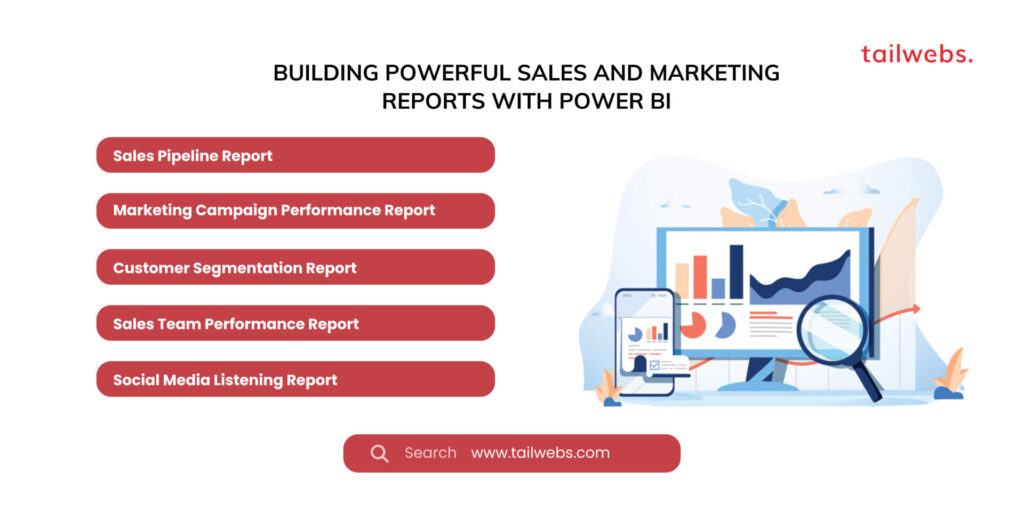
Connecting Power BI to Your Data Sources:
Power BI offers a variety of connectors that allow you to seamlessly connect to a wide range of data sources relevant to sales and marketing. Here’s a breakdown of the process:
Launch Power BI Desktop:
Download and install Power BI Desktop from Microsoft’s website. This is the free application you’ll use to create your reports and dashboards.
Access the “Get Data” Pane:
Click on the “Get Data” option in the Home tab of Power BI Desktop. This opens a window displaying available data connectors.
Choose Your Data Source:
Select the connector corresponding to your desired data source (e.g., Salesforce, Google Analytics, Facebook Insights, etc.). Power BI offers connectors for a vast array of popular CRM systems, marketing automation platforms, social media platforms, and even cloud storage services like Dropbox.
Authenticate and Connect:
Follow the on-screen prompts to authenticate your connection with the chosen data source. This typically involves entering your login credentials for the specific platform.
Data Transformation (Optional):
Once connected, you may have the option to transform your data within Power BI Desktop. This could involve filtering data, renaming columns, or creating calculated fields for further analysis.
Load Your Data:
Once you’re satisfied with your data selection and any necessary transformations, click “Load” to import the data into your Power BI report.
By following these steps, you can establish a connection between Power BI and your various sales and marketing data sources, creating a unified platform for analysis.
Crafting Compelling Reports and Dashboards in Power BI
Once your data is loaded into Power BI, you can start crafting insightful reports and dashboards:
Visualizations:
Drag and drop the desired data fields onto the report canvas. Power BI offers a wide range of visualizations like charts, graphs, tables, and maps to represent your data effectively. Choose the most suitable visualization type based on the insights you want to convey.
Filters and Slicers:
Incorporate filters and slicers into your reports to allow users to interact with the data and focus on specific segments. This empowers them to explore the data from different angles and gain deeper insights.
Drill-Down Functionality:
Enable drill-down capabilities within your reports. This allows users to click on specific data points and delve deeper into underlying details. This functionality fosters a more interactive and engaging data exploration experience.
Formatting and Customization:
Customize your reports and dashboards with colors, logos, and branding elements to align with your company’s visual identity. Utilize conditional formatting to highlight important data points and trends for better readability.
By following these design principles, you can create visually appealing, informative, and interactive reports and dashboards that effectively communicate sales and marketing insights to a broad audience.
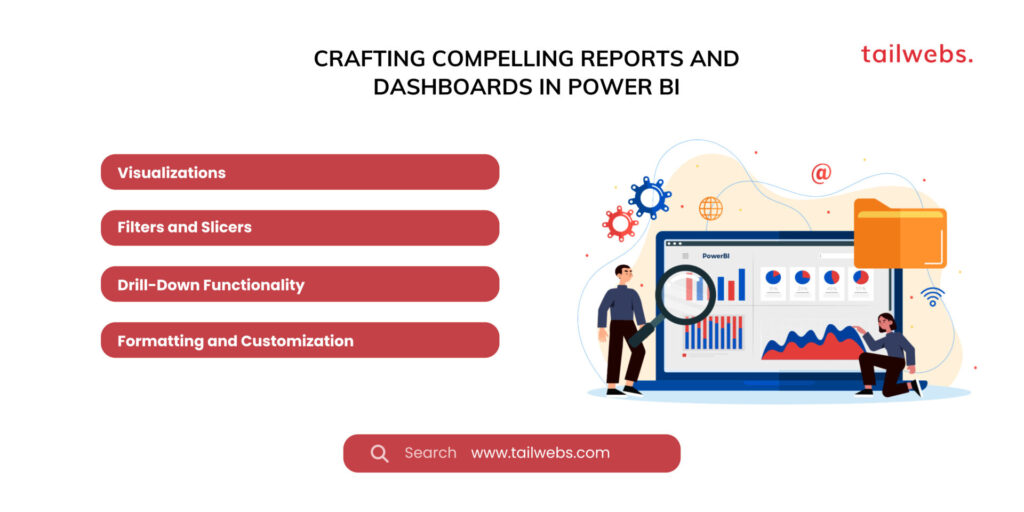
Maximizing the Benefits of Power BI for Sales and Marketing
Here are some valuable tips to help you leverage Power BI’s capabilities to their full potential for sales and marketing success:
Start Small and Focus on Business Value:
Don’t try to create overly complex reports initially. Begin with a few high-impact reports that address your most pressing sales and marketing needs. Focus on delivering clear business value with each report.
Promote a Data-Driven Culture:
Encourage a data-driven culture within your sales and marketing teams. Train them on how to interpret Power BI reports and dashboards to inform their decision-making processes.
Schedule Regular Reporting Cadence:
Establish a consistent schedule for generating and sharing reports. This could be weekly, monthly, or quarterly depending on your specific needs. Regular reporting keeps everyone informed and fosters data-driven discussions.
Integrate Power BI with Other Tools:
Explore Power BI’s integration capabilities with other business intelligence tools and platforms you utilize. This allows you to create a more comprehensive view of your business performance.
Stay Updated with Power BI Features:
Power BI is constantly evolving with new features and functionalities. Stay updated on the latest developments to leverage the full potential of the platform as it grows.
By implementing these tips and fostering a data-driven approach within your sales and marketing teams, you can unlock the true power of Power BI and achieve significant growth for your business.
Conclusion: Power BI – A Game Changer for Sales and Marketing Analytics
In conclusion, Power BI empowers sales and marketing teams to transform raw data into actionable insights, enabling them to make data-driven decisions that fuel sales growth, optimize marketing campaigns, and ultimately drive business success.
]]>