The post Top 4 Salesforce Connectors That Replace Manual Updates appeared first on Webopsweekly.
]]>It works, until it doesn’t.
What changes is not the task itself. It is the frequency. The same action repeats more often, across more records, across more systems. And suddenly, what used to take a few minutes starts eating hours every week.
That is the moment when manual work stops being invisible. Not because it becomes harder, but because it becomes constant.
Replacing it is not about automation for the sake of it. It is about removing actions that no longer make sense to do by hand.
Where Manual Updates Usually Break First
Manual processes don’t fail all at once. They start slipping in specific places.
The first thing that breaks is consistency. One system gets updated, another one doesn’t. Then someone notices, fixes it, and the cycle repeats.
The second thing that breaks is timing. Updates arrive late. Information lags behind reality. Decisions are made on outdated data.
And the third thing is trust. Once people start questioning whether the data is accurate, they stop relying on it completely.
This pattern tends to show up in similar ways:
- The same field has different values in different systems
- Status updates arrive after they are no longer relevant
- Teams rely on messages instead of system data
- Records need to be checked more than once
- Small mistakes keep reappearing
At that point, the issue is not effort. It is the process itself.
Types of Manual Updates That Add Up Over Time
Not all manual work looks the same. Some of it is obvious. Some of it blends into daily routines.
A useful way to look at it is by type. Because different types of updates require different solutions.
There are updates that happen because systems are disconnected. Some updates exist because workflows are unclear. And some updates exist simply because no one has replaced them yet.
In practice, most teams deal with a mix of these:
- Repeating the same update across multiple tools
- Copying information from one system to another
- Checking whether the data is still accurate
- Triggering actions manually instead of automatically
- Filling gaps where systems should already be connected
Individually, none of these is difficult. Together, they shape how much time is lost.
1. Peeklogic
The Peeklogic Salesforce Azure DevOps Connector focuses on one of the most common sources of manual updates, the gap between sales and development.
When these systems are not connected properly, teams end up duplicating information just to keep things aligned. That usually means updating statuses in both places, checking progress manually, or asking for confirmation.
This connector removes that need by keeping both systems in sync automatically.
It also keeps everything inside Salesforce, which reduces the number of steps required to manage work.
Teams typically use it for:
- Two-way synchronization between Salesforce and Azure DevOps
- Mapping of standard and custom fields, including statuses and comments
- Real-time updates without manual input
- Managing DevOps work items inside Salesforce
- Automation through Salesforce Flow
Instead of repeating the same update in two places, the system handles it once.

2. Zapier
Zapier replaces a different kind of manual work. The small actions that happen dozens of times a day.
These are not complex tasks. They are things like creating a record, updating a field, or sending a notification. The kind of actions that are easy to automate but often left manual for too long.
Zapier works by reacting to events and triggering actions automatically.
Teams use it for:
- Automating updates based on Salesforce events
- Creating or updating records in connected systems
- Reducing repetitive data entry
- Connecting Salesforce with other tools
- Setting up simple workflows without development
It works best when the goal is to remove frequent, predictable actions.

3. Exalate
Exalate handles a different problem. Situations where updates are not just repetitive, but inconsistent.
When systems follow different rules or workflows, simple automation is not enough. Data needs to be adjusted, filtered, or transformed before it is synced.
This is where Exalate becomes useful. It allows teams to define how synchronization should behave.
Teams rely on it for:
- Customizing how data is shared between systems
- Controlling synchronization logic
- Handling more complex workflows
- Connecting multiple platforms
- Adapting integration to specific processes
Instead of fixing mismatches after they happen, it prevents them from appearing in the first place.

4. Boomi
Boomi is often used when manual updates are spread across multiple systems, not just two.
In these situations, the issue is not a single connection. It is the overall structure of how systems interact.
Boomi provides a way to design integrations visually, which makes it easier to automate updates without building everything from scratch.
Teams rely on it for:
- Building integrations through a visual interface
- Reducing manual updates across multiple systems
- Supporting both simple and complex workflows
- Scaling integrations as systems grow
- Connecting Salesforce with a wide range of platforms
It helps reduce manual work by making integrations easier to build and adjust.

When It Actually Makes Sense to Replace Manual Updates
Not every manual process needs to be automated immediately.
But there is a point where it becomes clear that continuing manually is more expensive than changing the system.
That point usually shows up through repetition.
The same update is happening every day. The same issue appears again and again. The same gaps being filled manually.
A few signals usually indicate that it is time to replace manual work:
- The same tasks are repeated daily without variation
- Updates are often delayed or missed
- Data is frequently inconsistent between systems
- Teams rely on communication instead of system visibility
- Fixing errors takes more time than preventing them
At that stage, the question is no longer if automation is needed, but where to start.
What Changes Once Manual Updates Disappear
Removing manual updates does not transform everything overnight.
The change is quieter.
Things stop breaking in small ways. Fewer inconsistencies appear. Fewer follow-ups are needed. Information becomes something teams rely on instead of something they question.
Over time, this leads to:
- More stable and predictable workflows
- Less time spent correcting data
- Faster movement between steps
- Better alignment between teams
The biggest shift is not in speed, but in how reliable the system becomes.
Choosing the Right Connector for the Right Problem
Different connectors solve different types of manual work.
Some are better at removing repetitive actions. Others are better at keeping systems aligned. Some handle simple cases, others handle complexity.
The key is to match the tool to the problem.
It helps to look at where manual work is coming from:
- Is it repeated actions or inconsistent data
- Is it happening in one system or across several
- Is it simple or tied to complex workflows
- Is it constant or occasional
Understanding that usually makes the choice much clearer.
Manual Work Does Not Disappear on Its Own
Manual updates tend to stay in place until something replaces them.
They do not get optimized naturally. They do not scale well. They just keep repeating.
The only way to remove them is to replace them with something that handles the same task automatically.
That is what connectors are meant to do.
Not to add new functionality, but to remove the need for actions that should not be manual anymore.
The post Top 4 Salesforce Connectors That Replace Manual Updates appeared first on Webopsweekly.
]]>The post Top 6 Custom Software Development Services for Business appeared first on Webopsweekly.
]]>This gives better grip on daily operations, cuts out useless features, and pays for itself long-term: no more recurring license costs and less time spent on extra manual steps.
Leading Custom Software Development Service Providers
These companies have strong industry track records and technical expertise. They provide full-cycle development for mid-market and enterprise clients.
Avenga

Avenga is a global tech and consulting firm that specializes in building custom software and guiding companies through digital transformation. They’ve got over 6,000 experts working out of more than 50 delivery hubs, backed by 30+ years of hands-on experience.
The team helps businesses modernize their legacy systems, launch products that actually make an impact, and get real value from their data.
What sets them apart is combining serious industry insight with top-notch engineering to make sure tech spending delivers clear, measurable results—always tied directly to what the company is trying to achieve strategically.
What They Deliver
- Bespoke Software: Tailored solutions for strategic business challenges.
- Product Discovery: Idea validation and user-centered design.
- Full-Cycle Development: Web apps and end-to-end product delivery.
- Modern Architecture: Microservices and API-driven systems.
- Quality Assurance: Performance testing and user experience validation.
- Tech Innovation: AI, cloud, data, and IoT capabilities.
Industries Served
Avenga works with clients in automotive, banking, life sciences, telecommunications, retail, and manufacturing. Their projects focus on helping these companies run more efficiently and bring new ideas to market faster.
Intellias

Intellias is one of those rare full-cycle dev firms that partners with big global companies — they take ambitious concepts and actually make them happen. 20+ years in, they still form proper dedicated teams (devs, architects, designers, DevOps) who stay fully engaged instead of just checking tasks off.
It’s the combination of solid engineering and genuine industry feel that makes the difference. Clients get dependable results, transparent cooperation, and the chance to get more out of their tech money in today’s fast market.
What They Deliver
- Digital Strategy: All-digital approaches and tailored products.
- Automation: BPA, RPA, AI, and custom application development.
- Cloud & Analytics: Multi-cloud and data visualization services.
- Back-End Support: Scalable infrastructure for quick deployment.
- Legacy Upgrades: Tools that simplify migration to modern systems.
- AI Tools: Copilot integration for better development outcomes.
Industries Served
Intellias combines technical expertise with deep domain knowledge to build solutions for the financial services & insurance, retail, healthcare, telecom and media, travel and hospitality, iGaming, and agriculture industries.
Andersen

Andersen is a reliable custom software developer with a reputation for creating excellent work for a variety of companies at reasonable costs. They have over 2,000 completed projects under their belt and 19 years of expertise, particularly in data-driven and difficult industries.
One thing clients really value is that Andersen stays involved long-term — right now, they provide ongoing support and updates for over 200 active partnerships.
What They Deliver
- App Development: Web portals, enterprise internal tools, and truly cross-platform mobile solutions.
- Engineering: Responsive front-ends and efficient back-end architecture with API performance in focus.
- Cloud & Data: Cloud-first platforms leveraging Big Data, artificial intelligence, and ML models.
- Integration & DevOps: Reliable API connectivity, mature CI/CD pipelines, and infrastructure-as-code automation.
- End-to-End Services: From initial discovery and system design to full development, quality assurance, release, and scaling.
- Scalable Partnerships: Custom-fit engagement models for businesses large and small.
Industries Served
Andersen’s development expertise covers data-intensive and complex sectors, including financial services, healthcare, media and entertainment, and logistics.
N-iX

N-iX is a global software engineering and solutions company that works with major players, including many Fortune 500 firms, to solve tough problems and create real business value. With a team of over 2,400 people, they offer tech consulting plus full-cycle software development — from early discovery all the way through launch, support, and long-term maintenance.
Their technical skills are backed by strong partnerships with AWS, Google Cloud, and Microsoft, plus solid compliance with standards like ISO 27001, PCI DSS, and GDPR.
What They Deliver
- Launch Services: Discovery, prototyping, dev, testing, and maintenance.
- Modernization: Automation, compliance, legacy updates, and cloud migration.
- Rescue: Code audits, infrastructure checks, and transition plans.
- Cloud Engineering: Native development, optimization, and serverless.
- AI & Analytics: Strategy, governance, ML, computer vision, and MLOps.
- IoT Solutions: Hardware, firmware, connectivity, and predictive analytics.
- DevOps: IaaC, CI/CD, site reliability, and enterprise platforms.
Industries Served
N-iX clients are in fintech, manufacturing, logistics, retail, healthcare, and automotive. They deliver payment platforms, automation tools, tracking software, ecommerce systems, telehealth solutions, and connected vehicle technology.
Itransition

Itransition has been delivering software engineering services for more than 25 years. They have over 3,000 staff and have completed projects in over 40 countries. Their clients range from startups to large enterprises.
The company is ISO 9001 and ISO 27001 certified. Analysts at Everest Group, Forrester, and Gartner have recognized them as a leading provider.
What They Deliver
- Custom & Modernized Solutions: Built-from-scratch software, platform implementation, and legacy upgrades.
- Enterprise Software: ERP, CRM, HRM, BPM, collaboration, and security solutions.
- Customer Engagement: Portals, AI agents, marketing automation, and conversational AI.
- Retail & Commerce: Online stores, marketplaces, payment systems, PoS, and inventory tools.
- Data & Product Strategy: Data warehousing, BI, predictive analytics, and startup product development.
- Emerging Tech: AI, RPA, IoT, AR/VR, and blockchain integration.
Industries Served
Itransition works with companies in finance, retail, healthcare, manufacturing, and several other industries. They mainly focus on three things: digital enterprise systems, customer engagement solutions, and commerce software.
Leobit

Leobit builds custom software solutions designed to boost revenue, optimize cloud spending, or sharpen competitive advantage. Strong focus on quality & security (ISO 9001:2015 and ISO 27001:2022 certified).
They’re especially good with complex projects—Silver Stevie winner and ranked top .NET company by Clutch. Over 150 delivered solutions, helping clients revive legacy code and bring new products to market.
What They Deliver
- Software Development: Web, mobile, desktop, cross-platform, and embedded.
- Cloud Solutions: Scalable SaaS platforms with strong performance and cost controls.
- Data Analytics: Business intelligence systems for informed decision-making.
- Legacy Systems: Modernization work that extends software lifespan.
- Complex Builds: Feature-rich applications for demanding industries with strong UX.
Industries Served
Leobit works across multiple industries. Their PropTech portfolio includes real estate portals and lending platforms. Their Sportstech work covers streaming and fitness apps. FinTech projects include payment processing and trading platforms. EdTech projects include learning platforms and student portals.
Common Tech Stacks in Software Development
Building custom software requires selecting the right tools for the job. The following technologies are the ones most frequently used in modern development projects.
- Cloud Computing — Scalable infrastructure with AWS, Azure, and Google Cloud.
- AI/ML — Automates detection, forecasting, and personalization tasks.
- Data Analytics — Transforms data into decision-ready dashboards.
- IoT — Real-time sensor data prevents equipment failures.
- Microservices + APIs — Independent components with easy external connections.
- DevOps & Automation — Speeds releases and reduces errors via CI/CD.
Conclusion
Choosing the right dev partner isn’t only about delivering a finished product. It directly hits your day-to-day work and how competitive you stay long-term. Look closely at their industry experience, whether their tech stack actually matches your needs, and if they take security seriously.
The best ones don’t just hand over working code — they give you flexibility to pivot when things change. When their strong sides line up with what your project really needs, you end up with something that keeps delivering value for years.
The post Top 6 Custom Software Development Services for Business appeared first on Webopsweekly.
]]>The post 5 Backlink Marketplace Platforms Worth Trying for Scalable Link Building appeared first on Webopsweekly.
]]>The five below made the list. Each runs a different kind of link building marketplace. One lets you buy insertions into published pages. Another carries 75,000+ international domains. A third handles everything while you sleep. All show real sites with real metrics before you pay.
1. INSERT.LINK
This link building marketplace platform works off keywords. Type “enterprise saas” into the search field. The system crawls published articles and returns pages accepting new links. Domain Rating, monthly traffic, and article previews appear on screen. You see exactly where a client’s link would land before authorizing payment.

Two placement types exist. Link insertions go into content already published and ranking. Guest posts require fresh articles. Insertions move faster and cost less because no new content needs writing. The “links first, pay later” option means you review the live link before funds leave your account.
- NLP search groups publishers by content context rather than broad categories
- Insertions start around $10, guest posts begin near $40
- White-label reporting and team management built for agencies
- Trustpilot shows 4.3, DesignRush and G2 average 4.8
This level of targeting makes INSERT.LINK a strong contender for best link building marketplace discussions in 2026.
2. Linkhouse
Linkhouse has been around since 2014. Their inventory reflects that longevity. The database holds 75,000+ domains across twenty-five languages. European coverage stands out. German, French, Spanish, and Italian markets have deep selections.

Their Backlink Gap Tool changes how you find opportunities. You enter your domain and a keyword. The tool pulls competitor data from Ahrefs, Semrush, and Google simultaneously. It shows you every portal where competitors have backlinks that are available for purchase through their platform. The analysis and acquisition happen in one place.
- Pricing starts around $9.99 for basic placements
- Copywriting runs from $29, higher authority domains scale up
- Filter by competitor count, domain authority, and relevancy
- Each listing shows Domain Authority, Trust Flow, Citation Flow, traffic estimates
For data-driven teams wanting full competitor profile analysis without manual research, Linkhouse removes steps. It functions as both a research tool and a backlink marketplace in one interface.
3. PressWhizz
PressWhizz moves faster than any platform we tested. Eighteen hours is their average link delivery time. Ninety-nine percent publishing approval rate. Those numbers change how you plan campaigns when you need quick results.

The marketplace backlink inventory sits at 37,000+ curated sites across ninety countries. Forty-plus languages supported. Average price per link runs $131.61. A search for UK domains with DR40+ shows opportunities around $80.
Their competitor research tool works differently. You search competitor brand terms instead of comparing full backlink profiles. Type a competitor name. The platform returns every site mentioning them. You see domain authority, organic traffic, spam score, and the exact page where your competitor appears.
- Full URL previews appear before purchase
- Twelve-month replacement guarantee on all links
- Add tiered signals like social shares at checkout
- One-time pricing, no subscriptions, crypto accepted
For buyers who need to see exact page context before purchasing, PressWhizz delivers. It is one of the more transparent backlink marketplace platforms for page-level inspection.
4. Loganix
Loganix positions itself as the behind-the-scenes partner for agencies. You bring the clients. They handle execution. The setup takes minutes. Create an account. Browse services. Place an order.

Their authority link building service focuses on niche-specific backlinks from sites with strong organic traffic. You approve every placement before it goes live. No surprises. No links from domains you would not touch.
- Services start around $7, link building scales with authority needed
- Dashboard shows orders, approvals, and deliverables in one place
- Industry names like Brian Dean and Nick Eubanks have publicly trusted them
- Reports come with your logo, clients never see the platform
Agency owners mention saving thirty hours a month by outsourcing execution here. For agencies searching for a reliable best backlink marketplace partner that stays invisible, Loganix fits.
5. Bazoom
Bazoom positions itself as an extension of your team rather than just a link catalog. The difference shows in the details. A dedicated client manager checks in regularly. Support runs 24/7 with over eighty people available. Their AI scans your site and suggests specific pages to target. Someone picks up the phone when you call.

The platform covers everything in one price. Content writing. Publication. Management. No line items for extras. Average publication time runs four days.
- Intelligent marketplace pulls metrics from Ahrefs, Moz, and Semrush
- Publishers vetted upfront, no guessing which sites are legitimate
- Thousands of SEO professionals use them
- Free strategy input from client managers
Pricing runs custom based on your needs. They focus on enterprise and agencies with larger budgets. But the human support changes the experience entirely. This level of vetting makes it a trustworthy SEO backlink marketplace for enterprise-level work.
Where These Platforms Differ Most
We ran “best running shoes” through all five. Same keyword. Same day. Wanted to see what came back.
INSERT.LINK showed 47 pages ready for link insertions. Each listing included DR, monthly traffic, and article preview. One was a gear review site pulling 12,000 visitors monthly. $85 to place a link. The exact spot appeared on screen before checkout.
Linkhouse opened with competitor data. Their tool pulled sites already linking to pages ranking for that term. Filtered down to what’s available in their inventory. Research and purchase in one window.
PressWhizz had links live inside 20 hours. Not proposals. Live URLs. Full page previews before buying. Picked a DR 42 site with 3,500 monthly visitors. $147. Done.
Loganix sent a list for approval first. We picked three. They wrote content. Handled placement. Eleven days later we had reports with our logo on top.
Bazoom connected us with a client manager within the hour. She asked about niche preferences, target metrics, past campaigns. Three days later she sent recommendations. We approved five. Her team ran with it.
Speed ranges from 20 hours to two weeks. Control runs from full page selection to fully managed. Pick based on whether you want to inspect every URL or just want links showing up.
Final Thoughts
Some people want to inspect every page before committing cash. INSERT.LINK shows you the exact article where your link will land. Domain Rating, traffic numbers, and a preview all visible before checkout.
Others prefer letting competitor data guide their picks. Linkhouse built their Backlink Gap Tool for this. You enter your domain and a keyword. The system pulls competitor backlink profiles and highlights which of those domains are available for purchase.
Speed drives some campaigns. PressWhizz averages eighteen hours from order to live link. Full URL previews appear before purchase. If a link disappears within twelve months, they replace it.
Agencies often need to stay behind the scenes. Loganix handles execution while your brand stays on client reports. Services start at $7. The dashboard shows orders, approvals, and deliverables in one place.
Guided campaigns work better for others. Bazoom assigns a dedicated client manager who learns your niche. Support runs 24/7 with over eighty people available. They suggest specific targets based on your site.
Pick the scenario that matches how you work. Run three to five links through that platform. See how the actual purchase process feels. Some link building marketplace platforms will fit naturally into your routine. Others will create friction. That is how you separate the right tool from the wrong one.
The post 5 Backlink Marketplace Platforms Worth Trying for Scalable Link Building appeared first on Webopsweekly.
]]>The post Top VASP Compliance Services for Enterprise Crypto Projects appeared first on Webopsweekly.
]]>Here, we’ll cover the main compliance requirements at this level, outline the criteria we used for selection, and profile three leading service providers.
Core Compliance Needs at Enterprise Scale
For bigger crypto projects, compliance isn’t a checklist. It’s core to making the business work.
- Design global licensing + entity structure around real business goals, skip the short-term hack fixes.
- Get the VASP/crypto one, then layer on PSP/EMI/MSB/investment/gaming as required for mixed models.
- Put in AML, CFT, KYC, risk controls that scale and pass audits without rework.
- Use the regulatory status to actually open bank accounts, payment processors, and fiduciary services.
- Manage ongoing compliance across borders – filings, governance, spotting regulatory changes early.
- Adjust the setup for MiCAR rules coming in, and FATF updates that keep shifting.
3 Leading VASP Compliance Services for Enterprise Crypto
We selected these three providers for their ability to support enterprise operations. Their approaches differ, from structured compliance frameworks to jurisdiction-specific licensing and global legal coverage. We review their core services, strengths, and ideal clients.
1. Gofaizen & Sherle

Gofaizen & Sherle is an international legal and consulting firm focused on highly regulated sectors like fintech, crypto, payments, and gaming. In these fields, managing licenses and ongoing compliance is a core operational requirement, not just a legal one.
The firm is a central strategic partner for companies operating in these complex sectors, supporting them from initial launch to worldwide growth.
Key Services
- Licensing for crypto/VASP, payment services (EMI/PSP), forex, investment, gaming, and tokenization across 50+ jurisdictions.
- Regulatory architecture and long-term compliance design.
- Banking and payment institution onboarding.
- Corporate structuring and international group setup.
- Risk management and adaptation to frameworks like MiCAR and FATF.
Gofaizen Sherle Legal Services for VASP Licensing in Europe cover regulatory approvals in Switzerland, with end-to-end support for compliance and application processes. The firm also supports crypto operations in Canada, BVI, and the Cayman Islands through structured regulatory and operational planning.
For U.S. market access, the firm helps obtain a Montana MSB license, addressing state-level regulatory and compliance obligations. It also supports expansion through a crypto license in Australia, a crypto license in Panama, a crypto license in Costa Rica, and a crypto license in El Salvador, covering both licensing and operational setup.
2. Crypto License

Crypto License is a legal services provider dedicated exclusively to the cryptocurrency sector, guiding businesses through the specific regulatory and licensing challenges of operating a digital asset service.
The firm concentrates on the procedural and legal intricacies of securing authorization from financial regulators worldwide, offering a clear pathway for exchanges and VASPs to achieve compliant market entry and operation.
Key Services
- Legal support for obtaining crypto exchange and VASP licenses in key jurisdictions, including the UK, USA, Estonia, Lithuania, Poland, UAE, and Hong Kong.
- Advisory on AML/CFT, capital requirements, and ongoing regulatory compliance.
- Guidance on jurisdiction-specific application processes and regulator expectations.
- Assistance with related commercial, corporate, and financial law matters tied to crypto operations.
Crypto License handles cryptocurrency licensing. They manage the full application process required by regulators. Suited for businesses needing clear steps to get and keep licenses for compliant crypto exchanges or VASPs.
3. Global Law Experts

Global Law Experts operates as a selected network of legal professionals. Matches clients to pre-vetted independent firms and experts in 140+ countries.
Provides localized advice in every key practice area. Targets businesses with complex international requirements — regulatory compliance, licensing, fintech, and crypto included.
Key Services
- Access to local legal expertise for corporate, commercial, tax, IP, and regulatory matters in numerous jurisdictions.
- Multi-jurisdictional coordination and referrals for cross-border projects.
- Support with licensing, business formation, and compliance within a general legal practice framework.
- Collaboration tools and a network structure for managing international legal needs.
The network’s primary strength is its extensive global reach combined with genuine local presence. Clients gain access to established law firms with deep regional knowledge.
This model is particularly effective for enterprises with diverse, multi-country legal needs that extend beyond pure crypto licensing, providing a single point of contact for coordinating specialized legal support across different markets.
How We Selected These VASP Compliance Providers
We chose based on what enterprise clients need most:
- Experience securing different licences in the main jurisdictions for growing companies.
- Strategic help building the full regulatory setup, not only legal filings.
- Coverage across countries with real local knowledge of regulators and processes.
- Complete service from picking jurisdiction to application, ongoing compliance, banking setup, and compliance team hiring.
- Good standing and specialisation in crypto, fintech, and regulated finance.
Why Enterprise Compliance Fails Without Centralized Control
For an enterprise crypto project, compliance is not a standalone department. It is a fundamental component of the business.
If compliance management is divided among different law firms in different countries, handled by an internal team without a unified global strategy, or approached as a one-time licensing task, the business structure is put at risk.
This approach leads to a number of problems:
- Inconsistent compliance policies across regions, which regulators may identify as attempts to exploit differences in rules.
- A license secured in one country could be compromised by insufficient corporate governance in another.
- Banking partners will likely reject a business that cannot provide a consistent and clear compliance overview.
- Audits become inefficient, requiring the collection of documents from many uncoordinated sources.
Additionally, without central oversight, adapting to regulatory changes is very difficult. When new rules are introduced, such as updates from the FATF or the EU’s MiCAR, a decentralized compliance operation cannot respond uniformly. Some parts of the business may update their procedures while others do not, creating immediate compliance gaps.
Therefore, a centralized strategic partner is essential for a business operating at scale. This is not simply about delegating administrative tasks. It is about establishing a single point of control for all regulatory matters.
This partner aligns licensing, anti-money laundering policies, and corporate reporting across all jurisdictions. They consolidate various legal requirements into one coherent, verifiable operational framework.
Without this centralized management, compliance remains a costly function prone to failure. With it, compliance forms a reliable foundation that supports secure and sustainable business growth.
Conclusion
Your compliance partner is a key strategic choice for any crypto operation at scale. This decision directly impacts your ability to launch in a market, operate viably, and grow. The selection process must focus on your specific requirements, including business model complexity and target regions.
Prioritize providers with proven enterprise experience, a focus on building regulatory frameworks, and full-cycle operational support. The goal is a partner who makes compliance a stable base for growth, not a recurring problem.
The post Top VASP Compliance Services for Enterprise Crypto Projects appeared first on Webopsweekly.
]]>The post Coursiv Reviews 2026: What Real Users Say After the Update appeared first on Webopsweekly.
]]>We’ve analyzed the latest user feedback from January 2026 to see how real learners are responding to Coursiv’s recent updates. From busy executives to retirees picking up computers again, here’s what users actually say about this AI training platform.
Quick Verdict
Coursiv delivers exactly what it promises: bite-sized, practical AI training that transforms beginners into confident users. Best for busy professionals who want hands-on experience with ChatGPT, DALL-E, Midjourney, and other popular AI tools without drowning in technical jargon. The 4.4-star Trustpilot rating reflects genuine user satisfaction.
What Users Love About Coursiv
Makes Complex AI Feel Simple
The biggest praise centers on Coursiv’s ability to break down intimidating AI concepts into digestible lessons. Users consistently mention how the platform removes the overwhelm factor.
“I’m giving Coursiv 5 stars because it finally made AI feel simple and usable. Their 14-Day AI Challenge breaks things down into clear, step-by-step lessons in plain language, so you’re not drowning in tech jargon.”
- Joe O, Trustpilot (January 2026) Read full review
Even users with minimal computer experience find success. Michelle Herden’s story particularly stands out:
“I started this entire program knowing absolutely nothing about AI. I am 65 years old and haven’t used a computer for years. I just completed two tasks in ChatGBT. Not only is it fun; the lessons are easy to understand.”
- Michelle Herden, Trustpilot (January 2026) Read full review
Learning by Doing, Not Just Watching
Users rave about Coursiv’s hands-on approach. Instead of passive video consumption, learners immediately practice with real AI tools.
“What I liked most is the ‘playground’ practice at the end of each section — you immediately apply what you learned, which makes everything stick and shows you whether you actually understand it.”
- Joe O, Trustpilot (January 2026) Read full review
The practical focus resonates with professionals seeking immediate value:
“Simple quick courses that are comprehensive with hands on examples to practice as I go. This made the course easy and quick to move through. Excellent way to grasp basic capabilities of an array of different AI tools.”
- Sonja-Aloma Stewart, Trustpilot (December 2025) Read full review
Perfect for Busy Schedules
The bite-sized format consistently earns praise from time-pressed professionals. CavRTK highlights this strength:
“The standout feature of Coursiv is its low barrier to entry. The interface is optimized for busy professionals, making it easy to finish a module during a commute or lunch break.”
- CavRTK, Trustpilot (December 2025) Read full review
Real-World Application Focus
Users appreciate learning skills they can immediately use in their work and personal projects:
“I love how Coursiv incorporates real-world examples and practical case studies throughout the modules. They don’t just explain theory—they show you how to apply it, which makes the learning process both engaging and effective.”
- Nlove, Trustpilot (November 2025) Read full review
The practical approach extends to covering multiple AI platforms:
“I also appreciate that they cover multiple AI platforms (including Lovable), so you don’t feel locked into just one tool.”
- Joe O, Trustpilot (January 2026) Read full review
Outstanding Customer Support
Multiple reviewers highlight Coursiv’s responsive, empathetic support team. Feroz shares a particularly compelling experience:
“Due to an active job search, I was unable to progress through the course as quickly as planned. When I reached out, the support team not only understood my situation but went above and beyond by complementarily extending my subscription, giving me the time I needed to complete the modules properly.”
- Feroz, Trustpilot (December 2025) Read full review
Common Criticisms
While reviews are overwhelmingly positive, some users mention minor issues. The most frequent complaint involves mobile usability:
“I would recommend taking the course on a computer or laptop, since some of the prompts can be hard to see on a phone.”
- AV, Trustpilot (December 2025) Read full review
A few advanced users wished for more complex case studies, though this seems to reflect Coursiv’s intentional focus on beginners rather than a platform limitation.
Who Is Coursiv Best For?
Based on user feedback, Coursiv works exceptionally well for:
- Complete AI beginners who feel overwhelmed by technical jargon
- Busy professionals 45+ wanting practical skills without time commitment stress
- Career changers and job seekers looking to add AI competency quickly
- Small business owners who want to understand AI’s potential for their operations
- Anyone who learns better by doing rather than watching lengthy video tutorials
As Bellalbabu puts it:
“What I love most is how confidently Coursiv guides me through concepts that once felt complicated. It transforms advanced AI topics into something approachable and exciting, and that’s a rare skill.”
- Bellalbabu, Trustpilot (January 2026) Read full review
The Bottom Line
Coursiv reviews from 2026 show a platform delivering on its core promise: making AI accessible for absolute beginners through practical, bite-sized lessons. The consistent praise for its hands-on approach, clear instruction, and supportive community suggests this AI training platform has found the right formula for busy professionals.
While it’s designed specifically for beginners (so advanced users might want more complex content), that focus appears to be Coursiv’s strength rather than weakness. For anyone curious about AI but unsure where to start, the 68,000+ positive reviews speak volumes.
The post Coursiv Reviews 2026: What Real Users Say After the Update appeared first on Webopsweekly.
]]>The post Top 6 Photo Restoration Tools for Real-World Use appeared first on Webopsweekly.
]]>This guide breaks down six popular options and compares them based on real criteria that we consider essential: usability, output quality, pricing, and features that actually matter.
Top Tools for Old Photo Restoration Compared
We looked for tools that fit different people. Some want a simple, one-tap solution. Others need full professional control. Every choice here got rated on four points: ease of use, output quality, price, and any standout features.
This list has free apps, paid software, and everything in between. The aim is to match the tool to your project, whether it’s a fast scan cleanup or a complex restoration.
Renew Photo

Renew Photo uses AI to restore damaged photos. It’s straightforward: you give it a picture that’s scratched, faded, or torn. The tech handles repairs—edges, cracks, monochrome tones, poor light.
One tap starts the process, and in under a minute, you get a vibrant, restored image. Great for reviving personal memories like family portraits or vintage snaps. Everything stays private and secure. No expertise required.
Key Features:
- AI restoration in one tap.
- Instant black & white colorization.
- Enhance details with HD upscaling.
- Correct over/underexposed shots.
- Seamlessly erase surface damage.
- Add subtle motion to images.
- Simple upload interface.
- Fast, free trial.
Adobe Photoshop

If you’re dealing with a restoration project that’s seriously complex, you need professional software. That’s Adobe Photoshop. It’s built for demanding work. The program gives you total, pixel-level control over your edits, which is essential for detailed repairs.
You’ll use tools like the Healing Brush and Clone Stamp—industry standards for a reason. The advanced neural filters also help a lot, speeding up tough tasks like colorizing old photos or fixing faces. It’s made to fit right into a professional workflow on both Windows and Mac.
Key Advantages:
- Surgical precision on demanding repairs.
- Pro-grade tools for detailed restoration.
- Smart AI filters speed up color and touch-ups.
- Expandable with plugins and tutorials.
- Fits right into creative pipelines.
PhotoGlory

If you want to restore old photographs without dealing with complex software, PhotoGlory is a good option. It’s a Windows app made for fixing typical aging problems—scratches, dust, stains, and fading.
The interface is clean and straightforward, walking you through the restoration. It uses one-click fixes and AI for automatic scratch removal and photo colorization. You get high-quality results without the learning curve of professional tools.
Key Advantages:
- Focus on old photos: Built exclusively for restoration.
- Smart, instant repairs: Single-click AI for damage removal.
- Intuitive design: Simple, guided user interface.
- Integrated features: Face editing, colorization, and flaw correction.
- Fast results: Streamlined for quick, effective fixes.
PhotoBooth

You can restore damaged photos instantly with PhotoBooth, a free online tool. It works in your browser and is built to be straightforward and quick. Upload a photo with problems such as tears, scratches, or fading.
The AI scans and fixes the image pixel by pixel—sharpening details, adjusting colors, and removing flaws. In seconds, you’ll have a high-quality, restored photo to download for free. No installation required.
Key Advantages:
- Completely free to use, no fees or limits.
- Results in minutes, not days.
- AI handles major damage like tears, mold, and stains.
- Your photos stay private; nothing is stored.
- Automatically enhances clarity, faces, and color.
- Nothing to install—works in your browser.
Vance AI Photo Restorer

Vance AI Photo Restorer is an online tool that uses machine learning to quickly restore old photos. You use it in your browser—just upload a scan. The AI automatically fixes common problems like scratches, digital noise, and minor blur.
It also offers extra options for face enhancement and colorization. It’s a streamlined way to get presentable, quality results without a lot of time or specialized hardware.
Key Advantages:
- Fast AI fix with minimal input required.
- Works in your browser — no install or advanced PC.
- All-in-one tool with optional upscaling and colorization.
- Targets common flaws like scratches and noise.
- Built for speed, not for deep manual edits.
MyHeritage

MyHeritage is a genealogy-focused platform that offers surprisingly accessible and user-friendly photo restoration tools alongside its family history services. Its strength lies in delivering quick, satisfying results with minimal effort—letting you enhance, colorize, and repair old photos in just a few clicks directly on the web or via mobile apps.
While not as powerful as dedicated professional software, it provides a remarkably fast and convenient way to breathe new life into family images for its core audience.
Key Advantages:
- Exceptional Simplicity: Intuitive, click-driven tools make enhancing color and sharpness accessible to anyone, regardless of skill level.
- Fast Processing: Delivers most restored photos in about 30 seconds with minimal wait time.
- Cross-Platform Convenience: Accessible via the web and dedicated mobile apps (iOS/Android) for use across all devices.
- Affordable Value: Offers a generous 14-day free trial and is priced as one of the most budget-friendly options in the industry with its subscription.
Conclusion
Picking the right photo restoration tool comes down to what you need. For quick fixes on a phone, try something like Renew Photo or MyHeritage—they’re fast and simple. If you want a free option, use PhotoBooth. On a Windows PC, PhotoGlory gives you more control without professional complexity. For high-quality online restoration, Vance AI is solid. And for total professional control, nothing beats Adobe Photoshop.
Modern AI powers all these tools, making the restoration process much simpler. Whether you’re just starting out or have experience, you can get good results. The first step is to figure out what you need: consider your budget, desired quality, and skill level. Then, refer to this list to select the tool that fits your needs.
Two More Tools to Consider
The tools above cover most mainstream restoration scenarios, but there are a couple of additional apps worth mentioning for users whose needs fall slightly outside the usual “fix and enhance” workflow.
RetroFix
RetroFix is a mobile-focused restoration app that puts its emphasis on deeper repair rather than quick cosmetic cleanup. It’s designed for photos that show real age—heavy scratches, faded faces, uneven lighting, and loss of fine detail. The AI works to reconstruct damaged areas, especially facial features, before sharpening or enhancing the image.
While the interface stays simple, the results tend to be more restoration-oriented than many one-tap apps. RetroFix also includes photo animation as an optional step after restoration, allowing users to bring subtle movement to repaired images.
It’s best suited for users who want strong restoration results on damaged photos, without moving to complex desktop software. More information is available at https://retrofix.app.
Yore
Yore approaches photo restoration from a more creative angle. It can restore and enhance old photos, but its defining feature is the ability to combine two separate images into one. This makes it useful for reconstructing missing parts of a photo or creating new compositions from historical images that were never captured together.
In addition to restoration and photo combining, Yore supports photo animation, making it a flexible tool for users who want more than traditional repair. It’s less about strict technical correction and more about rebuilding memories in a visually engaging way.
Yore works well for users interested in restoration plus creative AI features. You can learn more at https://yoreapp.website.
In short:
Renew and MyHeritage focus on speed and simplicity. PhotoGlory and Photoshop provide control. RetroFix leans into serious restoration on mobile, while Yore blends restoration with creative reconstruction. Together, they round out the landscape of modern photo restoration tools for 2026.
The post Top 6 Photo Restoration Tools for Real-World Use appeared first on Webopsweekly.
]]>The post Gamification in Budgeting: Fun Challenges to Cut Unnecessary Spending appeared first on Webopsweekly.
]]>Picture your finances as a personal project you get to build. Every choice you make with your money, whether to save it or spend it, adds another piece to the structure. The cash you keep becomes your materials, growing your project day by day.
This is what gamification does. It swaps out the spreadsheets for something that feels more active. It uses the same hooks that keep you scrolling or playing. That little buzz from checking something off, from seeing a number tick up. Your finances stop being a list of rules and start feeling like something you’re building with your own hands.
Finelo: The Financial Dojo
Think of Finelo less as an app and more as a training ground for your money mind. While its core strength is investment education, its approach is a masterclass in gamification that changes how you view spending.

The platform uses a powerful investing simulator, giving you a virtual portfolio to test strategies with real-market data but no real risk. This is the ultimate “practice mode” that makes you think twice before making an impulse buy.

Why spend $50 on another delivery meal when you could see what that money could do in a simulated stock trade? Combined with personalized daily lessons, achievement streaks, and leaderboards, Finelo.com reframes your relationship with money from spending to strategic growth. It’s about building the confidence to make your money work for you.
Fortune City: Where Your Expenses Build a Metropolis
This app cleverly ties your spending habits to a visual reward. Every time you log an expense, you don’t just see a number disappear from your budget; you get to place a new building in your own virtual city. A coffee purchase might place a café, while a utility bill could construct a power plant.

Watching your city thrive becomes a direct motivator to track your spending consistently. The desire to see what new structure you can unlock next makes the sometimes-tedious task of logging purchases feel more like a creative project. It turns budgeting from a numbers game into a tangible, growing world that reflects your financial activity.
Qapital: Your Automated Savings Game Master
Qapital works like a personal assistant for your savings, one that operates on autopilot. You just tell it your conditions. Maybe you want it to stash the extra change every time you buy a coffee. Or perhaps you decide it should set aside a few dollars whenever you stream your favorite show.

The app handles the work behind the scenes. A small alert pops up to tell you your rule just worked, confirming a bit more cash landed in your savings. It shifts the effort from you remembering to save, to a simple system that runs on its own.
Goodbudget: The Digital Envelope System
Goodbudget digitizes the classic cash envelope system. You create dedicated categories for your spending, like “Weekend Fun” or “Coffee Run.” You fund these digital envelopes with your monthly income. Each purchase you log pulls directly from its specific envelope, giving you a clear picture of exactly what’s left for that part of your life.

Every time you spend, you open the app and take the money from the right envelope. Watching a specific envelope’s balance drop after a restaurant meal makes the cost feel immediate.
You’re actively deciding which envelope gets lighter. This turns a monthly budget into a series of small, conscious choices. The system makes your financial limits tangible, moving them from a forgotten number into something you interact with daily.
YNAB (You Need A Budget): The Strategy Game of Finance
While not as flashy as other apps, YNAB’s entire methodology is a form of deep gamification for those who love strategy. It uses a simple but powerful rule: “Give every dollar a job.” Setting up your budget feels like assigning your resources (your dollars) to different missions (your spending categories).
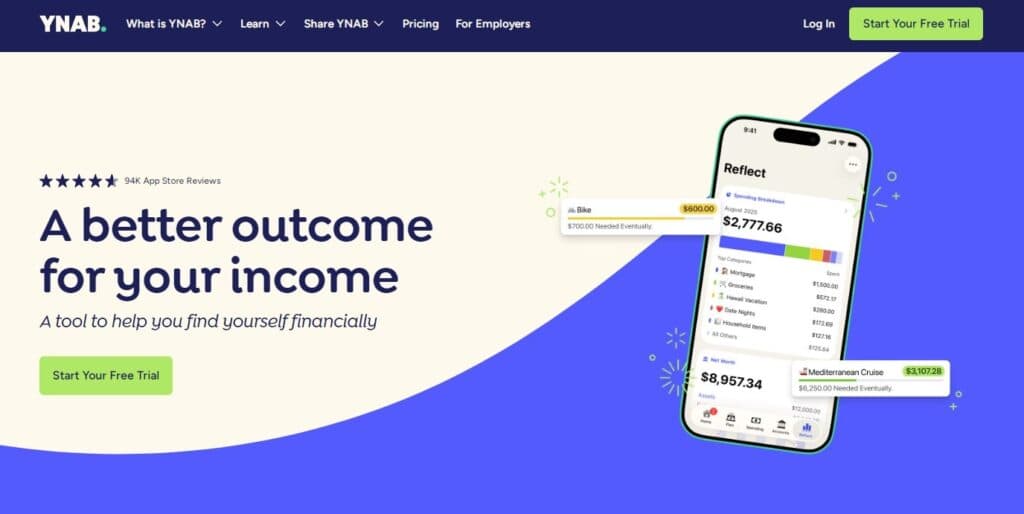
The gamified challenge is to keep all your “soldiers” in line, ensuring no category goes into the red. The satisfaction comes from the “Age of Money” metric, a score that tells you how many days old your money is before you spend it.
Seeing that number get bigger, watching your money get older, becomes its own kind of score. You stop just noting where your cash went and start feeling more in charge of where it’s headed next.
The Psychology Behind the Game: Why This Actually Works
It seems odd that something like a progress bar could change your money habits. But our minds love quick, clear feedback. Watching a number go up today is more satisfying than thinking about a big number you might have in a year.
These apps give you that instant nod. You skip a takeout meal, and an app like Fortune City lets you place a new shop in your virtual town. You log in to Finelo for the tenth day in a row and see your streak alive.
That little win feels good. It turns the vague idea of “doing better with money” into something you can see and touch right now. The good feeling you get from that keeps you coming back.
From Short-Term Wins to Long-Term Habits
The true value appears once these activities stop being a novelty and just become something you do. A fun challenge gives you a strong push at the start.
The apps, however, are what keep you rolling. They provide the steady rhythm that turns a one-off effort into a consistent habit. The challenge gets you on the bike, and the apps help you find your balance for the long ride.
The apps, then, are like removing those training wheels and discovering you can cruise on your own. The constant, gentle nudges from Qapital, the visual city you’ve built in Fortune City, and the confidence gained from Finelo’s simulator all work to rewire your underlying mindset about money.
You begin to instinctively question an unnecessary purchase not because you “shouldn’t,” but because you’re more focused on the rewarding feeling of hitting your next savings milestone or unlocking a new achievement. The game becomes a sustainable part of your financial life.
Final Thoughts
Staring at a budget often feels like a list of restrictions. But what if you could swap that feeling for something closer to the focus you have when solving a puzzle or completing a level?
That’s the space these apps occupy. They aren’t about turning finance into a cartoon. They use the same hooks that make games compelling—a clear mission, that little buzz of progress, a visual reward—and apply them to your money. You might enjoy the structured framework of YNAB, the city-building fun of Fortune City, or the hands-on practice in Finelo’s simulator.
The point is to find a tool that clicks with how you like to interact with things. It becomes less about forcing yourself to budget and more about following a process you find interesting.
That growing balance in your savings account is fantastic, but the true victory lies in how you feel. You begin to carry a quiet assurance, a belief in your ability to make smart decisions with your money. This newfound confidence becomes the real treasure you collect on this journey.
Pick a challenge that seems interesting. Find an app that looks simple to use. Then just begin. Your finances are a project ready for you to build.
The post Gamification in Budgeting: Fun Challenges to Cut Unnecessary Spending appeared first on Webopsweekly.
]]>The post Transform Your Business with Data Science Services: A Guide to Unlocking Growth and Efficiency appeared first on Webopsweekly.
]]>In today’s fast-paced and data-driven world, the ability to leverage data effectively is not just an advantage; it’s a necessity for any business aiming to thrive and outperform competitors. Data science services stand at the forefront of this revolution, offering tools and methodologies that transform raw data into actionable insights, driving strategic decisions, and fostering innovation across industries. This guide is designed to explore the transformative potential of data science for businesses, providing a roadmap for harnessing the power of data to unlock new levels of growth and efficiency.
The Importance of Data Science in Today’s Business Environment
In the digital age, the importance of data science in the business environment cannot be overstated. Data, often termed the ‘new oil,’ is the cornerstone upon which companies are building their strategies to outperform competitors and achieve unprecedented growth. The role of data science in refining this raw data into actionable insights is pivotal, transforming traditional decision-making processes into a precise, predictive, and automated journey.
The Role of Data in Decision-Making Processes
Data science encompasses a myriad of techniques and methodologies, from statistical analysis to machine learning and predictive modeling, all aimed at understanding and leveraging data in meaningful ways. These methodologies enable businesses to:
- Predict Future Trends: By analyzing current and historical data, companies can predict future trends, allowing for proactive strategy adjustments.
- Understand Customer Behavior: Data science helps in segmenting customers and understanding their preferences and behaviors, leading to more targeted and effective marketing strategies.
- Optimize Operations: From supply chain logistics to resource allocation, data science can identify inefficiencies and suggest improvements.
- Drive Innovation: By identifying patterns and insights that were not apparent before, data science drives innovation in product development and service offerings.
Understanding Data Science Services
As businesses navigate the complexities of the digital era, understanding the scope and potential of data science services is crucial. These services encompass a broad spectrum of techniques and technologies designed to extract meaningful information from data, facilitating smarter decisions, innovation, and efficiency. Let’s dive into what data science services entail, the types of services available, and the key components that make up a comprehensive data science service package.
What Do Data Science Services Entail?
Data science services merge statistical analysis, machine learning, data processing, and advanced analytics to interpret complex data sets. The objective is straightforward yet ambitious: to solve critical business challenges through data-driven insights. These services involve collecting data, cleaning it to ensure accuracy, analyzing patterns and trends, and then deploying models that can predict and influence future outcomes.
Types of Data Science Services Available
Data science’s versatility is evident in the range of services it offers, each catering to different aspects of business needs:
- Predictive Analytics: Utilizes historical data to predict future events, aiding in areas like customer behavior forecasts, sales trends, and inventory management.
- Machine Learning Development: Involves creating self-learning algorithms that can improve their accuracy over time without being explicitly programmed, enhancing areas such as customer service through chatbots or recommendation systems.
- Big Data Consulting: Focuses on managing and analyzing large sets of data, helping businesses understand market trends, customer preferences, and operational efficiencies.
- Data Visualization Services: Converts complex data sets into graphical representations, making it easier for stakeholders to understand and make informed decisions.
- AI Integration: Embeds artificial intelligence in business processes to automate and optimize operations, from AI-driven customer insights to operational robotics.
Key Components of a Comprehensive Data Science Service Package
A well-rounded data science service package should provide a holistic approach to data management and analysis, including:
- Data Strategy Consultation: Guidance on how to align data initiatives with business objectives, including identifying key data sources, setting up data governance, and ensuring data quality.
- Data Infrastructure Setup: Assistance in setting up the necessary data storage, processing, and analysis infrastructure, ensuring scalability and security.
- Custom Model Development: Development of tailored models to address specific business needs, from risk assessment models in finance to predictive maintenance in manufacturing.
- Ongoing Support and Maintenance: Continuous monitoring and updating of data models to ensure their accuracy and relevance, along with technical support.
- Training and Empowerment: Educating business teams on data literacy and the use of data science tools, enabling a data-driven culture within the organization.
Key Components of a Comprehensive Data Science Service Package
- Focuses on combining data from disparate sources into a unified format.
- Enables real-time or batch processing of data to support operational needs.
- Facilitates data movement, transformation, and synchronization across systems.
- Primarily addresses the challenges of data inconsistency, duplication, and fragmentation.
Understanding and leveraging data science services can transform a business from reactive to proactive, from intuition-driven to insight-driven. By demystifying data and turning it into actionable intelligence, companies can unlock potential, drive growth, and stay ahead in the competitive landscape.
How Data Science Drives Business Growth
The transformative power of data science in driving business growth is unmistakable. Through predictive analytics, machine learning, and deep data interpretation, companies can unlock efficiencies, unlock new opportunities, and deliver unparalleled customer experiences. This chapter examines real-world examples, the return on investment (ROI) of data science initiatives, and the competitive advantage companies gain through data analytics. If you also want to achieve business growth and gain benefits – DATAFOREST is your reliable partner in the world of data.
Increased Efficiency and Cost Reduction
Automating data-intensive processes can significantly reduce manual labor and operational costs. For instance, American Express used predictive analytics to automate fraud detection, saving millions of dollars in potential losses.
Enhanced Customer Insights
Data science can unlock deep insights into customer behavior, preferences, and trends. Starbucks, through its loyalty card and mobile app data analysis, offers personalized recommendations, which has led to increased customer spending and loyalty.
Revenue Growth
Data-driven product development and marketing strategies can lead to new revenue streams. Netflix’s recommendation system is credited with a 75% reduction in customer churn, directly impacting its bottom line.
Insights into Competitive Advantages Gained Through Data Analytics
- Personalization at Scale: Data science enables businesses to offer personalized experiences to customers, setting them apart from competitors. Amazon’s recommendation engines personalize the shopping experience for millions of users, contributing to its position as a retail giant.
- Strategic Decision Making: Data-driven decisions are often more accurate and timely. Google’s use of data analytics in HR practices, known as “People Analytics,” has helped them improve employee retention and satisfaction.
- Market Adaptability: Data science provides insights that help businesses quickly adapt to market changes. For instance, Coca-Cola uses social media data analytics to capture emerging trends, allowing for rapid adjustment of marketing strategies and product development.
Case Studies of Businesses Transformed by Data Science
- Walmart’s Inventory Management: Walmart implemented data science techniques to optimize its inventory management, using predictive analytics to forecast demand at different times of the year. This approach not only reduced overstock and understock situations but also improved customer satisfaction by ensuring product availability, leading to increased sales and reduced operational costs.
- Airbnb’s Dynamic Pricing Model: Airbnb uses data science to power its dynamic pricing model, helping hosts optimize their pricing strategy based on various factors such as location, seasonality, and local events. This model has increased revenue for hosts and Airbnb by ensuring prices are competitive and aligned with market demand.
Implementation of Data Science Services in Business
Integrating data science into business operations marks a pivotal step towards becoming a data-driven organization—a transition that can dramatically enhance decision-making, operational efficiency, and customer engagement. This process, however, requires strategic planning, the right partnerships, and a culture shift towards embracing data insights. Here’s a roadmap to successfully implementing data science services within your business.
Steps to Integrate Data Science into Business Operations
- Assess Data Maturity and Needs: Evaluate your current data capabilities and identify areas where data science can add the most value. This could involve enhancing customer experiences, optimizing operations, or innovating product offerings.
- Develop a Data Strategy: Craft a comprehensive data strategy that outlines objectives, data governance policies, necessary infrastructure, and the specific business processes that data science will enhance.
- Build or Upgrade Your Data Infrastructure: Ensure you have the necessary technology infrastructure to collect, store, process, and analyze large volumes of data. This might involve cloud storage solutions, data warehousing, and analytics platforms.
- Assemble a Data Science Team: Depending on your needs and resources, this could range from hiring a full in-house team to outsourcing tasks to specialized data science service providers.
- Deploy Pilot Projects: Start with small-scale projects to demonstrate the value of data science. This approach allows for learning and adjustments before scaling up.
- Scale and Integrate: Based on the success of pilot projects, gradually scale and integrate data science across business functions. Continuously monitor performance and adapt strategies as needed.
Identifying the Right Data Science Service Provider
Choosing a data science service provider is a critical decision. Consider the following:
- Expertise and Experience: Look for providers with proven expertise in your industry and a portfolio of successful projects.
- Customization Capabilities: Ensure the provider can tailor their services to meet your specific business needs and challenges.
- Technology and Tools: The provider should use state-of-the-art data science tools and platforms that integrate well with your existing systems.
- Support and Collaboration: Opt for a provider that offers ongoing support and is willing to work closely with your team to transfer knowledge and insights.
Tips for a Smooth Transition to a Data-Driven Culture
Leadership Buy-In: Secure commitment from top management to champion the adoption of data science across the organization.
Employee Engagement: Educate and involve employees at all levels about the benefits of data science. Encourage a culture of data literacy and informed decision-making.
Continuous Learning: Foster an environment of continuous learning and improvement. Stay updated on the latest data science trends and best practices.
Celebrate Successes: Recognize and celebrate early wins from data science projects to build momentum and demonstrate value.
Overcoming Challenges
Adopting data science solutions presents a transformative opportunity for businesses, yet it comes with its set of challenges. Understanding these obstacles and strategizing to overcome them is crucial for a smooth transition to a data-driven approach. Below, we delve into common challenges and effective strategies to mitigate them.
Common Obstacles Businesses Face
| Common Obstacles | Description |
| Data Quality and Quantity | Many businesses struggle with insufficient or poor-quality data, making it difficult to derive accurate insights. |
| Integration with Existing Systems | Ensuring new data science solutions work seamlessly with existing IT infrastructure can be a complex task. |
| Talent Acquisition and Retention | There is a high demand for skilled data scientists, making it challenging to build a capable in-house team. |
| Cultural Resistance | Employees may resist new technologies and methodologies, fearing job displacement or the need for re-skilling. |
| Cost and ROI Concerns | The initial investment in data science can be substantial, and businesses may be uncertain about the expected return on investment. |
Strategies to Mitigate These Challenges
Addressing Data Quality and Quantity
- Implement Robust Data Governance: Establish clear policies for data management, quality control, and privacy to improve data quality.
- Leverage External Data Sources: Consider augmenting internal data with external datasets to enrich insights.
Integrating with Existing Systems
- Choose Flexible Solutions: Opt for data science platforms that offer integration capabilities with a wide range of systems.
- Phase Implementation: Gradually integrate data science solutions, starting with non-critical systems to minimize disruption.
Talent Acquisition and Retention
- Upskill Existing Staff: Invest in training programs to develop data science skills among your current workforce.
- Explore Outsourcing: Consider partnering with data science service providers to access skilled expertise without the challenges of hiring.
Overcoming Cultural Resistance
- Communicate Benefits Clearly: Highlight how data science initiatives will benefit the company and its employees, emphasizing new opportunities and efficiency gains.
- Foster a Culture of Innovation: Encourage experimentation and learning, making it clear that data science will augment human decision-making, not replace it.
Managing Cost and ROI Concerns
- Start Small: Initiate small-scale projects with clear objectives to demonstrate quick wins and tangible ROI.
- Plan for Long-Term Value: Focus on strategic goals and long-term value creation rather than just immediate cost savings.
While navigating the path of integrating data science into your operations presents its set of challenges, such as data quality, system integration, and the need for skilled talent, there’s a straightforward solution to these hurdles: partnering with a specialized data science service provider like Dataforest – https://dataforest.ai/.
Future Trends in Data Science Services
As businesses increasingly rely on data to drive decisions, the field of data science is evolving at a rapid pace. Staying abreast of trends in data science services is crucial for companies looking to harness the full potential of their data for growth and efficiency. Here are key trends that are shaping the future of data science services:
1. Augmented Analytics
Augmented analytics uses artificial intelligence (AI) and machine learning (ML) to automate data analysis, making it easier for business users to understand data and gain insights without deep technical expertise. This trend is democratizing data science, enabling more widespread use across different levels of an organization and leading to quicker, more informed decision-making processes.
2. AI and ML Operationalization
As AI and ML development continues to mature, businesses are focusing on operationalizing these models—integrating them into everyday business processes. This involves not just the creation of models but their deployment, monitoring, and management in production environments. The trend towards MLOps (Machine Learning Operations) is facilitating this, ensuring that AI and ML projects move smoothly from the experimental phase to delivering real business value.
3. Data as a Service (DaaS)
The DaaS model is gaining traction, offering businesses access to high-quality, real-time data without the need for extensive infrastructure. This trend is particularly beneficial for small to medium-sized enterprises (SMEs) that may not have the resources to gather and process large volumes of data. DaaS can provide these businesses with the insights needed to compete with larger organizations.
4. Edge Computing
With the growth of IoT devices, edge computing is becoming increasingly important. Processing data on the device or close to the data source reduces latency, enhances security, and decreases bandwidth use. For data science, this means faster insights and the ability to perform real-time analytics in situations where immediate action is required.
5. Ethical AI and Transparency
As AI systems become more prevalent, there is a growing emphasis on ethical AI and transparency in how models are built and used. This trend focuses on ensuring AI systems are fair, unbiased, and transparent, with businesses increasingly required to explain how AI decisions are made. This accountability is crucial for maintaining customer trust and complying with regulatory requirements.
6. Quantum Computing
Although still in its early stages, quantum computing promises to revolutionize data science by offering unprecedented processing power. This could significantly reduce the time required for data analysis and complex computations, making previously intractable problems solvable. Businesses keeping an eye on quantum computing developments may soon find new opportunities for leveraging data science.
Importance of Adaptation
In the swiftly evolving landscape of data science and technology, the ability for businesses to adapt is not merely an advantage—it’s a fundamental necessity for survival and growth. Adaptation in this context goes beyond mere technological upgrades; it encompasses a holistic approach that includes adopting new business models, cultivating a data-driven culture, and continuously updating skills and processes to leverage emerging data science trends. Let’s delve into why adaptation is so crucial in the era of data science.
Embracing Change for Competitive Advantage
The rapid pace of technological advancement means that new tools, platforms, and methodologies are constantly emerging. Businesses that can quickly integrate these advancements into their operations are better positioned to outperform competitors. Adaptation enables companies to harness the latest in predictive analytics, machine learning models, and data processing technologies, thereby optimizing operations, enhancing decision-making, and creating more personalized customer experiences.
Nurturing a Data-Driven Culture
Adaptation also involves cultivating a data-driven culture within the organization. This means encouraging employees at all levels to base decisions on data rather than intuition. By embracing a culture that values data-driven insights, businesses can ensure that their strategies are aligned with actual market demands and customer needs. It also fosters an environment of continuous learning and improvement, where employees are motivated to develop new skills and embrace innovative approaches to problem-solving.
Leveraging Data for Innovation
The ability to adapt to new data science services and technologies is a key driver of innovation. By staying at the forefront of data science trends, businesses can uncover new opportunities for product development, market expansion, and customer engagement. Data science can reveal patterns and insights that were previously hidden, opening up new avenues for creative solutions and services that meet the evolving needs of customers.
Staying Compliant and Ethical
As data privacy laws and ethical standards evolve, adaptation is crucial for compliance. Businesses must stay informed about changes in regulations and adapt their data practices accordingly. This not only helps avoid legal penalties but also builds trust with customers by demonstrating a commitment to ethical data use and privacy protection.
Preparing for the Future
Finally, adaptation prepares businesses for the future. The landscape of data science and technology is ever-changing, with innovations like AI, quantum computing, and edge analytics set to transform the business world in ways we can only begin to imagine. Companies that are adept at adapting to change can anticipate and respond to future challenges and opportunities more effectively, ensuring long-term success and sustainability.
Conclusion
In navigating the transformative potential of data science services, businesses are presented with an unparalleled opportunity for growth and efficiency. The journey from understanding the significance of data science in the modern business landscape to implementing and adapting to its evolving trends underscores a crucial narrative: the path to success in today’s digital era is paved with data.
The post Transform Your Business with Data Science Services: A Guide to Unlocking Growth and Efficiency appeared first on Webopsweekly.
]]>The post Overview of testing types appeared first on Webopsweekly.
]]>Depending on the needs, the testing process should be organized accordingly. So, we can define 4 types of software testing:
- Functional testing;
- Non-functional testing;
- Structural testing;
- Change related testing.
Functional testing
Today, it is difficult to underestimate the importance of functional testing, because this action is aimed at testing all the functions of the system to confirm that each function of the program works in accordance with the documentation.
Elements of functional testing:
- preparation of test data based on the described documentation;
- business requirements as part of functional testing;
- obtaining results based on the specification;
- passing test cases;
- analysis of actual and expected results.
Functional testing can be performed according to the specification, but also on the basis of the business process, i.e. according to the knowledge of the system.
Advantages of functional testing:
As part of the testing, we “copy” the direct use of the system;
testing is usually carried out under conditions close to real life.
Disadvantages:
there is a possibility of missing a few errors in the software logic while checking the functionality of the program.
Non-functional testing
While functional testing answers the question “Does the system work?”, non-functional testing answers the question: “How well does the system work?”. Non-functional testing is aimed at checking those aspects of the software that can be described in the documentation, but are not related to the functions of software products.
Non-functional testing consists of subtypes:
- Stability testing – Stability testing is a check of the application’s performance during long-term testing with the expected level of load.
- Usability testing is a study to determine the usability of software.
- Efficiency testing is a test of the required amount of code and QA resources used by the program to perform a specific function.
- Maintainability testing – This subtype of non-functional testing determines how easy it is to maintain the system.
- Portability testing – Portability testing – testing the availability of transferring a separate component or the entire software from one environment to another (Windows 8.1 -> Windows 10, Windows -> MacOS).
- Baseline testing – Baseline testing is a check of the documentation and specifications that will be used to write test cases. This subtype of testing includes requirements testing.
- Acceptance testing – Compliance/Acceptance testing – checking the product for compliance with the readiness criteria.
- Documentation testing is the verification of all documentation created as part of the testing (from the master test plan to test cases).
- Endurance testing – Endurance testing is testing a system under high load for a long period of time in order to study its behavior.
- Load testing – Load testing is usually carried out to determine the behavior of the software under the expected level of load.
- Performance testing – Performance testing – checking the speed of the software or its individual functions.
- Compatibility testing – Compatibility testing – testing the system while working in different environments: “hardware, software, etc.
- Security testing is conducted to answer the question “Is the application safe/protected or not?”.
- Volume testing – testing of software using databases of a certain size.
- Stress testing – Stress testing is testing in limited conditions, for example, checking the behavior of the system (no crashes) in conditions of a lack of computer resources (RAM or space on HDD/SSD disks).
- Recovery testing is performed to determine the speed of system recovery in the event of a software crash or hardware error.
- Localization testing, internationalization – Localization testing is a software check for compliance with linguistic, cultural and/or religious norms. Localization is a check of the display of all translated software texts.
The post Overview of testing types appeared first on Webopsweekly.
]]>The post The most popular programming languages appeared first on Webopsweekly.
]]>A programming language is a formal set of instructions or commands that are used to interact with a computer in the form of programs. They provide developers and programmers with a structured way to communicate with computers, allowing them to write programs, algorithms, scripts or applications.
The top popular programming languages today include Python, JavaScript, Java, Swift, and more. Each language has its own pros and cons, as well as the area of application, which diversifies their use in projects and tasks. Below is a ranking of the languages.
Python
Python tops the programming language rankings, recognized for its versatility and speed of development. It has been continuously climbing the programming language charts over the last few years. It is considered a useful language for working with AI, and statistically it is the third most popular language after JavaScript and HTML/CSS.
JavaScript
In 2023, JavaScript was ranked number one by StackOverflow, and this year it will also gain the status of one of the most sought-after languages among developers. Today, prominent companies that work in JavaScript include Google, Facebook, eBay, PayPal, and Uber, among others. Android, iOS or desktop JavaScript is present almost everywhere and its popularity will definitely increase this year.
Java
Since its inception in 1995, this language has shown reliable and consistent performance. A survey of 14 million developers conducted earlier placed Java as the third most in-demand programming language. Today, it has more than one million repositories on Github. Java is widely used in areas ranging from web development to cloud computing, Internet of Things applications and large-scale enterprise tools. It is generally regarded as a language that provides excellent job security.
C and C++
While Python and JavaScript are fairly easy to learn, C and C++ are known for being the fastest. Creating low-level components such as operating systems, file systems, embedded systems, and kernel development is often done using C or C++ programming languages. Almost all innovative and widely used programming languages today have inherited properties characteristic of C and C++.
The post The most popular programming languages appeared first on Webopsweekly.
]]>