
Bethesda is one of the most respected and also controversial names in video games. Two of my favorite games were made by Bethesda, and if you know something about gaming, you can probably guess which ones. In 2015, Bethesda released Fallout 4, an incredible role-playing game set in a vast, lawless, post-apocalyptic world. It is recognized as one of the best games ever created in its genre. Skyrim, or The Elder Scrolls V: Skyrim, to be precise, was released by Bethesda four years earlier. It is a medieval fantasy role-playing game with mechanics somewhat similar to Fallout, but with a very different atmosphere. Skyrim, in my opinion, is the best game ever made by anyone, in any genre. Many feel the same.
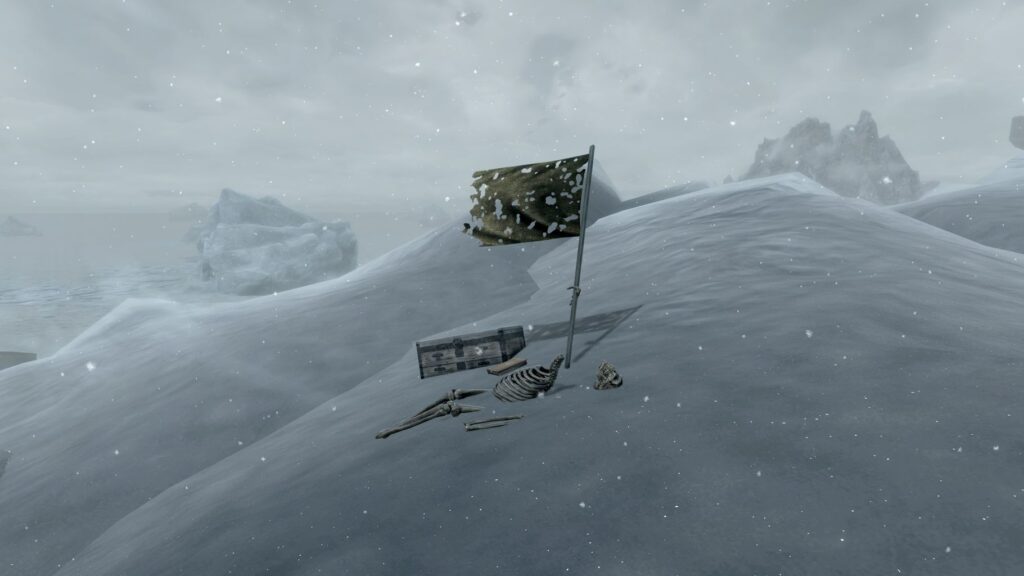
Fallout 4 and Skyrim are not perfect games, far from it. Both games suffered from technical issues upon release and required numerous patches. They are often criticized for lacking mechanical depth and for not being challenging enough for hardcore gamers. What elevates both games to the top of their genre is their meticulous, nuanced world-building and storytelling. Skyrim, especially, is a handcrafted masterpiece. Alongside an epic main storyline and numerous side quests, Skyrim’s open game world is rife with endless details that tell many different little human stories. Like the body of a man called Lucky Lorenz, found in a hut crushed by a fallen tree, the remains of an unnamed explorer on an iceberg, or a journal in an abandoned camp that tells the story of an heiress who ran away with a poor miner and died in the wilderness. Playing Skyrim feels like an adventure where something unique and interesting awaits behind every turn. I have been playing Skyrim for years, and I still discover something new in every playthrough.
In 2018, Bethesda announced it was developing a new open-world role-playing game, Starfield, described as “Skyrim in space”, featuring 1,000 explorable planets. The game was finally released in 2023 to mixed reviews. Starfield is a good game, with an epic storyline and much of the attention to detail that characterizes Skyrim and other Bethesda titles. Upon release, it was considerably more polished than its predecessors. The main difference, and primary source of player criticism, was that while everything in Skyrim was handcrafted, most of the Starfield universe is procedurally generated.
In Starfield, Bethesda aimed to depict the vastness of space by allowing players to jump between star systems and explore countless planets, each with its own terrain, installations, flora, and fauna. To achieve this realistically, game designers handcrafted the environments where most of the game’s main storyline takes place–major cities and key quest locations. Other locations are procedurally generated during gameplay from random and pre-designed elements using an algorithm. This results in a gaming experience that quickly feels artificial, repetitive, and predictable when moving beyond the central storyline. For players used to the fully and meticulously handcrafted world of Skyrim, this was a huge disappointment.
We are currently at the peak of an AI hype cycle, and managing AI-generated content is becoming a serious issue. One growing concern is distinguishing human content from AI-generated content. In an effort to deal with that, the European Union’s AI ACT mandates labeling some types of AI content. Legal and medical content is especially problematic. Some lawmakers are now suggesting a complete ban on chatbots providing such advice. However, in most contexts, the challenge is not so much identifying AI-generated content as it is finding ways to avoid it. The Internet, especially social media, is getting full of AI-generated text, images, and videos. Online AI-generated content feels generic, hollow, sometimes fake, and often wastes time and attention. Given how much of our time is spent online, an increasing part of our everyday life is becoming artificially generated.
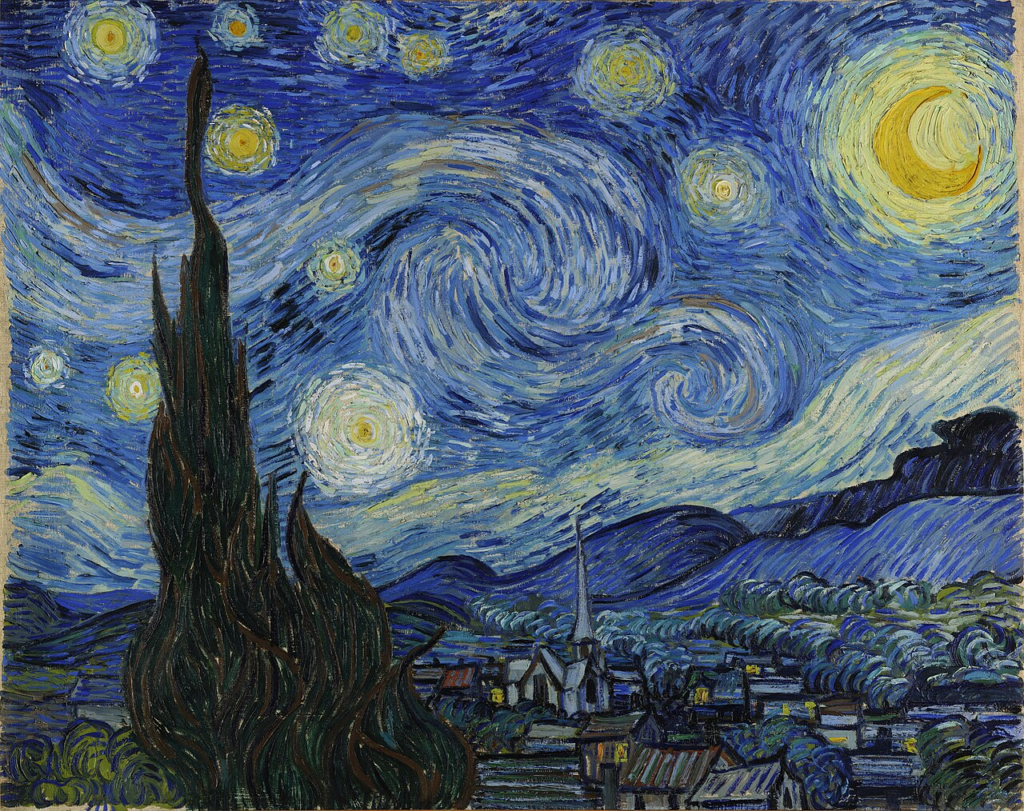
AI models, at least in their present configuration, will never be as creative as humans. An AI can generate an image of the night sky, but it has never seen it, nor can it experience the feeling that seeing it can evoke. An AI is essentially a sophisticated mirror that reflects human emotions back at us. Because AI models are trained on the aggregate of human output, they gravitate toward the mathematical mean of expression. If many of the descriptions and images of the night sky in the AI training data depict or mention twinkling stars and a soft glow, the AI will tend to create a starry, softly glowing night sky. Human creativity, however, thrives on deviation. Van Gogh didn’t paint the average night sky; he painted a distorted, swirling, high-contrast version that no statistical model would have predicted as likely. His starry night was born of his unique mind and fueled by his life experience, an experience that an AI model lacks and cannot understand.
We do not want to live in an artificially generated reality, just like we do not want to play a procedurally generated role-playing game. Life in a generated environment is hollow, repetitive, and mediocre. I think that Starfield is a good game, but that is because of the handcrafted parts, and despite the generated ones. Storming the same generic pirate outpost, nearly identical to the last three, feels empty. So does clicking a link and seeing the same generic AI content; content that can be at best informative, never inspiring. Still, creating generated content is so much more efficient than making it by hand that there is no doubt that we’ll see a lot more of it. As this trend continues, handcrafted content will become rarer and thus more valuable, more expensive, and less available.
Human society has seen this happen before. In the late 18th century, the Industrial Revolution introduced the mass production of goods that had previously been handcrafted. Mass production is so efficient that today, almost every good on the market is factory-produced. True handcrafted goods, by master craftsmen, have become rare and, therefore, costly and harder to acquire. We will likely see the same process with AI-generated digital content. An AI model can create music, perhaps putting mediocre musicians out of business, but original moving music will remain the sole domain of talented human artists. It will become rarer, more valuable, more expensive, and possibly less readily available.
Bethesda is now calling Starfield “a creative detour”, saying that their next game, The Elder Scrolls VI, will be less like Starfield and more like Skyrim. It seems they now understand that a generated game environment can never be as appealing as a carefully designed one. Likewise, a generated life, filled with artificially created content, can never be fulfilling. We should think carefully about the kind of environment we want to live in and how we can prevent AI-generated content from pushing out human craftsmanship and taking over our lives.
356 | 2 | Published: Mar. 6, 2026 | Last updated: Mar. 6, 2026 | Topics: AI, Culture
Try this week’s featured note:
-

Unforgettable
AI technology is making the right to be forgotten obsolete, leaving us prisoners of our own pasts.

Leave a Response