
LocalStack Resource Library
Explore the LocalStack Resource Library to unlock the full potential of local cloud development. From quick-start tutorials and deep-dive technical guides to best practices and webinars, we've gathered all the insights you need to build, test, and scale your cloud applications seamlessly.
Browse by Category

Your enterprise customers are giving AI agents cloud access before security, cost, and environment problems are solved. This two-page partner brief gives you the numbers behind those conversations and shows where LocalStack fits in the services you already deliver.
What's inside:
- Key findings from 309 developers and managers at enterprises with 1,000+ employees, covering agent access, risk, and environment delays
- Where LocalStack fits in AI agent enablement, cloud migration, and platform engineering engagements
- How sandboxes shorten delivery cycles and lower delivery cost and risk on customer projects
- A clear answer for customers asking how to run agents in the cloud safely
Who it's for: partner leaders, solution architects, and practice owners at cloud, AI, and DevOps service providers.
The complete report: Want the full data? Read the State of AI in Cloud Development 2026 report.

AI agents are deploying and testing in real cloud environments, often with broader access than human developers. This two-page brief from the State of AI in Cloud Development 2026 survey, conducted by Dimensional Research, shows what that means for security, cloud spend, and delivery speed.
What's inside:
- How far agent access goes, including how many teams let agents into production
- The top concerns teams have about agent access, led by leaked credentials and misconfigurations
- How AI-generated code is holding up once it leaves the editor
- Why staging is now the bottleneck, with 42% waiting more than 10 minutes per code update
- How isolated LocalStack sandboxes give agents, developers, and CI pipelines a safe place to deploy and test
Who it's for: engineering, platform, and security leaders rolling out AI agents across their cloud development lifecycle.
The complete report: Want the full data? Read the State of AI in Cloud Development 2026 report.
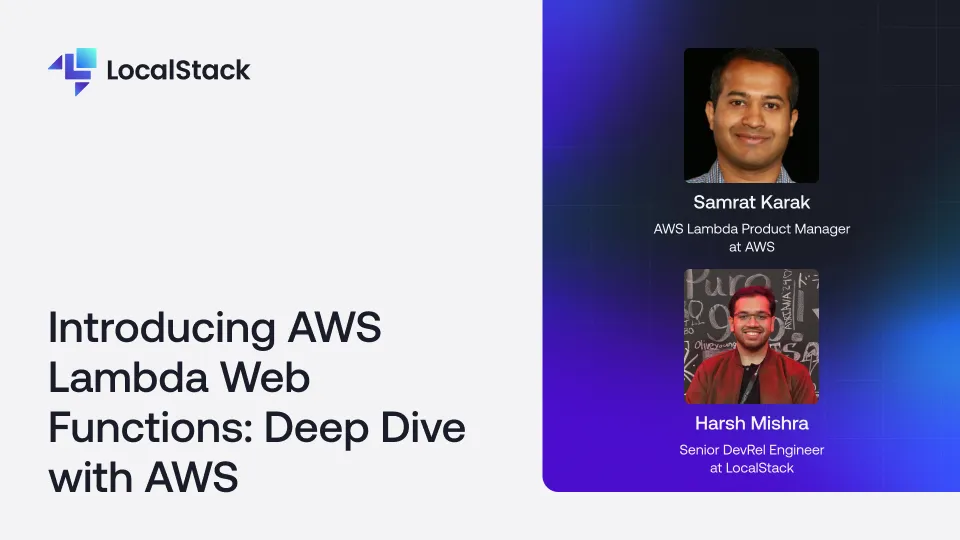
AWS just released Lambda Web Functions, a major update to AWS Lambda. In this session, Samrat Karak, AWS Lambda Product Manager, explains what's new and where Web Functions are most useful. Then see how to run and test them locally with LocalStack before you run them in your cloud environments.
What you'll learn
- What AWS Lambda Web Functions are, and why they matter
- Where Web Functions are most useful, straight from the AWS Lambda team
- How to run and test Web Functions locally with LocalStack
- How to catch issues locally before you run them in your cloud environments
- A live LocalStack demo of a Web Function running end to end, no AWS account required
See what developers really think about AI agents building cloud applications with our developers survey.
The dev and test environments running on public cloud are one of the largest — and least-tracked — drivers of cloud spend. This whitepaper shows how running that work locally reshapes your total cost of ownership.
What's inside:
- Why non-production environments drive most cloud waste
- What local cloud development is, and how teams test without a cloud account
- A pharmaceutical case study with real before-and-after results
- The impact across five DevOps metrics — and how each lowers cloud TCO
Who it's for: enterprise engineering, platform, and FinOps leaders sizing the true cost of their development lifecycle.
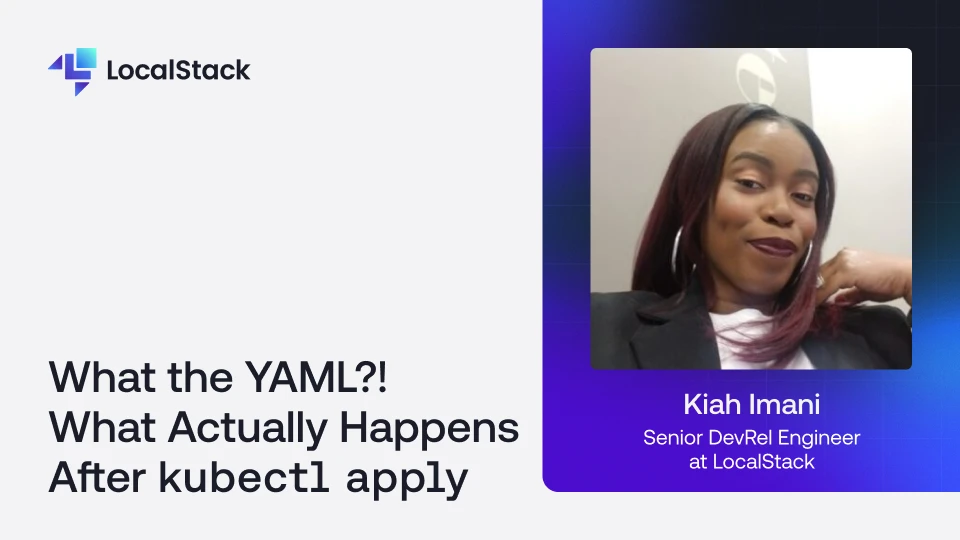
Developers are used to running kubectl apply and waiting on the magic to happen resulting in a running Kubernetes pod. But what actually happens between entering the command and the deployment being ready? What's the reality behind the "magic"? In this talk, Kiah will dissect all the stages of a Kubernetes deployment in a way that is easy to understand. She'll walk through that deployment happening locally on LocalStack to inspect what's really going on at each stage. At the end of this session, attendees will have a deeper understanding of the Kubernetes deployment process that can help debug many common issues and will gain an understanding of how LocalStack enables local testing of Kubernetes.
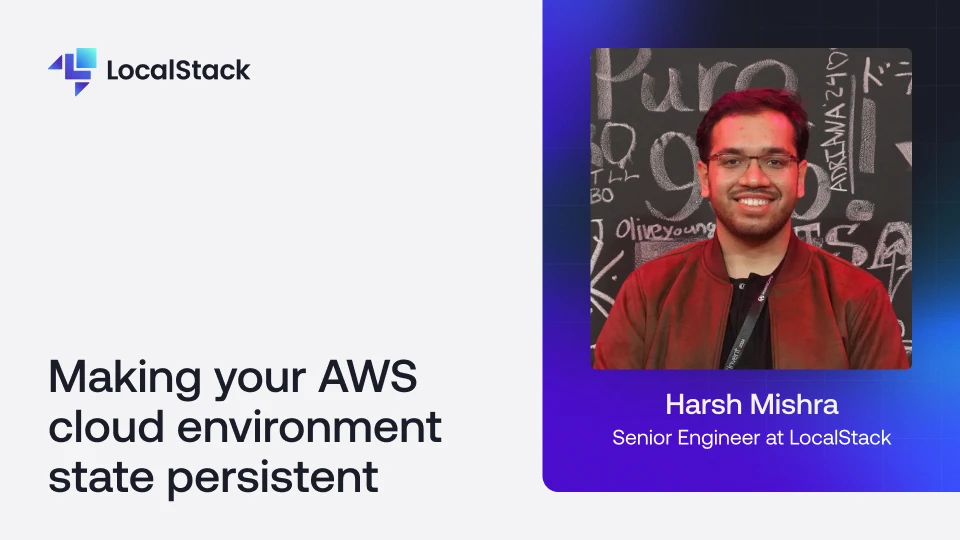
Recreating the unique state of a cloud app environment is notoriously complex, making it difficult to diagnose bugs, collaborate with teammates, or even just pick up where you left off. Join us as we deep dive into LocalStack’s powerful state management and persistence features, exploring how to maintain, snapshot, and seamlessly share your local cloud environments using core features like persistence, Cloud Pods, and state files. Learn how to restore a previous state, share preconfigured environments with colleagues for collaboration or onboarding, or restore preset services and data for functional tests in CI. We'll also showcase LocalStack's new Model Context Protocol (MCP) integration, revealing how AI can manage, inspect, and automate your local cloud state.
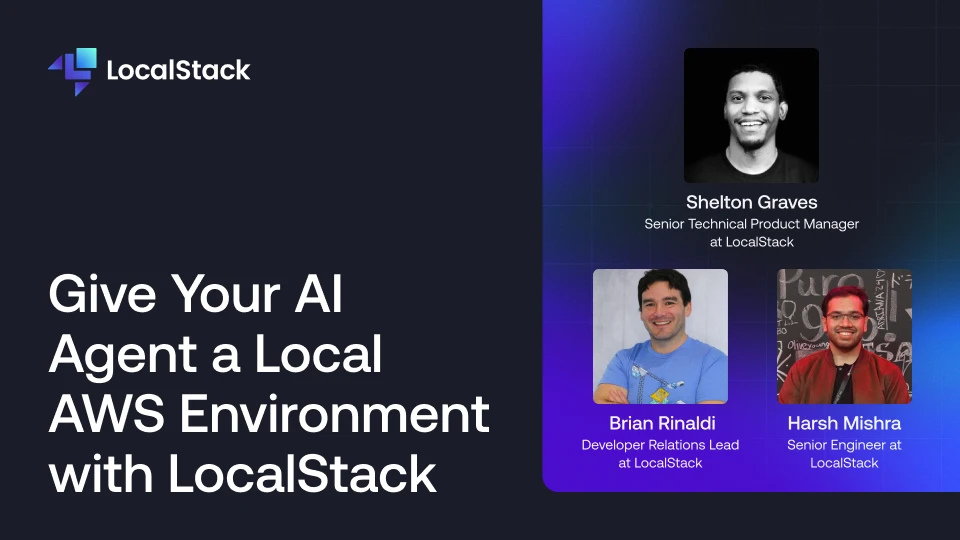
An agent will write you a CDK stack, a Terraform module, or a stack of IAM policies in seconds.
Whether any of it works is a separate question, and the usual way to find out is to deploy to a real AWS account and watch what breaks.
In an agentic workflow, that means giving AI access to a public cloud account, racking up costs on the AWS bill, and waiting for provisioning to complete every time you push new code to the environment.
An overview of how LocalStack relates to AWS, useful for AWS-aligned buyers, account teams, and partners weighing how the two fit together. It covers:
- How applications run against LocalStack with the same code and infrastructure files used in AWS
- How local development affects the path to production and usage of core AWS services
- How it applies to cloud migrations
- Where security and governance checks can happen before workloads reach the cloud
- How it relates to testing AI-generated code before deployment
An overview of how LocalStack applies to financial services, where regulatory constraints rule out using a shared cloud development account. It covers:
- How development and testing can happen inside your own network perimeter, without sending data to the cloud
- How licensing and cost work compared to public-cloud dev/test spend
- The effect on the serverless development loop
- How existing AWS tooling, SDKs, CLI, Terraform, CDK, and CloudFormation work with LocalStack
A practitioner's overview of how LocalStack fits into day-to-day development and where it changes the workflow. It covers:
- Why developers can build and test against AWS without waiting on shared or remote accounts
- How the local feedback loop compares to round-tripping through the cloud
- What "AWS parity" looks like in practice, and where it cuts out extra work
- How teams keep behavior consistent across local development and CI
A short overview of the case for local cloud development. It covers:
- Three problems that grow as cloud development scales: security and compliance risk, unpredictable cost, and slower developer workflows
- How running an AWS environment locally relates to all three
- Where local development sits in the workflow, from a developer's laptop through CI/CD
- The outcomes: time to market, non-production cloud spend, and application reliability

