
C++ Team Blog
The latest in C++, Visual Studio, VS Code, and vcpkg from the MSFT C++ team
Latest posts
Announcing Live Share for C++: Real-Time Sharing and Collaboration

C++ developers using Visual Studio 2019 16.0 Preview 1 or Visual Studio Code can now use Live Share. With Live Share you can share the full context of your code, enabling collaborative editing and debugging. Collaborative Editing: Collaborative Debugging: In a Live Share session there is a host and a guest(s). The host of the session provides the guest with everything it needs to be productive; the guest doesn’t need any of the source files locally. Furthermore, the guest doesn’t need the right compiler, external dependencies, or even the same installed components. The guest even gets IntelliSense fr...
Better template support and error detection in C++ Modules with MSVC 2017 version 15.9

Overview It has been a long time since we last talked about C++ Modules. We feel it is time to revisit what has been happening under the hood of MSVC for modules. The Visual C++ Team has been dedicated to pushing conformance to the standard with a focus on making the overall compiler implementation more robust and correct with the rejuvenation effort. This rejuvenation effort has given us the ability to substantially improve our modules implementation. We've mostly done this work transparently over the past few months until now. We are proud to say the work has reached a point where talking about it would hop...
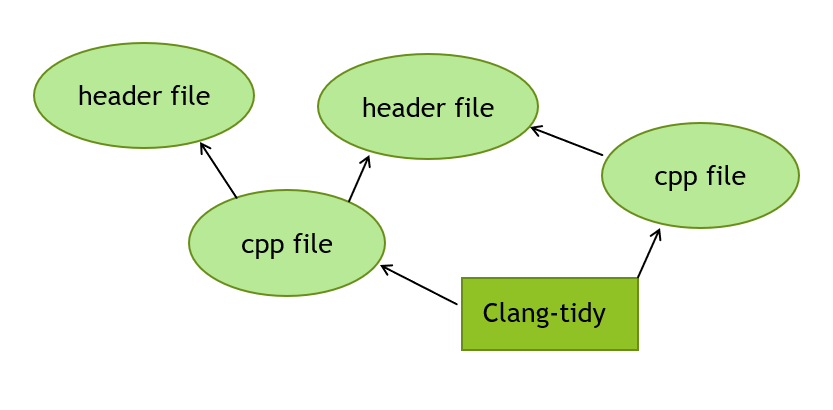
Exploring Clang Tooling – Using Build Tools with clang-tidy

This post is part of a regular series of posts where the C++ product team and other guests answer questions we have received from customers. The questions can be about anything C++ related: MSVC toolset, the standard language and library, the C++ standards committee, isocpp.org, CppCon, etc. Today’s post is by guest author Stephen Kelly, who is a developer at Havok, a contributor to Qt and CMake and a blogger. This post is part of a series where he is sharing his experience using Clang tooling in his current team. The previous series about clang-tidy on this blog covered the basics of creating a clang-tidy ...
Using Visual Studio for Cross Platform C++ Development Targeting Windows and Linux

A great strength of C++ is the ability to target multiple platforms without sacrificing performance. If you are using the same codebase for multiple targets, then CMake is the most common solution for building your software. You can use Visual Studio for your C++ cross platform development when using CMake without needing to create or generate Visual Studio projects. Just open the folder with your sources in Visual Studio (File > Open Folder). Visual Studio will recognize CMake is being used, then use metadata CMake produces to configure IntelliSense and builds automatically. You can quickly be editing, buildi...
Q&A: Fine-grained friendship

This post is part of a regular series of posts where the C++ product team here at Microsoft answers questions we have received from customers. The questions can be about anything C++ related: Visual C++, the standard language and library, the C++ standards committee, isocpp.org, CppCon, etc. Today's Q&A is by Herb Sutter. Question Reader @thesamhughescom recently asked: Has there ever been a consideration for allowing individual private functions to whitelist other classes or functions to call them? Similar to the per class friend method, I was thinking you could annotate a function with or just an ide...
Use the official range-v3 with MSVC 2017 version 15.9

We’re happy to announce that the ongoing conformance work in the MSVC compiler has reached a new milestone: support for Eric Niebler’s range-v3 library. It’s no longer necessary to use the range-v3-vs2015 fork that was introduced for MSVC 2015 Update 3 support; true upstream range-v3 is now usable directly with MSVC 2017. The last push to achieve range-v3 support involved Microsoft-sponsored changes in both the MSVC compiler and range-v3. The compiler changes involved fixing about 60 historically blocking bugs, of which 30+ were alias template bugs in /permissive- mode. Changes to range-v3 were to add support...
Exploring Clang Tooling Part 3: Rewriting Code with clang-tidy
In the previous post in this series, we used clang-query to examine the Abstract Syntax Tree of a simple source code file. Using clang-query, we can prototype an AST Matcher which we can use in a clang-tidy check to refactor code in bulk. This time, we will complete the rewriting of the source code. Let's return to MyFirstCheck.cpp we generated earlier and update the registerMatchers method. First we can refactor it to port both function declarations and function calls, using the callExpr() and callee() matchers we used in the previous post: Because Matchers are really C++ code, we can extract them i...
Exploring Clang Tooling Part 2: Examining the Clang AST with clang-query
This post is part of a regular series of posts where the C++ product team and other guests answer questions we have received from customers. The questions can be about anything C++ related: MSVC toolset, the standard language and library, the C++ standards committee, isocpp.org, CppCon, etc. Today’s post is by guest author Stephen Kelly, who is a developer at Havok, a contributor to Qt and CMake and a blogger. This post is part of a series where he is sharing his experience using Clang tooling in his current team. In the last post, we created a new clang-tidy check following documented steps and encountered...
Exploring Clang Tooling Part 1: Extending Clang-Tidy
This post is part of a regular series of posts where the C++ product team and other guests answer questions we have received from customers. The questions can be about anything C++ related: MSVC toolset, the standard language and library, the C++ standards committee, isocpp.org, CppCon, etc. Today’s post is by guest author Stephen Kelly, who is a developer at Havok, a contributor to Qt and CMake and a blogger. This post is part of a series where he is sharing his experience using Clang tooling in his current team. This post is part of a three-part series about using the Clang AST Matchers to mechanically re...
