-
-
#Beauty

Inspiration
Modern chat applications are fast and convenient, but they often lack intelligent assistance, strong security, and scalable backend design. I wanted to build a chat platform that is not only real-time and user-friendly but also secure, AI-powered, and production-ready. Chat Helper was inspired by the idea of combining AI intelligence with enterprise-grade backend architecture using Spring Boot.
What it does
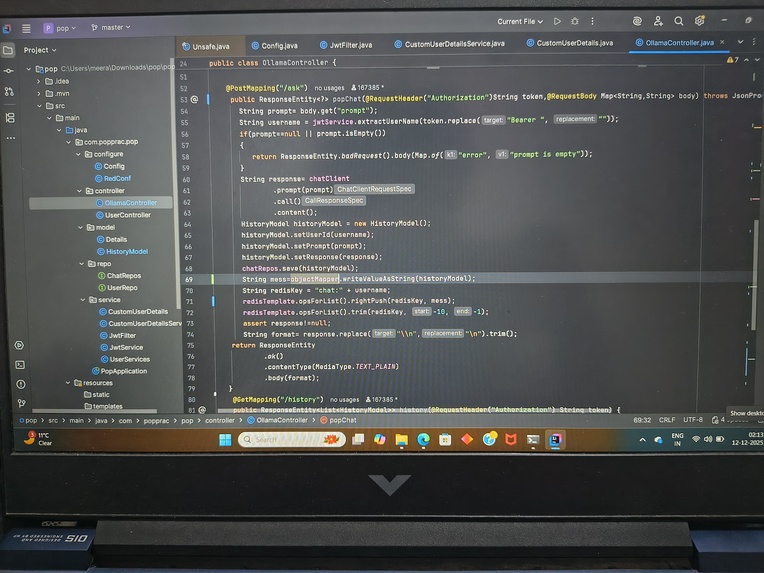
Chat Helper is a secure, AI-integrated chat platform that enables users to: Register and authenticate securely using JWT-based authentication Chat in real time via RESTful APIs Store structured data (users, chats, roles) efficiently Leverage AI integration for smart responses and chat assistance Achieve fast performance using Redis caching Maintain scalability with multiple databases for different data needs
How I built it
I built Chat Helper using a clean, layered backend architecture: Backend & Core Spring Boot – Core application framework Spring Security – Authentication & authorization JWT (JSON Web Tokens) – Stateless and secure session management REST APIs – Clean and scalable communication between client and server
Challenges I ran into
Designing a secure JWT authentication flow without session-based state Managing multiple databases and deciding what data belongs where Ensuring high performance while integrating AI services Handling role-based access control with Spring Security Maintaining clean API design while scaling features
Accomplishments that I am proud of
Successfully implemented JWT-based secure authentication Integrated AI features directly into a Spring Boot backend Used PostgreSQL, MongoDB, and Redis together efficiently Built a scalable, production-ready REST API Designed a clean and maintainable backend architecture
What I learned
How to build enterprise-level security using Spring Security and JWT Best practices for multi-database architecture Performance optimization using Redis caching Real-world challenges of AI integration in backend systems Importance of clean architecture and separation of concerns
What's next for Chat Helper
WebSocket-based real-time messaging Advanced AI features like summarization, sentiment analysis, and smart replies End-to-end encryption for chats Mobile and web frontend integration Deployment using Docker & cloud platforms Monitoring and logging with Prometheus & Grafana
Databases PostgreSQL – Relational data (users, roles, chat metadata) MongoDB – Chat messages and flexible AI-related data Redis – Caching, session optimization, and fast data access AI Integration Integrated AI services into the backend to enhance chat responses and assist users intelligently.
Development Tools IntelliJ IDEA – Primary development environment Maven/Gradle – Dependency management Postman – API testing and validation


Log in or sign up for Devpost to join the conversation.