-
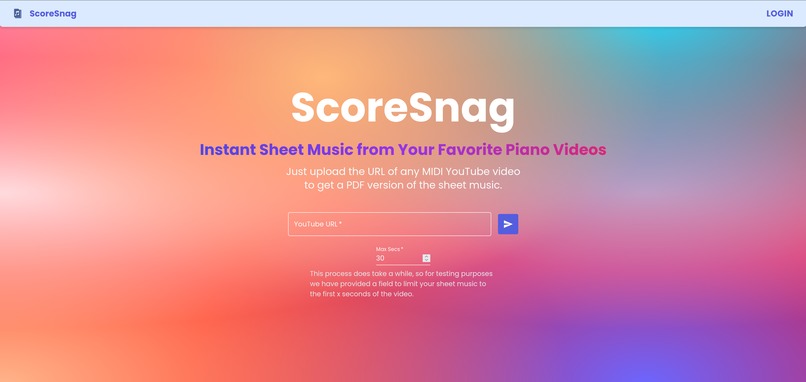
home page :D
-
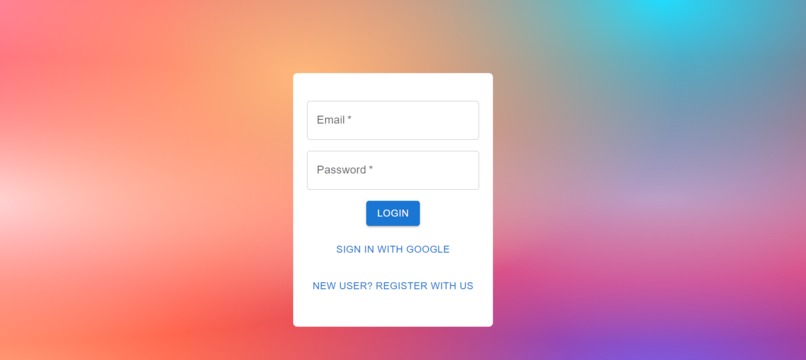
user auth
-
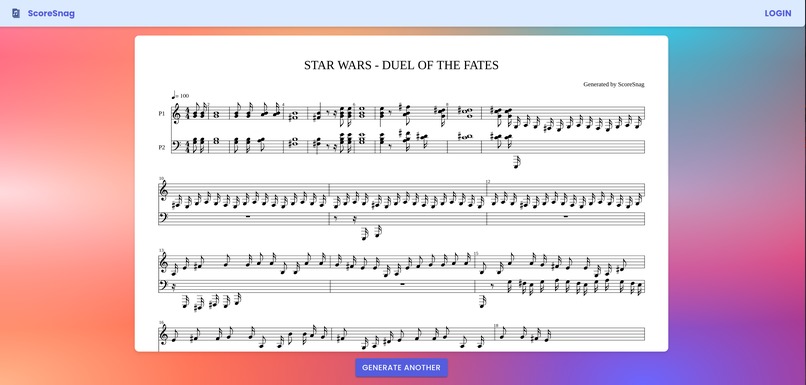
Generated music
-
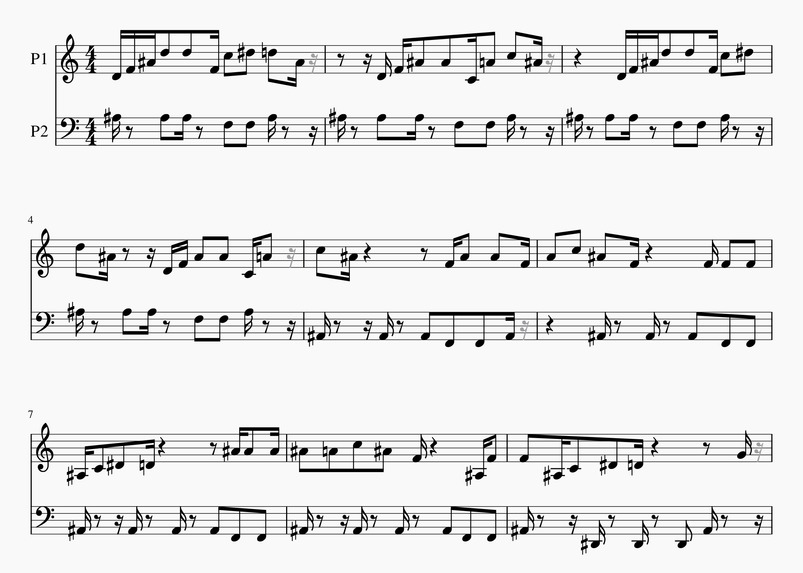
some of our other generated sheet music


Inspiration
You start tapping your foot, you start bobbing your head, and you start hitting a little boogey. Finding a song you really vibe to is always great, but for a musician it spurs a desire to grab an instrument. Recently, the prices for music transcription services have significantly increased, creating a barrier for aspiring musicians from challenged socio-economic regions to learn. We aim to provide a service that closes the gap between musicians are varying background by making sheet music to trending and relevant songs available.
What it does
ScoreSnag takes in a url for a MIDI piano Youtube video. The program then transcribes the waterfall of falling notes into a pristine and accurate score. The user is then able to playback the transcribed music and download a PDF version which can be printed.
How we built it
ScoreSnag's user-friendly frontend is built using React.js, TailwindCSS, and MaterialUI. While it's backend is powered by Google Colab and the pymusicxml library. The piano notes into the video are identified by their duration, key, and clef before being exported as an array of tuples. We then use the pymusicxml library to construct a MusicXML file that is converted into a PDF by MuseScore3.
Challenges we ran into
Our biggest challenge was finding a way to identify music notes from a MIDI video. These videos use different aspect ratios, visual affects, and coloring which can hinder the transcribing process. We identified the unique ratio of black and white piano key to find the middle C note, thus allowing us to find the rest of the keys. We also were challenged by the structure of MusicXML coupled with uncommon music transcription conventions. Finally, we really wanted to make our UI as user-friendly and inviting as possible, so we spent a great deal of time designing and adjusting our frontend.
Accomplishments that we're proud of
We are extremely proud of the fact that we were able to convert out Colab python code into an API. This allowed us perform POST requests on our web app to deliver high quality scores to our users.
What we learned
In this project, we learned about MusicXML, a powerful format for representing musical scores in a structured, machine-readable way. We explored how to represent notes, rests, accidentals, and other musical elements using pymusicxml and learned how to encode the pitch, duration, and timing of each note.
What's next for ScoreSnag
We hope to fine tune our algorithm for more extraneous video variables that could impede transcription. Additionally, we plan to integrate more advanced transcription techniques such as key signatures, trills, and grace notes which would allow us to further raise the quality and potential difficulty ceiling of the outputted scores.
Built With
- python
- react.js



Log in or sign up for Devpost to join the conversation.