-
-
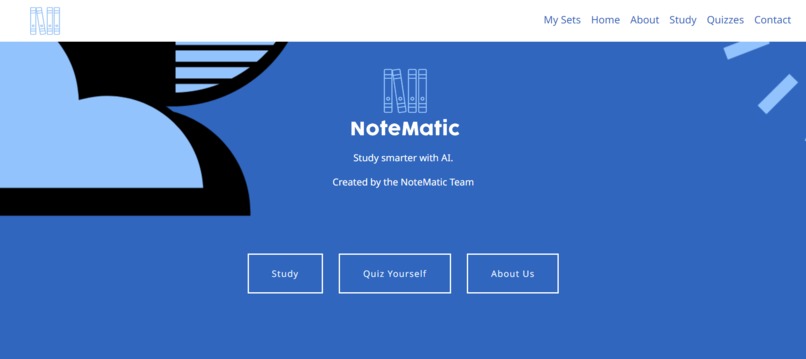
Home Page
-
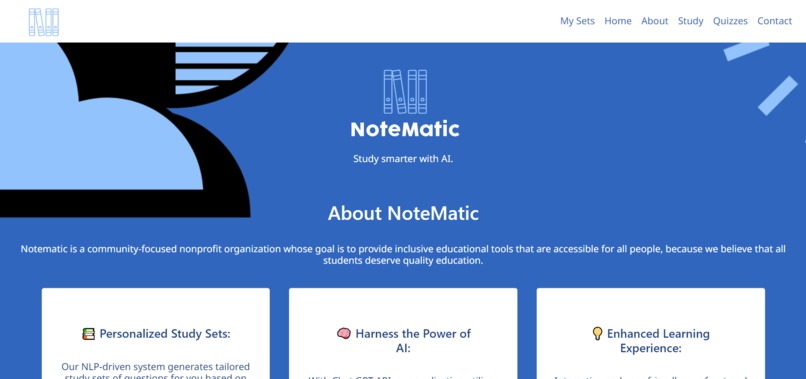
About Page
-

AI-Generated Flashcards Page
-
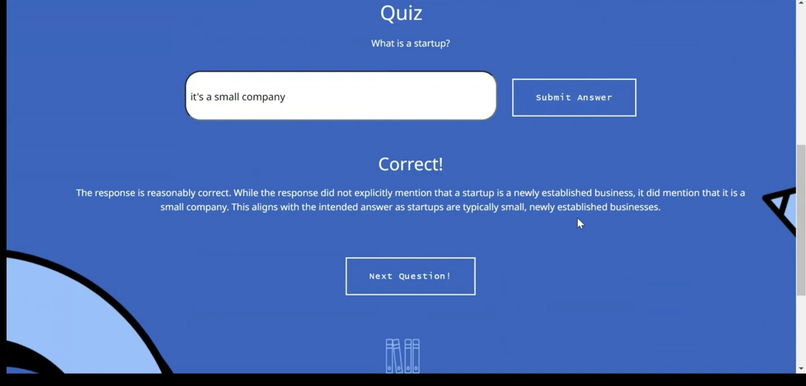
Quiz (AI Checker) Page
-
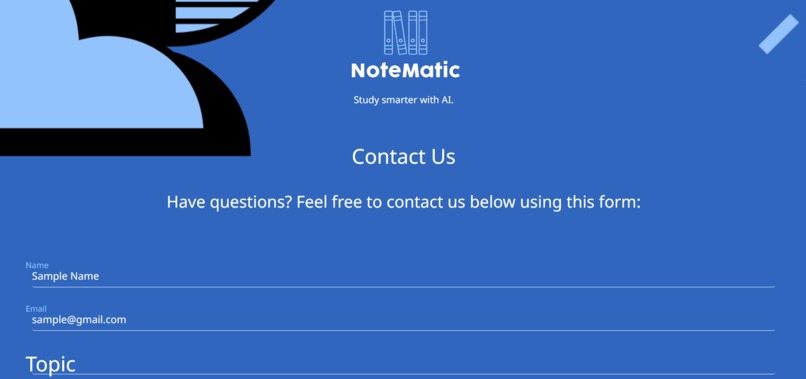
Contact Page


Inspiration
The education sector is underserved. Most schools around the world focus on broad-based learning, where teachers teach the same way to all kids in the classroom regardless of each individual's specific needs. There is currently not really a focus on individual learning and making sure each person is caught up and understands the material. This is a problem because students all learn at different paces and learn better with different methods. Since we are high schoolers and college students ourselves, we have experienced this phenomenon first-hand, especially in harder classes like physics and history. Therefore, we created a versatile tool, Notematic, that will help resolve this issue.
What Notematic does
With ChatGPT API, our application utilizes state-of-the-art natural language processing (NLP) to provide you with intelligent and contextually accurate study material. We generate multiple notecards using AI based on any user-inputted keyword topics for students to study and/or review. We also provide a quiz function that evaluates the students’ answers and the AI can correct them dynamically.
How we built Notematic
We integrated ChatGPT API into a user-friendly, responsive web application using front-end languages HTML, CSS, Bootstrap, Canva, JavaScript and back-end Node.js in order to provide a seamless experience for our student customers.
Challenges we ran into
We found that some JavaScript functions were producing bugs, so it took some time to debug. Prompting for ChatGPT was also difficult because ChatGPT sometimes responds inaccurately to complex prompts. We solved this by improving our parsing of question-answer pairs.
Accomplishments that we're proud of/benefits of our app
We are happy to finish building Notematic's front and back-end, which is easy to use, UI-friendly, and free for all student users. Similar to the popular website Quizlet, NoteMatic uses an engaging flashcard format to help people retain information quickly. However, since Quizlet requires people to create their own sets, it is difficult to find sets on niche topics.
In addition, Quizlet’s quiz mode is only for premium users with a subscription, therefore it is not as accessible to low-income students. We as a community-focused nonprofit organization want to provide inclusive educational tools that are accessible for all people, because we believe that all students deserve quality education.
Other accomplishments we’re proud of include our versatile and UI-friendly front-end design, such as our dynamic contact form, loading screen for generating flashcards (which integrates our moving Notematic logo), fading-in animation for the about page, Canva-designed graphic background, and our other subtle animations, styling, and color theme.
In addition, our built-in ChatGPT AI flashcards can be generated on any niche topic, which provides flexibility based on school curriculum. Notematic also provides an easy-to-use quiz mode to evaluate the correctness of your response. Lastly, Notematic is intuitive/easy to use and is fast: it generates quiz questions instantly and generates flashcards within ONLY a few seconds.
What we learned
We learned to use ChatGPT as an API and integrate it into a responsive website and learned how to prompt engineer ChatGPT to generate flashcards and quiz questions for users.
What's next for Notematic
We plan to register Notematic as an official 501(c) nonprofit organization and advertise it on social media channels to reach school-aged kids. We also hope to add more languages to Notematic to increase our international customer base.


Log in or sign up for Devpost to join the conversation.