-

SageAI
-
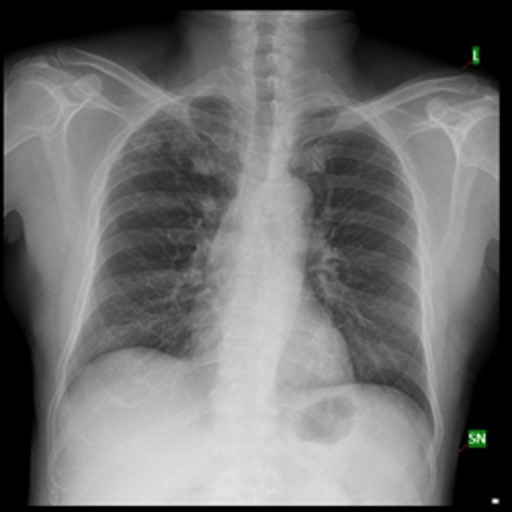
Chest X-ray


Project Inspiration In the healthcare sector, we've pinpointed three primary challenges that need addressing: Enhancing the accessibility of swift diagnostic processes, ensuring diseases can be identified at their earliest and most treatable stages, Addressing the issue of healthcare affordability, and Providing support to healthcare professionals through tools that aid in making accurate diagnoses.
Our mission with SageAI is to revolutionize healthcare by creating a platform where individuals can easily input symptoms, images, and biomedical scans for rapid diagnosis from our virtual medical assistant. We believe in the profound impact of good health on happiness and productivity, aligning our efforts with the third Sustainable Development Goal—promoting global health and wellbeing. Committed to inclusivity, SageAI prioritizes accessibility to ensure our technology serves everyone, adapting continuously to diverse needs. Our aim is to forge an inclusive digital world where our platform empowers each user uniquely, making advanced healthcare accessible and user-friendly for all.
Product Summary SageAI creates a user-centric environment which enables personal account creation and personal health data submission to diagnose diseases. SageAI accepts various inputs, including textual symptoms, self-taken images and biomedical scans. We utilize the BERT model for analyzing textual symptoms, while Imagen aids in processing user-uploaded images in conjunction with BERT. For biomedical scans, BiomedCLIP is used to identify the scan type and pass the scan to a corresponding model. For instance, chest x-rays are distinguished by the BiomedCLIP model from other types of biomedical scans and then passed into the ResNet-152 model to diagnose diseases.
SageAI leverages AI models to deliver swift, cost-effective, and globally accessible disease diagnoses, emphasizing inclusivity through its advanced features. Currently, SageAI focuses on diagnosing diseases through chest x-rays, with plans to extend its diagnostics to include CT and MRI scans for wider coverage.
Leveraging a combination of deep learning models, Generative AI, and Google Technologies enables the efficient processing and accurate diagnosis of diseases from symptoms. Specifically, Generative AI enriches data by transforming images into comprehensive symptom descriptions. The integration of Google Technologies facilitates the storage and execution of these models on Google Cloud, enhancing efficiency and minimizing the costs associated with computing and storage.
Built With
- alexnet
- css
- express.js
- gemini
- github
- google-cloud
- google-colab
- google-drive
- google-workspace
- html
- javascript
- jupyter-notebook
- matplotlib
- mongodb
- node.js
- numpy
- pandas
- pillow
- postman
- python
- pytorch
- react.js
- resnet
- scikit-learn
- vertex-ai
- vgg
- visual-studio


Log in or sign up for Devpost to join the conversation.